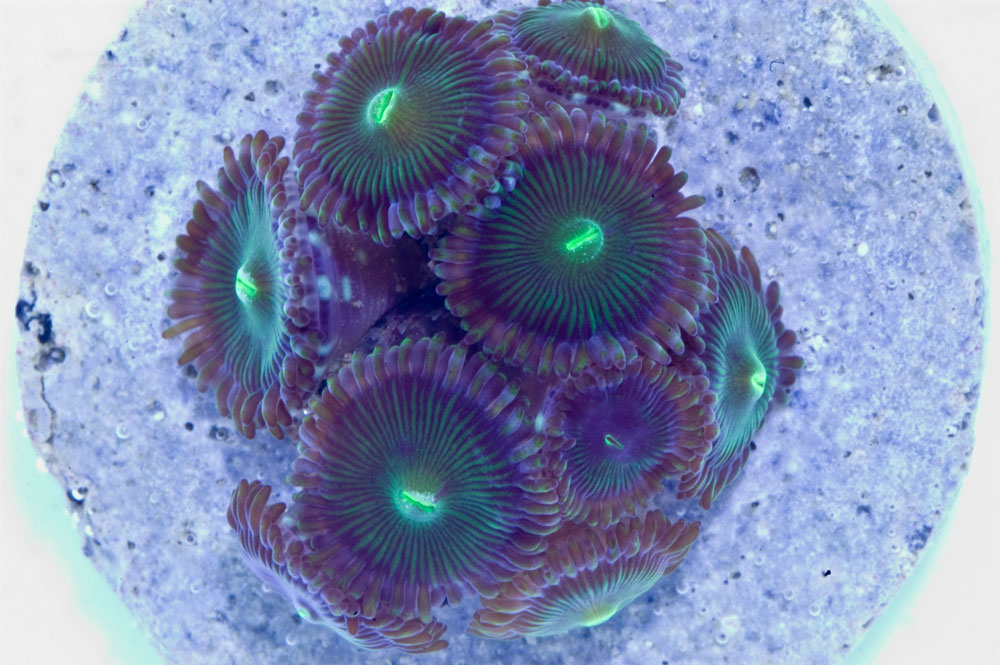
A zoanthid. As mike stated, zoanthids do not have a long mouth. Also, when a palythoa is closed you can see striped on the back side of the polyp. You can see them on the left polyp in the photo that Mike posted.
Even Zoas have a slanted mouth (it's simply smaller, just as the zoas are smaller). However many palys have a highlighted mouth (typically neon green). Although there's plenty of palys without green mouths as well. Ultimately I judge a polyp as a zoa or a paly, based on whether or not it is responsive to feedings (not simply responsive to touch, but actively closes in on food for the purpose of consumption). The photo above is a really good example of this!! :bigsmile:
A zoanthid. As mike stated, zoanthids do not have a long mouth. Also, when a palythoa is closed you can see striped on the back side of the polyp. You can see them on the left polyp in the photo that Mike posted.
Even Zoas have a slanted mouth (it's simply smaller, just as the zoas are smaller). However many palys have a highlighted mouth (typically neon green). Although there's plenty of palys without green mouths as well. Ultimately I judge a polyp as a zoa or a paly, based on whether or not it is responsive to feedings (not simply responsive to touch, but actively closes in on food for the purpose of consumption). The photo above is a really good example of this!! :bigsmile:
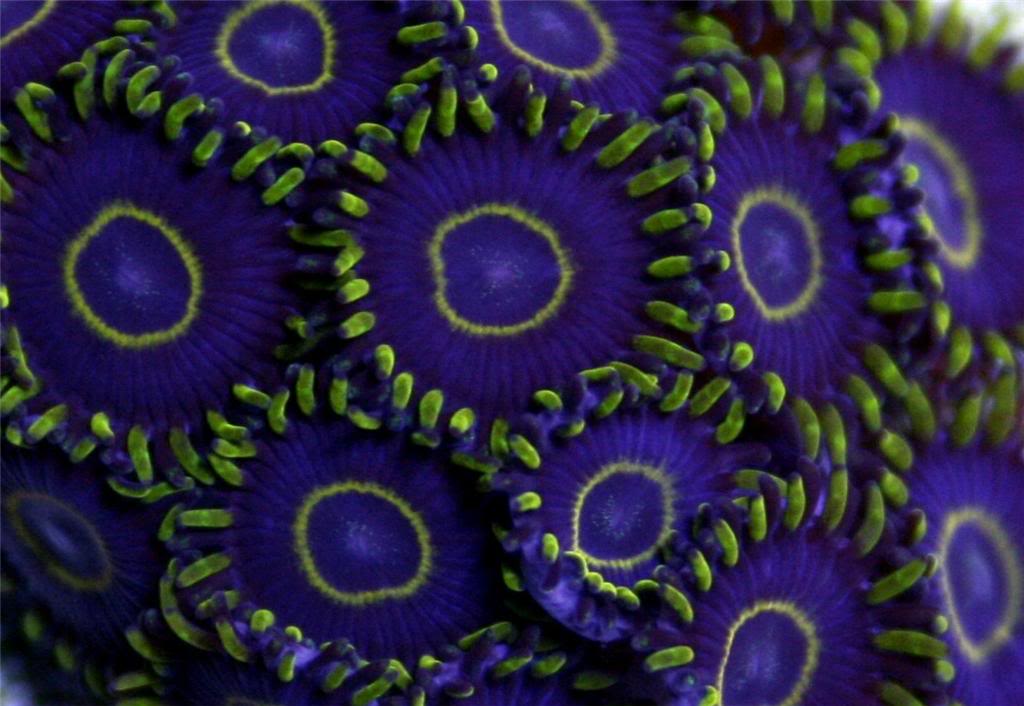
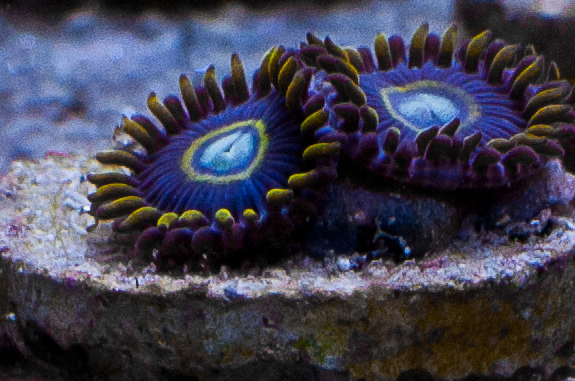
With all due respect, the answers given above are all incorrect - you all are citing the characteristics of PE zoas, not palys. The polyps pictured are Zoanthus gigantus - in other words, zoanthids, not palys (although they are often incorrectly referred to as palys). The difference between a paly and a zoa is often stated to be in the feeding response. Again, incorrect, as the Zoanthus gigantus also exhibit a prominant feeding response.
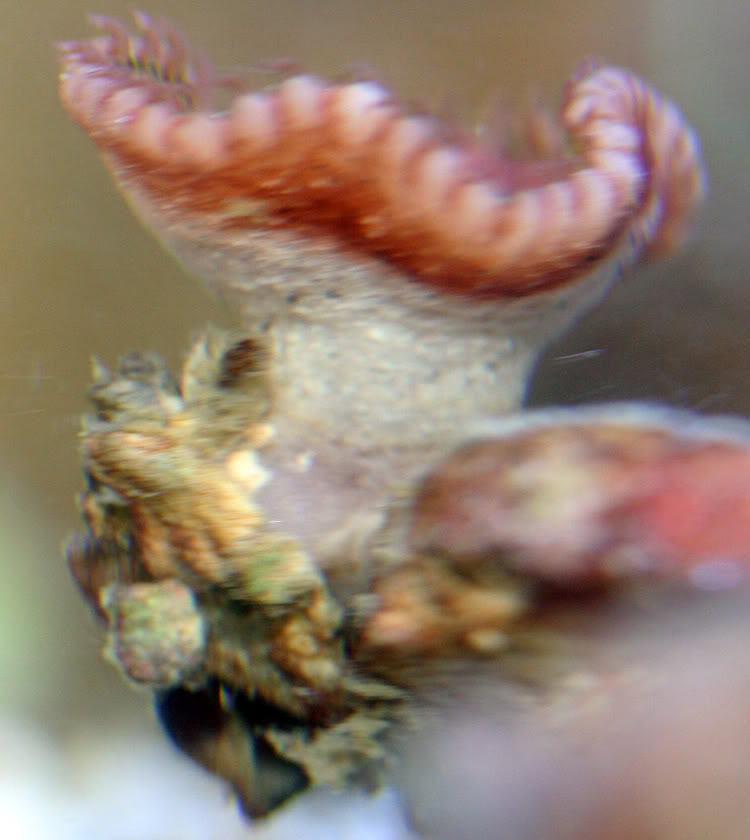
The true difference between palys and zoas is much harder to distinguish. It is in the coenenchyme (or mat tissue); palythoa (protopalys included) take up sand and other small particles to build their structure (particularly noticable in the "stem" of the polyp or course texture of the oral disc). Zoanthids (such as those pictured above) do not.
Polyp, colony form, and oral disc shape and color are all highly variable between members of these two genera.
If you have a question as to which you have, take a picture of the of the polyp. If it shows the sand grains like this out of focus shot of a Palythoa grandis, it is a paly not a zoa.
Oh yeah, I remember hearing about the palys taking up sea bedding to use in their tissue. Pretty cool :) . Although I see none of this in any of my "grandis palys". Oh well, thanks for the clarification.
I wonder how they'll be classified next year...?
If you touch the oral disc of the P. grandis with your finger tips, you will feel the courseness of the sand grains (be sure and wash your hands with soap and water afterwards). Why would it change next year?
its been changing since the name process started on Z's and P's. Pulled up three coral books, all three describe different taxinomic structures in the Zoanthus family. The classification keeps changing when exceptions are found. Made sense to me while Dr Reimer (sp?) is using molecular means to define them.
I think the above descriptions do apply to "what does the hobby consider the difference between a paly and a zoa" with "paly" and "zoa" in this case being used as hobby "common names" and not scientifically ascribed.
Truly molecular ID is the ultimate answer. I've also seen indications of paly and protopaly reclassification, but nothing I've read indicates that changes are in store for the Zoanthus genus. Even Reimers continued use of the Zoanthus genus for purposes of classification indicates that at least that portion of the classification index will remain unchanged.
That of course assumes that the new proposed Domain/Kingdom classification system does not take hold. If it does, it will reconstitute an entire reorganization of the entire classification scheme as we know it.
A zoanthid. As mike stated, zoanthids do not have a long mouth. Also, when a palythoa is closed you can see striped on the back side of the polyp. You can see them on the left polyp in the photo that Mike posted.