



- Joined
- Jan 9, 2014
- Messages
- 222
- Reaction score
- 128
- Location
- Simsbury CT
- What state or country do you live in
- Connecticut
This is a story of tragedy, loss and new hope. I live in new england (CT to be exact) I began my adventure in salt water after losing my freshwater tank to the 2011 Halloween nor'easter This is not the tragedy I speak of this was just my first venture into the reefing world.
I converted my 26gal bowfront to salt and got my feet wet. About a year later I upgraded to a 90 gal with a corner overflow.
In Aug of 2013 we began a renovation project on our house, converting a screened porch to a new kitchen and opening up our old kitchen and dining room. This was a huge space compared to what it was before. During all the construction we decided it would be best to incorporate a tank into the build so we don't have a free standing tank staining up a wall and taking up some of our newly gained space.
The house is a raised ranch and anyone familiar with the layout knows as you come up the stairs into the house there's usually a long hallway to greet you at the top. We decided to put the existing 90 gal tank into that wall to partition the old kitchen (now dining room) and hallway. So as you enter the house and climb the stairs the tank is the first thing you see. Also improve the view from the dining room. This spot is also over the main support beam of the house so there was not much needed for extra support.
The planning began.

The view from the hallway. Note: This side will be slightly shorter than the front of the tank as this wall hides the corner overflow.
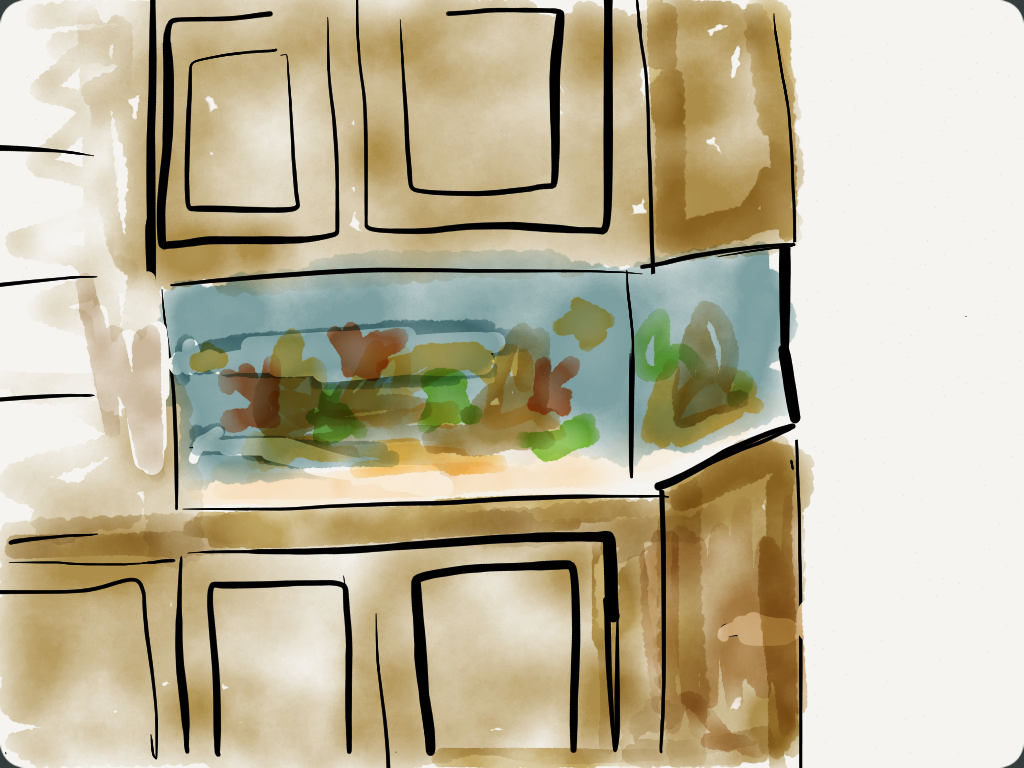
The view from the dining room with finished cabinets and built in hutch (figured we would get rid of our furniture by incorporating all of it into the new space)
So the build was accepted by our cabinet guy and contractor of our remodel. We even got the electrician onboard.
Here are some photos of the reno in progress.
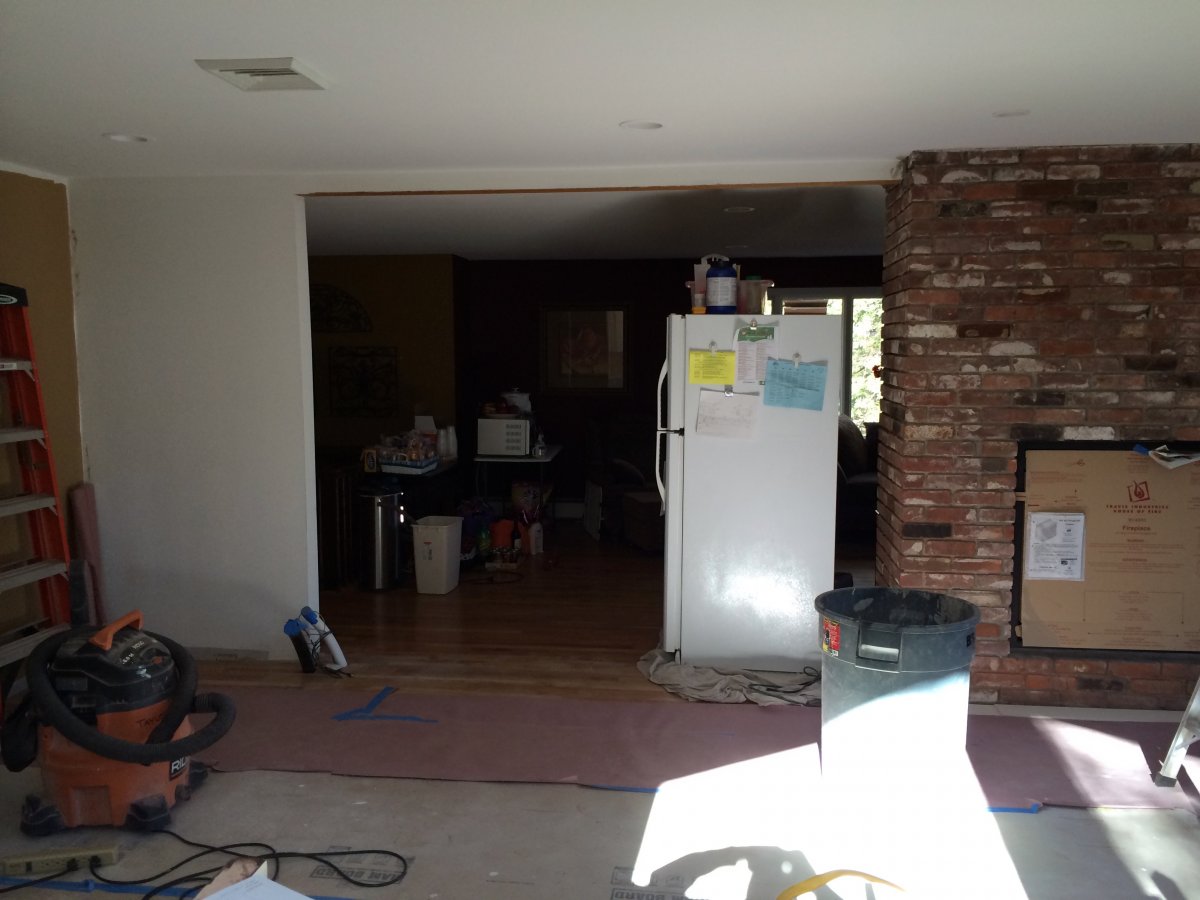
See the flex pvc poking up from the floor?

My tank as it stood during the renovations
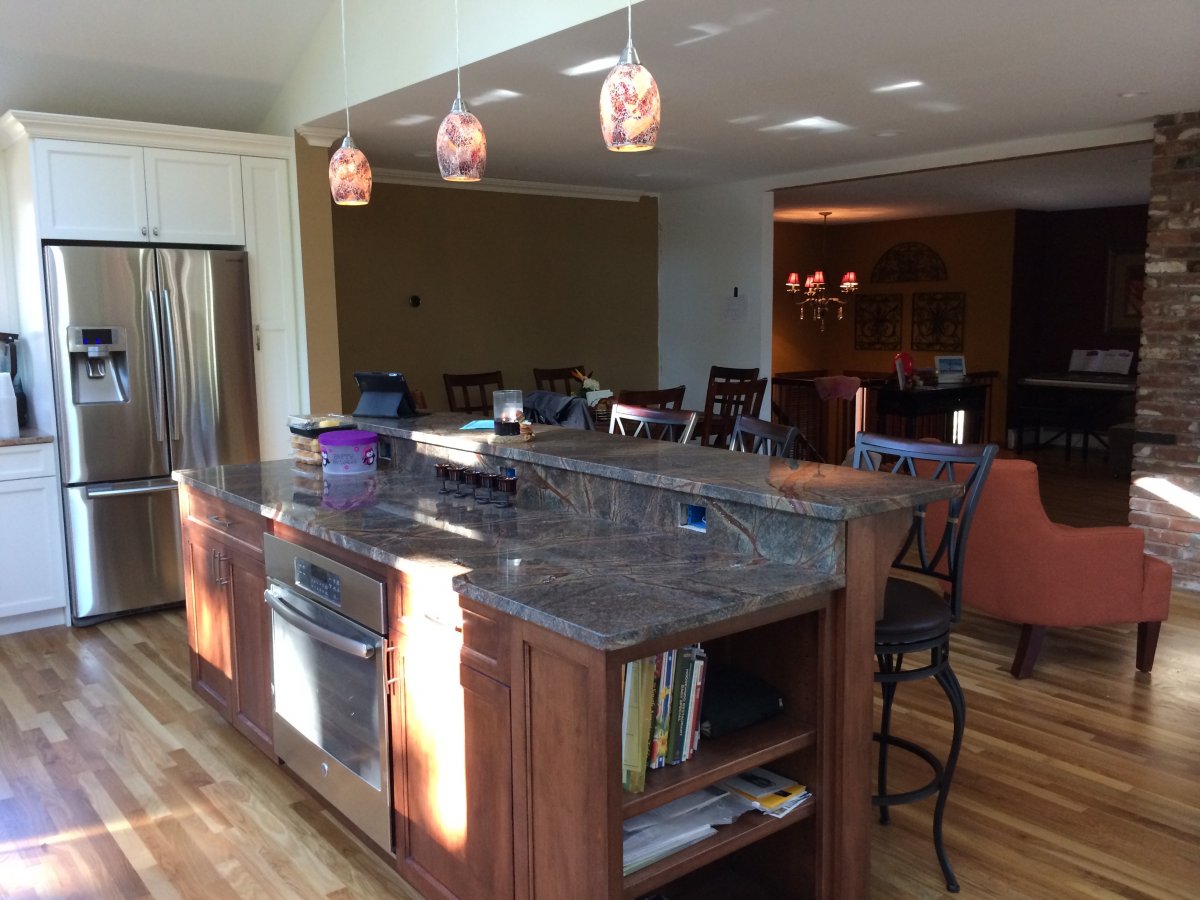
The completed space when the Kitchen was done before the fish tank cabinets were installed. If you look in the back of the image there's a build plan taped on the wall.
At this point I had lots of questions on how to properly set up a "built in tank" with a canopy / hood. How do you keep the heat down, how do you keep the moisture out, what kind of hardware can I use in the cabinets... my list went on. I decided to bring in a professional as a consultant on the build to help me plan it out. Looking back I wish I started this thread then!
The consultant talked me into moving the sump to the basement while we had the floors open. This is where it got expensive and huge. In retrospect I could have the same success keeping everything under the tank. The biggest selling point was to get water changes, and filter cleaning out of the dining room. We would be installing new hardwood floors and my wife didn't want to be smelling fish poop in the dining room while eating or entertaining guests.
We have a raised ranch home remember? Well the basement is finished, but the garage isn't and they are at the same level. So I began planning the basement "fish room" in the garage space with the consultant.
Here is a shot of the soon to be fish room wall with the plans sketched out on the plywood

What I don't have shots of are the plumbing in the floor/ceiling during install, the electrical and cabinet install, plumbing install and basically all the good stuff. :( So let me fill in some blanks.
The space I took over in the garage was my workshop. There was a room in front of my car bay that was a fairly large space used as a workshop. On the interior wall of this space was the main plumbing wall and just on the other side was my laundry room. This was convenient as the drains are in the floor and allowed me to have our plumber move our old kitchen sink into this space. Also convenient to have a drain for RO/DI and water changes. You can see the old sink just to the right of the plywood wall in the above picture.
I built a low stand for the sump to sit on from extra pressure treated 2x4's and subflooring. That stand is butted up against the sink cabinet and spans just about the full length of that wall. I also covered both the stand and the entire wall with PVC board so it's 100% water tight. During this time the cabinets were being installed upstairs along with electrical in both upper and lower cabinets.

Once the cabinet was in we needed to move the tank into place before the finish trim could be added. The photo shows my old Acan lighting.
New equipment was purchased for the build.
Also planned at this time but not a priority was water storage and mixing station with auto water changes.
Things were moving super fast at this point. I refilled the tank and put my fish and livestock in but didn't have the plumbing done. As I said I needed to get the tank in place so the finish work on the cabinets could be completed. So as I was working with the consultant on the plumbing my tank was running without a sump for about a month. I think I did one water change during this time.
Here are some shots of the completed cabinets
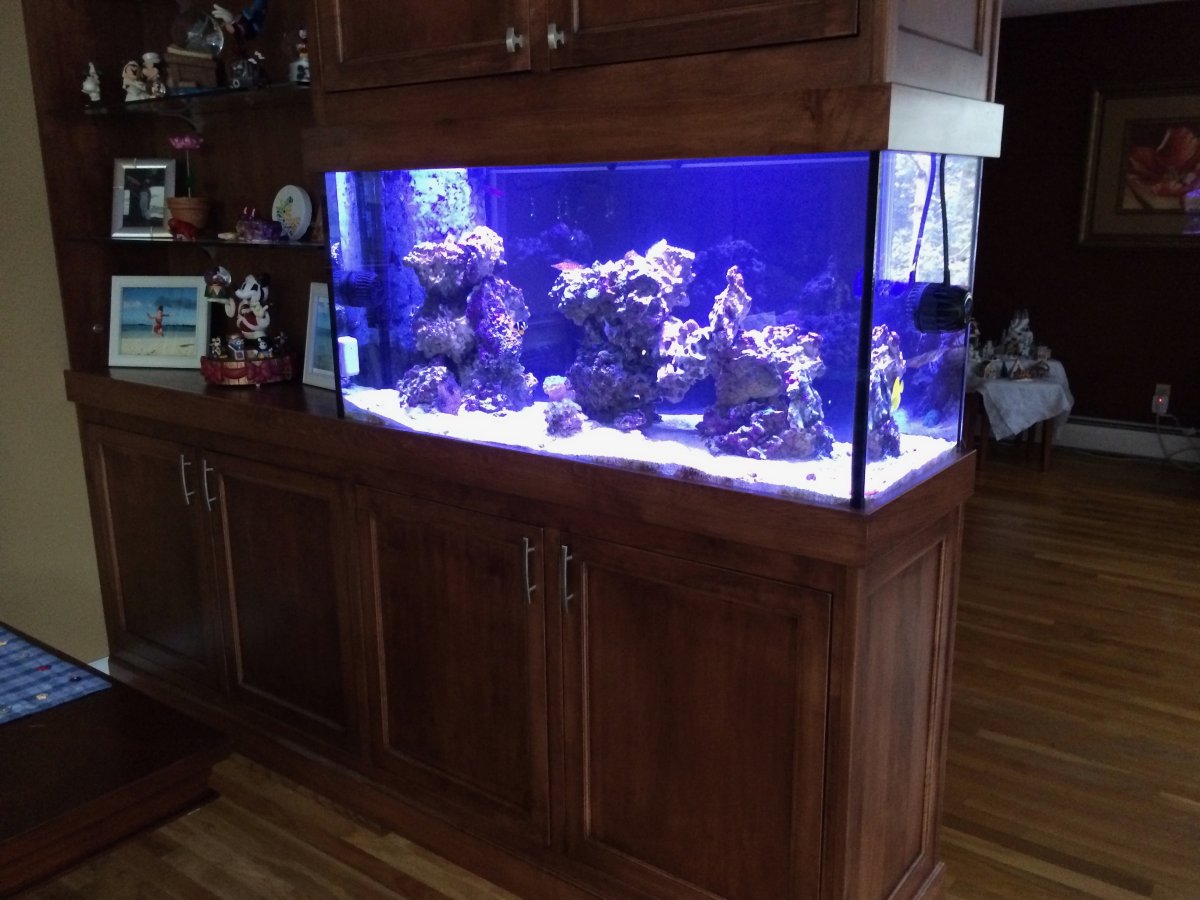

My inhabitants
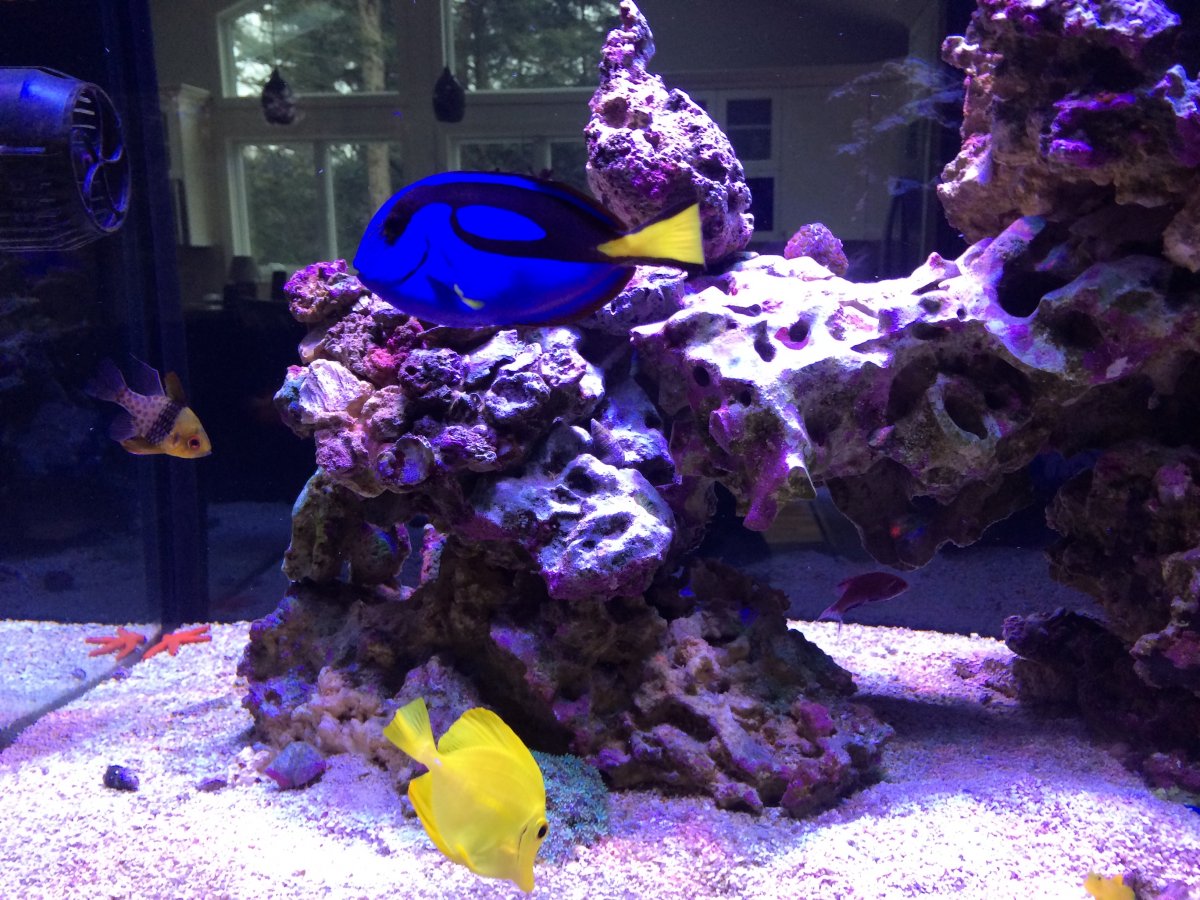
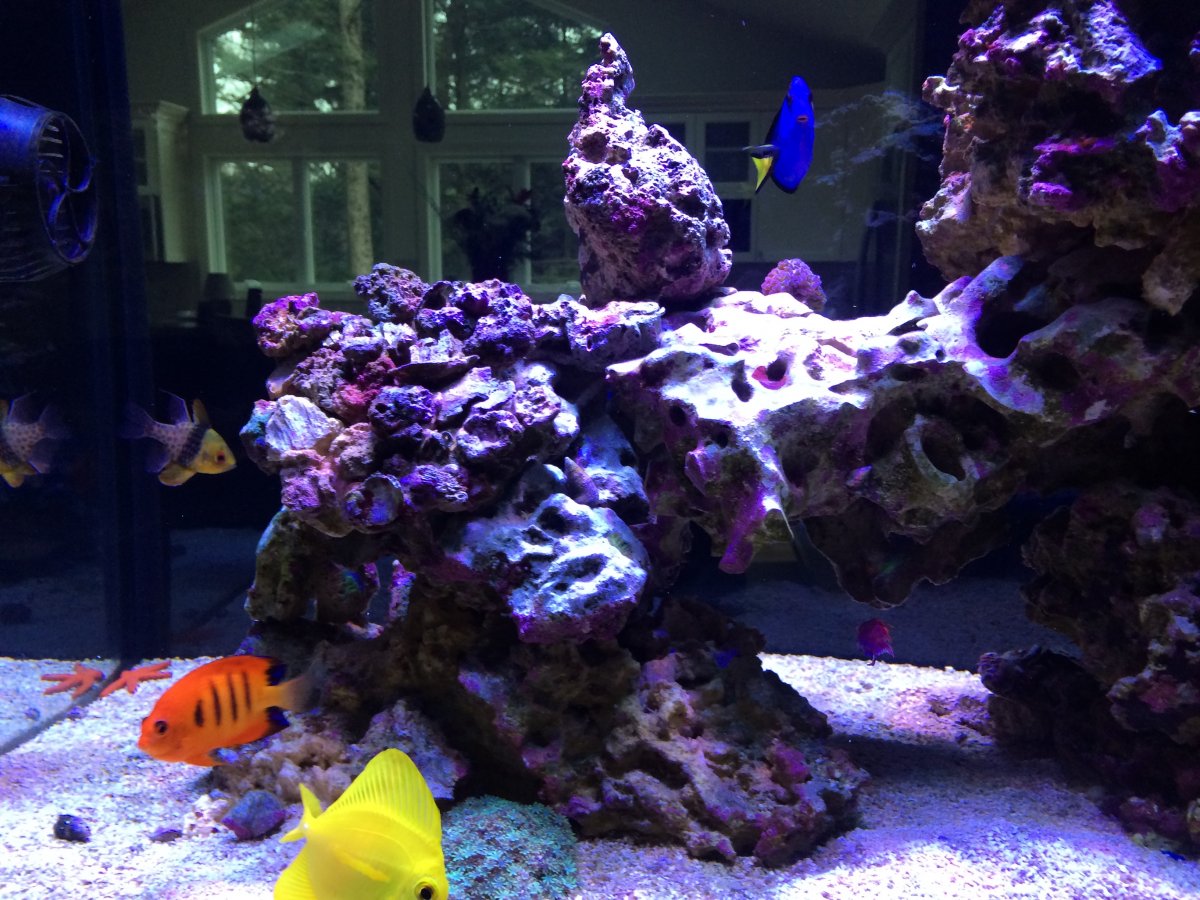


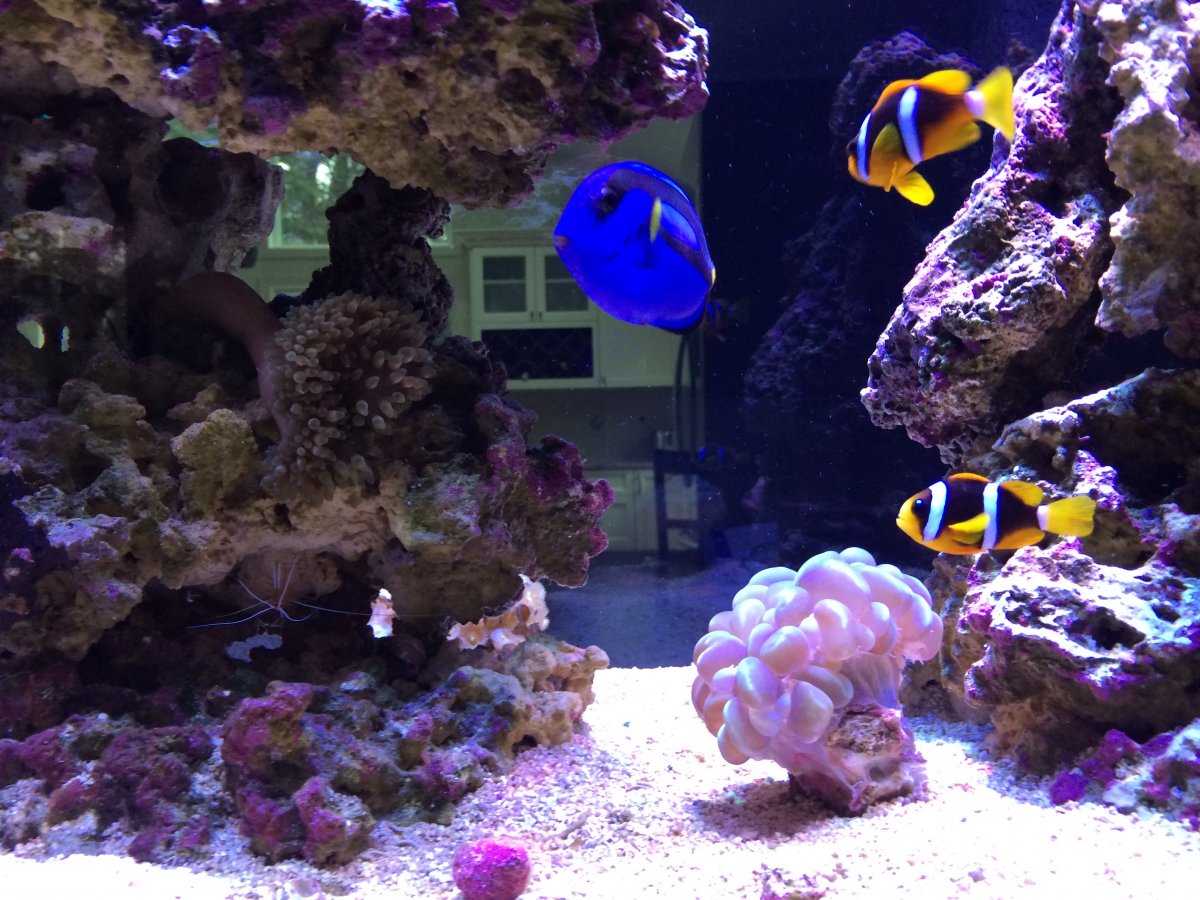
And finally my completed plumbing...


Woot!
After that I worked on finishing up the fish room with new walls and the auto water change system.
 nailing floor of the wall in place

 my tools rusting in the salt air
 back side of the wall

new wall completed
So onto the bad news... in Dec 2014 almost a year later i find this in my tank.
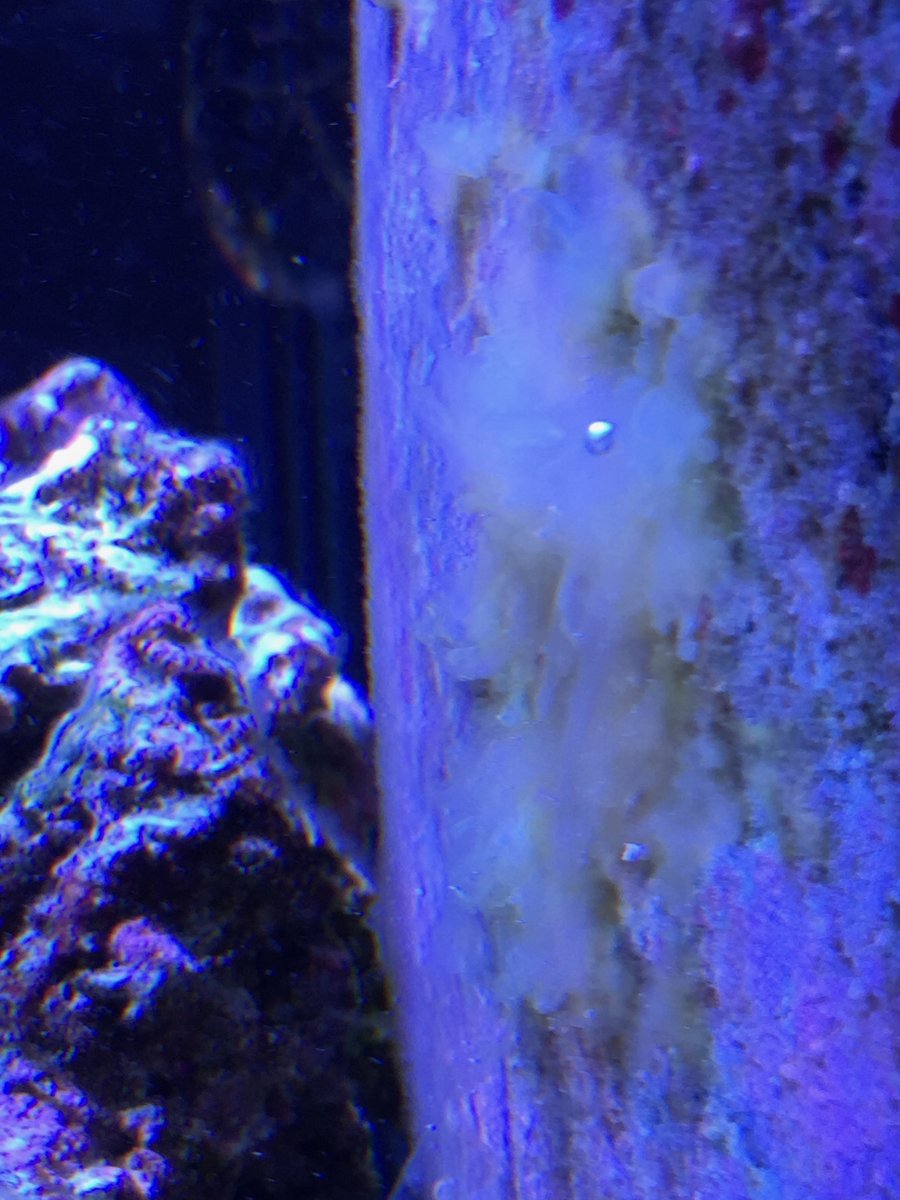
DINOS!!!!
The battle began. Needless to say I lost just about all inhabitants due to the fight. I want into what I like to call Tank depression. My entire system was covered in this nasty slime. I tried high PH dosing kalk up to 9.5ph, blackout periods, Metro, Outcompeting with good bacteria, Aerating...
All was lost. I was ready to give up and through in the towel. However I spent a lot of money on this system and it was not a part of the house... what was I going to do? I entertained a planted tank.
I decided I was not going to give up. I would rise from the ashes and start anew.
I broke down the system, dumped all sand and rock and ran about 8 gal of vinegar into the system twice after watching the PH go from 3.5 to 8.5 I'd do it again.
I set up a refugium to house the 3 fish i had left keeping it separate from the main system until it was all filled and cycled.


I also took the opportunity to clean everything while the system cycled new rock, sand and water for 4 months, including my radions which were caked up with salt creep and dust.

I converted my 26gal bowfront to salt and got my feet wet. About a year later I upgraded to a 90 gal with a corner overflow.
In Aug of 2013 we began a renovation project on our house, converting a screened porch to a new kitchen and opening up our old kitchen and dining room. This was a huge space compared to what it was before. During all the construction we decided it would be best to incorporate a tank into the build so we don't have a free standing tank staining up a wall and taking up some of our newly gained space.
The house is a raised ranch and anyone familiar with the layout knows as you come up the stairs into the house there's usually a long hallway to greet you at the top. We decided to put the existing 90 gal tank into that wall to partition the old kitchen (now dining room) and hallway. So as you enter the house and climb the stairs the tank is the first thing you see. Also improve the view from the dining room. This spot is also over the main support beam of the house so there was not much needed for extra support.
The planning began.
The view from the hallway. Note: This side will be slightly shorter than the front of the tank as this wall hides the corner overflow.
The view from the dining room with finished cabinets and built in hutch (figured we would get rid of our furniture by incorporating all of it into the new space)
So the build was accepted by our cabinet guy and contractor of our remodel. We even got the electrician onboard.
Here are some photos of the reno in progress.
See the flex pvc poking up from the floor?
My tank as it stood during the renovations
The completed space when the Kitchen was done before the fish tank cabinets were installed. If you look in the back of the image there's a build plan taped on the wall.
At this point I had lots of questions on how to properly set up a "built in tank" with a canopy / hood. How do you keep the heat down, how do you keep the moisture out, what kind of hardware can I use in the cabinets... my list went on. I decided to bring in a professional as a consultant on the build to help me plan it out. Looking back I wish I started this thread then!
The consultant talked me into moving the sump to the basement while we had the floors open. This is where it got expensive and huge. In retrospect I could have the same success keeping everything under the tank. The biggest selling point was to get water changes, and filter cleaning out of the dining room. We would be installing new hardwood floors and my wife didn't want to be smelling fish poop in the dining room while eating or entertaining guests.
We have a raised ranch home remember? Well the basement is finished, but the garage isn't and they are at the same level. So I began planning the basement "fish room" in the garage space with the consultant.
Here is a shot of the soon to be fish room wall with the plans sketched out on the plywood
What I don't have shots of are the plumbing in the floor/ceiling during install, the electrical and cabinet install, plumbing install and basically all the good stuff. :( So let me fill in some blanks.
The space I took over in the garage was my workshop. There was a room in front of my car bay that was a fairly large space used as a workshop. On the interior wall of this space was the main plumbing wall and just on the other side was my laundry room. This was convenient as the drains are in the floor and allowed me to have our plumber move our old kitchen sink into this space. Also convenient to have a drain for RO/DI and water changes. You can see the old sink just to the right of the plywood wall in the above picture.
I built a low stand for the sump to sit on from extra pressure treated 2x4's and subflooring. That stand is butted up against the sink cabinet and spans just about the full length of that wall. I also covered both the stand and the entire wall with PVC board so it's 100% water tight. During this time the cabinets were being installed upstairs along with electrical in both upper and lower cabinets.
Once the cabinet was in we needed to move the tank into place before the finish trim could be added. The photo shows my old Acan lighting.
New equipment was purchased for the build.
- 2 MP40 vortech pumps
- lots of new Apex control modules
- 2 Radion v2s
- reeflink
- JBJ 1/4 chiller
- Titanium inline heater
- Aquatic skimmer
Also planned at this time but not a priority was water storage and mixing station with auto water changes.
Things were moving super fast at this point. I refilled the tank and put my fish and livestock in but didn't have the plumbing done. As I said I needed to get the tank in place so the finish work on the cabinets could be completed. So as I was working with the consultant on the plumbing my tank was running without a sump for about a month. I think I did one water change during this time.
Here are some shots of the completed cabinets
My inhabitants
And finally my completed plumbing...
Woot!
After that I worked on finishing up the fish room with new walls and the auto water change system.
new wall completed
So onto the bad news... in Dec 2014 almost a year later i find this in my tank.
DINOS!!!!
The battle began. Needless to say I lost just about all inhabitants due to the fight. I want into what I like to call Tank depression. My entire system was covered in this nasty slime. I tried high PH dosing kalk up to 9.5ph, blackout periods, Metro, Outcompeting with good bacteria, Aerating...
All was lost. I was ready to give up and through in the towel. However I spent a lot of money on this system and it was not a part of the house... what was I going to do? I entertained a planted tank.
I decided I was not going to give up. I would rise from the ashes and start anew.
I broke down the system, dumped all sand and rock and ran about 8 gal of vinegar into the system twice after watching the PH go from 3.5 to 8.5 I'd do it again.
I set up a refugium to house the 3 fish i had left keeping it separate from the main system until it was all filled and cycled.
I also took the opportunity to clean everything while the system cycled new rock, sand and water for 4 months, including my radions which were caked up with salt creep and dust.
Last edited:














