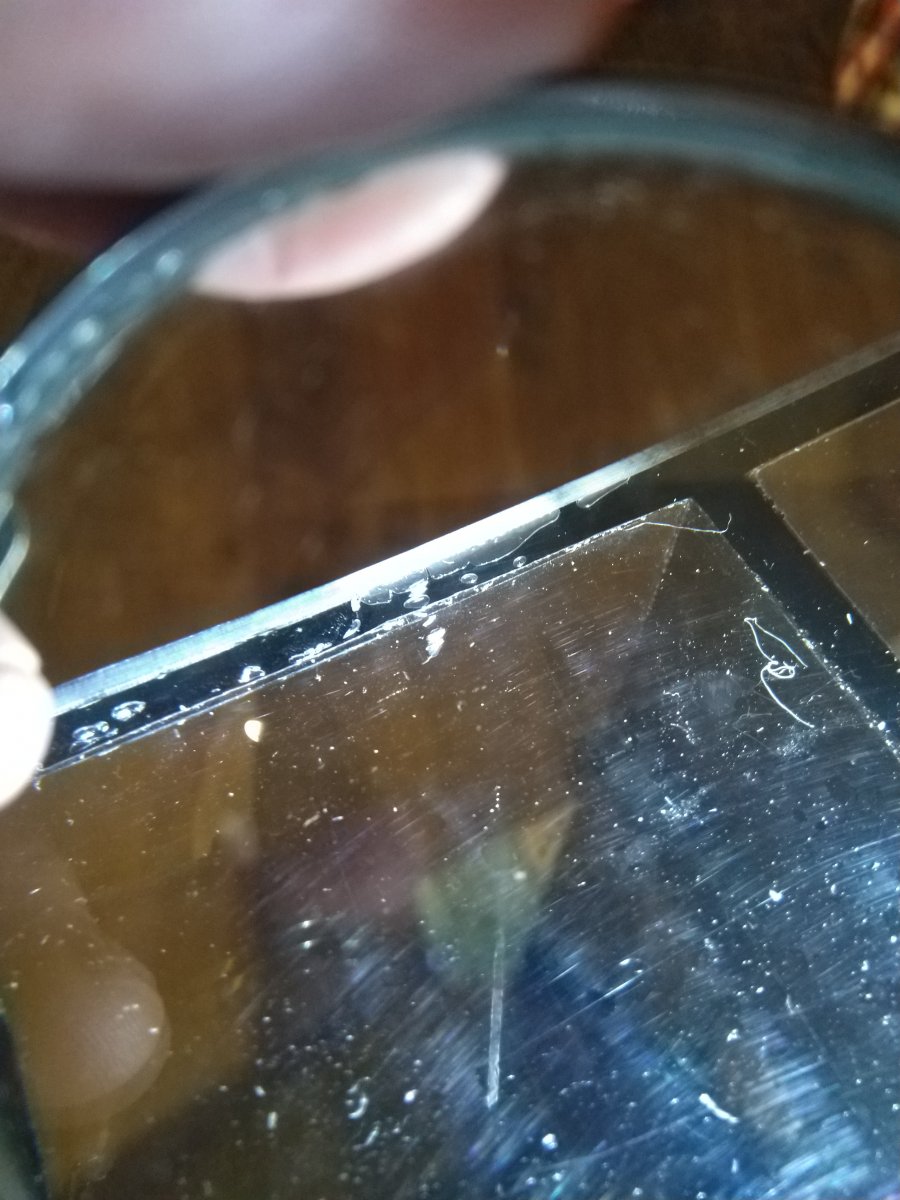
I wanted to go for 15mm because the budget is not enough for 20mm. You think the 15mm will bend?
deflection will likely be minimal.
if i go front and back 20mm and bot eurobrace and sides 15mm it will be safe?
yes. 20mm on front & back is not necessary, but you will have slightly less deflection in the middle
The sump will be 26''L*14''W*16''H. i was thinking about 8 or 10mm with the bafles 5mm.Only 3 bafles will go to the top but they will have 1'' gap from bottom.total 5-6 bafles. Sorry about the thickness measures but in my country i find these.
8mm should be fine. You could use 6mm also, and 5mm for baffles is fine
After long read i think you suggest pin method. Why you don't like the other method? it looks easier than pin method especially if you have no help like me...
pins allow for solvent to soak and dissolve material for a period of time so that the bond is strong. Do NOT use the capillary method. This results in very weak bonds. The shimming & pinning method is a critical thing that you need to learn and practice.
I saw somewhere that for pin method you dont need smooth edges and rough ones are better is that correct?
I'm not sure where you read this. You need perfectly straight, square, sharp, router-prepped edges for solvent welding. You might be thinking of 2-part bonding, where you want some roughness to the bonding surfaces, but this would be after prepping the edges with a router (as if you were going to solvent weld them). Also 2-part (Weldon 40) is not necessary for anything under about 2" thick, and I don't recommend this unless you really know what you are doing (and don't let others tell you this is a "better" technique)
If you can get Weldon #4, that is better than #3, but either will do. Ideally you can use Methylene Chloride and mix in 5% Glacial Acetic Acid, but it all depends on whether or not you can get these in Greece.
It sounds like you haven't done any acrylic tank building before - if this is the case, start with the sump, or even something smaller using some scrap material and practice. Parts preparation is critical, you need the right equipment and tables, etc. For instance, in order to put a parallel edge on a 64" long piece of acrylic, you need a router table that is on the order of 120" long and a long, perfectly straight fence. There are other ways to do it but it injects error factors.