


Blenny parasite id?

20gallonreefer000

Active Member
View Badges
Joined
Sep 23, 2024
Messages
182
Reaction score
141
Location
Ontario
Rating - 0%
0   0   0
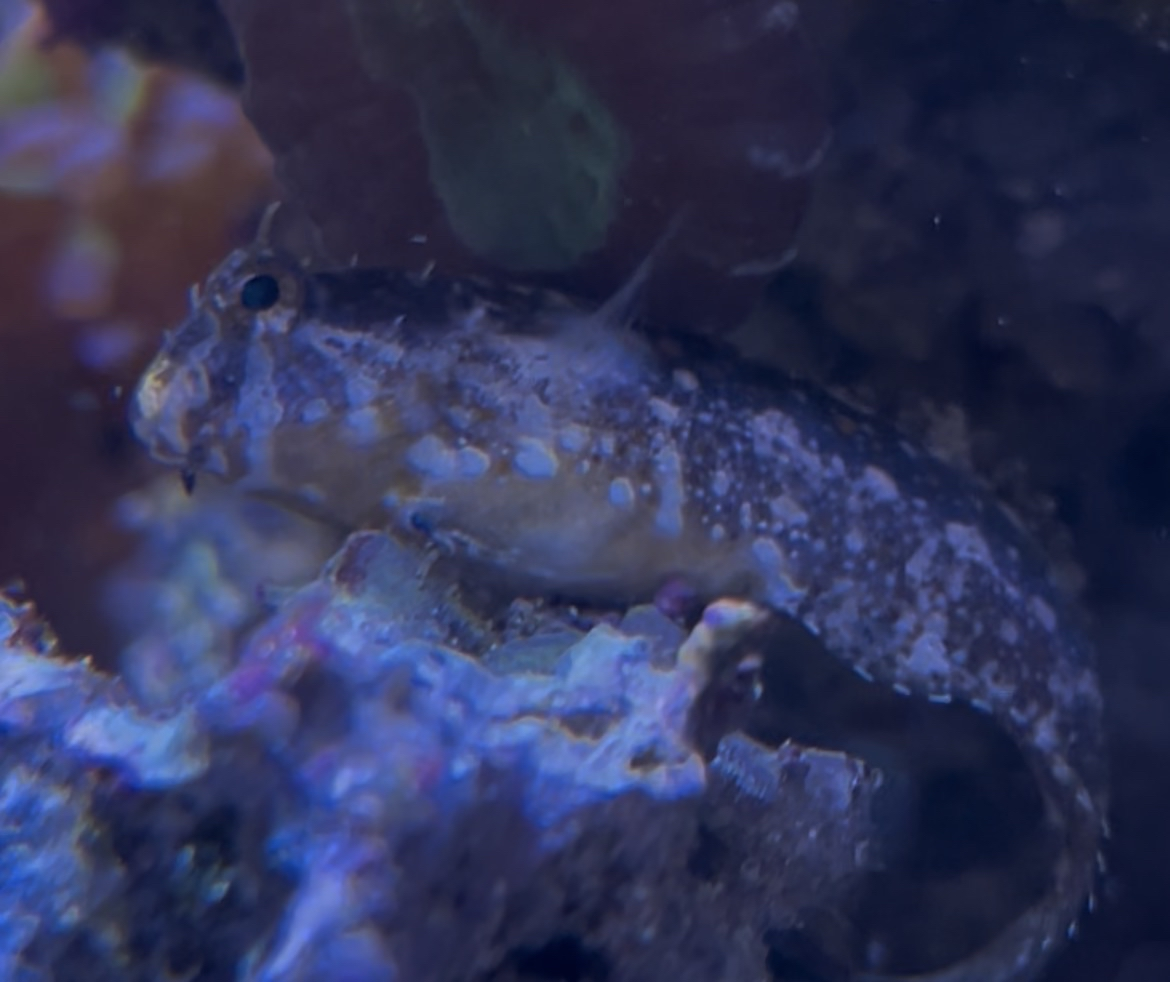
I've had my "floral blenny" for around 8 months and he's always been active. In the past few months he's been twitching and spinning himself, my assumption was that he had something I couldn't see. He still eats and his behavior hasn't changed much. Today I noticed he had what looked to me like a parasite behind his front fin. I know the store I got him from treats fish with formaldehyde and copper but I don't know if that would kill this or if it would last 8 months unnoticed. I haven't added any new fish and all corals I've got were dipped. I'd like to keep him in tank if possible as my tank is pretty grown in which would make him difficult to catch. Would a cleaner shrimp be able to help? Any thoughts are appreciated :)
1779908702035.png
1779908791416.png
1779908977970.png
 

resortez

Well-Known Member
View Badges
Joined
Jan 28, 2013
Messages
597
Reaction score
446
Location
los angeles, ca
Rating - 0%
0   0   0
8 months with the blenny should clear it from any infections, but in this hobby we are constantly being tested & proven wrong. It would help if you can circle the thing you are speaking about. The blennies colors make it difficult to spot what you are seeing because everything blends in with its colors. But the blenny looks great from what I can see & very well fed, has a nice tummy.
 
OP
OP
20gallonreefer000

20gallonreefer000

Active Member
View Badges
Joined
Sep 23, 2024
Messages
182
Reaction score
141
Location
Ontario
Rating - 0%
0   0   0
8 months with the blenny should clear it from any infections, but in this hobby we are constantly being tested & proven wrong. It would help if you can circle the thing you are speaking about. The blennies colors make it difficult to spot what you are seeing because everything blends in with its colors. But the blenny looks great from what I can see & very well fed, has a nice tummy.
1779910142252.png
that entire "disk"
 

resortez

Well-Known Member
View Badges
Joined
Jan 28, 2013
Messages
597
Reaction score
446
Location
los angeles, ca
Rating - 0%
0   0   0
I see what you are referring to. Theres many possibilities, could also be an injury from scratching or bumping against rock while spinning. I personally would keep it in observation & see if you can catch the blenny purposely scratching itself against rock or sand & if it’s constant. That will help in getting closer to the cause of the lesion & strange behavior, deducing it to a parasitic infection or a simple injury. My other thoughts are if by chance it could have bumped against a coral that could have stung the blenny & caused the lesion, the reason why I say there could be many possibilities. On the bright side, it’s still feeding. Be very concerned if its appetite goes away.
 

Jay Hemdal

10K Club member
View Badges
Joined
Jul 31, 2020
Messages
37,573
Reaction score
37,369
Location
Dundee, MI
Rating - 0%
0   0   0
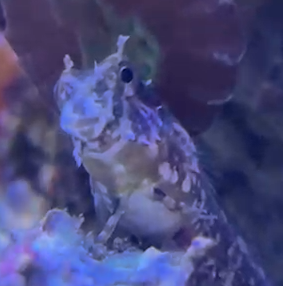
I've had my "floral blenny" for around 8 months and he's always been active. In the past few months he's been twitching and spinning himself, my assumption was that he had something I couldn't see. He still eats and his behavior hasn't changed much. Today I noticed he had what looked to me like a parasite behind his front fin. I know the store I got him from treats fish with formaldehyde and copper but I don't know if that would kill this or if it would last 8 months unnoticed. I haven't added any new fish and all corals I've got were dipped. I'd like to keep him in tank if possible as my tank is pretty grown in which would make him difficult to catch. Would a cleaner shrimp be able to help? Any thoughts are appreciated :)
1779908702035.png
1779908791416.png
1779908977970.png

The twitching and "spinning" could be symptoms of flukes. The lesion itself isn't directly from flukes, but it could be a secondary bacterial infection from the flukes.

As mentioned, the fish is well fed and otherwise looks pretty good.

You might consider trying a fluke treatment to see if that helps. Praziquantel is reef safe:


The only downside to that treatment is the cost, and then, if the bacterial infection keeps spreading, that would require antibiotics (gram negative, broad spectrum, like Kanamycin) in a treatment tank.
 
OP
OP
20gallonreefer000

20gallonreefer000

Active Member
View Badges
Joined
Sep 23, 2024
Messages
182
Reaction score
141
Location
Ontario
Rating - 0%
0   0   0
The twitching and "spinning" could be symptoms of flukes. The lesion itself isn't directly from flukes, but it could be a secondary bacterial infection from the flukes.

As mentioned, the fish is well fed and otherwise looks pretty good.

You might consider trying a fluke treatment to see if that helps. Praziquantel is reef safe:


The only downside to that treatment is the cost, and then, if the bacterial infection keeps spreading, that would require antibiotics (gram negative, broad spectrum, like Kanamycin) in a treatment tank.
Thank you, I'll look into this :)

 
OP
OP
20gallonreefer000

20gallonreefer000

Active Member
View Badges
Joined
Sep 23, 2024
Messages
182
Reaction score
141
Location
Ontario
Rating - 0%
0   0   0
The twitching and "spinning" could be symptoms of flukes. The lesion itself isn't directly from flukes, but it could be a secondary bacterial infection from the flukes.

As mentioned, the fish is well fed and otherwise looks pretty good.

You might consider trying a fluke treatment to see if that helps. Praziquantel is reef safe:


The only downside to that treatment is the cost, and then, if the bacterial infection keeps spreading, that would require antibiotics (gram negative, broad spectrum, like Kanamycin) in a treatment tank.
I spent more time observing my fish and found flukes on my clown as well as a slight change in behavior (yawning and scratching on coral). I read through your article(very useful), found a 98.5% purity PZQ powder and plan on doing the mesh method. Should I be doing water changes or adding carbon in between doses to stop it from accumulating? Anything else I should know? Thanks in advance :)

 

Jay Hemdal

10K Club member
View Badges
Joined
Jul 31, 2020
Messages
37,573
Reaction score
37,369
Location
Dundee, MI
Rating - 0%
0   0   0
I spent more time observing my fish and found flukes on my clown as well as a slight change in behavior (yawning and scratching on coral). I read through your article(very useful), found a 98.5% purity PZQ powder and plan on doing the mesh method. Should I be doing water changes or adding carbon in between doses to stop it from accumulating? Anything else I should know? Thanks in advance :)

I like to do a 25% water change between doses, especially for those using Prazipro. The water change is less important with the powdered form (assuming there are no other water quality issues like high ammonia).
 
OP
OP
20gallonreefer000

20gallonreefer000

Active Member
View Badges
Joined
Sep 23, 2024
Messages
182
Reaction score
141
Location
Ontario
Rating - 0%
0   0   0
I like to do a 25% water change between doses, especially for those using Prazipro. The water change is less important with the powdered form (assuming there are no other water quality issues like high ammonia).
Thanks for all the help, you are very insightful
 

TOP 10 Trending Threads

WHAT AMOUNT OF LIVE ROCK AND SAND SHOULD BE PRIORITIZED FOR OPTIMAL BIODIVERSITY/FILTRATION?

  • 100% live rock + bagged sand

    Votes: 34 28.1%
  • 100% dry rock + 100% live sand

    Votes: 41 33.9%
  • 50/50 live/dry rock, 50/50 live/bagged sand

    Votes: 27 22.3%
  • 75% live rock, 25% live sand

    Votes: 11 9.1%
  • 25% live rock, 75% live sand

    Votes: 8 6.6%
Back
Top






