High nitrates, but low undectable phosphates help

Rick.45cal

2500 Club Member
View Badges
Joined
Jan 14, 2016
Messages
3,693
Reaction score
8,901
Location
Lakeland Florida
Rating - 0%
0   0   0
I don’t think there’s anything wrong with doing daily waterchanges with the DOS, you can probably do some big manual ones if you want. It’s likely only the large manual ones will really make a dent in the nitrates in the short term. I don’t think your nitrates even being that high are really the problem. Not having phosphates is the problem.

I’m not someone who’s used algae as an export system to maintain a system so keep that in mind with this next part. If it was me, I would use your DOS to do small daily waterchanges, preferably spread out over the whole 24 hours, I would clean out my sump/refugium and start using NOPOx and I’d also use Prodibio BioDigest, or brigthwell MicroBacter7 But you’ll still have to make sure you have phosphates in the system otherwise it won’t work and it will add to your problem. You have to start slow and cosistently but you can use your nitrates to fuel a probiotic environment which will be a long term solution and you won’t have to worry about whether chaeto grows or not, it also makes it much easier to control (you control via the dosage of NOPOx).

I don’t think there’s anything wrong with big waterchanges as long as all the parameters match, but it’s a temporary solution and it’s risky with a tank of corals, the DOS excells at doing small constant waterchanges and that will make all your corals happy, but you won’t see much of a dent in your nitrates, but like I said they really aren’t the problem. I’ve had my tank full of SPS up to 80 ppm of NO3 with no issues before, but I always had detectable phosphates.

All of this stuff you’ve got to make a decision on which path to go, there’s a 1000 ways to skin a cat, sometimes that’s the hardest part. The trick is not to strip your water of nutrients too fast, otherwise you’ll kill your remaining corals. Go Slow! :)

 
OP
OP
vdubreefer

vdubreefer

Active Member
View Badges
Joined
Mar 5, 2017
Messages
324
Reaction score
138
Rating - 0%
0   0   0
I don’t think there’s anything wrong with doing daily waterchanges with the DOS, you can probably do some big manual ones if you want. It’s likely only the large manual ones will really make a dent in the nitrates in the short term. I don’t think your nitrates even being that high are really the problem. Not having phosphates is the problem.

I’m not someone who’s used algae as an export system to maintain a system so keep that in mind with this next part. If it was me, I would use your DOS to do small daily waterchanges, preferably spread out over the whole 24 hours, I would clean out my sump/refugium and start using NOPOx and I’d also use Prodibio BioDigest, or brigthwell MicroBacter7 But you’ll still have to make sure you have phosphates in the system otherwise it won’t work and it will add to your problem. You have to start slow and cosistently but you can use your nitrates to fuel a probiotic environment which will be a long term solution and you won’t have to worry about whether chaeto grows or not, it also makes it much easier to control (you control via the dosage of NOPOx).

I don’t think there’s anything wrong with big waterchanges as long as all the parameters match, but it’s a temporary solution and it’s risky with a tank of corals, the DOS excells at doing small constant waterchanges and that will make all your corals happy, but you won’t see much of a dent in your nitrates, but like I said they really aren’t the problem. I’ve had my tank full of SPS up to 80 ppm of NO3 with no issues before, but I always had detectable phosphates.

All of this stuff you’ve got to make a decision on which path to go, there’s a 1000 ways to skin a cat, sometimes that’s the hardest part. The trick is not to strip your water of nutrients too fast, otherwise you’ll kill your remaining corals. Go Slow! :)
Ok alot of good info there, I've been maintaining po4 like you said, so your saying that I can do bigger water changes 60 80 100% but my nitrates will just climb back up because my system has been po4 depleted for so long, your saying because of this it's going to take awhile to essentially build back up my bacteria thats died off or been In a hibernation state because of my low po4, and that's the part that'll take time, kind of restarting the system cycle, ??

I like having a refugium, its basically what my sump is built around, I havent a spot for filter socks because it's a "triton" style, and kinda looking at it, it looks like my cheato has grown a lil bit, not much.

Also I personally think that because my skimmer is rated for such a bigger tank then my 90, I think its pulling out all the inorganic or organic Po4 I cant remember which is removed, i know people here have told me this cant be the case, but I can't stop thinking about my skimmer being rated for 200+ gallons on my 90 gallon has a lil to do with my system being po4 limited, maybe If i switch to a skimmer thats rated for my system it could put thi gas back into balance?? And add a few more fish I could possibly get away with having to do po4.
 

gosaints

Community Member
View Badges
Joined
Mar 19, 2013
Messages
36
Reaction score
16
Rating - 0%
0   0   0
Are the litter boxes anywhere near the tank, sump, or return air for you a/c unit? Trace amounts of air born ammonia could be making into the tank causing high nitrates. Which are being broken down to the point where you run out of phosphate.
 
OP
OP
vdubreefer

vdubreefer

Active Member
View Badges
Joined
Mar 5, 2017
Messages
324
Reaction score
138
Rating - 0%
0   0   0
Are the litter boxes anywhere near the tank, sump, or return air for you a/c unit? Trace amounts of air born ammonia could be making into the tank causing high nitrates. Which are being broken down to the point where you run out of phosphate.
Not really, the litter boxes are down in our unfinished basement, and my tank is one level up in our family room
Do you think it's a cause for concern have you heard of that happening before ??
 

gosaints

Community Member
View Badges
Joined
Mar 19, 2013
Messages
36
Reaction score
16
Rating - 0%
0   0   0
I have been having the same issue as you. I also have 2 indoor cats. After a lot of googling I came across a thread on another site (can't remember) where a guy was also having the same issue. He was sure it was airborne ammonia because he would test his ro water strait out the tap and get no ammonia. Then he would let it sit exposed to the air test again later and it would have ammonia in it. He floated the theory that it was coming from his litter box. The thread died shortly after with no real conclusion.

This ultra low phosphate and high nitrate doesn't seem to be a common problem and I'm sure a lot of reefers have cats so I'm not sure what to make of it but I thought it was worth mentioning.
 

IslandLifeReef

Valuable Member
View Badges
Joined
Jul 25, 2017
Messages
2,417
Reaction score
5,986
Location
Florida
Rating - 0%
0   0   0
@vdubreefer, I agree with what @Rick.45cal is telling you. I would follow his advice.

I'm not really familiar with how the DOS does a water change, but I would imagine that is removes and replaces water at the same time. If that is the case, that is not as effective at reducing nutrients as removing a total quantity of water, and the replacing that quantity.

Think of it this way. If you had a 100 gallon tank and NO3 of 10 ppm and removed 10 gallons of tank water, i.e. 10%, and replaced it with 10 gallons of new saltwater, NO3 should reduce by 10%. If you removed 5 gallons and then replace with 5 gallons of new salt water you would reduce NO3 by 5%, resulting in 9.5 ppm. Do that a second time, and you reduce it by another 5%, and now have 9.025 ppm of NO3, which is more than the 9 ppm you would have had if you had just done a 10% change once. Now if you reduce that water change down to infinitesimally small changes, like a DOS simultaneously removing and replace water, the reduction in nutrients is small.

The advantage in doing water changes with the DOS is stability in your water. It will help keep nutrients and essential elements steady in your tank, and in the long run, that is what you want. Just be patient and what @Rick.45cal is suggesting will work.

Really nice set-up by the way. Very jealous.
 
OP
OP
vdubreefer

vdubreefer

Active Member
View Badges
Joined
Mar 5, 2017
Messages
324
Reaction score
138
Rating - 0%
0   0   0
I have been having the same issue as you. I also have 2 indoor cats. After a lot of googling I came across a thread on another site (can't remember) where a guy was also having the same issue. He was sure it was airborne ammonia because he would test his ro water strait out the tap and get no ammonia. Then he would let it sit exposed to the air test again later and it would have ammonia in it. He floated the theory that it was coming from his litter box. The thread died shortly after with no real conclusion.

This ultra low phosphate and high nitrate doesn't seem to be a common problem and I'm sure a lot of reefers have cats so I'm not sure what to make of it but I thought it was worth mentioning.
Dang, well I'm not gonna lie I've been paranoid that the cats have been trying to get to the water because I've got a banister right above my tank, but I installed cardboard backing to my tank and the cats never actually step on to the canopy they will poke their head through and look down at it but maybe that air thing is happening what have you done to remedy the situation ?? Heres a picture
198208e8e31571bd4df93c21ea9d1525.jpg
 

gosaints

Community Member
View Badges
Joined
Mar 19, 2013
Messages
36
Reaction score
16
Rating - 0%
0   0   0
I live in a small 2 bed apt. I've switched to an odor absorbing litter with carbon and clean the boxes religiously but still having the issue. Still not sure that is the problem. The only thing I can figure is phosphate dosing so I'm giving it a second try. The first time I tried to fix this problem I dosed phosphate while my nitrates were still very high. It seemed to be going well then I had a major algae outbreak. Now I'm of the opinion it may be a better Idea to do a few big water changes to get nitrates to a more reasonable level before dosing phosphate. which I did, got them down to 6 and started dosing neophos again they went up to 12 but have ben holding there for 3 weeks now so I'm hopeful it is working.
 
OP
OP
vdubreefer

vdubreefer

Active Member
View Badges
Joined
Mar 5, 2017
Messages
324
Reaction score
138
Rating - 0%
0   0   0
I live in a small 2 bed apt. I've switched to an odor absorbing litter with carbon and clean the boxes religiously but still having the issue. Still not sure that is the problem. The only thing I can figure is phosphate dosing so I'm giving it a second try. The first time I tried to fix this problem I dosed phosphate while my nitrates were still very high. It seemed to be going well then I had a major algae outbreak. Now I'm of the opinion it may be a better Idea to do a few big water changes to get nitrates to a more reasonable level before dosing phosphate. which I did, got them down to 6 and started dosing neophos again they went up to 12 but have ben holding there for 3 weeks now so I'm hopeful it is working.
That's interesting, have you thought about asking about the air born ammonia in the randy Holmes Farley chemistry section, cuz thats an interesting point and he would be the man to consult about it
 

gosaints

Community Member
View Badges
Joined
Mar 19, 2013
Messages
36
Reaction score
16
Rating - 0%
0   0   0
I did some googling and air born ammonia is defiantly a real thing. now weather it is actually my/your problem I don't know. I'm going to pick up an ammonia test kit and do what the other guy did. test ro water and if it comes up 0 let it sit out near the tank for a day or so test again and see if it picked up any ammonia out the air.
 
OP
OP
vdubreefer

vdubreefer

Active Member
View Badges
Joined
Mar 5, 2017
Messages
324
Reaction score
138
Rating - 0%
0   0   0
I did some googling and air born ammonia is defiantly a real thing. now weather it is actually my/your problem I don't know. I'm going to pick up an ammonia test kit and do what the other guy did. test ro water and if it comes up 0 let it sit out near the tank for a day or so test again and see if it picked up any ammonia out the air.
Hey so I found this, maybe this eases your mind like it did me

http://www.mrsaltwatertank.com/terrible-advice-tuesday-t-a-tues-blame-the-cat/

=)
 

Rick.45cal

2500 Club Member
View Badges
Joined
Jan 14, 2016
Messages
3,693
Reaction score
8,901
Location
Lakeland Florida
Rating - 0%
0   0   0
You can do a large waterchange and lower the nitrates if you want. All I am expressing is that your nitrates aren’t the problem. Nothing wrong with keeping the refugium, it will take time to grow the chaeto, just like culturing a large enough bacteria population. Your algae might be limited by the amount of iron in your system so dosing iron in small amounts might help get it growing. Whatever you do, it’s going to take time. :)

I also wouldn’t blame your cats!
 
OP
OP
vdubreefer

vdubreefer

Active Member
View Badges
Joined
Mar 5, 2017
Messages
324
Reaction score
138
Rating - 0%
0   0   0
You can do a large waterchange and lower the nitrates if you want. All I am expressing is that your nitrates aren’t the problem. Nothing wrong with keeping the refugium, it will take time to grow the chaeto, just like culturing a large enough bacteria population. Your algae might be limited by the amount of iron in your system so dosing iron in small amounts might help get it growing. Whatever you do, it’s going to take time. :)

I also wouldn’t blame your cats!
Ok, thanks alot @Rick.45cal for all your advice I really have appreciated all of this
Also I cleaned out that nasty fuge

d63d82493c94ed0a12071c796bda3343.jpg
 
OP
OP
vdubreefer

vdubreefer

Active Member
View Badges
Joined
Mar 5, 2017
Messages
324
Reaction score
138
Rating - 0%
0   0   0
Heres a bit of an update, AWC continues with 4 g a day being changed out, cheato has been thrown out, corals continue to show signs of healing, I'm also starting to see some green algea around the tank on my mp40s and down my return line in my sump,
However more diatom / dino looking algea has started to grow back in my sump specifically in my refugium, and with my cheato being gone I need some kind of mechanical filtration so I'm starting to use filter floss at the first baffle from the fuge to the skimmer compartment I dunno what else to do I kinda feel like detritus from DT swirls around the sump causing some of the funky algea problems. Hopefully mechanical filtration will help
Let me know what you guys think
 
OP
OP
vdubreefer

vdubreefer

Active Member
View Badges
Joined
Mar 5, 2017
Messages
324
Reaction score
138
Rating - 0%
0   0   0
Hey does anybody think this could be the cause of my high nitrates ? I've been using this hose to do water changes since my freshwater days I use it to remove and I use it to replace the water and have been doing so for my 90g I just connect it to my pump at my wc station and turn it on over the tank and bam clean water running through super dirty hose, I was walking past it and thought geez that's dirty and then it donned on me I wonder if that could help my nitrates go up instead of down, I havent used it in about 2 weeks since I've had my dos performing my wc 's for me, please everyone share your opinion ! Thank you
4542cf318a3c3c8c8ea1e51f74e10ddc.jpg
48d7a10eb244cfc45f65f14a8ed55125.jpg
d8fc6f46be1be9b622c27843901b8e18.jpg
f068cbc4915abf5ca5d60606016bf741.jpg
 
OP
OP
vdubreefer

vdubreefer

Active Member
View Badges
Joined
Mar 5, 2017
Messages
324
Reaction score
138
Rating - 0%
0   0   0
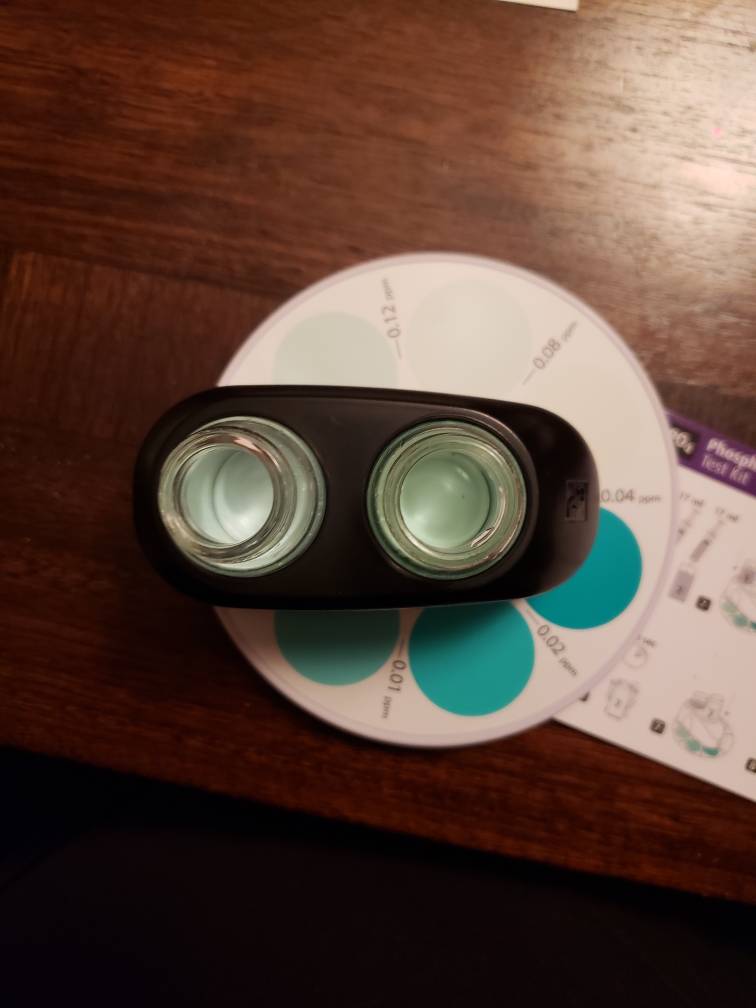
Hey everyone just an update here, it's not much but I think I'm making progress with nitrates , my levels are down slightly from what they used to be, and my phosphates are now detectable, slowly and steady wind the race
f4fe1b8643519961816fd496279f3353.jpg
906cb9198302f41b6b2742489e586a8a.jpg
a4e652ed7f02fad1ca622a85d6ee1e5d.jpg
 

TOP 10 Trending Threads

WHAT AMOUNT OF LIVE ROCK AND SAND SHOULD BE PRIORITIZED FOR OPTIMAL BIODIVERSITY/FILTRATION?

  • 100% live rock + bagged sand

    Votes: 38 27.3%
  • 100% dry rock + 100% live sand

    Votes: 47 33.8%
  • 50/50 live/dry rock, 50/50 live/bagged sand

    Votes: 30 21.6%
  • 75% live rock, 25% live sand

    Votes: 14 10.1%
  • 25% live rock, 75% live sand

    Votes: 10 7.2%
Back
Top