"Ich Management"

OP
OP
Jay Hemdal

Jay Hemdal

10K Club member
View Badges
Joined
Jul 31, 2020
Messages
37,828
Reaction score
37,726
Location
Dundee, MI
Rating - 0%
0   0   0
Jay my friend, I knew you would say that thats why I said:


With the emphasis on "home". Your 185,000 gallon tank is not exactly a "home" tank as fish would not be stressed in that tank and the fish think they are in the sea. :beaming-face-with-smiling-eyes:

If you did not quarantine that tank, I doubt you would have any fish die from parasites as I have never seen a fish in the sea dying from parasites under "normal" conditions and I have spent about 400 hours underwater. Overheating, typhoons where fresh water fills the bays and an abundance of RAP music will stress fish no matter where they are and they would die from something.

But immune fish such as many of us have will never die from a communicable disease "under normal conditions". If the house goes on fire, well maybe they will die, but not from parasites or as I keep saying, my tank would not exist. :grimacing-face:

Paul, that is a 185,000 system comprising many tanks, plus a variety of off system tanks that are essentially identical to home aquariums. No epizootics at all in a decade proves that the quarantine process I developed works. Sure fish died during that period, but not from parasitic disease.
 

Paul B

10K Club member
View Badges
Joined
Nov 3, 2010
Messages
21,372
Reaction score
71,865
Location
Long Island NY
Rating - 0%
0   0   0
No epizootics at all in a decade proves that the quarantine process I developed works. Sure fish died during that period, but not from parasitic disease.
I guess that is the case. But mine has been running 46 or so years with no epizootics either so that proves no quarantine also works. :beaming-face-with-smiling-eyes: So I assume we can both prove things. :p
 

drbrivers

Community Member
View Badges
Joined
Jul 22, 2024
Messages
38
Reaction score
18
Location
CA
Rating - 0%
0   0   0
Paul, that is a 185,000 system comprising many tanks, plus a variety of off system tanks that are essentially identical to home aquariums. No epizootics at all in a decade proves that the quarantine process I developed works. Sure fish died during that period, but not from parasitic disease.
Mr. Hemdal: I agree with your statements. My last fish only system in the 80's was set up with strict quarantine of all fish going in (copper plus atabrine). Once fishes successfully passed through quarantine and went into display tank, zero issues for the remainder of the time that system was set up (5 years until I had to break system down as I was moving across the country).
 

kboogie

Well-Known Member
View Badges
Joined
Aug 6, 2021
Messages
879
Reaction score
554
Location
Boynton Beach
Rating - 0%
0   0   0
@Jay Hemdal, I'm seeing Ich Management related post increase recently. I wonder if more education around the details of a fish's immune response to marine ich and how it differs (if any) from viral immune responses in both effectiveness and process would be helpful?

For example, from the research I've personally done, I know the IgT (mucus-based antibodies) are most important. I also know marine ich mutates on almost every cycle, reducing the effectiveness of these antibodies. I do wonder if it was possible to artificially increase the production of mucus (creating a thicker mucus layer) and these antibodies; would that result in a shield (force field) that could prevent infection? If it were possible to keep this "shield" up for 10+ weeks, could that wipe out ich without medications?

I know it is highly unlikely, but the theory feels right.

Regardless, I hope more people find ways to do a medicated QT protocol and avoid these issues.
 

Paul B

10K Club member
View Badges
Joined
Nov 3, 2010
Messages
21,372
Reaction score
71,865
Location
Long Island NY
Rating - 0%
0   0   0
I do wonder if it was possible to artificially increase the production of mucus (creating a thicker mucus layer) and these antibodies; would that result in a shield (force field) that could prevent infection? If it were possible to keep this "shield" up for 10+ weeks, could that wipe out ich without medications?
It is not only possible, but it is how tanks run on what you call an "Ich Management" system. And what I call a "natural" system. 😎
 

kboogie

Well-Known Member
View Badges
Joined
Aug 6, 2021
Messages
879
Reaction score
554
Location
Boynton Beach
Rating - 0%
0   0   0
It is not only possible, but it is how tanks run on what you call an "Ich Management" system. And what I call a "natural" system. 😎
I understand what you are saying. I'm not sure I'm communicating what I want to communicate in a manner for it to be properly interpreteted. I'll be more detailed.


If the mucus layer of a healthy Flame Angel (I intentionaly choice a Flame Angel instead of a tang) is 100 microns thick, with about 0.1 mg of IgT per mL, and an ich infected Flame Angel with a fully functioning immune system will have a much thinner mucus layer (from the stress of the infection) of about 50 microns thick with about 1mg of IgT per ML to fight off the ich. My question is, could we artificially increase the thickness of the mucus layer to 150+ microns and simultaneously increase the IgT count to 1.5+ mg per mL, thus creating a true barrier where the ich can't feed, thus dies off in the same manner as going fallow.

The differences between what I'm saying and the fundamental principles on which ich management is built are:

1) Ich management relies on a fish that has survived an ich infection to have a modestly higher IgT count around 0.3 mg per mL to 0.4 mg per mL (which is up to four times higher than before the infection), but not high enough to ensure reinfection is impossible.

I want to increase both the mucus layer thickness to something too thick for the active parasite to attach and increase the antibodies to a level that is 5x higher than a previously infection fish, virtually guaranteeing the parasite can't survive and reproduce, eventually eliminating the parasite all together.

2) Ich management treats parasites like viruses, which is not how animal immune systems work. Where viruses can be truly fought off because of the memory of the immune system, parasites are different.

3) Ich Management says if fish are fortunate to survive an ich infection (Darwinism), they can better fight off the parasites in the future while allowing the parasite to continue to feed a multiply, creating a cycle of infection, convalescence, and reinfection. I want to eliminate the presence of the parasites without the use of medications (at least in theory, I doubt that is possible without medication or fallow periods).
 
OP
OP
Jay Hemdal

Jay Hemdal

10K Club member
View Badges
Joined
Jul 31, 2020
Messages
37,828
Reaction score
37,726
Location
Dundee, MI
Rating - 0%
0   0   0
@Jay Hemdal, I'm seeing Ich Management related post increase recently. I wonder if more education around the details of a fish's immune response to marine ich and how it differs (if any) from viral immune responses in both effectiveness and process would be helpful?

For example, from the research I've personally done, I know the IgT (mucus-based antibodies) are most important. I also know marine ich mutates on almost every cycle, reducing the effectiveness of these antibodies. I do wonder if it was possible to artificially increase the production of mucus (creating a thicker mucus layer) and these antibodies; would that result in a shield (force field) that could prevent infection? If it were possible to keep this "shield" up for 10+ weeks, could that wipe out ich without medications?

I know it is highly unlikely, but the theory feels right.

Regardless, I hope more people find ways to do a medicated QT protocol and avoid these issues.

IDK - it's pretty complicated to study, even under controlled conditions. A "thick mucus layer" does tend to thwart ich infections (Synchiropus dragonets and eels seem inherently more resistant to Cryptocaryon) but adding artificial slime coats (bandage in a bottle sorts of things) does nothing to help fight off infections. I don't know if the immune response seen in fish that survive an infection is due to something in their slime coat, or something else.

It is generally accepted that immunity to ich is temporary - I've heard time frames of around 4 months or so. I don't know anything about ich mutating in every cycle - that seems a bit fast to me, even bacteria can't do that.

There is a lot in the popular press (and a few studies I think) about regional population variations for ich - mostly involving salinity tolerance - but in those cases, it seems that the population involved is different at the very start of the infection. For example, I used to prescribe a specific gravity of 1.012 to control ich...until a few cases kept cropping up where the disease continued until the SG was dropped to 1.009. Is that due to different strains? IDK, it could be that, or it could be due to poor implementation of the hyposalinity process.

I still do not recommend "ich management" as a viable technique in most cases. I wrote my article, not because it works well, but because there is a HUGE amount of pressure from aquarists to deal with ich in a reef situation where normal therapeutics cannot easily be used. I offer it up then, as sort of a "well, if you can't/won't do that, try this" sort of thing.

The vast majority of success seen with "ich management" is when it is caught very early (low propagule pressure) in larger reef tanks (again, lower propagule pressure), with a mature microbiome (critters that tend to eat tomonts), good foam fractionation (wet foam exports theronts), good mechanical filtration (traps theronts) and usually a UV sterilizer, and sometimes ozone application. Where it rarely works is when a person has a small, 6 month old reef, adds a bunch of non-quarantined fish, doesn't catch the disease soon enough, etc.

I managed 180,000 gallons of tropical seawater in a variety of systems for over ten years, with all fish getting my standard quarantine process. No cases of ich, ever, and none showing up on eDNA. For me, that's the best outcome.
 

kboogie

Well-Known Member
View Badges
Joined
Aug 6, 2021
Messages
879
Reaction score
554
Location
Boynton Beach
Rating - 0%
0   0   0
@kboogie have you publish anything of your work? Links?

Sincerely Lasse
Unfortunately, no. I spent the last 25 years doing applied machine learning for finance and marketing. I come from a family of Chemists and Economists. You can’t argue a point at a family gathering without scientific research so it is normal for people in my family (and friend group) to become well educated in a topic in order to discuss it thoroughly. My knowledge comes from being in the aquarium trade for just under decade during my youth and reading research papers, talking to people at FAU Harbour Campus (where ORA started), and listening very carefully to experts like Jay Hemdal.
 

kboogie

Well-Known Member
View Badges
Joined
Aug 6, 2021
Messages
879
Reaction score
554
Location
Boynton Beach
Rating - 0%
0   0   0
IDK - it's pretty complicated to study, even under controlled conditions. A "thick mucus layer" does tend to thwart ich infections (Synchiropus dragonets and eels seem inherently more resistant to Cryptocaryon) but adding artificial slime coats (bandage in a bottle sorts of things) does nothing to help fight off infections. I don't know if the immune response seen in fish that survive an infection is due to something in their slime coat, or something else.

It is generally accepted that immunity to ich is temporary - I've heard time frames of around 4 months or so. I don't know anything about ich mutating in every cycle - that seems a bit fast to me, even bacteria can't do that.

There is a lot in the popular press (and a few studies I think) about regional population variations for ich - mostly involving salinity tolerance - but in those cases, it seems that the population involved is different at the very start of the infection. For example, I used to prescribe a specific gravity of 1.012 to control ich...until a few cases kept cropping up where the disease continued until the SG was dropped to 1.009. Is that due to different strains? IDK, it could be that, or it could be due to poor implementation of the hyposalinity process.

I still do not recommend "ich management" as a viable technique in most cases. I wrote my article, not because it works well, but because there is a HUGE amount of pressure from aquarists to deal with ich in a reef situation where normal therapeutics cannot easily be used. I offer it up then, as sort of a "well, if you can't/won't do that, try this" sort of thing.

The vast majority of success seen with "ich management" is when it is caught very early (low propagule pressure) in larger reef tanks (again, lower propagule pressure), with a mature microbiome (critters that tend to eat tomonts), good foam fractionation (wet foam exports theronts), good mechanical filtration (traps theronts) and usually a UV sterilizer, and sometimes ozone application. Where it rarely works is when a person has a small, 6 month old reef, adds a bunch of non-quarantined fish, doesn't catch the disease soon enough, etc.

I managed 180,000 gallons of tropical seawater in a variety of systems for over ten years, with all fish getting my standard quarantine process. No cases of ich, ever, and none showing up on eDNA. For me, that's the best outcome.
You confirmed what I thought. While a nice theory, in practice, it is not possible. If someone ever invents a product to do this, they would be a billionaire.
 

Lasse

10K Club member
View Badges
Joined
Mar 20, 2016
Messages
12,736
Reaction score
31,459
Location
Källarliden 14 D Bohus, Sweden
Rating - 0%
0   0   0
For example, from the research I've personally done,
Unfortunately, no. I spent the last 25 years doing applied machine learning for finance and marketing.
My knowledge comes from being in the aquarium trade for just under decade during my youth and reading research papers, talking to people at FAU Harbour Campus (where ORA started), and listening very carefully to experts like Jay Hemdal.
I´m sorry - I got the impression of your post #104 that you had done own research of the matter. My bad

Sincerely Lasse
 

Paul B

10K Club member
View Badges
Joined
Nov 3, 2010
Messages
21,372
Reaction score
71,865
Location
Long Island NY
Rating - 0%
0   0   0
Kboogie, I can see your idea of increasing fish slime thickness to repel parasites is sound and some fish are actually able to do just that.

Quote:
Bream are considered attractive to parasites, particularly when they are young, so in order to combat this problem, they produce much more slime than you’d typically find on a fish. Fish will also create more Epidermal Mucus when they are unwell. The amount of secretion will vary depending on the health of the fish, the quality of the water, and the species.
Un quote:

I feel the key here is "depending on the health of the fish".

I also feel that the vast majority of fish we keep in a typical home tank are not in the state of health to repel anything and that is due to our practices of trying to keep fish away from pathogens.

Parasites have been there as long as the fish have, and healthy fish "kept properly" and eating the "correct" food are perfectly capable of living alongside parasites with neither creature dying.

All the very old home tanks are obviously keeping fish correctly (old is not ten to twenty years as that is about the lifespan of many of the fish we keep)


Quote:​

does fish slime kill parasites​

Fish slime does not directly kill parasites, but it serves as a protective barrier against them. The slime contains chemicals that actively protect fish from pathogens and parasites, creating a hostile environment that prevents the growth of harmful microbes. While the slime itself does not kill parasites, it provides a significant defense mechanism that can help keep fish healthy and free from disease.

Un-Quote:

The first line of protection for a fish is it's slime and being it is water soluble; it is constantly produced and constantly "sloughed" off bringing parasites and anything else off the fish. "If" you could convince the fish to produce more slime, I assume that would help with keeping parasites off fish but as I said, parasites don't hurt healthy fish and there is no need to eliminate them just like no one eliminates them in the sea.

I feel the vast majority of hobbyists are going about this incorrectly (Jay will disagree)
If parasites don't bother my fish and don't bother fish in all the old tanks, or in the sea, then those people learned the secret just as I have and you won't learn that secret from someone working in a lab. It will only come from those people who successfully keep fish healthy for many decades.

Stress is the biggest killer and all fish in home tanks are stressed. Fish can't frown or cry so we can't tell by looking at the expression on their faces. Non stressed fish do and exhibit a few things.

One is live for their presumed lifespan with no help from us through quarantine or medication. They also spawn or at least fill with eggs as all healthy (female) fish do constantly. The other thing is that if we have been looking at fish long enough, not just in a tank but underwater where they live, we will see that fish in the sea almost always look better than they do in a tank.

Many fish we see in the sea look slightly different and many of them have a colored tinge at the top of their dorsal fins that may be hard to see. It is a different color than the normal fin color.


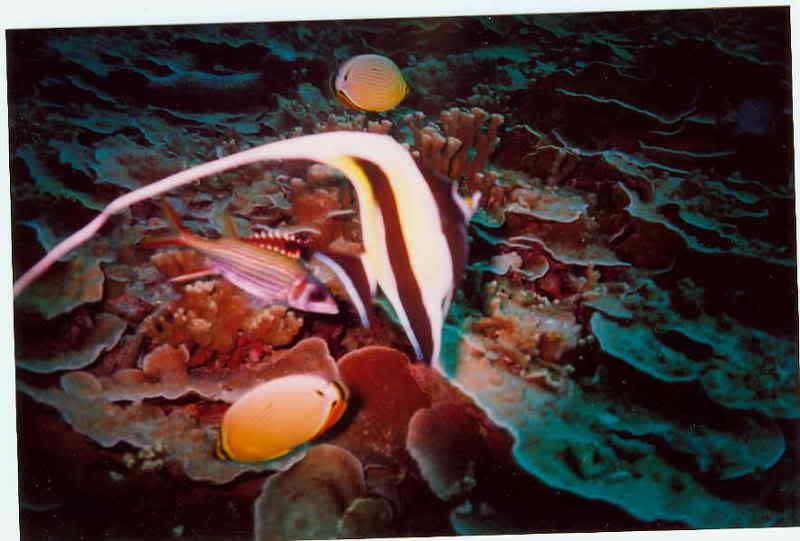
Morish Idols in the sea have a very long dorsal spine which is usually shortened if we keep that fish in a "home" tank. For some reason healthful signs show up in dorsal fins.

(I took this in Bora Bora)


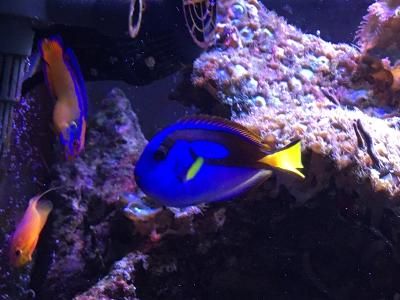
This Hippo tang has a pinkish or purple tinge on the tips of it's dorsal spines. You can't see it here because I can't get a picture of him with his fin up which he only does occasionally.


I'm sure you never heard of that and Jay will just think I'm nuts. But I have spent about 300 hours underwater watching fish in their natural habitat. Most of us just look at a fishes skin looking for spots and miss the nuances that determine a healthy fish.

Immunity is very easy to achieve in fish but many hobbyists just look for a treatment or water conditioner rather than just giving the fish exactly what it needs to become immune as mine are.


1) Ich management relies on a fish that has survived an ich infection to have a modestly higher IgT count around 0.3 mg per mL to 0.4 mg per mL (which is up to four times higher than before the infection), but not high enough to ensure reinfection is impossible.
All fish "from the sea" were already exposed to parasites for their entire life and survived so are already immune. WE ourselves eliminate that immunity with our un-natural methods of keeping fish.
 
Last edited:

Lasse

10K Club member
View Badges
Joined
Mar 20, 2016
Messages
12,736
Reaction score
31,459
Location
Källarliden 14 D Bohus, Sweden
Rating - 0%
0   0   0
Ich Management says if fish are fortunate to survive an ich infection (Darwinism), they can better fight off the parasites in the future while allowing the parasite to continue to feed a multiply, creating a cycle of infection, convalescence, and reinfection.
I do not understand why you mention Darwinism in this context, Please explain.


Sincerely Lasse
 

kboogie

Well-Known Member
View Badges
Joined
Aug 6, 2021
Messages
879
Reaction score
554
Location
Boynton Beach
Rating - 0%
0   0   0
I´m sorry - I got the impression of your post #104 that you had done own research of the matter. My bad

Sincerely Lasse
Sorry. I should have made it clear that I was referring to research with a lower-case "r" versus Research with a capital "R".

I'm going to try to create a collection of research journals I've read on the topic to help interested parties better.
 

kboogie

Well-Known Member
View Badges
Joined
Aug 6, 2021
Messages
879
Reaction score
554
Location
Boynton Beach
Rating - 0%
0   0   0
I do not understand why you mention Darwinism in this context, Please explain.


Sincerely Lasse
I use the term "Darwinism" to point out that parasitic infections like ich frequently kill fish. While there are several stochastic (a fancy term for random that has meaning for statisticians) factors, there are many deterministic factors (having direct, repeatable, cause and effect), with the biggest of those deterministic factors being the "strength" of the fish. That strength can not be directly measured, but there are highly correlated factors that are associated with "stronger" fish. These factors include whether the fish is well-nourished, which can be observed by the thickness of fat stores, such as the thickness of the area below the base of the dorsal fin. Of course, you have the main fat store of the visceral adipose tissue (VAT), which is the area around the stomach. When there are ample, but not excessive, fat stores, that is indicative of a stronger fish. Where is the fish in the pecking order? If the fish is at or near the top of the pecking order, that is indicative of a stronger fish, which typically has more of a will to live. There are additional factors, but the general concept is basically Darwinism: the strongest fish will survive and the weaker fish will not. This is interesting because if you look at life expectancy, for the first 10K years of humans, the median life expectancy was around 30 years (this comes from Neil deGrasse Tyson quoting a study) and in the last 100 years it has sky rocketed to almost 80 years (additional quote from Neil deGrasse Tyson) which is almost entirely because of modern medicine, minimizing Darwinism.

That was the point I was trying to make by using the term "Darwinism".
 

kboogie

Well-Known Member
View Badges
Joined
Aug 6, 2021
Messages
879
Reaction score
554
Location
Boynton Beach
Rating - 0%
0   0   0
(I took this in Bora Bora)

I love Melon Butterfly fish, so my brain spent three seconds on the extremely long dorsal fin of the Moorish Idol and three minutes on the Melon Butterfly fish. I thought that was a funny anecdote.


I understand the point you are communicating.
 

Lasse

10K Club member
View Badges
Joined
Mar 20, 2016
Messages
12,736
Reaction score
31,459
Location
Källarliden 14 D Bohus, Sweden
Rating - 0%
0   0   0
I use the term "Darwinism" to point out that parasitic infections like ich frequently kill fish. While there are several stochastic (a fancy term for random that has meaning for statisticians) factors, there are many deterministic factors (having direct, repeatable, cause and effect), with the biggest of those deterministic factors being the "strength" of the fish. That strength can not be directly measured, but there are highly correlated factors that are associated with "stronger" fish. These factors include whether the fish is well-nourished, which can be observed by the thickness of fat stores, such as the thickness of the area below the base of the dorsal fin. Of course, you have the main fat store of the visceral adipose tissue (VAT), which is the area around the stomach. When there are ample, but not excessive, fat stores, that is indicative of a stronger fish. Where is the fish in the pecking order? If the fish is at or near the top of the pecking order, that is indicative of a stronger fish, which typically has more of a will to live. There are additional factors, but the general concept is basically Darwinism: the strongest fish will survive and the weaker fish will not.

That was the point I was trying to make by using the term "Darwinism".
Thank you for the clarification of your view of the evolution (with exception of your version of "survival of the fittest") By the way - this was not Darwins statement of the natural selection - it was Simon Spencer that invent that phrase and often misused to include individuals instead of whole population (species) .

But to use the term "Darwinism" in order to describe the scientific accepted description of how the nature looks like today - which is described by the term evolution is IMO not right.

The term "Darwinism" was established by Huxley 1860 and long before the the incorporation of natural selection with population genetic and Mendelian genetics - often referred to as modern synthesis-

Today - "Darwinism" is often used by opponent of the concept of evolution in a derogatory manner in order to insinuate that it is an "ism" (believe) and not science. Scientist very seldom use it.

if you look at life expectancy, for the first 10K years of humans, the median life expectancy was around 30 years (this comes from Neil deGrasse Tyson quoting a study) and in the last 100 years it has sky rocketed to almost 80 years (additional quote from Neil deGrasse Tyson) which is almost entirely because of modern medicine, minimizing Darwinism.
Modern medicines and methods can explain why expected life time (with is calculated by a average - not median) have rise among certain populations (among those that can afford them) because infant mortality tends to decrease very much among these populations. However - IMO - the main reason for this is not only morden medicines (mostly vaccination among infants) - the higher and better nutrition and living status in these populations (these populations tend to be the same) has an importance in these figures - just in line with @Paul B:s emphasis on the food and non stressful environment

Expected lifetime in different countries - interesting reading. From top 85,77 to the bottom 54,17.

Sincerely Lasse
 

salty joe

Valuable Member
View Badges
Joined
Dec 14, 2015
Messages
1,071
Reaction score
664
Location
Medina, Oh
Rating - 0%
0   0   0
It was mentioned that ozone, protein skimmer and mechanical filtration are important for ich management. Maybe they are, but IMO the most critical factors are a well established tank with plenty of bugs and worms, live food such as fresh shellfish and a tank that's not crowded with plenty of hiding spots.
I also believe a cleaner shrimp is beneficial. I read a study that backs that up. I can try to find if anybody is interested. I have two skunk shrimp, too bad I rarely see them...
 

Lasse

10K Club member
View Badges
Joined
Mar 20, 2016
Messages
12,736
Reaction score
31,459
Location
Källarliden 14 D Bohus, Sweden
Rating - 0%
0   0   0
I also believe a cleaner shrimp is beneficial. I read a study that backs that up. I can try to find if anybody is interested.
Please do that because the The issue is under debate where most people seem to believe that cleaner shrimp have no meaning when it comes to the "ich" parasite.

Sincerely Lasse
 

TOP 10 Trending Threads

HOW DO YOU ADJUST YOUR CUC AS ALGAE DISAPPEARS?

  • Capture and re-home CUC

    Votes: 10 8.3%
  • Increase white light/hours in tank to spur algae growth to feed CUC

    Votes: 8 6.6%
  • Feed nori to support CUC

    Votes: 39 32.2%
  • Feed herbivore pellets to support CUC

    Votes: 43 35.5%
  • Allow attrition to balance CUC and algae

    Votes: 52 43.0%
  • Provide macro algae to feed CUC

    Votes: 8 6.6%
  • Introduce CUC predators

    Votes: 1 0.8%
  • Other (please explain)

    Votes: 12 9.9%
Back
Top