- Joined
- Jun 8, 2017
- Messages
- 12,921
- Reaction score
- 24,231
- Location
- Southern Oregon
- What state or country do you live in
- Oregon
Thank you for the update. Much appreciated.

Follow along with the video below to see how to install our site as a web app on your home screen.
Note: This feature may not be available in some browsers.


"Piperazine is NOT reef safe"However, I have no idea whether or not Piperazine is reef safe.
If iInternal Issues
For simplicity’s sake, there are 6 basic problems a marine fish may experience on the inside:
1. Intestinal worms
Symptoms: White stringy feces, pinched stomach, loss of color, fish eats voraciously but still seems to be losing weight.
Treatment of choice: Praziquantel
Alternative treatments: Fenbendazole, Levamisole, Piperazine
2. Internal parasites/flagellates
Symptoms: White stringy feces, pinched stomach, loss of color, fish eats voraciously but still seems to be losing weight. Flagellates are more virulent than worms, and thus can kill faster.
Treatment of choice: Metronidazole
Alternative treatments: Albendazole, Flubendazole and Mebendazole all show promise.
3. Internal infections (bacteria)
Symptoms: Bloating, and lumps or swollen areas on the body. Also, poor water quality can cause/aggravate an internal infection.
Treatment of choice: Metronidazole combined with Neomycin Sulfate in a medicated fish food slurry can be a very good full spectrum internal/gut infection treatment, treating both aerobic and anaerobic bacteria.
Alternative treatment: Seachem Focus claims to be an antibacterial polymer for internal infections of fish. The active ingredient found therein is nitrofurantoin.
4. Swim bladder disorder
Symptoms: Fish swims vertically with its tail up. Basically, the back half of the fish will seem more buoyant than the front half, and the fish will swim in a way to compensate for that. The fish may also stay near the surface of the water (or even float), unable to swim downwards. A protrusion (i.e. gas bubble) may be visible near the swim bladder area. In most cases, swim bladder disorders are caused by improper decompression of deep water species of fish.
Treatment: If a gas bubble is present, you can lance the air out using a 30 gauge insulin syringe. For swim bladder infections, the following are possible treatment options:
(1) Dose magnesium sulfate (Epsom Salt) at 1 tablespoon per 5 gallons.
(2) Give the affected fish a 30 minute Methylene Blue bath.
(3) Dose Metronidazole in conjunction with Neomycin. (You can food soak this combination as well.)
5. Spinal injury
Symptoms: Fish swims vertically with its tail down. Sometimes the fish just lays on the bottom of the tank; sometimes swims in a swirling motion. Most believe spinal injuries are caused when the fish jumps and hits a hard object (or swims/rams into one.) However, there is some evidence that internal flagellates and/or harmful bacteria which has migrated to the spinal canal may be contributing factors to spinal injuries. Wrasses seem most prone to spinal injuries, especially fairy & flasher wrasses.
Treatment: The injury can heal if the damage is not too severe. Sadly, this is most often not the case. Dosing Metronidazole (for internal flagellates) + Erythromycin or Enrofloxacin (for bacteria) may help. If the fish is still eating, food soak metronidazole + neomycin as well.
6. Fish constipation
Symptoms: Bloated stomach, obvious anal obstruction, rectal prolapse, erratic swimming behavior. The fish will sometimes stay near the surface of the water, swimming in circles. Constipation is sometimes mistaken for a gas bubble in a fish’s swim bladder (or vice versa.)
Treatment options:
(1) Feed peeled boiled green peas (high in fiber)
(2) Dose Epsom salt @ 1 tablespoon per 5 gallons (laxative)
(3) Dose Kanamycin (Seachem Kanaplex) in a Quarantine Tank (diarrhea is a side effect of kanamycin)
Internal parasites vs. intestinal worms – Since these can be difficult to distinguish due to near identical symptoms, it is best to always treat with praziquantel + metronidazole so both pathogens are covered. You can combine different medications (e.g. Prazipro + Seachem Metroplex), or API General Cure contains both.
Does the color of the poop matter? – Yes! It has to be white. Brown stringy poop, for example, can just mean intestinal irritation which requires no treatment.
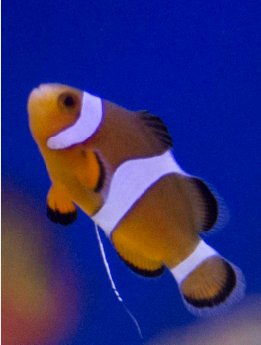
Food soaking vs. dosing the water – Sometimes dosing the water with the above medication(s) can help clear an internal pathogen. After all, fish do drink the water, and their skin will absorb medications. However, I feel soaking fish food with medication(s) is the best way to treat internal problems for obvious reasons. Food soaking delivers meds directly into the gut where most internal pathogens live. In order to food soak, you should also use a binder (e.g. Seachem Focus, unflavored gelatin, agar) to prevent the medication from just leaching out into the water. Binding also makes the treatment reef safe.My recipe for food soaking metro (and prazi) can be found below:
Using a shot glass:
1 scoop (~ 1/8 teaspoon) of medication (Metroplex or General Cure)
1 scoop Seachem Focus (this makes it reef safe)
1 Tbsp food (preferably pellets or frozen food)
A pinch of Epsom salt to help expel dead worms/parasites
A few drops of saltwater or fish vitamins
Stir until a medicated food slurry has been achieved.
Feed after soaking for 30 mins.
Refrigerate or freeze any leftovers for future use.
You can feed this mix 1-2 times per day. Not recommend to exceed 2 feedings per day with medicated food.
Final Thoughts – Due to the resilience of these critters, it is recommended to treat (or food soak) for a minimum of 10 days. However, it is not uncommon for symptoms to persist for up to 3 weeks.And just like with any other disease, you will sooner or later run up against a strain which seems resistant to the preferred treatment. In which case, you should seek out an alternative medication. (e.g. Using fenbendazole, levamisole or piperazine in lieu of praziquantel to treat stubborn intestinal worms.)
Can i treat water with kana metro and furan-2 and feed with metro and focus at the same time?Internal Issues
For simplicity’s sake, there are 6 basic problems a marine fish may experience on the inside:
1. Intestinal worms
Symptoms: White stringy feces, pinched stomach, loss of color, fish eats voraciously but still seems to be losing weight.
Treatment of choice: Praziquantel
Alternative treatments: Fenbendazole, Levamisole, Piperazine
2. Internal parasites/flagellates
Symptoms: White stringy feces, pinched stomach, loss of color, fish eats voraciously but still seems to be losing weight. Flagellates are more virulent than worms, and thus can kill faster.
Treatment of choice: Metronidazole
Alternative treatments: Albendazole, Flubendazole and Mebendazole all show promise.
3. Internal infections (bacteria)
Symptoms: Bloating, and lumps or swollen areas on the body. Also, poor water quality can cause/aggravate an internal infection.
Treatment of choice: Metronidazole combined with Neomycin Sulfate in a medicated fish food slurry can be a very good full spectrum internal/gut infection treatment, treating both aerobic and anaerobic bacteria.
Alternative treatment: Seachem Focus claims to be an antibacterial polymer for internal infections of fish. The active ingredient found therein is nitrofurantoin.
4. Swim bladder disorder
Symptoms: Fish swims vertically with its tail up. Basically, the back half of the fish will seem more buoyant than the front half, and the fish will swim in a way to compensate for that. The fish may also stay near the surface of the water (or even float), unable to swim downwards. A protrusion (i.e. gas bubble) may be visible near the swim bladder area. In most cases, swim bladder disorders are caused by improper decompression of deep water species of fish.
Treatment: If a gas bubble is present, you can lance the air out using a 30 gauge insulin syringe. For swim bladder infections, the following are possible treatment options:
(1) Dose magnesium sulfate (Epsom Salt) at 1 tablespoon per 5 gallons.
(2) Give the affected fish a 30 minute Methylene Blue bath.
(3) Dose Metronidazole in conjunction with Neomycin. (You can food soak this combination as well.)
5. Spinal injury
Symptoms: Fish swims vertically with its tail down. Sometimes the fish just lays on the bottom of the tank; sometimes swims in a swirling motion. Most believe spinal injuries are caused when the fish jumps and hits a hard object (or swims/rams into one.) However, there is some evidence that internal flagellates and/or harmful bacteria which has migrated to the spinal canal may be contributing factors to spinal injuries. Wrasses seem most prone to spinal injuries, especially fairy & flasher wrasses.
Treatment: The injury can heal if the damage is not too severe. Sadly, this is most often not the case. Dosing Metronidazole (for internal flagellates) + Erythromycin or Enrofloxacin (for bacteria) may help. If the fish is still eating, food soak metronidazole + neomycin as well.
6. Fish constipation
Symptoms: Bloated stomach, obvious anal obstruction, rectal prolapse, erratic swimming behavior. The fish will sometimes stay near the surface of the water, swimming in circles. Constipation is sometimes mistaken for a gas bubble in a fish’s swim bladder (or vice versa.)
Treatment options:
(1) Feed peeled boiled green peas (high in fiber)
(2) Dose Epsom salt @ 1 tablespoon per 5 gallons (laxative)
(3) Dose Kanamycin (Seachem Kanaplex) in a Quarantine Tank (diarrhea is a side effect of kanamycin)
Internal parasites vs. intestinal worms – Since these can be difficult to distinguish due to near identical symptoms, it is best to always treat with praziquantel + metronidazole so both pathogens are covered. You can combine different medications (e.g. Prazipro + Seachem Metroplex), or API General Cure contains both.
Does the color of the poop matter? – Yes! It has to be white. Brown stringy poop, for example, can just mean intestinal irritation which requires no treatment.
Food soaking vs. dosing the water – Sometimes dosing the water with the above medication(s) can help clear an internal pathogen. After all, fish do drink the water, and their skin will absorb medications. However, I feel soaking fish food with medication(s) is the best way to treat internal problems for obvious reasons. Food soaking delivers meds directly into the gut where most internal pathogens live. In order to food soak, you should also use a binder (e.g. Seachem Focus, unflavored gelatin, agar) to prevent the medication from just leaching out into the water. Binding also makes the treatment reef safe.My recipe for food soaking metro (and prazi) can be found below:
Using a shot glass:
1 scoop (~ 1/8 teaspoon) of medication (Metroplex or General Cure)
1 scoop Seachem Focus (this makes it reef safe)
1 Tbsp food (preferably pellets or frozen food)
A pinch of Epsom salt to help expel dead worms/parasites
A few drops of saltwater or fish vitamins
Stir until a medicated food slurry has been achieved.
Feed after soaking for 30 mins.
Refrigerate or freeze any leftovers for future use.
You can feed this mix 1-2 times per day. Not recommend to exceed 2 feedings per day with medicated food.
Final Thoughts – Due to the resilience of these critters, it is recommended to treat (or food soak) for a minimum of 10 days. However, it is not uncommon for symptoms to persist for up to 3 weeks.And just like with any other disease, you will sooner or later run up against a strain which seems resistant to the preferred treatment. In which case, you should seek out an alternative medication. (e.g. Using fenbendazole, levamisole or piperazine in lieu of praziquantel to treat stubborn intestinal worms.)


Will this treatment be safe in a tank with corals?Internal Issues
For simplicity’s sake, there are 6 basic problems a marine fish may experience on the inside:
1. Intestinal worms
Symptoms: White stringy feces, pinched stomach, loss of color, fish eats voraciously but still seems to be losing weight.
Treatment of choice: Praziquantel
Alternative treatments: Fenbendazole, Levamisole, Piperazine
2. Internal parasites/flagellates
Symptoms: White stringy feces, pinched stomach, loss of color, fish eats voraciously but still seems to be losing weight. Flagellates are more virulent than worms, and thus can kill faster.
Treatment of choice: Metronidazole
Alternative treatments: Albendazole, Flubendazole and Mebendazole all show promise.
3. Internal infections (bacteria)
Symptoms: Bloating, and lumps or swollen areas on the body. Also, poor water quality can cause/aggravate an internal infection.
Treatment of choice: Metronidazole combined with Neomycin Sulfate in a medicated fish food slurry can be a very good full spectrum internal/gut infection treatment, treating both aerobic and anaerobic bacteria.
Alternative treatment: Seachem Focus claims to be an antibacterial polymer for internal infections of fish. The active ingredient found therein is nitrofurantoin.
4. Swim bladder disorder
Symptoms: Fish swims vertically with its tail up. Basically, the back half of the fish will seem more buoyant than the front half, and the fish will swim in a way to compensate for that. The fish may also stay near the surface of the water (or even float), unable to swim downwards. A protrusion (i.e. gas bubble) may be visible near the swim bladder area. In most cases, swim bladder disorders are caused by improper decompression of deep water species of fish.
Treatment: If a gas bubble is present, you can lance the air out using a 30 gauge insulin syringe. For swim bladder infections, the following are possible treatment options:
(1) Dose magnesium sulfate (Epsom Salt) at 1 tablespoon per 5 gallons.
(2) Give the affected fish a 30 minute Methylene Blue bath.
(3) Dose Metronidazole in conjunction with Neomycin. (You can food soak this combination as well.)
5. Spinal injury
Symptoms: Fish swims vertically with its tail down. Sometimes the fish just lays on the bottom of the tank; sometimes swims in a swirling motion. Most believe spinal injuries are caused when the fish jumps and hits a hard object (or swims/rams into one.) However, there is some evidence that internal flagellates and/or harmful bacteria which has migrated to the spinal canal may be contributing factors to spinal injuries. Wrasses seem most prone to spinal injuries, especially fairy & flasher wrasses.
Treatment: The injury can heal if the damage is not too severe. Sadly, this is most often not the case. Dosing Metronidazole (for internal flagellates) + Erythromycin or Enrofloxacin (for bacteria) may help. If the fish is still eating, food soak metronidazole + neomycin as well.
6. Fish constipation
Symptoms: Bloated stomach, obvious anal obstruction, rectal prolapse, erratic swimming behavior. The fish will sometimes stay near the surface of the water, swimming in circles. Constipation is sometimes mistaken for a gas bubble in a fish’s swim bladder (or vice versa.)
Treatment options:
(1) Feed peeled boiled green peas (high in fiber)
(2) Dose Epsom salt @ 1 tablespoon per 5 gallons (laxative)
(3) Dose Kanamycin (Seachem Kanaplex) in a Quarantine Tank (diarrhea is a side effect of kanamycin)
Internal parasites vs. intestinal worms – Since these can be difficult to distinguish due to near identical symptoms, it is best to always treat with praziquantel + metronidazole so both pathogens are covered. You can combine different medications (e.g. Prazipro + Seachem Metroplex), or API General Cure contains both.
Does the color of the poop matter? – Yes! It has to be white. Brown stringy poop, for example, can just mean intestinal irritation which requires no treatment.
Food soaking vs. dosing the water – Sometimes dosing the water with the above medication(s) can help clear an internal pathogen. After all, fish do drink the water, and their skin will absorb medications. However, I feel soaking fish food with medication(s) is the best way to treat internal problems for obvious reasons. Food soaking delivers meds directly into the gut where most internal pathogens live. In order to food soak, you should also use a binder (e.g. Seachem Focus, unflavored gelatin, agar) to prevent the medication from just leaching out into the water. Binding also makes the treatment reef safe.My recipe for food soaking metro (and prazi) can be found below:
Using a shot glass:
1 scoop (~ 1/8 teaspoon) of medication (Metroplex or General Cure)
1 scoop Seachem Focus (this makes it reef safe)
1 Tbsp food (preferably pellets or frozen food)
A pinch of Epsom salt to help expel dead worms/parasites
A few drops of saltwater or fish vitamins
Stir until a medicated food slurry has been achieved.
Feed after soaking for 30 mins.
Refrigerate or freeze any leftovers for future use.
You can feed this mix 1-2 times per day. Not recommend to exceed 2 feedings per day with medicated food.
Final Thoughts – Due to the resilience of these critters, it is recommended to treat (or food soak) for a minimum of 10 days. However, it is not uncommon for symptoms to persist for up to 3 weeks.And just like with any other disease, you will sooner or later run up against a strain which seems resistant to the preferred treatment. In which case, you should seek out an alternative medication. (e.g. Using fenbendazole, levamisole or piperazine in lieu of praziquantel to treat stubborn intestinal worms.)


Would it be a good idea/benefit to mixing two batches of food, one with Focus + Metroplex and the other with Focus + General Cure, then feed the fish twice a day with one of the feedings being Focus + Metroplex and the other being Focus + General Cure? Also, is it a bad idea to use the medication if it's 6-12 months expired? Or should be fine?Internal Issues
For simplicity’s sake, there are 6 basic problems a marine fish may experience on the inside:
1. Intestinal worms
Symptoms: White stringy feces, pinched stomach, loss of color, fish eats voraciously but still seems to be losing weight.
Treatment of choice: Praziquantel
Alternative treatments: Fenbendazole, Levamisole, Piperazine
2. Internal parasites/flagellates
Symptoms: White stringy feces, pinched stomach, loss of color, fish eats voraciously but still seems to be losing weight. Flagellates are more virulent than worms, and thus can kill faster.
Treatment of choice: Metronidazole
Alternative treatments: Albendazole, Flubendazole and Mebendazole all show promise.
3. Internal infections (bacteria)
Symptoms: Bloating, and lumps or swollen areas on the body. Also, poor water quality can cause/aggravate an internal infection.
Treatment of choice: Metronidazole combined with Neomycin Sulfate in a medicated fish food slurry can be a very good full spectrum internal/gut infection treatment, treating both aerobic and anaerobic bacteria.
Alternative treatment: Seachem Focus claims to be an antibacterial polymer for internal infections of fish. The active ingredient found therein is nitrofurantoin.
4. Swim bladder disorder
Symptoms: Fish swims vertically with its tail up. Basically, the back half of the fish will seem more buoyant than the front half, and the fish will swim in a way to compensate for that. The fish may also stay near the surface of the water (or even float), unable to swim downwards. A protrusion (i.e. gas bubble) may be visible near the swim bladder area. In most cases, swim bladder disorders are caused by improper decompression of deep water species of fish.
Treatment: If a gas bubble is present, you can lance the air out using a 30 gauge insulin syringe. For swim bladder infections, the following are possible treatment options:
(1) Dose magnesium sulfate (Epsom Salt) at 1 tablespoon per 5 gallons.
(2) Give the affected fish a 30 minute Methylene Blue bath.
(3) Dose Metronidazole in conjunction with Neomycin. (You can food soak this combination as well.)
5. Spinal injury
Symptoms: Fish swims vertically with its tail down. Sometimes the fish just lays on the bottom of the tank; sometimes swims in a swirling motion. Most believe spinal injuries are caused when the fish jumps and hits a hard object (or swims/rams into one.) However, there is some evidence that internal flagellates and/or harmful bacteria which has migrated to the spinal canal may be contributing factors to spinal injuries. Wrasses seem most prone to spinal injuries, especially fairy & flasher wrasses.
Treatment: The injury can heal if the damage is not too severe. Sadly, this is most often not the case. Dosing Metronidazole (for internal flagellates) + Erythromycin or Enrofloxacin (for bacteria) may help. If the fish is still eating, food soak metronidazole + neomycin as well.
6. Fish constipation
Symptoms: Bloated stomach, obvious anal obstruction, rectal prolapse, erratic swimming behavior. The fish will sometimes stay near the surface of the water, swimming in circles. Constipation is sometimes mistaken for a gas bubble in a fish’s swim bladder (or vice versa.)
Treatment options:
(1) Feed peeled boiled green peas (high in fiber)
(2) Dose Epsom salt @ 1 tablespoon per 5 gallons (laxative)
(3) Dose Kanamycin (Seachem Kanaplex) in a Quarantine Tank (diarrhea is a side effect of kanamycin)
Internal parasites vs. intestinal worms – Since these can be difficult to distinguish due to near identical symptoms, it is best to always treat with praziquantel + metronidazole so both pathogens are covered. You can combine different medications (e.g. Prazipro + Seachem Metroplex), or API General Cure contains both.
Does the color of the poop matter? – Yes! It has to be white. Brown stringy poop, for example, can just mean intestinal irritation which requires no treatment.
Food soaking vs. dosing the water – Sometimes dosing the water with the above medication(s) can help clear an internal pathogen. After all, fish do drink the water, and their skin will absorb medications. However, I feel soaking fish food with medication(s) is the best way to treat internal problems for obvious reasons. Food soaking delivers meds directly into the gut where most internal pathogens live. In order to food soak, you should also use a binder (e.g. Seachem Focus, unflavored gelatin, agar) to prevent the medication from just leaching out into the water. Binding also makes the treatment reef safe.My recipe for food soaking metro (and prazi) can be found below:
Using a shot glass:
1 scoop (~ 1/8 teaspoon) of medication (Metroplex or General Cure)
1 scoop Seachem Focus (this makes it reef safe)
1 Tbsp food (preferably pellets or frozen food)
A pinch of Epsom salt to help expel dead worms/parasites
A few drops of saltwater or fish vitamins
Stir until a medicated food slurry has been achieved.
Feed after soaking for 30 mins.
Refrigerate or freeze any leftovers for future use.
You can feed this mix 1-2 times per day. Not recommend to exceed 2 feedings per day with medicated food.
Final Thoughts – Due to the resilience of these critters, it is recommended to treat (or food soak) for a minimum of 10 days. However, it is not uncommon for symptoms to persist for up to 3 weeks.And just like with any other disease, you will sooner or later run up against a strain which seems resistant to the preferred treatment. In which case, you should seek out an alternative medication. (e.g. Using fenbendazole, levamisole or piperazine in lieu of praziquantel to treat stubborn intestinal worms.)


Is seachem metroplex safe to give my fish, i saw my flame angel had some white stingy poop so i was going to give this to all my fish but I’m a bit skeptical to give medication to my fish if its just nothing like stomach irritation or brine shrimp mimicking white stringy poop?Internal Issues
For simplicity’s sake, there are 6 basic problems a marine fish may experience on the inside:
1. Intestinal worms
Symptoms: White stringy feces, pinched stomach, loss of color, fish eats voraciously but still seems to be losing weight.
Treatment of choice: Praziquantel
Alternative treatments: Fenbendazole, Levamisole, Piperazine
2. Internal parasites/flagellates
Symptoms: White stringy feces, pinched stomach, loss of color, fish eats voraciously but still seems to be losing weight. Flagellates are more virulent than worms, and thus can kill faster.
Treatment of choice: Metronidazole
Alternative treatments: Albendazole, Flubendazole and Mebendazole all show promise.
3. Internal infections (bacteria)
Symptoms: Bloating, and lumps or swollen areas on the body. Also, poor water quality can cause/aggravate an internal infection.
Treatment of choice: Metronidazole combined with Neomycin Sulfate in a medicated fish food slurry can be a very good full spectrum internal/gut infection treatment, treating both aerobic and anaerobic bacteria.
Alternative treatment: Seachem Focus claims to be an antibacterial polymer for internal infections of fish. The active ingredient found therein is nitrofurantoin.
4. Swim bladder disorder
Symptoms: Fish swims vertically with its tail up. Basically, the back half of the fish will seem more buoyant than the front half, and the fish will swim in a way to compensate for that. The fish may also stay near the surface of the water (or even float), unable to swim downwards. A protrusion (i.e. gas bubble) may be visible near the swim bladder area. In most cases, swim bladder disorders are caused by improper decompression of deep water species of fish.
Treatment: If a gas bubble is present, you can lance the air out using a 30 gauge insulin syringe. For swim bladder infections, the following are possible treatment options:
(1) Dose magnesium sulfate (Epsom Salt) at 1 tablespoon per 5 gallons.
(2) Give the affected fish a 30 minute Methylene Blue bath.
(3) Dose Metronidazole in conjunction with Neomycin. (You can food soak this combination as well.)
5. Spinal injury
Symptoms: Fish swims vertically with its tail down. Sometimes the fish just lays on the bottom of the tank; sometimes swims in a swirling motion. Most believe spinal injuries are caused when the fish jumps and hits a hard object (or swims/rams into one.) However, there is some evidence that internal flagellates and/or harmful bacteria which has migrated to the spinal canal may be contributing factors to spinal injuries. Wrasses seem most prone to spinal injuries, especially fairy & flasher wrasses.
Treatment: The injury can heal if the damage is not too severe. Sadly, this is most often not the case. Dosing Metronidazole (for internal flagellates) + Erythromycin or Enrofloxacin (for bacteria) may help. If the fish is still eating, food soak metronidazole + neomycin as well.
6. Fish constipation
Symptoms: Bloated stomach, obvious anal obstruction, rectal prolapse, erratic swimming behavior. The fish will sometimes stay near the surface of the water, swimming in circles. Constipation is sometimes mistaken for a gas bubble in a fish’s swim bladder (or vice versa.)
Treatment options:
(1) Feed peeled boiled green peas (high in fiber)
(2) Dose Epsom salt @ 1 tablespoon per 5 gallons (laxative)
(3) Dose Kanamycin (Seachem Kanaplex) in a Quarantine Tank (diarrhea is a side effect of kanamycin)
Internal parasites vs. intestinal worms – Since these can be difficult to distinguish due to near identical symptoms, it is best to always treat with praziquantel + metronidazole so both pathogens are covered. You can combine different medications (e.g. Prazipro + Seachem Metroplex), or API General Cure contains both.
Does the color of the poop matter? – Yes! It has to be white. Brown stringy poop, for example, can just mean intestinal irritation which requires no treatment.
Food soaking vs. dosing the water – Sometimes dosing the water with the above medication(s) can help clear an internal pathogen. After all, fish do drink the water, and their skin will absorb medications. However, I feel soaking fish food with medication(s) is the best way to treat internal problems for obvious reasons. Food soaking delivers meds directly into the gut where most internal pathogens live. In order to food soak, you should also use a binder (e.g. Seachem Focus, unflavored gelatin, agar) to prevent the medication from just leaching out into the water. Binding also makes the treatment reef safe.My recipe for food soaking metro (and prazi) can be found below:
Using a shot glass:
1 scoop (~ 1/8 teaspoon) of medication (Metroplex or General Cure)
1 scoop Seachem Focus (this makes it reef safe)
1 Tbsp food (preferably pellets or frozen food)
A pinch of Epsom salt to help expel dead worms/parasites
A few drops of saltwater or fish vitamins
Stir until a medicated food slurry has been achieved.
Feed after soaking for 30 mins.
Refrigerate or freeze any leftovers for future use.
You can feed this mix 1-2 times per day. Not recommend to exceed 2 feedings per day with medicated food.
Final Thoughts – Due to the resilience of these critters, it is recommended to treat (or food soak) for a minimum of 10 days. However, it is not uncommon for symptoms to persist for up to 3 weeks.And just like with any other disease, you will sooner or later run up against a strain which seems resistant to the preferred treatment. In which case, you should seek out an alternative medication. (e.g. Using fenbendazole, levamisole or piperazine in lieu of praziquantel to treat stubborn intestinal worms.)


You should try metroplex but only if you can do it right, I would ask @Jay Hemdal for help he knows the mostMy new clown has white stringy poop. Hasn’t really eaten the last two days. It did eat the first week but not much.
I’ve given it flake, pellets, house made fish food, and mysis. Both clowns are not eating much but the female has the stringy poop. Any ideas?


Stringy feces can have multiple causes. However, when combined with a lack of appeitite, you will need to try some treatment. Since the fish isn't eating well, medicated food won't work. You'll need to house the clown in a tank away from invertebrates in order to treat it. I would suggest API's General Cure. It is a mixture of metronidazole and praziquantel, so it helps with protozoans and worm parasites.My new clown has white stringy poop. Hasn’t really eaten the last two days. It did eat the first week but not much.
I’ve given it flake, pellets, house made fish food, and mysis. Both clowns are not eating much but the female has the stringy poop. Any ideas?

Thank you. both clowns are eating now. Cyclopeze. I will need to research more. Need to setup a make shift tank too. Not sure how long it will need with General Cure.Stringy feces can have multiple causes. However, when combined with a lack of appeitite, you will need to try some treatment. Since the fish isn't eating well, medicated food won't work. You'll need to house the clown in a tank away from invertebrates in order to treat it. I would suggest API's General Cure. It is a mixture of metronidazole and praziquantel, so it helps with protozoans and worm parasites.
Jay

I must add that that it is helpful prior to look under a microscope to see and identify the pathogen or Parasite from the excrement as to whether this method is necessary or using the right medication . I remember also using dronocit which is a dog / cat dewormer using the same method . And I have to stress that this method I would use when nothing else would work and I was convinced he fish wouldn’t survive without this kind of intervention . There is a book called “discus health “ to where you can read about this procedureSorry I’m late to this . When a fish wont eat and is deficating a white stringy excrement . I’ve in the past have put together a syringe with a hollow coffee stirrer in place of a needle , mixed up live food with Metronidazole to kill internal flagellants / parasites and carefully putting the fish on a damp towel, opening its mouth and slowly, carefully pushing the tip toward its stomach with out harming the fish then slowly activating the syringe pushing the food mixture into its stomach while watching the stomach bulge slightly not to cause over filling or rupture . Smaller fish are more difficult but not impossible . One treatment usually did this for me . I can’t stress enough that this has to be a delicate procedure . And I am in no way advocating for anyone to do this . This is what I have done which was a procedure that I carried over from treating freshwater discus fish back in the day when I used to keep and breed them . You have to know the internal organ makeup of the fish your treating as to know where the opening of the stomach is located and to also not do and harm to other internal organs .

I have an article on tube feeding fish here:I must add that that it is helpful prior to look under a microscope to see and identify the pathogen or Parasite from the excrement as to whether this method is necessary or using the right medication . I remember also using dronocit which is a dog / cat dewormer using the same method . And I have to stress that this method I would use when nothing else would work and I was convinced he fish wouldn’t survive without this kind of intervention . There is a book called “discus health “ to where you can read about this procedure
That was well written , it’s almost like you read my mind lol !! :cool: Only snag that I see is the part when you said you keep the fish in the water holding upside down on his back while administering the tube into his stomach . I’m imagining you doing that with a rabbit fish and feeling your pain lol !!:astonished-face: . Kidding ! . Your spot on , great write up . I didn’t think it was a practice that anyone was using in this hobby let alone even knew about and that’s why I shared . I never applied this method while they were still in the water though . Always Laid down on a wet towel and a wet towel over 3/4 of the fish to hold on to it so that it wouldn’t harm the fish or the person administering that tube with their spiny dorsal fins . The trick is to carefully find the stomach . i remember back in the day exhausting a syringe full of food and meds and releasing the fish back into the tank only to realize my tube exited the gills and left a little pile of the contents on the towel . Good times . Thanks for sharing your write up . Hope others will click the link and find the contents useful if they ever are in a situation where it could benefit .:cool:I have an article on tube feeding fish here:
https://www.reef2reef.com/ams/tube-force-feeding-fish.808/Jay

How would I go about treating internals if the fish will not eat (or seemingly not eating, since I sit next the the tank and watch after adding in the food.) For clarification I am treating clowns and I understand they are opportunistic eaters so its very hard to tell if they are eating the medicated food once I leave. It is usually gone by the time I look about two hours later but I am not sure if the food just got sucked into the cracks and holes of my rocks or eaten by my inverts.Internal Issues
For simplicity’s sake, there are 6 basic problems a marine fish may experience on the inside:
1. Intestinal worms
Symptoms: White stringy feces, pinched stomach, loss of color, fish eats voraciously but still seems to be losing weight.
Treatment of choice: Praziquantel
Alternative treatments: Fenbendazole, Levamisole, Piperazine
2. Internal parasites/flagellates
Symptoms: White stringy feces, pinched stomach, loss of color, fish eats voraciously but still seems to be losing weight. Flagellates are more virulent than worms, and thus can kill faster.
Treatment of choice: Metronidazole
Alternative treatments: Albendazole, Flubendazole and Mebendazole all show promise.
3. Internal infections (bacteria)
Symptoms: Bloating, and lumps or swollen areas on the body. Also, poor water quality can cause/aggravate an internal infection.
Treatment of choice: Metronidazole combined with Neomycin Sulfate in a medicated fish food slurry can be a very good full spectrum internal/gut infection treatment, treating both aerobic and anaerobic bacteria.
Alternative treatment: Seachem Focus claims to be an antibacterial polymer for internal infections of fish. The active ingredient found therein is nitrofurantoin.
4. Swim bladder disorder
Symptoms: Fish swims vertically with its tail up. Basically, the back half of the fish will seem more buoyant than the front half, and the fish will swim in a way to compensate for that. The fish may also stay near the surface of the water (or even float), unable to swim downwards. A protrusion (i.e. gas bubble) may be visible near the swim bladder area. In most cases, swim bladder disorders are caused by improper decompression of deep water species of fish.
Treatment: If a gas bubble is present, you can lance the air out using a 30 gauge insulin syringe. For swim bladder infections, the following are possible treatment options:
(1) Dose magnesium sulfate (Epsom Salt) at 1 tablespoon per 5 gallons.
(2) Give the affected fish a 30 minute Methylene Blue bath.
(3) Dose Metronidazole in conjunction with Neomycin. (You can food soak this combination as well.)
5. Spinal injury
Symptoms: Fish swims vertically with its tail down. Sometimes the fish just lays on the bottom of the tank; sometimes swims in a swirling motion. Most believe spinal injuries are caused when the fish jumps and hits a hard object (or swims/rams into one.) However, there is some evidence that internal flagellates and/or harmful bacteria which has migrated to the spinal canal may be contributing factors to spinal injuries. Wrasses seem most prone to spinal injuries, especially fairy & flasher wrasses.
Treatment: The injury can heal if the damage is not too severe. Sadly, this is most often not the case. Dosing Metronidazole (for internal flagellates) + Erythromycin or Enrofloxacin (for bacteria) may help. If the fish is still eating, food soak metronidazole + neomycin as well.
6. Fish constipation
Symptoms: Bloated stomach, obvious anal obstruction, rectal prolapse, erratic swimming behavior. The fish will sometimes stay near the surface of the water, swimming in circles. Constipation is sometimes mistaken for a gas bubble in a fish’s swim bladder (or vice versa.)
Treatment options:
(1) Feed peeled boiled green peas (high in fiber)
(2) Dose Epsom salt @ 1 tablespoon per 5 gallons (laxative)
(3) Dose Kanamycin (Seachem Kanaplex) in a Quarantine Tank (diarrhea is a side effect of kanamycin)
Internal parasites vs. intestinal worms – Since these can be difficult to distinguish due to near identical symptoms, it is best to always treat with praziquantel + metronidazole so both pathogens are covered. You can combine different medications (e.g. Prazipro + Seachem Metroplex), or API General Cure contains both.
Does the color of the poop matter? – Yes! It has to be white. Brown stringy poop, for example, can just mean intestinal irritation which requires no treatment.
Food soaking vs. dosing the water – Sometimes dosing the water with the above medication(s) can help clear an internal pathogen. After all, fish do drink the water, and their skin will absorb medications. However, I feel soaking fish food with medication(s) is the best way to treat internal problems for obvious reasons. Food soaking delivers meds directly into the gut where most internal pathogens live. In order to food soak, you should also use a binder (e.g. Seachem Focus, unflavored gelatin, agar) to prevent the medication from just leaching out into the water. Binding also makes the treatment reef safe.My recipe for food soaking metro (and prazi) can be found below:
Using a shot glass:
1 scoop (~ 1/8 teaspoon) of medication (Metroplex or General Cure)
1 scoop Seachem Focus (this makes it reef safe)
1 Tbsp food (preferably pellets or frozen food)
A pinch of Epsom salt to help expel dead worms/parasites
A few drops of saltwater or fish vitamins
Stir until a medicated food slurry has been achieved.
Feed after soaking for 30 mins.
Refrigerate or freeze any leftovers for future use.
You can feed this mix 1-2 times per day. Not recommend to exceed 2 feedings per day with medicated food.
Final Thoughts – Due to the resilience of these critters, it is recommended to treat (or food soak) for a minimum of 10 days. However, it is not uncommon for symptoms to persist for up to 3 weeks.And just like with any other disease, you will sooner or later run up against a strain which seems resistant to the preferred treatment. In which case, you should seek out an alternative medication. (e.g. Using fenbendazole, levamisole or piperazine in lieu of praziquantel to treat stubborn intestinal worms.)
How would I go about treating internals if the fish will not eat (or seemingly not eating, since I sit next the the tank and watch after adding in the food.) For clarification I am treating clowns and I understand they are opportunistic eaters so its very hard to tell if they are eating the medicated food once I leave. It is usually gone by the time I look about two hours later but I am not sure if the food just got sucked into the cracks and holes of my rocks or eaten by my inverts.
I started the medicated food process about two days ago. I have yet to see them eat once. I feed medicated twice a day. Thinking about dropping down to once a day. Also, instead of using the 1 tbsp of water would it make a difference if I have been using 1 tbsp of garlicguard?