



- Joined
- May 8, 2024
- Messages
- 425
- Reaction score
- 181
- Location
- Bolingbrook
- What state or country do you live in
- Illinois
So I recently moved all my corals into my larger system finally, and turned my nano reef into a macroalgae tank that I’ll be putting dwarf seahorses in. I finished all the macro scaping last week and this was the final product which I’m really satisfied with
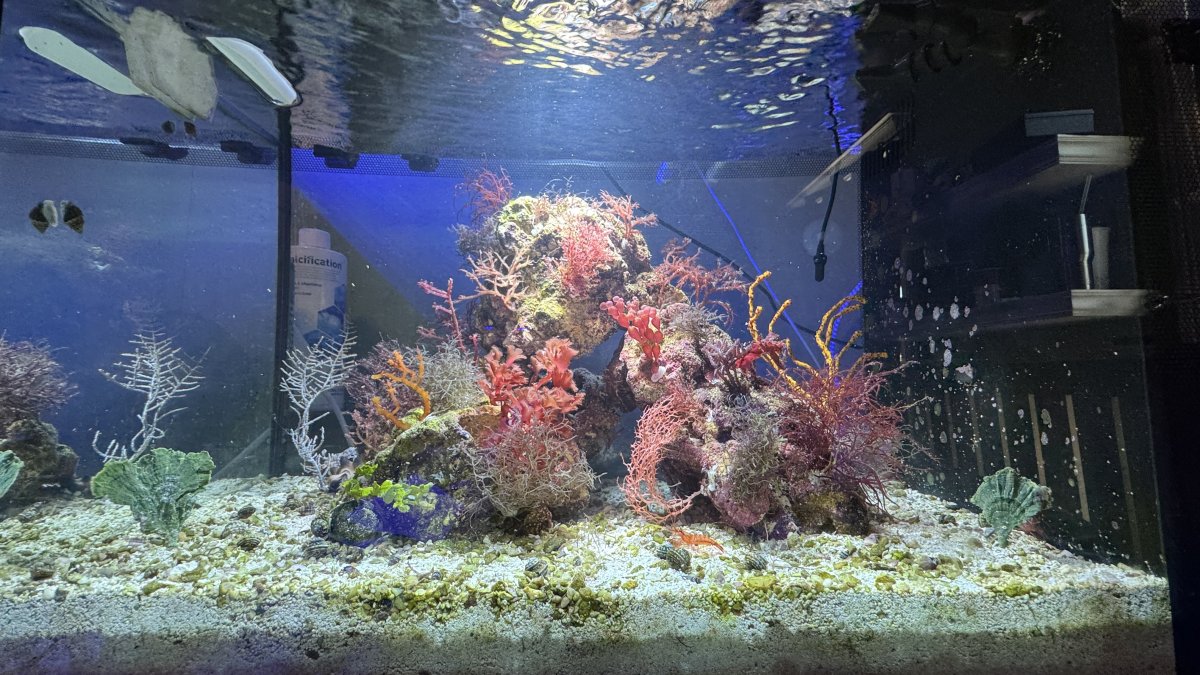
Pretty quickly the macros began getting microalgae growing on them, which I’ve tried remedying with occasionally just wiggling my finger on each one to shake it off. It works to an extent but once the seahorses are in there that could be risky to do, and of course it doesn’t get rid of it all. Now as of the last couple days some of the macros are actually starting to die. I don’t know if the microalgae is the whole issue, but I assume it’s at least part of it. I don’t believe it’s a nutrient issue because I’ve been dosing brightwell neonitro to consistently maintain 5ppm of nitrates. I’m wondering if for some of these species it may be a lighting or temp issue so I’m wondering if anyone has any info on specific requirements for any/all of them as I can’t find much info on most of them. Tank temp is 74°F as it will be a seahorse tank and the cooler temp will reduce infectious bacterial growth. The light I’m using is the Susanoo 10W macroalgae light from The Marine Plant Store, recommended to me by MosaicMacros. I’ve been running the light 12 hours on and 12 hours off.
Livestock for animals at the current moment are a harlequin shrimp (and his chocolate chip starfish), 6 peppermint shrimp and 3 berghia nudibranchs (to destroy any possible aiptasia long before seahorses go in), a blue porcelain crab, 8 nassarius vibex snails, 6 dwarf cerith snails, 12 zig zag periwinkle snails, and 12 button snails.
The species of macros in question in order from the most die off to the least die off are:
Spiny seaweed (Eucheuma isiforme), it really sucks to see this one dying so quickly because it’s my favorite out of all of them as yellow is my favorite color and it looks really good on the opposite side of the tank from the yellow finger gorgonian.

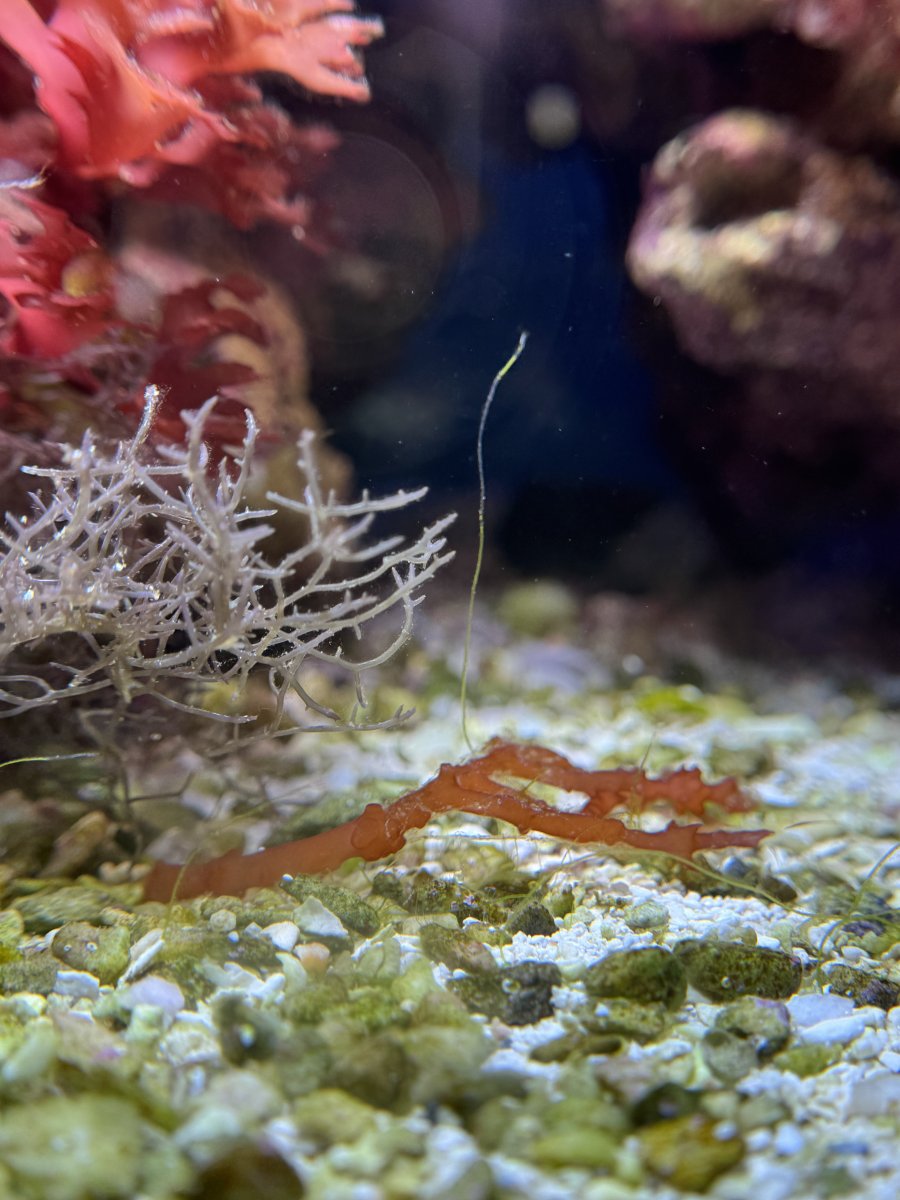
Succulent orange Gracilaria
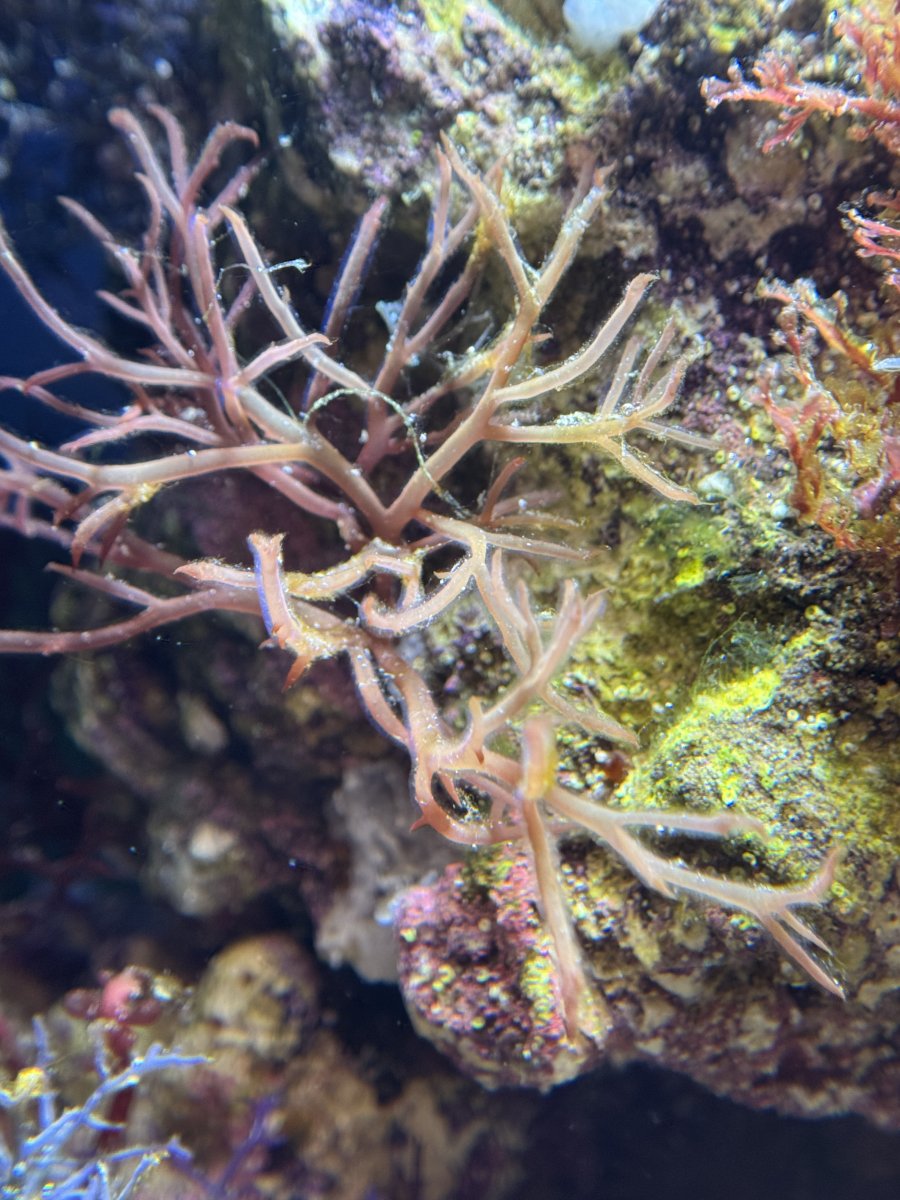
Blue hypnea (some bunches doing better than others)
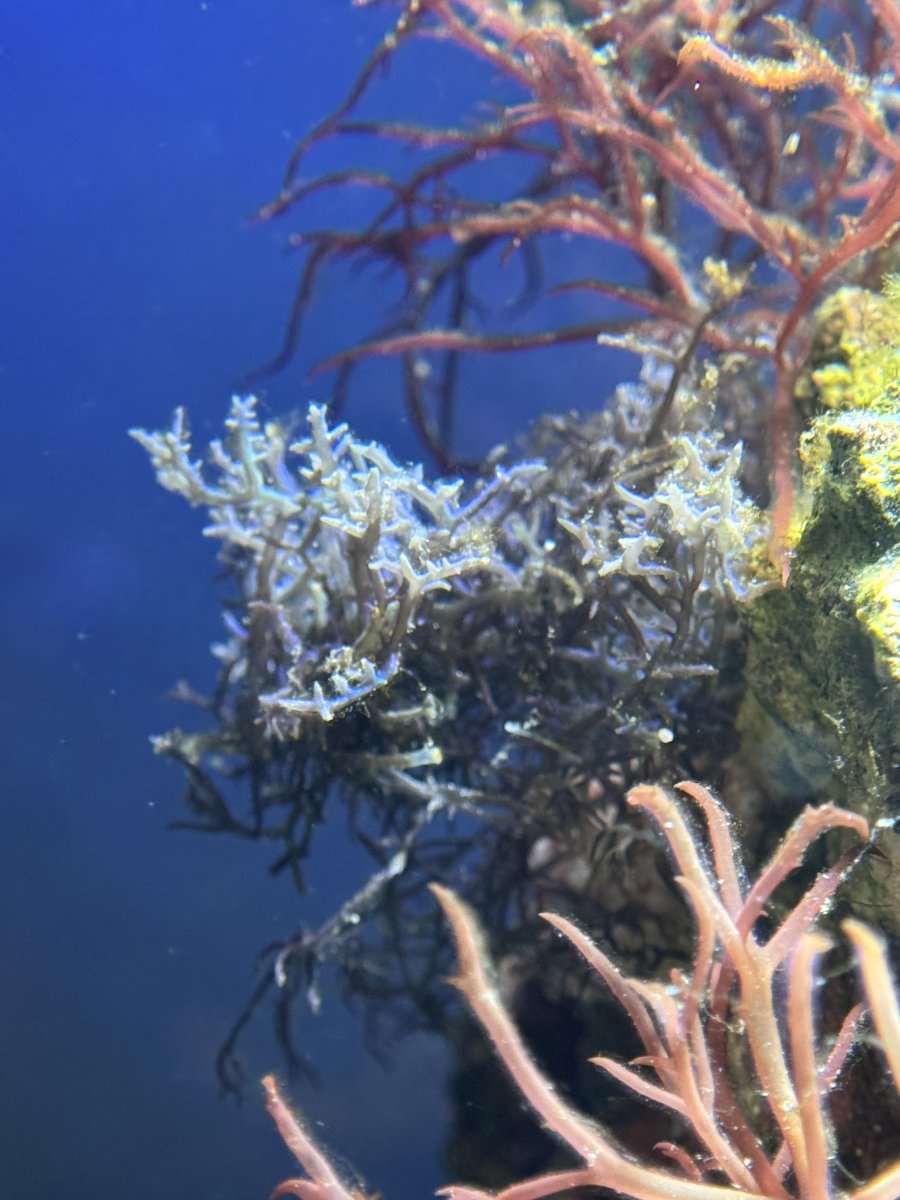
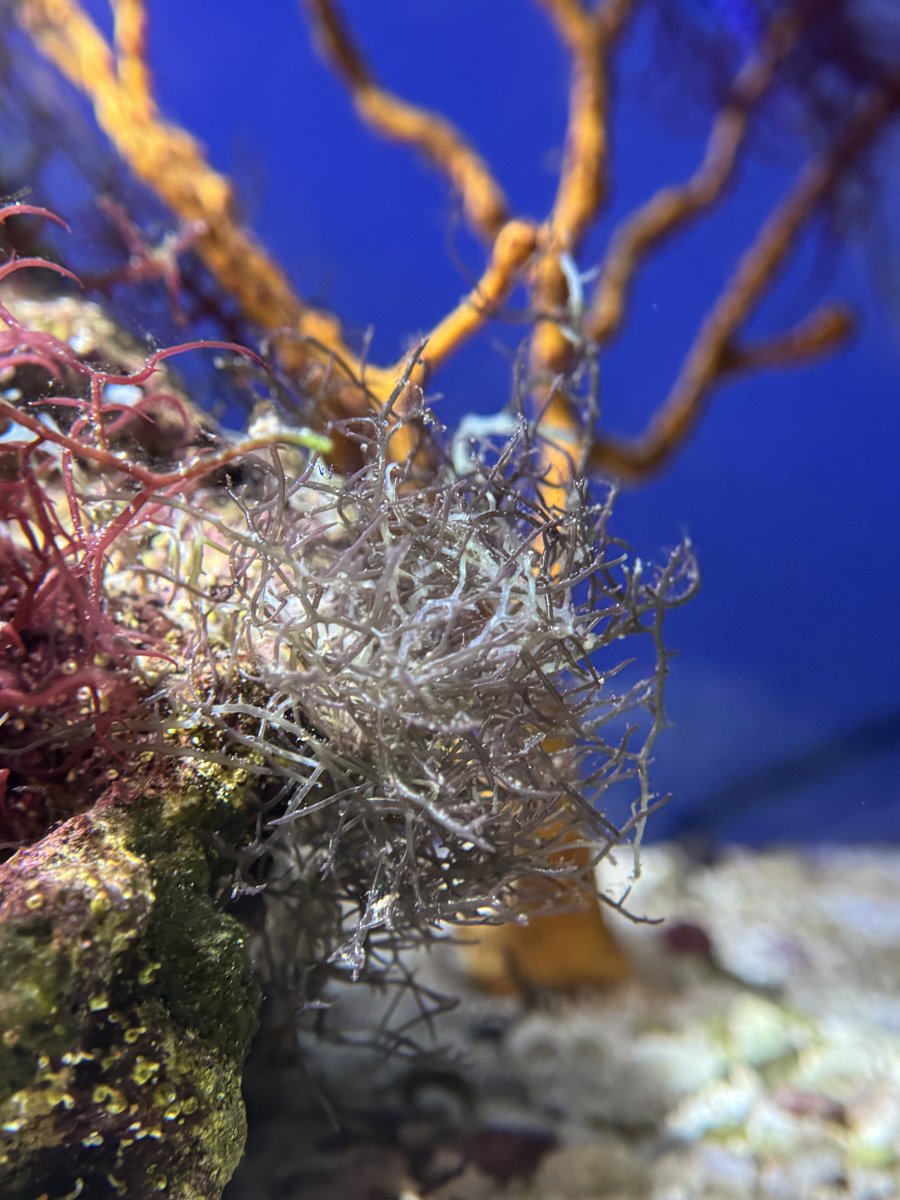


Pink feather
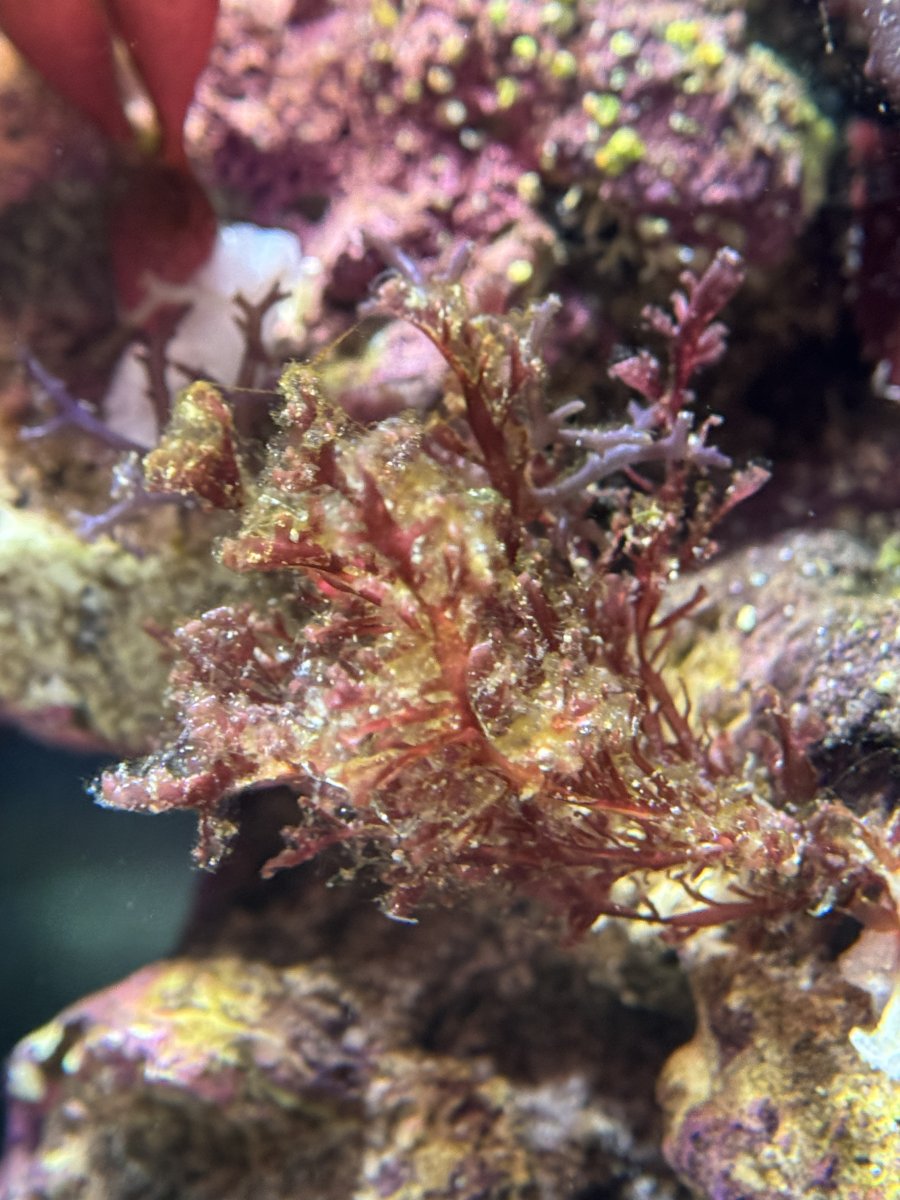
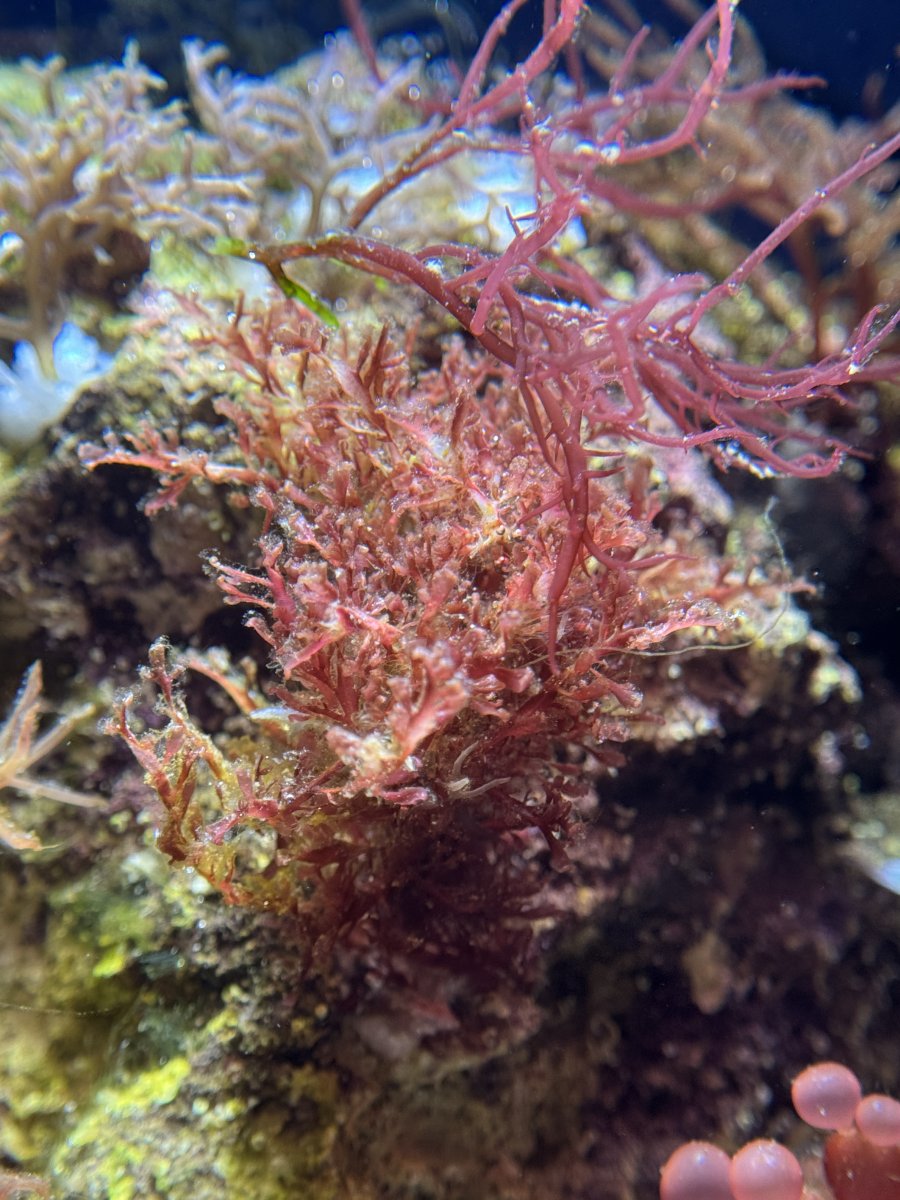
Pink Knobby Laurencia
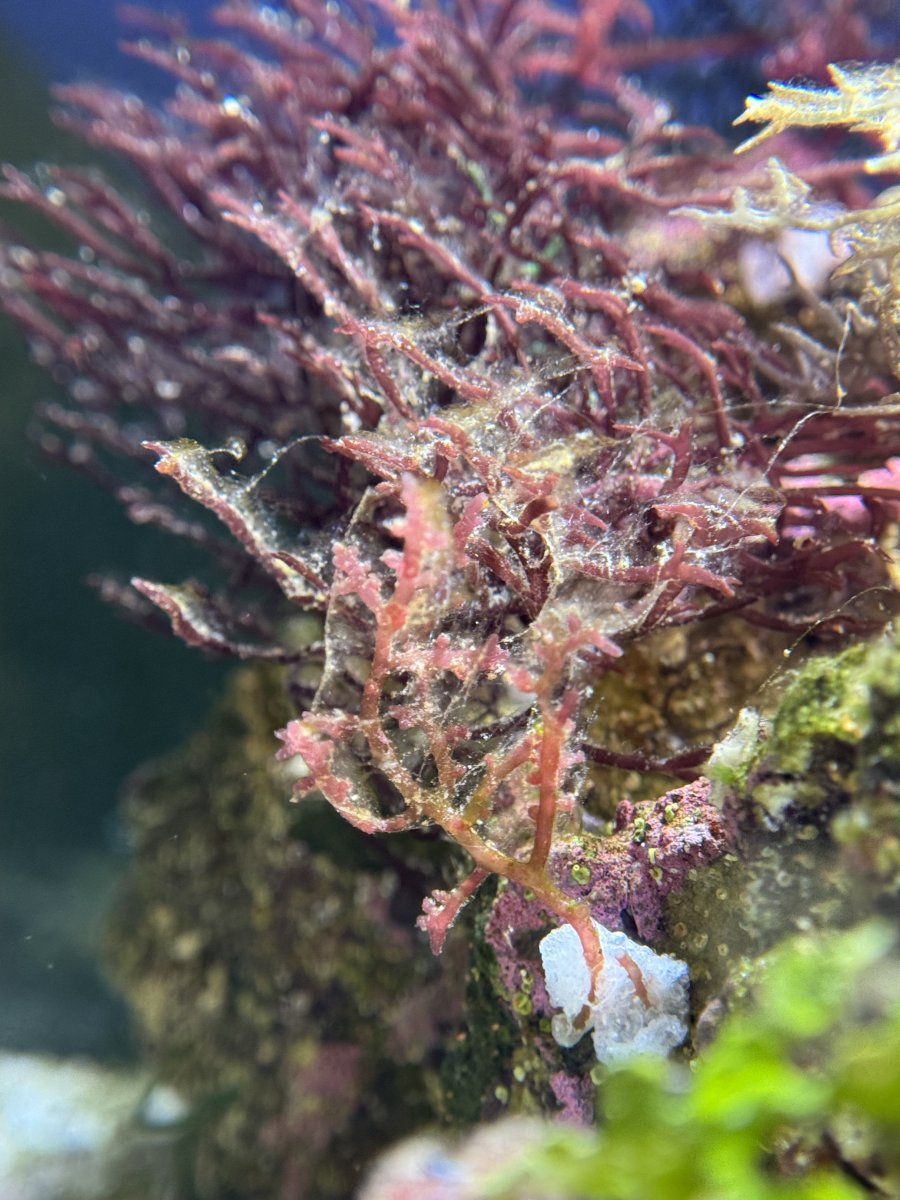
Red bush gracilaria, aka pom pom
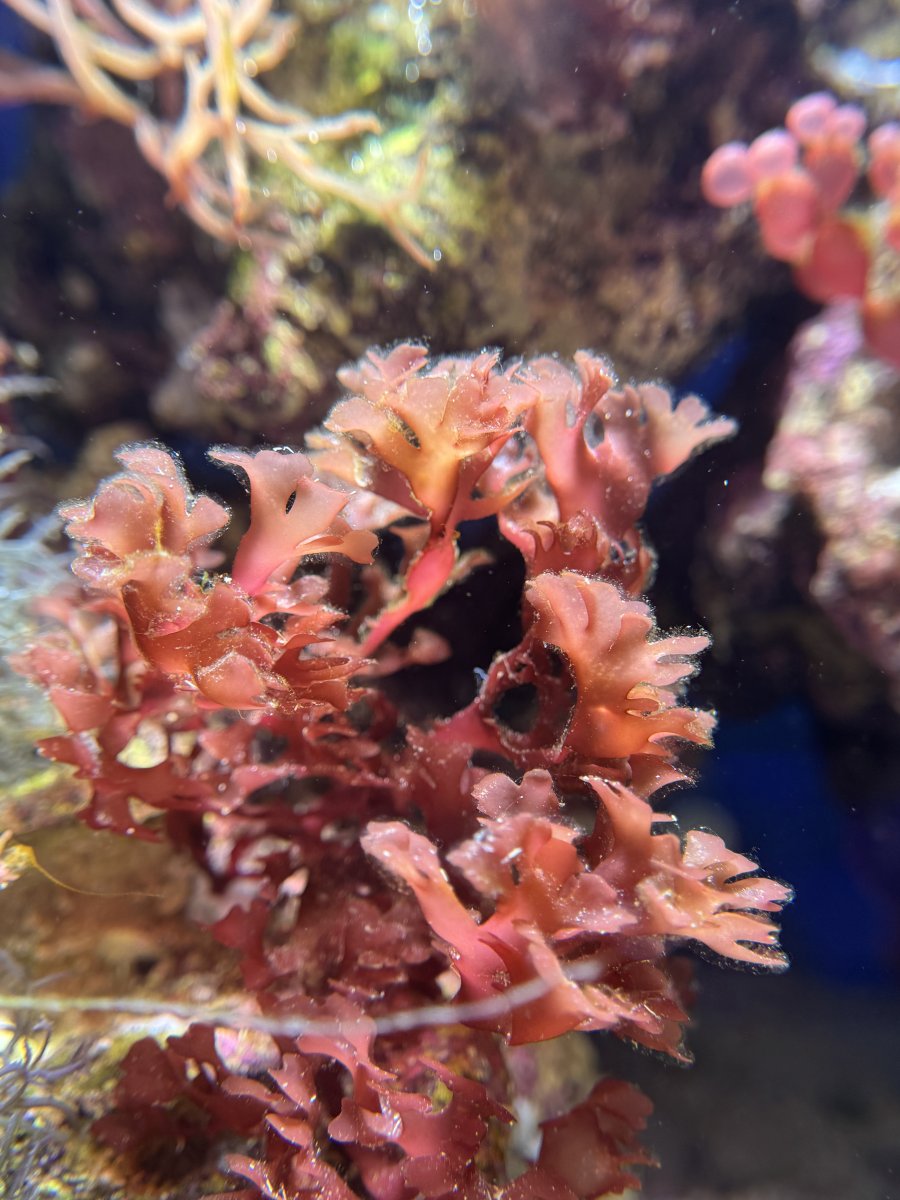
Red sea grapes
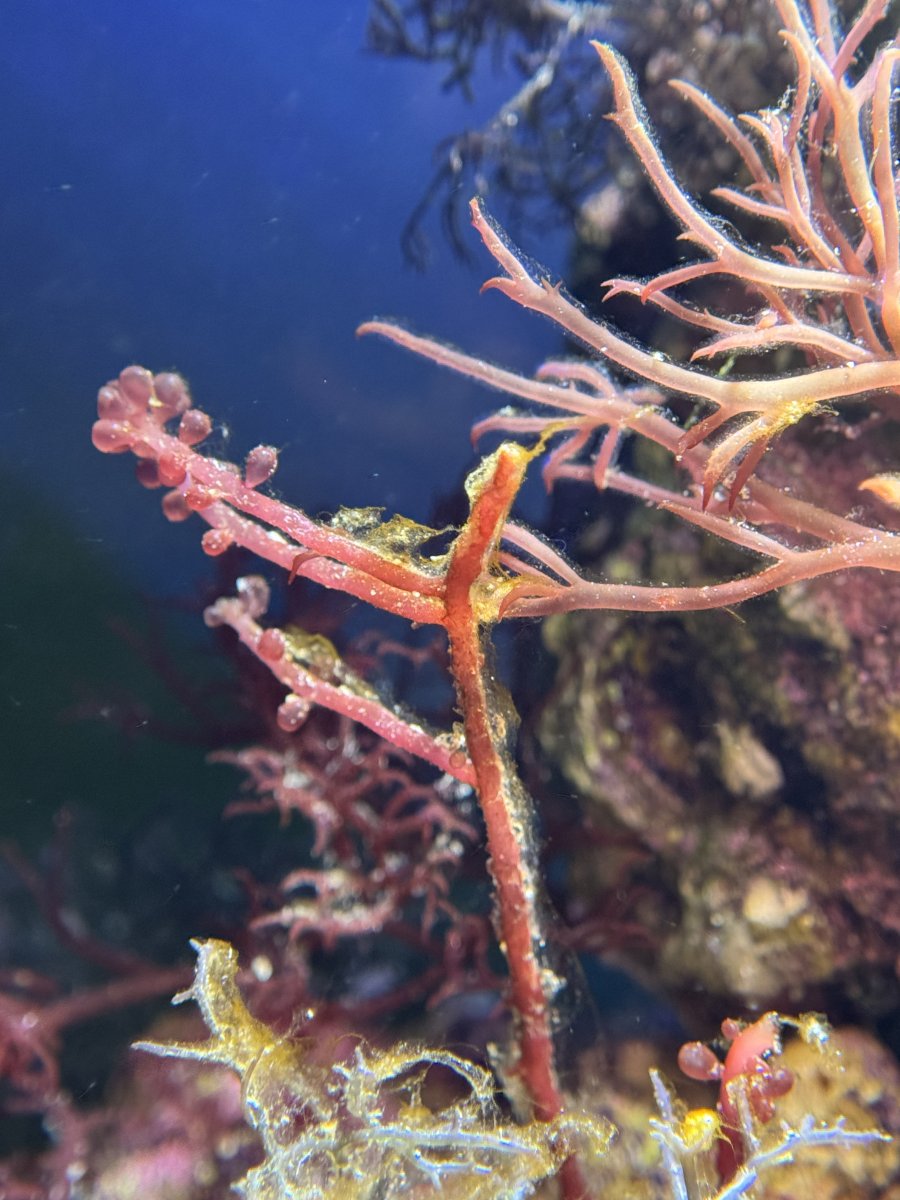
Carpeting Halimeda (Halimeda opuntia)
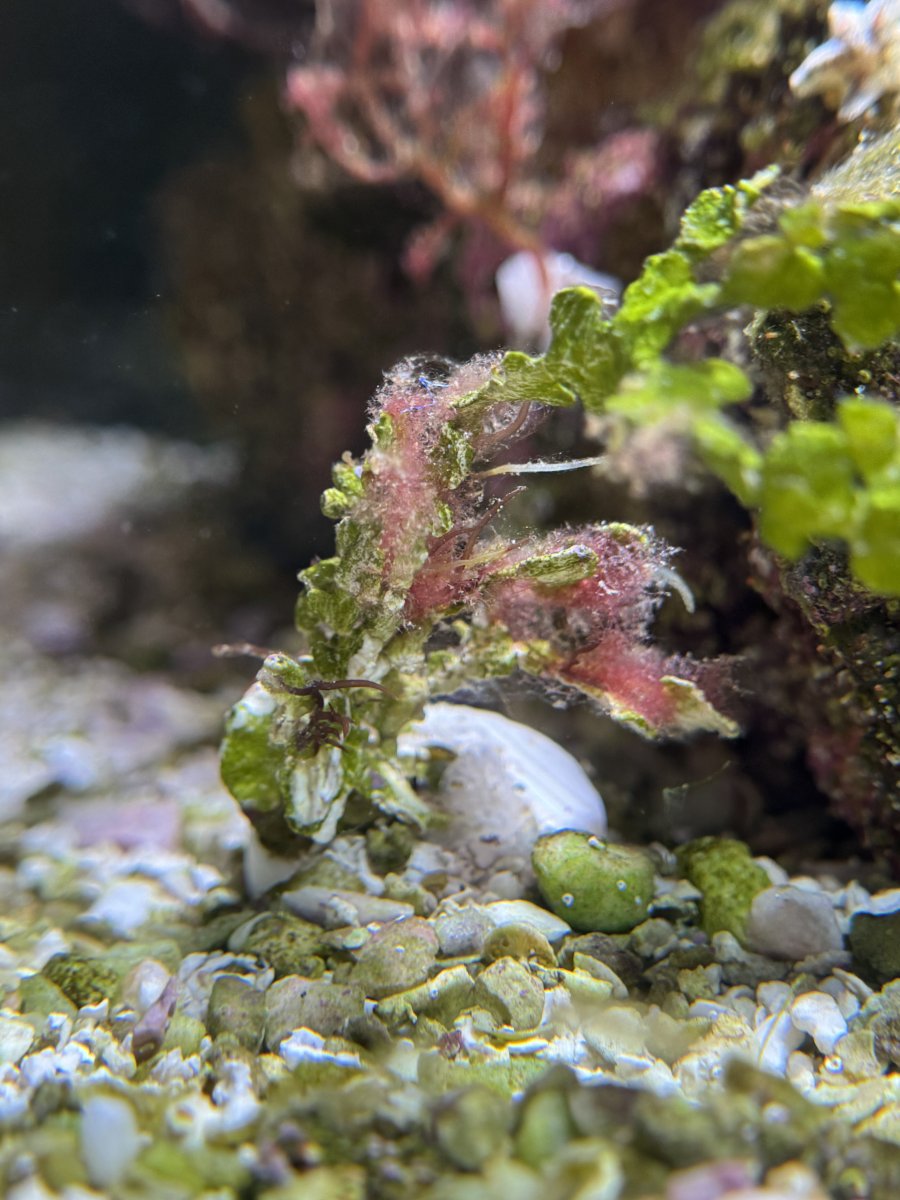
All other species in the tank seem to be doing well aside from having microalgae on them
Also if anyone has any tips as to how I can remove algae from the NPS gorgonians in here it would be greatly appreciated. They’re doing fine and eating still but there is algae starting to build up on them which I know isn’t good. I tried blowing them off with a large pipette but it just sent sand flying everywhere. I know high flow is ideal but it’s a macroalgae and seahorse tank so there aren’t any areas like that.
Thank you to anyone and everyone who read this whole thing regardless of if you have info to provide. I know I tend to over explain things, not only on here but in day to day life in general. It’s something I’ve always struggled with, so I appreciate it greatly when people are willing to listen and take in all the info I have. Any tips, info, or advice would be amazing to hear though if you have it, thank you!
Pretty quickly the macros began getting microalgae growing on them, which I’ve tried remedying with occasionally just wiggling my finger on each one to shake it off. It works to an extent but once the seahorses are in there that could be risky to do, and of course it doesn’t get rid of it all. Now as of the last couple days some of the macros are actually starting to die. I don’t know if the microalgae is the whole issue, but I assume it’s at least part of it. I don’t believe it’s a nutrient issue because I’ve been dosing brightwell neonitro to consistently maintain 5ppm of nitrates. I’m wondering if for some of these species it may be a lighting or temp issue so I’m wondering if anyone has any info on specific requirements for any/all of them as I can’t find much info on most of them. Tank temp is 74°F as it will be a seahorse tank and the cooler temp will reduce infectious bacterial growth. The light I’m using is the Susanoo 10W macroalgae light from The Marine Plant Store, recommended to me by MosaicMacros. I’ve been running the light 12 hours on and 12 hours off.
Livestock for animals at the current moment are a harlequin shrimp (and his chocolate chip starfish), 6 peppermint shrimp and 3 berghia nudibranchs (to destroy any possible aiptasia long before seahorses go in), a blue porcelain crab, 8 nassarius vibex snails, 6 dwarf cerith snails, 12 zig zag periwinkle snails, and 12 button snails.
The species of macros in question in order from the most die off to the least die off are:
Spiny seaweed (Eucheuma isiforme), it really sucks to see this one dying so quickly because it’s my favorite out of all of them as yellow is my favorite color and it looks really good on the opposite side of the tank from the yellow finger gorgonian.
Succulent orange Gracilaria
Blue hypnea (some bunches doing better than others)
Pink feather
Pink Knobby Laurencia
Red bush gracilaria, aka pom pom
Red sea grapes
Carpeting Halimeda (Halimeda opuntia)
All other species in the tank seem to be doing well aside from having microalgae on them
Also if anyone has any tips as to how I can remove algae from the NPS gorgonians in here it would be greatly appreciated. They’re doing fine and eating still but there is algae starting to build up on them which I know isn’t good. I tried blowing them off with a large pipette but it just sent sand flying everywhere. I know high flow is ideal but it’s a macroalgae and seahorse tank so there aren’t any areas like that.
Thank you to anyone and everyone who read this whole thing regardless of if you have info to provide. I know I tend to over explain things, not only on here but in day to day life in general. It’s something I’ve always struggled with, so I appreciate it greatly when people are willing to listen and take in all the info I have. Any tips, info, or advice would be amazing to hear though if you have it, thank you!

















