Question before using chemiclean for green cyano

peterat33rpm

Active Member
View Badges
Joined
Mar 30, 2024
Messages
126
Reaction score
41
Location
Chapel Hill
Rating - 100%
1   0   0
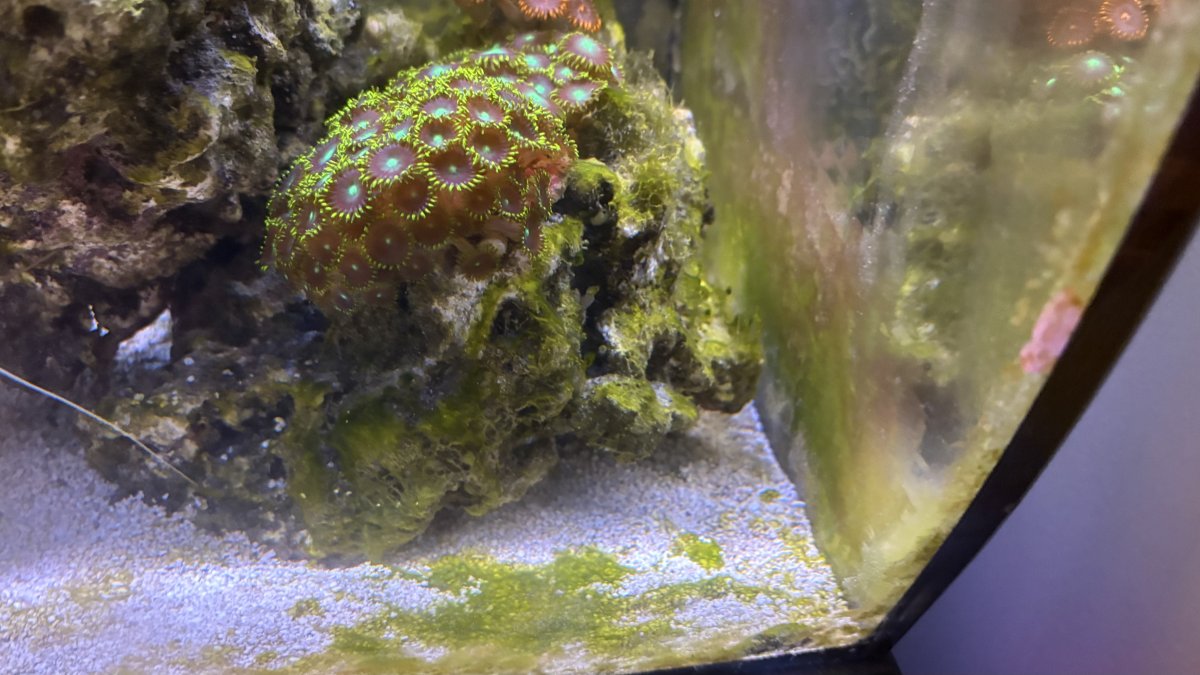
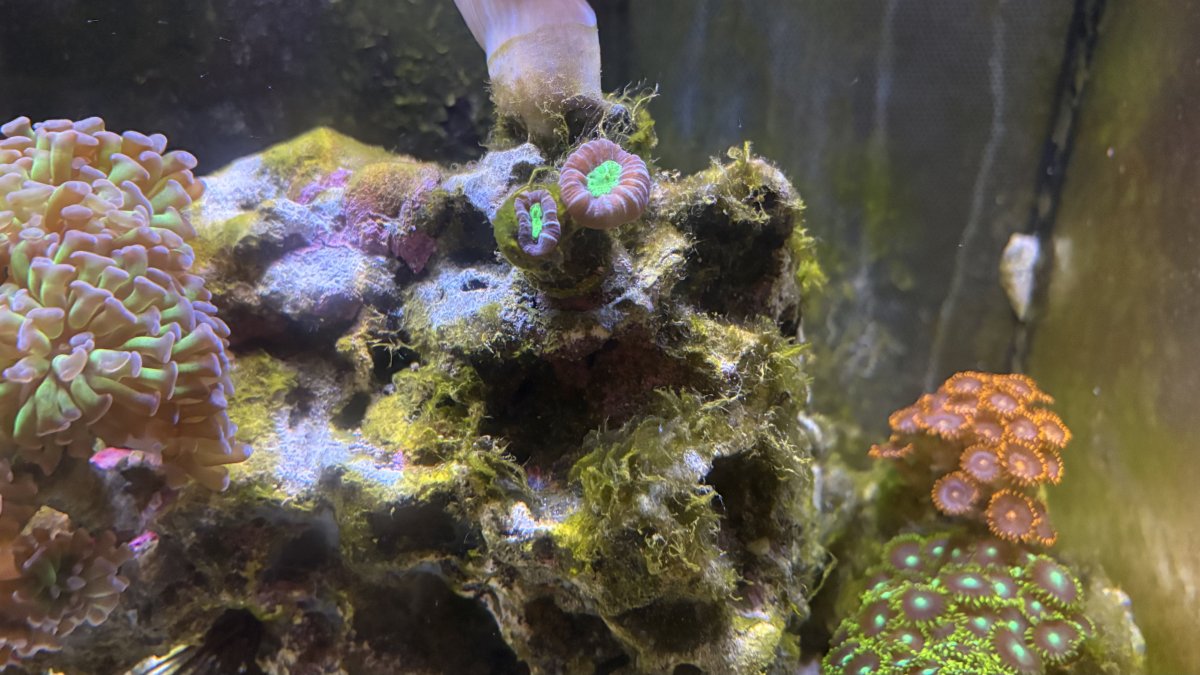
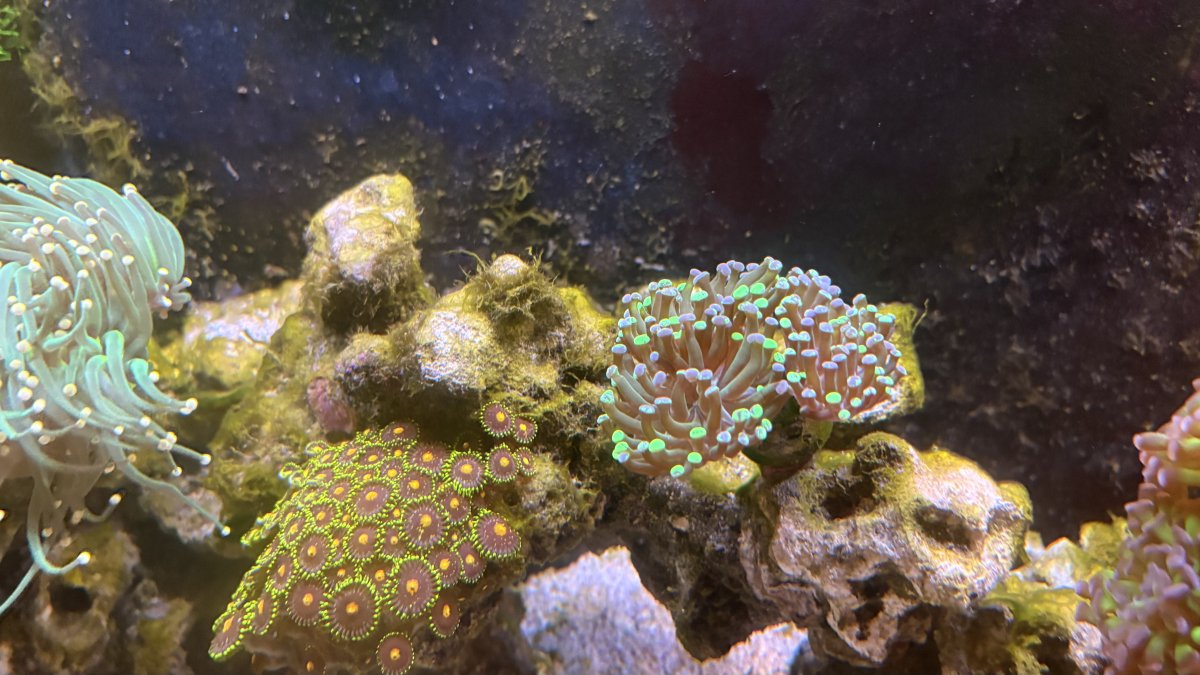
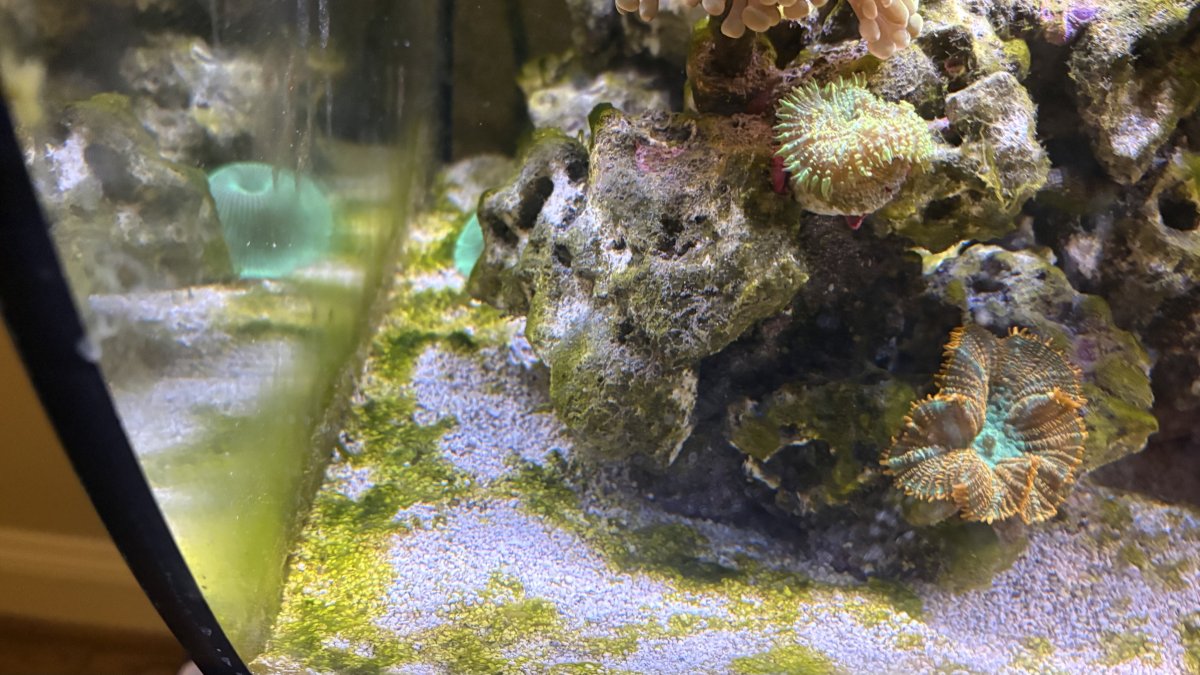
Hello all - I have a pretty bad cyano problem in my 32 gallon AIO system and I’m at the point of trying chemiclean. I had been able to beat it back with weekly water changes to a point I found tolerable but it’s getting on my nerves now and I would like a clean slate. My questions are

1) should I do a water change now to reduce the amount that’s in the tank before dosing, and then another a few days later? Or just wait and do a change after

2) I don’t have a skimmer so I was just going to remove carbon and then put it back in a few days. Is not having a skimmer an issue?

3) I had dinos about 8 months ago that were a nightmare. How likely is it that wiping out the cyano will pave the way for another Dino outbreak?

I know chemiclean is a bandaid not the ultimate solution, but right now I want a bandaid haha. Thanks for any advice!
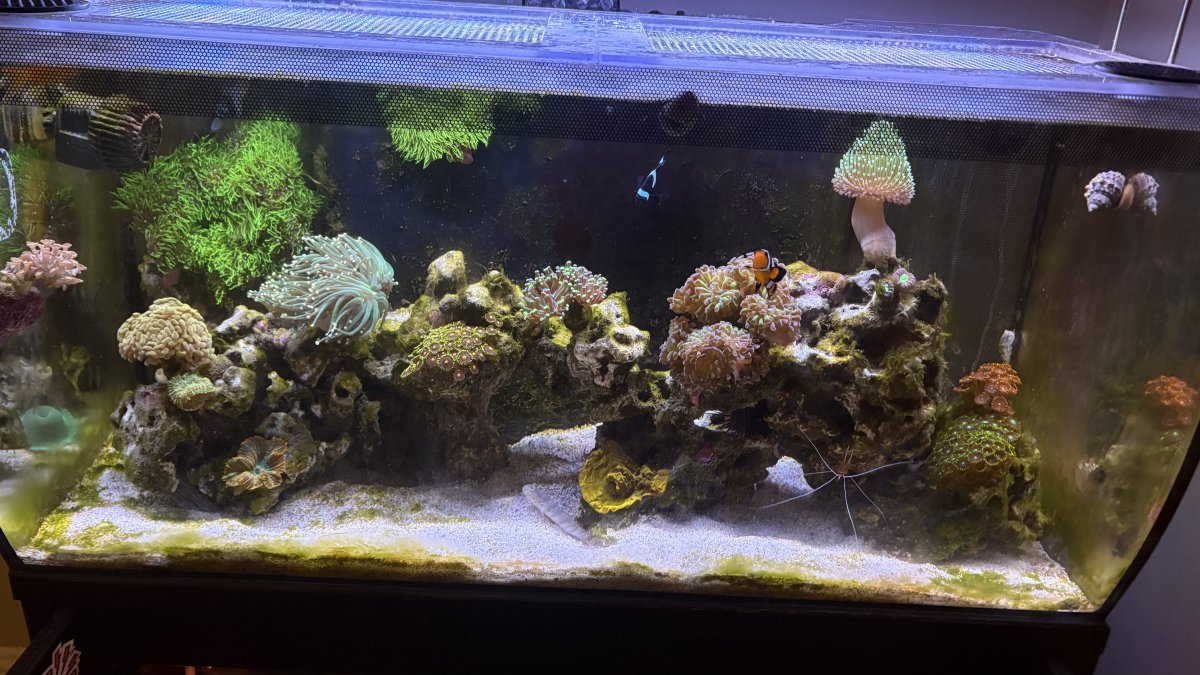
IMG_5576.jpeg
IMG_5577.jpeg
IMG_5578.jpeg
IMG_5579.jpeg
IMG_5580.jpeg
 

code4

just one more.....
View Badges
Joined
May 3, 2015
Messages
2,596
Reaction score
6,574
Location
wyoming
Rating - 0%
0   0   0
Following to see other suggestions. I also just beat dinos finally. Not wanting to go back that route.

@peterat33rpm Do you have measurable nitrates and phosphate?

Shelley
 
OP
OP
P

peterat33rpm

Active Member
View Badges
Joined
Mar 30, 2024
Messages
126
Reaction score
41
Location
Chapel Hill
Rating - 100%
1   0   0
Following to see other suggestions. I also just beat dinos finally. Not wanting to go back that route.

@peterat33rpm Do you have measurable nitrates and phosphate?

Shelley
No not typically. I didn’t have measurable amounts of either when I had dinos and even with dosing I never registered them (maybe low nitrates but never phos) and just stopped checking them once things leveled out. I actually don’t even have a nitrate test at home right now but I can check phosphate if the result would change advice
 

code4

just one more.....
View Badges
Joined
May 3, 2015
Messages
2,596
Reaction score
6,574
Location
wyoming
Rating - 0%
0   0   0
Just know that a lot of advice I have seen is to always have measurable phosphate and nitrates. I was finally able to achieve that. That was how I finally beat dinos. Well that and dosing, using snow, hydrogen peroxide and silicate. Lowering lights. No white lights and blue about 15. And turned up the flow in my tank also. Crazy. The flow increase has helped with the cyano and so has the hydrogen peroxide. But since I have been doing a lot of tweaking, very slowly I can't be sure what actually did it. 🤷‍♀️ Been battling this mess a long time. Getting readable phosphate and nitrates has been a game changer. I tested regularly for weeks and charted all my progress.
 
OP
OP
P

peterat33rpm

Active Member
View Badges
Joined
Mar 30, 2024
Messages
126
Reaction score
41
Location
Chapel Hill
Rating - 100%
1   0   0
Is there any chance the green stringy stuff in my pictures is actually dinos? It def does look like the Dino’s I had before (brown snotty stringy **** with bubbles) and most of the green slime in my tank now blows off with a baster, but I want to be a little more sure before I pull the trigger on chemiclean
 

Gone Reefin’

Active Member
View Badges
Joined
Mar 22, 2025
Messages
356
Reaction score
491
Location
Illinois
Rating - 0%
0   0   0
Just my opinion. Your tank looks good and I would not go nuclear with chemiclean at this point.

Yes, I think chemiclean combined with undetectable nutrients is a recipe for Dino’s. I’ve seen much worse, and uglier cyano and would still think twice before CC. Also, are we sure this is cyano? I see algae on the glass sides and this is not.

If you do decide to go CC, not having a skimmer is a slight issue. You will need another way to enrich oxygen, either with heavy surface agitation or air stones. Good luck but I wield fight the good fight a bit longer. You can always pull the trigger later, but can’t take it back.
 
OP
OP
P

peterat33rpm

Active Member
View Badges
Joined
Mar 30, 2024
Messages
126
Reaction score
41
Location
Chapel Hill
Rating - 100%
1   0   0
Just my opinion. Your tank looks good and I would not go nuclear with chemiclean at this point.

Yes, I think chemiclean combined with undetectable nutrients is a recipe for Dino’s. I’ve seen much worse, and uglier cyano and would still think twice before CC. Also, are we sure this is cyano? I see algae on the glass sides and this is not.

If you do decide to go CC, not having a skimmer is a slight issue. You will need another way to enrich oxygen, either with heavy surface agitation or air stones. Good luck but I wield fight the good fight a bit longer. You can always pull the trigger later, but can’t take it back.
Appreciate that! It’s definitely not all cyano, but a portion of it I’m confident is (on the sand bed at the very least). And I do have an airtime if it comes to it. Maybe I’ll do one more water change with some real elbow grease and reassess, I’m just tired of the slimy crap coming back every week
 

Sam7

BYE BYE
View Badges
Joined
Nov 23, 2025
Messages
1,919
Reaction score
7,054
Location
Gone
Rating - 0%
0   0   0
Get a cucumber for your sand they work wonders. I see what looks like a sand sifter goby but he's not a heavy sifter like some others. More water changes more manual get in there rip out that on the rocks siphon off or vaccum that sand. Scrap that algae off the lower glass and probably need more flow
 

EnterName

Well-Known Member
View Badges
Joined
Sep 21, 2025
Messages
808
Reaction score
1,931
Location
Germany
Rating - 0%
0   0   0
Everything (even dinoflagellates which are often associated with low nutrient readings) require carbon (C), nitrogen (N), and phosphorus (P) to grow. This means even if all available ammonia is assimilated before it gets oxidized to nitrate for your tests to detect, there still is enough C, N, and P to support this growth.
That's why I would still suggest "cleaning up":
  • water changes
  • manual removal of the slime
  • improved flow + copepods to break down detritus faster
  • properly set up protein skimmer
  • filter socks or similar (manual filtration)
Nutrients are not consumed and are then simply gone. A bacterium will assimilate them, die, and release them back into the water (bound to organic matter which then gets broken down again, etc.). This means there are only a few ways that can remove nutrients from the water column permanently:
  • De-nitrification (gas exchange of N₂)
  • Phosphate precipitation and binding to rocks and substrate (this can also work the other way around and increase phosphate)
  • Growth of organisms like corals that keep the nitrogen and phosphate bound to their tissue
  • Replacement of water (water changes)
  • Removal of particles/detritus/organic matter/... via filtration (regularly changed filter socks or a skimmer)
  • Manual removal of algae/bacteria (e.g. regularly harvested algae refugium/scrubber or siphoning off the slime)
De-nitrification and phosphate binding are slow (especially if gas exchange is limited without a skimmer and rocks and substrate are already saturated). This means your tank has no efficient export channel right now and this keeps the growth coming back.
I would worry about dinoflagellates once they actually take over. Silicate, ammonia, and phosphate dosing will probably be enough to get rid of them and then finally "the good microbes" can take over.

If really consistently cleaning up further doesn't help or makes it worse, you can still try the other way by dosing nutrients to get readable levels. And if that doesn't work, you at least tried everything before using antibiotics.
 

slingfox

2500 Club Member
View Badges
Joined
Mar 22, 2023
Messages
2,739
Reaction score
2,603
Location
Northern California
Rating - 100%
1   0   0
You should test for phosphate and nitrate and get those levels up first for a few weeks before going the Chemiclean route. A protein skimmer is highly advised. Even if you don’t need the nutrient export, it is great for the aeration.
 
OP
OP
P

peterat33rpm

Active Member
View Badges
Joined
Mar 30, 2024
Messages
126
Reaction score
41
Location
Chapel Hill
Rating - 100%
1   0   0
That's why I would still suggest "cleaning up":
  • water changes
  • manual removal of the slime
  • improved flow + copepods to break down detritus faster
  • properly set up protein skimmer
  • filter socks or similar (manual filtration)
Nutrients are not consumed and are then simply gone. A bacterium will assimilate them, die, and release them back into the water (bound to organic matter which then gets broken down again, etc.). This means there are only a few ways that can remove nutrients from the water column permanently:
  • De-nitrification (gas exchange of N₂)
  • Phosphate precipitation and binding to rocks and substrate (this can also work the other way around and increase phosphate)
  • Growth of organisms like corals that keep the nitrogen and phosphate bound to their tissue
  • Replacement of water (water changes)
  • Removal of particles/detritus/organic matter/... via filtration (regularly changed filter socks or a skimmer)
  • Manual removal of algae/bacteria (e.g. regularly harvested algae refugium/scrubber or siphoning off the slime)
.

If really consistently cleaning up further doesn't help or makes it worse, you can still try the other way by dosing nutrients to get readable levels. And if that doesn't work, you at least tried everything before using antibiotics.
You should test for phosphate and nitrate and get those levels up first for a few weeks before going the Chemiclean route. A protein skimmer is highly advised. Even if you don’t need the nutrient export, it is great for the aeration.

Thanks for these replies! So for filtration right now I have a basket with two sections of filter floss and one of filter media in both sides, and carbon on one side. I change the floss every 3-5 days depending on laziness. Do you think changing one of these compartments to a skimmer would outweigh the benefit of having the media and floss? Not opposed to doing that, I’d probably go with the Fluval skimmer made for this tank.

I should also buy copepods more often, maybe I’ll start doing that on a schedule. M
As for manual removal, I change water about as often as I can which is 5 gallons every 1-2 weeks (a toddler and a baby, job, dogs, etc get in the way). I try to really scrub and remove as much as I can when I water change I’ll keep doing that for sure.

As for dosing nutrients - I did that to beat dinos my first go around and then got a massive hair algae problem. So honestly if this is just what my tank is like going forward it’s still better than the hair algae and dinos I dealt with.

Thanks again!
 

slingfox

2500 Club Member
View Badges
Joined
Mar 22, 2023
Messages
2,739
Reaction score
2,603
Location
Northern California
Rating - 100%
1   0   0
In the long run you want to monitor nitrates and phosphates and keep them in some reasonable range. Those ranges are pretty wide since many have success with nutrients at different levels. What most will agree upon is having nitrate and/or phosphate at undetectable is bad. For GHA, you can hopefully keep it in check by having a properly sized CUC. For that size tank one urchin with an army of snails (some combo of Astrea, Trochus and maybe Turbos).
 

EnterName

Well-Known Member
View Badges
Joined
Sep 21, 2025
Messages
808
Reaction score
1,931
Location
Germany
Rating - 0%
0   0   0
That's why I would still suggest "cleaning up":
  • water changes
  • manual removal of the slime
  • improved flow + copepods to break down detritus faster
  • properly set up protein skimmer
  • filter socks or similar (manual filtration)
Nutrients are not consumed and are then simply gone. A bacterium will assimilate them, die, and release them back into the water (bound to organic matter which then gets broken down again, etc.). This means there are only a few ways that can remove nutrients from the water column permanently:
  • De-nitrification (gas exchange of N₂)
  • Phosphate precipitation and binding to rocks and substrate (this can also work the other way around and increase phosphate)
  • Growth of organisms like corals that keep the nitrogen and phosphate bound to their tissue
  • Replacement of water (water changes)
  • Removal of particles/detritus/organic matter/... via filtration (regularly changed filter socks or a skimmer)
  • Manual removal of algae/bacteria (e.g. regularly harvested algae refugium/scrubber or siphoning off the slime)
.

If really consistently cleaning up further doesn't help or makes it worse, you can still try the other way by dosing nutrients to get readable levels. And if that doesn't work, you at least tried everything before using antibiotics.
You should test for phosphate and nitrate and get those levels up first for a few weeks before going the Chemiclean route. A protein skimmer is highly advised. Even if you don’t need the nutrient export, it is great for the aeration.

Thanks for these replies! So for filtration right now I have a basket with two sections of filter floss and one of filter media in both sides, and carbon on one side. I change the floss every 3-5 days depending on laziness. Do you think changing one of these compartments to a skimmer would outweigh the benefit of having the media and floss? Not opposed to doing that, I’d probably go with the Fluval skimmer made for this tank.

I should also buy copepods more often, maybe I’ll start doing that on a schedule. M
As for manual removal, I change water about as often as I can which is 5 gallons every 1-2 weeks (a toddler and a baby, job, dogs, etc get in the way). I try to really scrub and remove as much as I can when I water change I’ll keep doing that for sure.

As for dosing nutrients - I did that to beat dinos my first go around and then got a massive hair algae problem. So honestly if this is just what my tank is like going forward it’s still better than the hair algae and dinos I dealt with.

Thanks again!
I personally would always run a skimmer just for the gas exchange. The resulting change in pH and better availability of oxygen could have a major influence on your tank's biology. It might be chaotic at first, but if you are currently switching between hair algae + dinos and cyanos, why not shift the whole equilibrium a bit and maybe some good organisms have a better chance :)

Dinos don't rely on low nutrients. They just seem to do well when other organisms fail to properly establish. Some species have adapted to be able to consume nutrients even at very low concentrations but if you go through different R2R posts a little bit, you will see that dinos can also appear in normal or high nutrient systems.


 
OP
OP
P

peterat33rpm

Active Member
View Badges
Joined
Mar 30, 2024
Messages
126
Reaction score
41
Location
Chapel Hill
Rating - 100%
1   0   0
Have you tried coral snow?
I haven’t, I hadn’t even heard of it until 2 days ago when I was looking into all this. Seems like it might be beneficial? Plus zeobak for cyano?

I personally would always run a skimmer just for the gas exchange. The resulting change in pH and better availability of oxygen could have a major influence on your tank's biology. It might be chaotic at first, but if you are currently switching between hair algae + dinos and cyanos, why not shift the whole equilibrium a bit and maybe some good organisms have a better chance :)
Yeah makes sense. I’ll look into that and I’ll just toss the filter media thats in that chamber into the main return pump chamber to keep the surface area in the tank at least
 

slingfox

2500 Club Member
View Badges
Joined
Mar 22, 2023
Messages
2,739
Reaction score
2,603
Location
Northern California
Rating - 100%
1   0   0
I haven’t, I hadn’t even heard of it until 2 days ago when I was looking into all this. Seems like it might be beneficial? Plus zeobak for cyano?


Yeah makes sense. I’ll look into that and I’ll just toss the filter media thats in that chamber into the main return pump chamber to keep the surface area in the tank at least
I don’t believe coral snow does anything noticeable to dinos, GHA or cyano. This is from a person that doses coral snow every week too!
 

kevinf

lalalala
View Badges
Joined
Sep 15, 2011
Messages
626
Reaction score
335
Location
central, nj
Rating - 100%
3   0   0
I don’t believe coral snow does anything noticeable to dinos, GHA or cyano. This is from a person that doses coral snow every week too!

I've been dosing it for about 2 months. My cyano on rocks all have disappeared and the sand bed has been getting better as well
The only other thing I changed was auto dosing kH instead of manually doing it.
I also changed water changes from every week to every other week
I used to have real bad flatworm problem & that disappeared as well.
Now was it the coral snow, I dont know.. but surely wont hurt to try before using chemiclean
In the last 2 weeks I started using zeovit biomate as well.
 

slingfox

2500 Club Member
View Badges
Joined
Mar 22, 2023
Messages
2,739
Reaction score
2,603
Location
Northern California
Rating - 100%
1   0   0
I've been dosing it for about 2 months. My cyano on rocks all have disappeared and the sand bed has been getting better as well
The only other thing I changed was auto dosing kH instead of manually doing it.
I also changed water changes from every week to every other week
I used to have real bad flatworm problem & that disappeared as well.
Now was it the coral snow, I dont know.. but surely wont hurt to try before using chemiclean
In the last 2 weeks I started using zeovit biomate as well.
Agreed it definitely won’t hurt anything. I am a fan of coral snow overall. I’ve used it to help combat vermitids. Also helps keep water crystal clear.
 

biom

Well-Known Member
View Badges
Joined
Aug 8, 2015
Messages
694
Reaction score
474
Location
Bulgaria
Rating - 0%
0   0   0
I would give a try to the Fluval skimmer, continue with the water changes and manual removal of the slime.
 

TOP 10 Trending Threads

WHAT AMOUNT OF LIVE ROCK AND SAND SHOULD BE PRIORITIZED FOR OPTIMAL BIODIVERSITY/FILTRATION?

  • 100% live rock + bagged sand

    Votes: 38 26.6%
  • 100% dry rock + 100% live sand

    Votes: 48 33.6%
  • 50/50 live/dry rock, 50/50 live/bagged sand

    Votes: 32 22.4%
  • 75% live rock, 25% live sand

    Votes: 15 10.5%
  • 25% live rock, 75% live sand

    Votes: 10 7.0%
Back
Top