- Joined
- Dec 16, 2018
- Messages
- 1,189
- Reaction score
- 2,811
Its under config>>settingsYes, (I think) I'm using the RPI. Let me check the config doc.
Thanks
Play with the rpi frequency...reload reef pi after each change
Follow along with the video below to see how to install our site as a web app on your home screen.
Note: This feature may not be available in some browsers.
Its under config>>settingsYes, (I think) I'm using the RPI. Let me check the config doc.
Thanks
Its under config>>settings
Play with the rpi frequency...reload reef pi after each change
Looks good to me. You are using a linear regulator for 12v to 5v conversion?Working on cleaning my board up & adding float sensors, rather than an optical one. Anyone feel like giving this diagram a look to see if everything looks good? Mainly concerned with the wiring to the float switches. Also considering trying out a 7805 regulator, rather than a buck converter to see how it works out.
![]()
I have connected the red wire (ground) to gpio 39. Blue wire (vcc) to gpio 2 and White wire signal to gpio 23. Check period is 10 secs and have tried both reverse and normal mode. Yellow wire I have left unconnected
Looks good to me. You are using a linear regulator for 12v to 5v conversion?
The float switch circuit will be fine even if you just use one resistor instead of two.
Looks good to me. You are using a linear regulator for 12v to 5v conversion?
The float switch circuit will be fine even if you just use one resistor instead of two.
the lm2596 are rated for 3 Amp. Which is why i prefer them, they are efficient and doesnot need heatsinks. Just verify that your overall current draw is within bounds and you have heating sorted outThat's my plan. The buck converters simply take up too much room in my opinion, especially when I'm not planning on using the 10V one for light dimming.
I had originally planed on only using 1 resistor, but split into 2 to be safe. Sounds like I should be fine reverting to 1 for simplicity's sake, thanks!
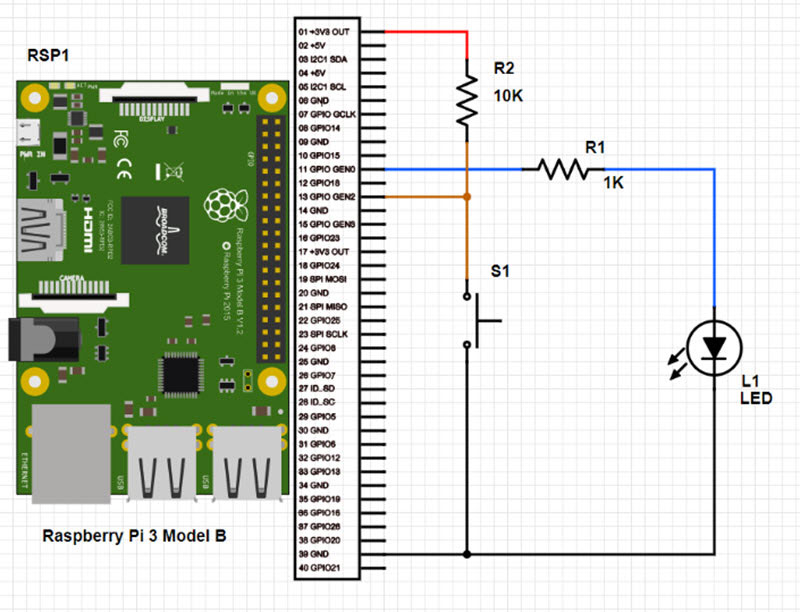
Actually, I'm looking at it with just 1 resistor & I don't see how it would work. If there's only a single resistor, wouldn't it pull both float switch inputs to ground even if only one of them triggered?
![]()
See how S1 is wired, float switch can be wired same way. This is enough for addressing floating ground. The other resistor provide safety from cases where the input (S1) has power (by accident). this is highly unlikey in your case i.e. you are unlikely to plugin something that has power (say a dc power supply ) in the ato sensor connector.
This is my primitive understanding :) , i'll let others chime in.
That’s definitely possible. Let’s take baby steps for debugging this. Did you update the iOS on this device ? If possible install google chrome and try that as well. Use incognito mode or private mode and try to access the website from there.I forgot to mention, I can get to the pi webpage on any device accept the older iPad. So I know the ip and address works. I’m wondering if maybe the pi webserver uses some sort of script not supported by older apple web browser? Or maybe I will instead of the IP address try the local name. I think I recall sometime back Simeon was having issue on an apple device and had to use a different format for the address.

That’s definitely possible. Let’s take baby steps for debugging this. Did you update the iOS on this device ? If possible install google chrome and try that as well. Use incognito mode or private mode and try to access the website from there.
if you have https enabled type the whole adress:
For the xxx use the ip adress of your pi.
Make sure that you use the correct ip, when dhcp is enabled in your router it is possible your pi got a different ip adess