reef-pi :: An opensource reef tank controller based on Raspberry Pi.

Bigtrout

Valuable Member
View Badges
Joined
Dec 16, 2018
Messages
1,189
Reaction score
2,811
Rating - 0%
0   0   0
Thank you!
I did manage to solve it
1582436736648.png

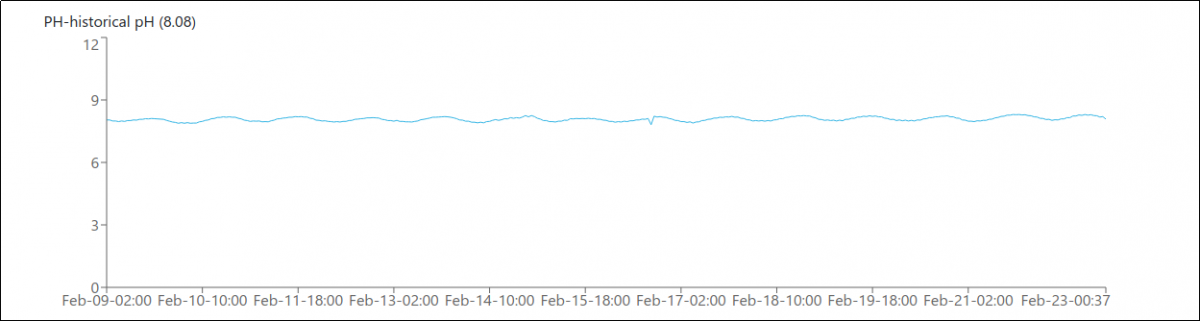
Hopefully @Ranjib will add a check to make sure that all the graph data is in logical order.
To find the IP address if you can get a free app for an android phone called FING. You can see all the ip addresses of all your devices hooked to your network with it.
 

janos

Active Member
View Badges
Joined
Jun 4, 2017
Messages
267
Reaction score
259
Location
Toronto,Canada
Rating - 0%
0   0   0
Hi to all,sorry for the stupid question but could not go over on this one.Reef-pi working for me for 3 year long now i try to change something and i could not save.Please if you have time and patient help me out.That is a simple timer for my sump,was working for a year no problem but now i try to change the time and could not do.What i do wrong.Please do not advise to upgrade because i have lung cancer and Friday i go to surgery.Just a simple thing what i do wrong.Thank you for your time and patient.

Screenshot from 2020-02-23 11-43-28.png Screenshot from 2020-02-23 11-43-20.png
 

Michael Lane

Well-Known Member
View Badges
Joined
Aug 11, 2018
Messages
677
Reaction score
1,121
Rating - 0%
0   0   0
Hi to all,sorry for the stupid question but could not go over on this one.Reef-pi working for me for 3 year long now i try to change something and i could not save.Please if you have time and patient help me out.That is a simple timer for my sump,was working for a year no problem but now i try to change the time and could not do.What i do wrong.Please do not advise to upgrade because i have lung cancer and Friday i go to surgery.Just a simple thing what i do wrong.Thank you for your time and patient.

Screenshot from 2020-02-23 11-43-28.png Screenshot from 2020-02-23 11-43-20.png
The timer expects cron format. Use 20 instead of 8.PM.
 

AbjectMaelstroM

Valuable Member
View Badges
Joined
Jul 21, 2019
Messages
1,535
Reaction score
1,709
Location
RVA
Rating - 100%
1   0   0
Those of you using ULN2803 off of Mike's HAT with a DB9 to control a powerstrip, where are tapping in the GND? Mike's had doesn't have a dedicated ground pin on the 12v headers, one pin is "NC"...not connected?

Screenshot_20200223-135720_Chrome.jpg
 

Michael Lane

Well-Known Member
View Badges
Joined
Aug 11, 2018
Messages
677
Reaction score
1,121
Rating - 0%
0   0   0
Those of you using ULN2803 off of Mike's HAT with a DB9 to control a powerstrip, where are tapping in the GND? Mike's had doesn't have a dedicated ground pin on the 12v headers, one pin is "NC"...not connected?

Screenshot_20200223-135720_Chrome.jpg
NC is not connected, that pin on the DB-9 connectors is not connected. ULN2803 switches on the low side, so GND is not routed over the DB-9 connector.
 

robsworld78

Valuable Member
View Badges
Joined
Feb 14, 2020
Messages
1,029
Reaction score
1,293
Location
Edmonton, Canada
Rating - 0%
0   0   0
Here's a 8 channel PWM converter board that could be useful to some. It uses the LM358 op-amp, 5v PWM goes in and you can use the jumpers so it outputs one of the following, each channel is independent. The schematic is attached if you want to make one and I offer them as well.
  • 0-5v PWM
  • 0-10v PWM
  • 0-5v Analog
  • 0-10v Analog
PWM_converter.jpg


PWM_converter_schematic.png
 

robsworld78

Valuable Member
View Badges
Joined
Feb 14, 2020
Messages
1,029
Reaction score
1,293
Location
Edmonton, Canada
Rating - 0%
0   0   0
Here's an updated AC 120v - 240v power bar I've been working on for Reef-pi. I've been offering these for quite a while and stand behind it but just added a snubber to protect the relays from inductive loads such as motors and added a DB9 socket to match the Reef-pi controller so you only need one cable to controller.

It was designed to be wire free internally, the AC outlets are held firmly in place by a strong 3D printed plate and soldered directly to the board, the 5th image is what you have when its fully assembled. Then it easily drops in the case and is secured with 17 screws overall.

The power bar has an internal 120v - 240v AC-DC module which powers the relays. If Reef-pi is turned off or DB9 is unplugged all outlets turn off.

In the near future I plan to offer a small module that will add an emergency power outage feature. This will plug into the power bar DB9 and have dip switches so you can set each outlet to go to a specific mode if power to controller is lost or DB9 is unplugged. For example you could have outlet 1, 3 and 7 stay on and the remaining turn off. You could also plug something into any outlet and it will only turn on if power goes out or DB9 is unplugged. If you plug the power bar into a UPS you'll have an emergency backup mode for power outages and no need to keep the controller running under battery power.

As you can see this board has North America outlets but soon I will have a version with Australian plugs that work for many countries and another with the large universal outlets to cover the rest. I'm planning to run a Kickstarter soon if any one is interested. If you already have Reef-pi running you can get a DB9 to screw terminals adapter so it would connect easy to your system.

You can also solder wire to the pads on the circuit board and use your own outlets.

I messed up the board so had to put relays on top, I wanted them on the other side of board. Those and the other components will all be on the other side which trim about 14mm off the height of the case. And in the large image the outlets are supposed to be flush with the top but I messed up and ran out of filament, SMH...


US_power_bar_clips.jpg


power_bar_schematic.png
 
OP
OP
Ranjib

Ranjib

7500 Club Member
View Badges
Joined
Apr 16, 2016
Messages
9,876
Reaction score
16,680
Location
Pleasant Hill, Concord
Rating - 0%
0   0   0
Here's an updated AC 120v - 240v power bar I've been working on for Reef-pi. I've been offering these for quite a while and stand behind it but just added a snubber to protect the relays from inductive loads such as motors and added a DB9 socket to match the Reef-pi controller so you only need one cable to controller.

It was designed to be wire free internally, the AC outlets are held firmly in place by a strong 3D printed plate and soldered directly to the board, the 5th image is what you have when its fully assembled. Then it easily drops in the case and is secured with 17 screws overall.

The power bar has an internal 120v - 240v AC-DC module which powers the relays. If Reef-pi is turned off or DB9 is unplugged all outlets turn off.

In the near future I plan to offer a small module that will add an emergency power outage feature. This will plug into the power bar DB9 and have dip switches so you can set each outlet to go to a specific mode if power to controller is lost or DB9 is unplugged. For example you could have outlet 1, 3 and 7 stay on and the remaining turn off. You could also plug something into any outlet and it will only turn on if power goes out or DB9 is unplugged. If you plug the power bar into a UPS you'll have an emergency backup mode for power outages and no need to keep the controller running under battery power.

As you can see this board has North America outlets but soon I will have a version with Australian plugs that work for many countries and another with the large universal outlets to cover the rest. I'm planning to run a Kickstarter soon if any one is interested. If you already have Reef-pi running you can get a DB9 to screw terminals adapter so it would connect easy to your system.

You can also solder wire to the pads on the circuit board and use your own outlets.

I messed up the board so had to put relays on top, I wanted them on the other side of board. Those and the other components will all be on the other side which trim about 14mm off the height of the case. And in the large image the outlets are supposed to be flush with the top but I messed up and ran out of filament, SMH...

US_power_bar_clips.jpg


power_bar_schematic.png
This is awesome.
The db9 and sink type 12v wiring came from us retrofitting to control adj power strip, it was not our preferred design. I would recommend allowing 5v or whatever is more appropriate circuit for the use case. Don’t stick to the db9 layout if it does not are sense.
 

robsworld78

Valuable Member
View Badges
Joined
Feb 14, 2020
Messages
1,029
Reaction score
1,293
Location
Edmonton, Canada
Rating - 0%
0   0   0
This is awesome.
The db9 and sink type 12v wiring came from us retrofitting to control adj power strip, it was not our preferred design. I would recommend allowing 5v or whatever is more appropriate circuit for the use case. Don’t stick to the db9 layout if it does not are sense.

Glad you like it, I don't mind the DB9 other than the size and need at least 8 wires so it works good. Power isn't needed, it has it's own power supply.

EDIT: Curious, what was your preferred design?
 
Last edited:

Bigtrout

Valuable Member
View Badges
Joined
Dec 16, 2018
Messages
1,189
Reaction score
2,811
Rating - 0%
0   0   0
Here's an updated AC 120v - 240v power bar I've been working on for Reef-pi. I've been offering these for quite a while and stand behind it but just added a snubber to protect the relays from inductive loads such as motors and added a DB9 socket to match the Reef-pi controller so you only need one cable to controller.

It was designed to be wire free internally, the AC outlets are held firmly in place by a strong 3D printed plate and soldered directly to the board, the 5th image is what you have when its fully assembled. Then it easily drops in the case and is secured with 17 screws overall.

The power bar has an internal 120v - 240v AC-DC module which powers the relays. If Reef-pi is turned off or DB9 is unplugged all outlets turn off.

In the near future I plan to offer a small module that will add an emergency power outage feature. This will plug into the power bar DB9 and have dip switches so you can set each outlet to go to a specific mode if power to controller is lost or DB9 is unplugged. For example you could have outlet 1, 3 and 7 stay on and the remaining turn off. You could also plug something into any outlet and it will only turn on if power goes out or DB9 is unplugged. If you plug the power bar into a UPS you'll have an emergency backup mode for power outages and no need to keep the controller running under battery power.

As you can see this board has North America outlets but soon I will have a version with Australian plugs that work for many countries and another with the large universal outlets to cover the rest. I'm planning to run a Kickstarter soon if any one is interested. If you already have Reef-pi running you can get a DB9 to screw terminals adapter so it would connect easy to your system.

You can also solder wire to the pads on the circuit board and use your own outlets.

I messed up the board so had to put relays on top, I wanted them on the other side of board. Those and the other components will all be on the other side which trim about 14mm off the height of the case. And in the large image the outlets are supposed to be flush with the top but I messed up and ran out of filament, SMH...

US_power_bar_clips.jpg


power_bar_schematic.png
This is some great work! The only suggestion I would have is some kind of option to make the relays NO or NC. I don t know if you can get the songle relays in a socketable version but user replacable relays without soldering would make this even better!

I been fooling around with a few circuits for mosfet modules for pwm on rgbw led strips and the driverless led lights such as the beamswork and finnex type. I just dont have the time to get into the pcb design. We may have to talk!!!
 

AbjectMaelstroM

Valuable Member
View Badges
Joined
Jul 21, 2019
Messages
1,535
Reaction score
1,709
Location
RVA
Rating - 100%
1   0   0
This is some great work! The only suggestion I would have is some kind of option to make the relays NO or NC. I don t know if you can get the songle relays in a socketable version but user replacable relays without soldering would make this even better!

I been fooling around with a few circuits for mosfet modules for pwm on rgbw led strips and the driverless led lights such as the beamswork and finnex type. I just dont have the time to get into the pcb design. We may have to talk!!!

Yeah, user replaceable relays would be an instant buy for me, though I suppose to could re-solder new ones. I've already had to replace a relay board in my powerstrip as on two of the sockets the relays died after a couple months of use....Chinese QC, you get what you pay for.
 

cwalton00

Active Member
View Badges
Joined
Jan 19, 2017
Messages
324
Reaction score
249
Rating - 0%
0   0   0
Here's an updated AC 120v - 240v power bar I've been working on for Reef-pi. I've been offering these for quite a while and stand behind it but just added a snubber to protect the relays from inductive loads such as motors and added a DB9 socket to match the Reef-pi controller so you only need one cable to controller.

It was designed to be wire free internally, the AC outlets are held firmly in place by a strong 3D printed plate and soldered directly to the board, the 5th image is what you have when its fully assembled. Then it easily drops in the case and is secured with 17 screws overall.

The power bar has an internal 120v - 240v AC-DC module which powers the relays. If Reef-pi is turned off or DB9 is unplugged all outlets turn off.

In the near future I plan to offer a small module that will add an emergency power outage feature. This will plug into the power bar DB9 and have dip switches so you can set each outlet to go to a specific mode if power to controller is lost or DB9 is unplugged. For example you could have outlet 1, 3 and 7 stay on and the remaining turn off. You could also plug something into any outlet and it will only turn on if power goes out or DB9 is unplugged. If you plug the power bar into a UPS you'll have an emergency backup mode for power outages and no need to keep the controller running under battery power.

As you can see this board has North America outlets but soon I will have a version with Australian plugs that work for many countries and another with the large universal outlets to cover the rest. I'm planning to run a Kickstarter soon if any one is interested. If you already have Reef-pi running you can get a DB9 to screw terminals adapter so it would connect easy to your system.

You can also solder wire to the pads on the circuit board and use your own outlets.

I messed up the board so had to put relays on top, I wanted them on the other side of board. Those and the other components will all be on the other side which trim about 14mm off the height of the case. And in the large image the outlets are supposed to be flush with the top but I messed up and ran out of filament, SMH...

US_power_bar_clips.jpg


power_bar_schematic.png
This looks like a really clean setup. Are you planning on selling them or are you planning on listing the files for people to build their own?
 

robsworld78

Valuable Member
View Badges
Joined
Feb 14, 2020
Messages
1,029
Reaction score
1,293
Location
Edmonton, Canada
Rating - 0%
0   0   0
This is some great work! The only suggestion I would have is some kind of option to make the relays NO or NC. I don t know if you can get the songle relays in a socketable version but user replacable relays without soldering would make this even better!

I been fooling around with a few circuits for mosfet modules for pwm on rgbw led strips and the driverless led lights such as the beamswork and finnex type. I just dont have the time to get into the pcb design. We may have to talk!!!

Thanks, the small add-on I'll be making will give the option for NO or NC.

They probably have sockets for relays but at what cost. I added a heavy duty snubber which should protect the relay, they can die prematurely when motors are switched off because a high voltage surge will hit the relay. This should help a lot.

The Reef-pi controller I made will run up to 8 channels of 12v LED strip lights. You can connect rgbw to a separate port and have independent control of each. Each port can handle up to 4 amps but the board is limited to 8 amps for accessories.

Speaking of this I actually have plans to make a 16 channel LED controller with mosfets and other features. I made one for a customer once and it was pretty cool. You'll be able to run lights for the tank and all around the house. :) I have many boards to come and like ideas.

Yeah, user replaceable relays would be an instant buy for me, though I suppose to could re-solder new ones. I've already had to replace a relay board in my powerstrip as on two of the sockets the relays died after a couple months of use....Chinese QC, you get what you pay for.

As I mentioned the relays should have adequate protection and they can be removed without too much trouble. I also have a power bar that uses Triacs so very reliable and monitors energy, at some point I'll probably redo it for Reef-pi without the energy monitoring.

This looks like a really clean setup. Are you planning on selling them or are you planning on listing the files for people to build their own?

Thanks, I do sell them and will be running a Kickstarter soon, once I get things finalized I'll be listing some files.
 
Last edited:

Alaa

Community Member
View Badges
Joined
Nov 28, 2018
Messages
74
Reaction score
80
Rating - 0%
0   0   0
Hi
question about macros
is there any way to add logic functions to macros, like if equipment X is on then activate Y weather it is alarm, equipment, or other macros, etc...
 
OP
OP
Ranjib

Ranjib

7500 Club Member
View Badges
Joined
Apr 16, 2016
Messages
9,876
Reaction score
16,680
Location
Pleasant Hill, Concord
Rating - 0%
0   0   0

robsworld78

Valuable Member
View Badges
Joined
Feb 14, 2020
Messages
1,029
Reaction score
1,293
Location
Edmonton, Canada
Rating - 0%
0   0   0
Is there a way a person can setup Reef-pi for easy editing basically like an Arduino, as in make a small change, upload and view? I mostly use Visual Studio Code on windows. I'm dying to see what makes it tick and to know if I have any chance of contributing to it. As a challenge these are the two things I would like to see if I could pull off.

The first it appears a dosing pump can only be activated with a schedule and calibration, it would be nice to trigger one at any given time using a macro. Looks like they are only enabled/disabled via the macro.

The other is with the equipment tab, thinking an option when you add a piece of equipment to select AC or DC, if DC is selected you can set a min/max speed. I see this useful for pumps, fans, lights etc. that you might only want to run based on sensor feedback and need to change the speed. Its fine now but everything runs at 100%.
 
OP
OP
Ranjib

Ranjib

7500 Club Member
View Badges
Joined
Apr 16, 2016
Messages
9,876
Reaction score
16,680
Location
Pleasant Hill, Concord
Rating - 0%
0   0   0
Is there a way a person can setup Reef-pi for easy editing basically like an Arduino, as in make a small change, upload and view? I mostly use Visual Studio Code on windows. I'm dying to see what makes it tick and to know if I have any chance of contributing to it. As a challenge these are the two things I would like to see if I could pull off.

The first it appears a dosing pump can only be activated with a schedule and calibration, it would be nice to trigger one at any given time using a macro. Looks like they are only enabled/disabled via the macro.

The other is with the equipment tab, thinking an option when you add a piece of equipment to select AC or DC, if DC is selected you can set a min/max speed. I see this useful for pumps, fans, lights etc. that you might only want to run based on sensor feedback and need to change the speed. Its fine now but everything runs at 100%.
reef-pi is more involved compared to Arduino or circuit python. Its more similar to how web services are written to power cloud-based services, websites etc with a combination frontend, backend technology and the development practices involve continuous integration, code review etc. You can get close to very similar to arduino like experience in development, where you can see the effect of your code change instantly, but it's with limited capability and running on your local laptop/workstation mostly. I have used Pi for some development, but it's morbidly slow for most development tools.
 

TOP 10 Trending Threads

WHAT AMOUNT OF LIVE ROCK AND SAND SHOULD BE PRIORITIZED FOR OPTIMAL BIODIVERSITY/FILTRATION?

  • 100% live rock + bagged sand

    Votes: 37 27.4%
  • 100% dry rock + 100% live sand

    Votes: 46 34.1%
  • 50/50 live/dry rock, 50/50 live/bagged sand

    Votes: 30 22.2%
  • 75% live rock, 25% live sand

    Votes: 12 8.9%
  • 25% live rock, 75% live sand

    Votes: 10 7.4%
Back
Top