Trident FAQ

Status
Not open for further replies.

spartanman22

Well-Known Member
View Badges
Joined
Oct 10, 2014
Messages
911
Reaction score
688
Rating - 0%
0   0   0
What's really eye-opening is sending multiple identical water samples to several different ICPOES testers.
I do this routinely and am often quite amazed at how different the values reported can be.
Evidence that currently available commercial analytical lab testing of our water is no 'holy grail'.

The problem with these is that an ICP is expensive, a qualified chemist to operate the instrument is expensive, and running several independent analyses is expensive.

To get by it sounds like these aquarium ICP tests are trying to sandwich a catalogue of analyses into a “single-pass” type analysis, where one sample is run through and various parameters analyzed. This greatly reduces the cost and availability to the average reefer, but takes serious concessions with accuracy and precision versus running the analyze independently with the appropriate method.
 

spartanman22

Well-Known Member
View Badges
Joined
Oct 10, 2014
Messages
911
Reaction score
688
Rating - 0%
0   0   0
I don't think many of the TNT methods work with seawater sadly. We worked directly with them on a whole variety of methods and approaches. Maybe a few hundred samples attempts, dozens of calls with the lab and it just didn't work in the ranges we needed it to. I think the ones they do approve for sea water are based on the Cadmium Reduction Method.

They eventually helped us make a custom program to accurately read the Red Sea method. Then tested against a series of standards and it met the accuracy requirements for what we are using it for.

8192 Powder Pillows LR Cadmium Reduction

Ya unfortunately no. Hach is really geared towards the water/wastewater industry and some industrial. So they aren’t well suited towards saline environments, yet.

Plus the reactivity of free chlorine makes it a nuisance interference for many colorimetric analyses.
 

MnFish1

10K Club member
View Badges
Joined
Dec 28, 2016
Messages
26,916
Reaction score
24,617
Location
Midwest
Rating - 100%
2   0   0
There is a calibration Task and calibration solution. It's pretty impressive how it goes about it, actually. :)
I thought I had heard that. So this would be the answer to using other tests to verify the alkalinity. It should’t be necessary. As well as the reasons mentioned before
 

stacksoner

Well-Known Member
View Badges
Joined
Jul 29, 2018
Messages
810
Reaction score
1,133
Rating - 0%
0   0   0
Sorry. Wasn’t directed specifically at you. In fact it was actually piggy backing on your post to make a point.

And this is not bashing other test kits. I just think there needs to be a reset in terms of understanding what is a source of truth when it comes to measuring anything on our aquariums.

Ultimately what matters is finding a way to get consistent results. Precision. With reasonable and relative accuracy. And then replicating that for yourself to obtain consistency in your aquarium.

My point was simply that inexpensive test kits have their place in that world. As does the Trident or other devices. But none of these inexpensive test kits should be used to determine accuracy of another test kit or any automated device.


What's really eye-opening is sending multiple identical water samples to several different ICPOES testers.
I do this routinely and am often quite amazed at how different the values reported can be.
Evidence that currently available commercial analytical lab testing of our water is no 'holy grail'.

Don't each of the testing sites provide margin of error data? Blood tests provide different results when sent to multiple labs.
 

MnFish1

10K Club member
View Badges
Joined
Dec 28, 2016
Messages
26,916
Reaction score
24,617
Location
Midwest
Rating - 100%
2   0   0
Don't each of the testing sites provide margin of error data? Blood tests provide different results when sent to multiple labs.
I think this has been posted before -ie the margin of error (but its unclear about whether you're talking about accuracy or precision or something else).

Blood tests test a bunch of people who are 'normal' and get a 'normal range' (which is usually the mean +- 2 standard deviations. Most labs have 'normal ranges' that are very similar (if they have large testing groups). This is different. Here we know what level we want (ie we don't care what the average alkalinity is - we want to know that if we 'dial in' / 'want' an alkalinity of 7 - that the result given is as close to 7 as possible. The Key is - how accurate is that result - and how precise is that result. You're asking if the real alkalinity is 'x' - every test has a margin of error such that if you tested the same water with 1000 times you would get a mean x+-y (no matter WHAT method you use - the x should be the same - the y should be different).
 

JeffB418

Well-Known Member
View Badges
Joined
Jan 3, 2016
Messages
922
Reaction score
832
Rating - 0%
0   0   0
RAP seems like it might be interesting this year for Trident
 

MnFish1

10K Club member
View Badges
Joined
Dec 28, 2016
Messages
26,916
Reaction score
24,617
Location
Midwest
Rating - 100%
2   0   0
The problem is there is no 'gold standard'. So take a solution with a known alkalinity (by a gold standard test) - Lets say you get an alkalinity of 7.8 on a Hannah checker - 7 on API, 8 on Salifert, and 7.5 on a trident - which one do you believe? Firstly - with the API test kit any of those results are within the 'margin of error. So I can see the point of saying 'whats the point'. I'm sure when the Trident is released the accuracy and precision will be published with the manual. Also - the fact that the machine is calibrated against a 'known standard' - which the other tests are not - also makes a difference.

One thing I agree with you on - I'm not sure its proven (yet) that having any tighter control on Alkalinity than we do already with the test kits we have will make a difference - it might - and it will be interesting to see results comparing tight control with the 'old fashioned' methods. I certainly wouldn't buy any automated alkalinity tester until it was shown to make a large difference in health/growth, etc of fish/corals etc in the tank.
 
Last edited by a moderator:

JeffB418

Well-Known Member
View Badges
Joined
Jan 3, 2016
Messages
922
Reaction score
832
Rating - 0%
0   0   0
The problem is there is no 'gold standard'. So take a solution with a known alkalinity (by a gold standard test) - Lets say you get an alkalinity of 7.8 on a Hannah checker - 7 on API, 8 on Salifert, and 7.5 on a trident - which one do you believe? Firstly - with the API test kit any of those results are within the 'margin of error. So I can see the point of saying 'whats the point'. I'm sure when the Trident is released the accuracy and precision will be published with the manual. Also - the fact that the machine is calibrated against a 'known standard' - which the other tests are not - also makes a difference.

One thing I agree with you on - I'm not sure its proven (yet) that having any tighter control on Alkalinity than we do already with the test kits we have will make a difference - it might - and it will be interesting to see results comparing tight control with the 'old fashioned' methods. I certainly wouldn't buy any automated alkalinity tester until it was shown to make a large difference in health/growth, etc of fish/corals etc in the tank.
 

JeffB418

Well-Known Member
View Badges
Joined
Jan 3, 2016
Messages
922
Reaction score
832
Rating - 0%
0   0   0
I think consistency in dosing is a major part of a successful reef tank but only one piece of the equation. Lighting is another key part. Feeding and nutrient removal is a big part. And finally trace elements and ph stability is huge too. I think a lot of people will look at trident to be the end all be all solution to having the best reef tank, but it’s only a step closer.
 

eschulist

Active Member
View Badges
Joined
Apr 4, 2012
Messages
354
Reaction score
788
Location
Minneapolis
Rating - 0%
0   0   0
I certainly wouldn't buy any automated alkalinity tester until it was shown to make a large difference in health/growth, etc of fish/corals etc in the tank.

Reef Raft Nauti Spiral has been my canary in the coal mine coral for seeing the health of my tank.

Brown/Drab Orange pre Trident (Taken early Jan)

1tsovEZl.jpg


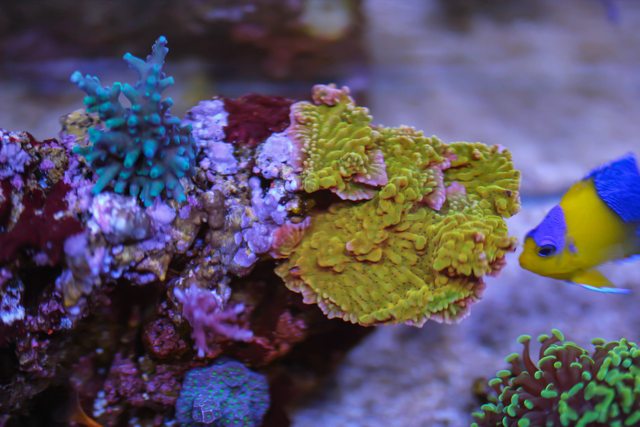
Taken April 2nd after using the Trident for about 2 and a half months. Coral is now vibrant gold with a pink rim.

GbzITTtl.jpg
 

MnFish1

10K Club member
View Badges
Joined
Dec 28, 2016
Messages
26,916
Reaction score
24,617
Location
Midwest
Rating - 100%
2   0   0
I think consistency in dosing is a major part of a successful reef tank but only one piece of the equation. Lighting is another key part. Feeding and nutrient removal is a big part. And finally trace elements and ph stability is huge too. I think a lot of people will look at trident to be the end all be all solution to having the best reef tank, but it’s only a step closer.

Yes. My philosophy is I will never again try to use my Apex (or any other controller) manage important tasks on my tanks - like 'dosing'. Its one thing to get measurements its another to use those measurements to dose with electronically. Just my philosophy
 

MnFish1

10K Club member
View Badges
Joined
Dec 28, 2016
Messages
26,916
Reaction score
24,617
Location
Midwest
Rating - 100%
2   0   0
Reef Raft Nauti Spiral has been my canary in the coal mine coral for seeing the health of my tank.

Brown/Drab Orange pre Trident (Taken early Jan)

1tsovEZl.jpg


Taken April 2nd after using the Trident for about 2 and a half months. Coral is now vibrant gold with a pink rim.

GbzITTtl.jpg
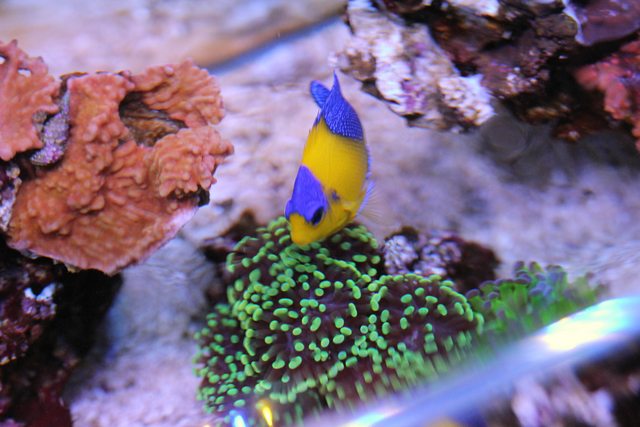
Nice coral - what kind of fish is that. Do you have any idea whats 'different' with the trident i.e. are you dosing based on the measurements and how? Do you see any correlation if you look at the graph of pH and alkalinity in your tank?

BTW - what I'm asking is - is the trident really changing your dosing more often than it was being changed before?
 

JeffB418

Well-Known Member
View Badges
Joined
Jan 3, 2016
Messages
922
Reaction score
832
Rating - 0%
0   0   0
Yes. My philosophy is I will never again try to use my Apex (or any other controller) manage important tasks on my tanks - like 'dosing'. Its one thing to get measurements its another to use those measurements to dose with electronically. Just my philosophy

Yes. I forever will want to be in the feedback loop for any changes that happen to any regimen.
 

eg8r210

Well-Known Member
View Badges
Joined
Nov 25, 2012
Messages
749
Reaction score
303
Location
Minneola, FL
Rating - 0%
0   0   0
The problem is there is no 'gold standard'. So take a solution with a known alkalinity (by a gold standard test) - Lets say you get an alkalinity of 7.8 on a Hannah checker - 7 on API, 8 on Salifert, and 7.5 on a trident - which one do you believe? Firstly - with the API test kit any of those results are within the 'margin of error. So I can see the point of saying 'whats the point'. I'm sure when the Trident is released the accuracy and precision will be published with the manual. Also - the fact that the machine is calibrated against a 'known standard' - which the other tests are not - also makes a difference.

One thing I agree with you on - I'm not sure its proven (yet) that having any tighter control on Alkalinity than we do already with the test kits we have will make a difference - it might - and it will be interesting to see results comparing tight control with the 'old fashioned' methods. I certainly wouldn't buy any automated alkalinity tester until it was shown to make a large difference in health/growth, etc of fish/corals etc in the tank.
HAHA you quoted me before I had a chance to edit the perceived "mean" part of my post. My view is that all these automated machines might be more accurate but not to a degree that is impactful. Where they help is that there is some level of testing actually happening because many people simply don't bother to test. At the same time it also feeds the desire to be lazy. One less thing to do around the tank. I like that the automated testing has allowed greater visibility to changes in the chemistry at different times of the day without the need to wake up in the middle of the night to test repeatedly for a week/month/year to see trends. The CoralVue KHG is the pioneer and has by far the most experience and data available. I would compare the results of Triton to the KHG, Salifert, API, Red Sea, Alkatronic etc and if Triton is close then it is probably good enough. Triton offers nothing new in terms of performance or capability other than reading calcium and Mg which other companies will follow suit.
 

MnFish1

10K Club member
View Badges
Joined
Dec 28, 2016
Messages
26,916
Reaction score
24,617
Location
Midwest
Rating - 100%
2   0   0
HAHA you quoted me before I had a chance to edit the perceived "mean" part of my post. My view is that all these automated machines might be more accurate but not to a degree that is impactful. Where they help is that there is some level of testing actually happening because many people simply don't bother to test. At the same time it also feeds the desire to be lazy. One less thing to do around the tank. I like that the automated testing has allowed greater visibility to changes in the chemistry at different times of the day without the need to wake up in the middle of the night to test repeatedly for a week/month/year to see trends. The CoralVue KHG is the pioneer and has by far the most experience and data available. I would compare the results of Triton to the KHG, Salifert, API, Red Sea, Alkatronic etc and if Triton is close then it is probably good enough. Triton offers nothing new in terms of performance or capability other than reading calcium and Mg which other companies will follow suit.

I agree - in addition - (No offense to Neptune) - Except to sell more reagents - I see no value in testing Mg more than once every couple months - and Ca perhaps every 2-4 weeks. It may be helpful when trying to start dosing in a new tank especially - but not for Mg.
 

eschulist

Active Member
View Badges
Joined
Apr 4, 2012
Messages
354
Reaction score
788
Location
Minneapolis
Rating - 0%
0   0   0
Nice coral - what kind of fish is that. Do you have any idea whats 'different' with the trident i.e. are you dosing based on the measurements and how? Do you see any correlation if you look at the graph of pH and alkalinity in your tank?

Fish is a Venustus Angelfish from Diver’s Den.

I run a 12 gallon tank so my parameters and stability to keep sps has always been a challenge. After turning on the Trident I saw large swings in all 3 parameters for a few weeks. Eventually I was able to dial in my daily dosage. Testing a few times a week with a manual test gets you close but testing 4 times a day reveals ebbs and flow due to light cycles and salinity. Eventually I nailed my dosage into fractions of a ml. And since things were now stable consumption has been steadily increasing. I can see this trend and adjust to compensate.
 

MnFish1

10K Club member
View Badges
Joined
Dec 28, 2016
Messages
26,916
Reaction score
24,617
Location
Midwest
Rating - 100%
2   0   0
Fish is a Venustus Angelfish from Diver’s Den.

I run a 12 gallon tank so my parameters and stability to keep sps has always been a challenge. After turning on the Trident I saw large swings in all 3 parameters for a few weeks. Eventually I was able to dial in my daily dosage. Testing a few times a week with a manual test gets you close but testing 4 times a day reveals ebbs and flow due to light cycles and salinity. Eventually I nailed my dosage into fractions of a ml. And since things were now stable consumption has been steadily increasing. I can see this trend and adjust to compensate.
Yes - with a smaller tank - it makes sense.
 

NeveSSL

2500 Club Member
View Badges
Joined
Jul 20, 2007
Messages
2,706
Reaction score
263
Location
Kodak
Rating - 0%
0   0   0
Fish is a Venustus Angelfish from Diver’s Den.

I run a 12 gallon tank so my parameters and stability to keep sps has always been a challenge. After turning on the Trident I saw large swings in all 3 parameters for a few weeks. Eventually I was able to dial in my daily dosage. Testing a few times a week with a manual test gets you close but testing 4 times a day reveals ebbs and flow due to light cycles and salinity. Eventually I nailed my dosage into fractions of a ml. And since things were now stable consumption has been steadily increasing. I can see this trend and adjust to compensate.
And that is precisely what most of us want. This, to me, is the biggest point of getting a Trident.

Brandon
 
U

User1

Guest
View Badges
Just manually tested my tank, as usual hated every second of it. Can’t wait for this to come out

Just a quick note that your dog (pictured in your avatar) texted me to say how much he/she also hated every second of it. Something along the lines that you spend too much time playing mad scientist rather than going for coffee or a puppychino and play time ;)

I'm teasing (not really, your dog has mad texting skills) - I also did some testing and didn't find it much enjoyable either. So put me in the same camp as you.
 

JeffB418

Well-Known Member
View Badges
Joined
Jan 3, 2016
Messages
922
Reaction score
832
Rating - 0%
0   0   0
And while alk/calc/mag are “the holy trinity” of testing. I think phos and nitrate testing has far more impact. I’ve had much more issues with those levels causing major tank issues.
 
Status
Not open for further replies.

TOP 10 Trending Threads

WHAT AMOUNT OF LIVE ROCK AND SAND SHOULD BE PRIORITIZED FOR OPTIMAL BIODIVERSITY/FILTRATION?

  • 100% live rock + bagged sand

    Votes: 38 26.6%
  • 100% dry rock + 100% live sand

    Votes: 48 33.6%
  • 50/50 live/dry rock, 50/50 live/bagged sand

    Votes: 32 22.4%
  • 75% live rock, 25% live sand

    Votes: 15 10.5%
  • 25% live rock, 75% live sand

    Votes: 10 7.0%
Back
Top