Wrasse Ich... disappearing?

KadeSirin

Community Member
View Badges
Joined
Feb 28, 2019
Messages
87
Reaction score
66
Location
Las Vegas, NV
Rating - 0%
0   0   0
So I have this carpenter's flasher wrasse that's currently undergoing observation in my QT tank, well, its less of a QT tank than a FOWLR tank made with leftover rock and sand. However, all fish hit this tank before they go into the DT.

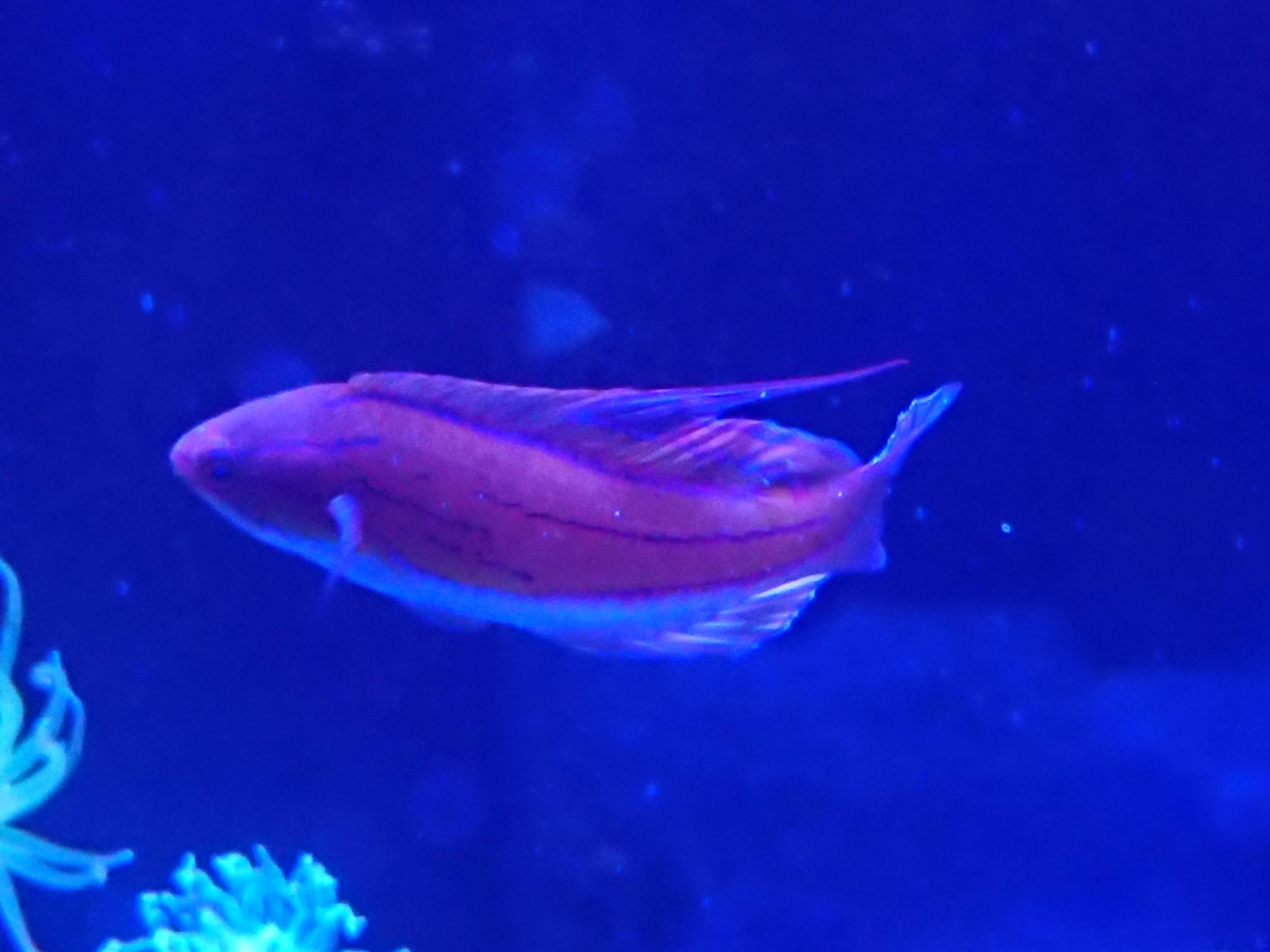
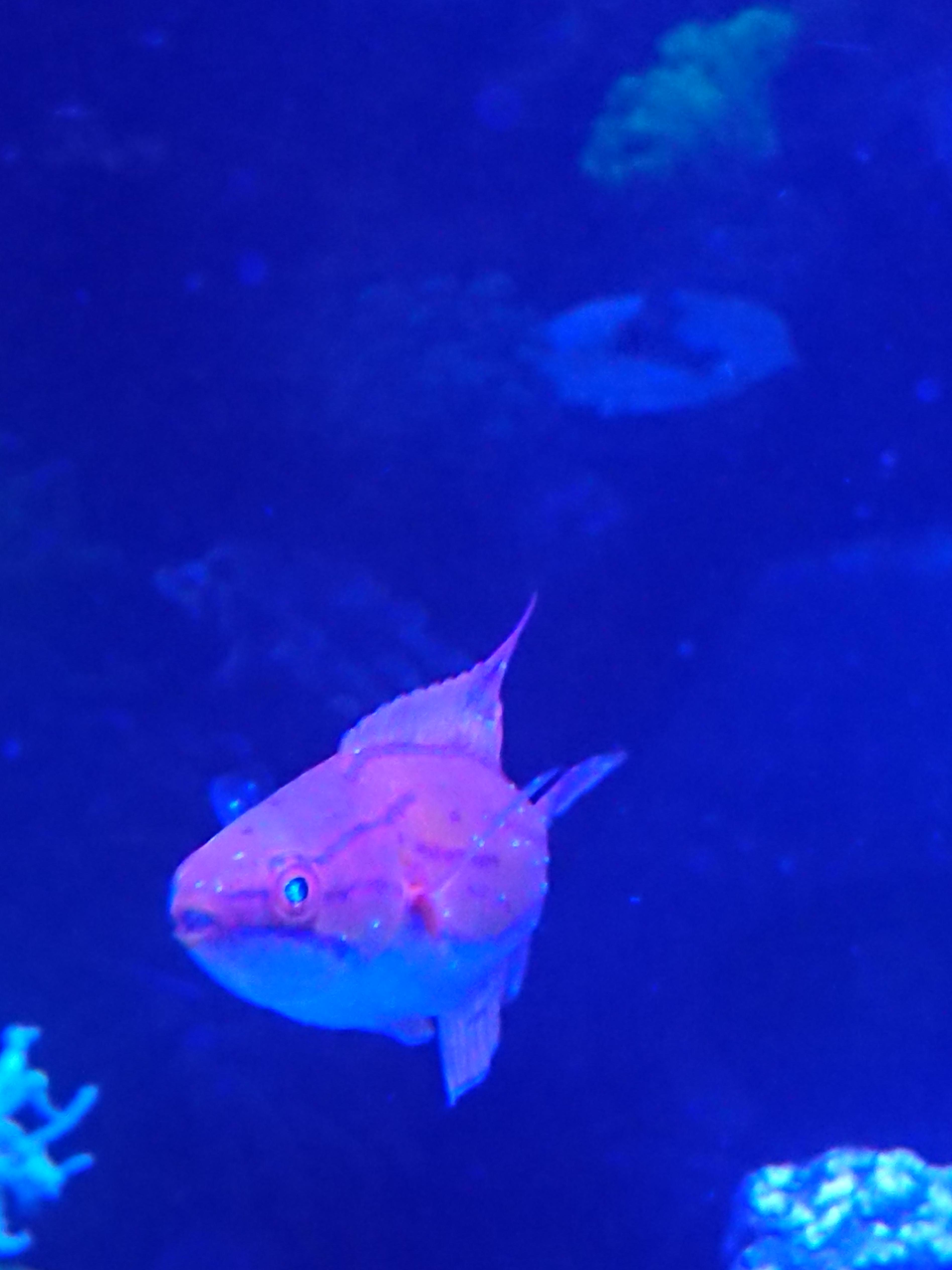
Anyways, for the last two nights, I've seen spots on the fish, apologies for the horrid photos, but it won't really hold still.
Earlier this evening:
mydx3UK.jpg

Yesterday:
RSfYJHL.jpg


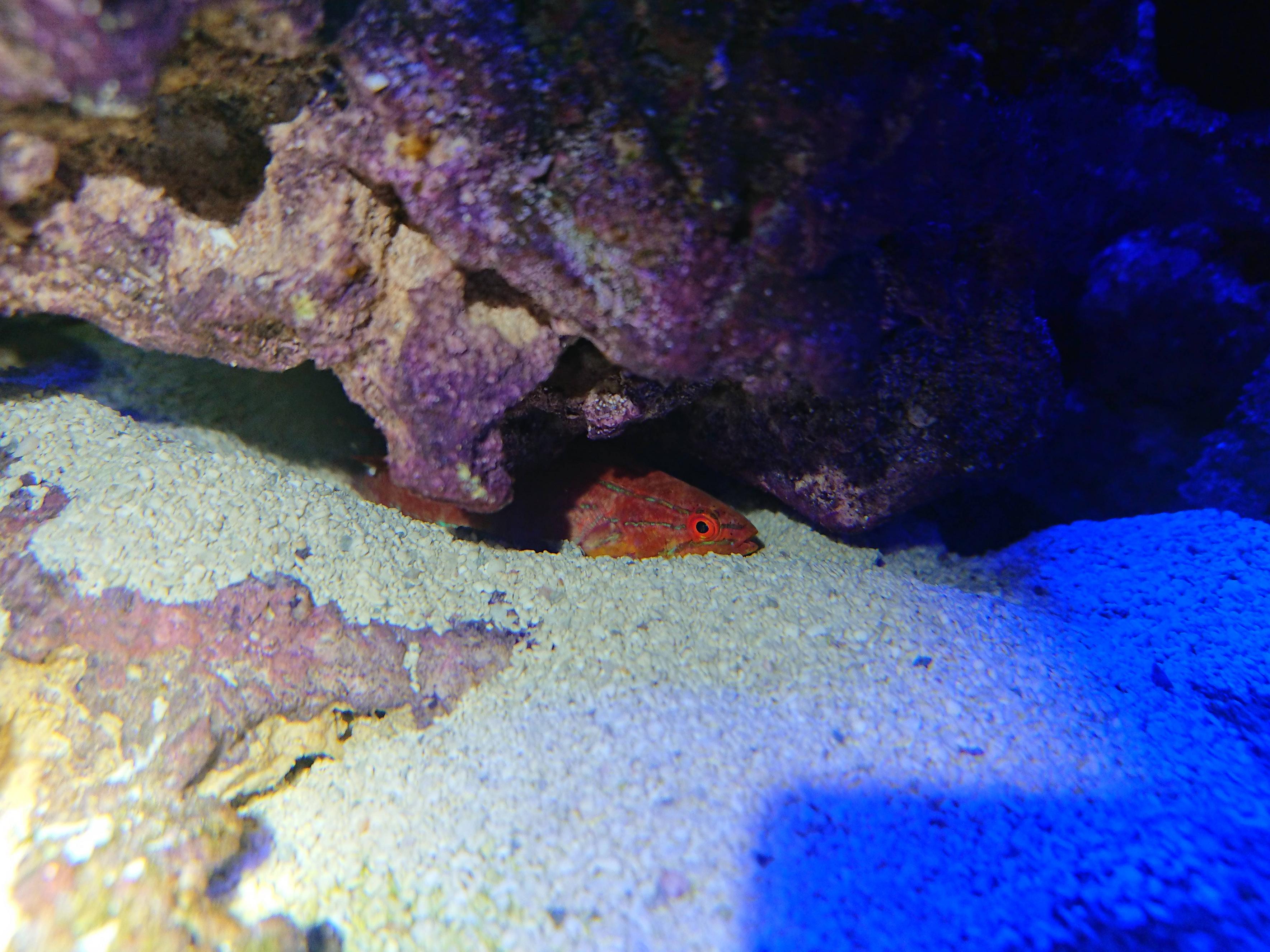
However, now that's its laying down in the sand for the night, I checked on the fish...
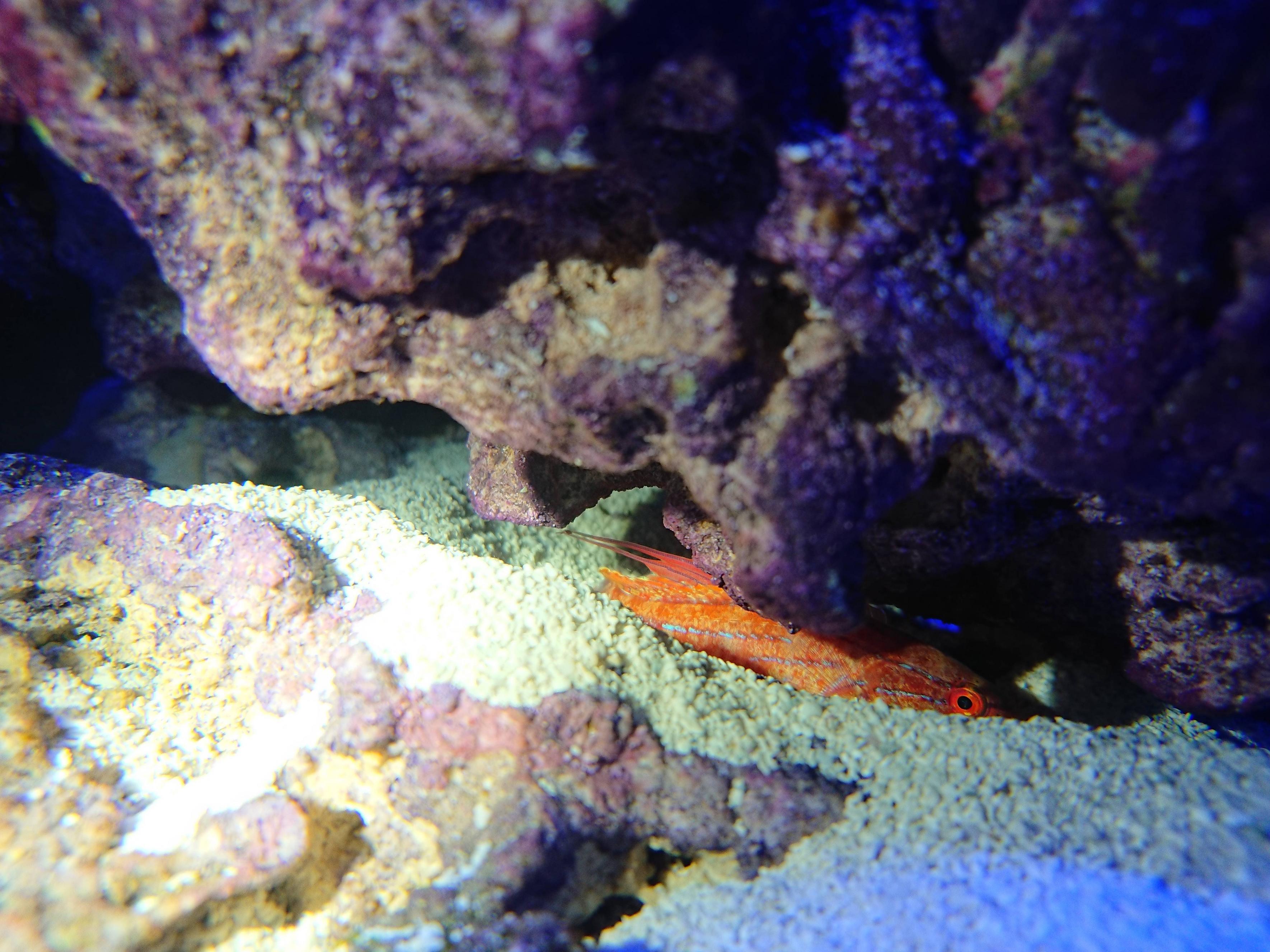
G0wGniL.jpg

m5gRhkX.jpg

4j0l3AX.jpg

I can't see any ich spots.

Should I dose my tank with Cupramine to therapeutic levels regardless? This wrasse is eating well, and I think it should handle the treatment well.

 

ngoodermuth

5000 Club Member
View Badges
Joined
Mar 4, 2011
Messages
5,217
Reaction score
11,975
Location
York, PA
Rating - 0%
0   0   0
I would treat it yes, before it goes into your DT. Wrasses are pretty “resistant” to ich, and with spots coming and going that quickly (part of the parasite’s natural lifecycle, they drop to the substrate to reproduce)... I’d say velvet is a very strong possibility also.

It would be better to replace the live rock with PVC elbows first. Live rock will absorb and leach copper, and make it very hard to hold steady once it gets to therapeutic (.5 for Cupramine) Make sure you raise the level very slowly for wrasses and test often. Even as long as a week to get there - I’ve never had issues with wrasses in copper as long as the level is brought up very slowly.
 

LAReefer4Life

Lover of Angelfish
View Badges
Joined
Feb 11, 2019
Messages
3,022
Reaction score
7,842
Location
LOS ANGELES CA
Rating - 0%
0   0   0
As @ngoodermuth mentioned, you will want to treat with cupramine as it treats both ich and velvet. If you choose not to treat even if symptoms look better, you're taking a huge risk of infecting all the fish in your DT. Trust me, its not worth it!

The sand in your tank will absorb copper too. Keep in mind dosing cupramine will seed your tank, filter, heater, etc so you won't be able to home LR/LS and inverts with this equipment. You're other option is to purchase a cheap 10 gallon tank setup, filter, ammonia badge, and heater and treat your wrasse in there. Conduct large water changes when ammonia readings conclude to do so.

Raise cupramine over 2-3 days to recommend .5 therapeutic levels and do not use any ammonia reducing agents such as PRIME when medicating with copper.

Good luck!
 

Neo Jeo

Valuable Member
View Badges
Joined
Dec 6, 2017
Messages
2,475
Reaction score
2,858
Location
East Michigan
Rating - 0%
0   0   0
My wrasse eye was popping out. He hid for a few days then when he was feeling better he came back out. They hide when sick.
 
OP
OP
KadeSirin

KadeSirin

Community Member
View Badges
Joined
Feb 28, 2019
Messages
87
Reaction score
66
Location
Las Vegas, NV
Rating - 0%
0   0   0
Okay so treatment plan:
Live rock is coming out.
PVC elbows going in.
Remove most of the sand.
Slowly raise copper level over two days.
Feed lighter than usual.
Hold at treatment levels for 14 days.
So daily 10% water change to handle ammonia.
- water change water will already have copper added.
Make sure there's power head and extra bubblers in the tank for oxygenation.

Anything else? I'm glad this is my qt tank for new fish, I really don't want to catch all my gobies. However it's my first time dealing with an infected fish.
 

LAReefer4Life

Lover of Angelfish
View Badges
Joined
Feb 11, 2019
Messages
3,022
Reaction score
7,842
Location
LOS ANGELES CA
Rating - 0%
0   0   0
Okay so treatment plan:
Live rock is coming out.
PVC elbows going in.
Remove most of the sand.
Slowly raise copper level over two days.
Feed lighter than usual.
Hold at treatment levels for 14 days.
So daily 10% water change to handle ammonia.
- water change water will already have copper added.
Make sure there's power head and extra bubblers in the tank for oxygenation.

Anything else? I'm glad this is my qt tank for new fish, I really don't want to catch all my gobies. However it's my first time dealing with an infected fish.

Looking good! One recommendation. Hold at therapeutic levels for 4 weeks. I've read nightmare stories about people adding fish into DT after 2 weeks of treatment and all hell breaks loose.
 
OP
OP
KadeSirin

KadeSirin

Community Member
View Badges
Joined
Feb 28, 2019
Messages
87
Reaction score
66
Location
Las Vegas, NV
Rating - 0%
0   0   0
Looking good! One recommendation. Hold at therapeutic levels for 4 weeks. I've read nightmare stories about people adding fish into DT after 2 weeks of treatment and all hell breaks loose.
noted, increasing the treatment length to 4 weeks, 30 days.


I'm also reading up on tank transfer method. Is that something I should try on this fish? Seems to be less harsh and a little faster.

Can I premix new salt water with copper? So all the water will come from the same batch?
 

LAReefer4Life

Lover of Angelfish
View Badges
Joined
Feb 11, 2019
Messages
3,022
Reaction score
7,842
Location
LOS ANGELES CA
Rating - 0%
0   0   0
noted, increasing the treatment length to 4 weeks, 30 days.


I'm also reading up on tank transfer method. Is that something I should try on this fish? Seems to be less harsh and a little faster.

Can I premix new salt water with copper? So all the water will come from the same batch?

I prefer cupramine over TTM as you're approaching this treatment for possible velvet. Less room from error.

In regards to mixing copper with new salt water, I'd first mix the water and before adding into the tank dose the copper accordingly.
 
OP
OP
KadeSirin

KadeSirin

Community Member
View Badges
Joined
Feb 28, 2019
Messages
87
Reaction score
66
Location
Las Vegas, NV
Rating - 0%
0   0   0
I prefer cupramine over TTM as you're approaching this treatment for possible velvet. Less room from error.

In regards to mixing copper with new salt water, I'd first mix the water and before adding into the tank dose the copper accordingly.
Got it. I'll remove the rock and sand later today and will begin dosing the copper. I'll hold the level for 30 days. Maybe I'll do treatment in a different tank leave this qt tank to go fallow for 80 days.

Thanks for the info. Hopefully this guy pulls through.
 
OP
OP
KadeSirin

KadeSirin

Community Member
View Badges
Joined
Feb 28, 2019
Messages
87
Reaction score
66
Location
Las Vegas, NV
Rating - 0%
0   0   0
One question that popped into my head. If I do a water change and the water I'm adding doesn't have copper, it may lower the tank concentration below the 0.5 cupramine theraputic level.

Does that reset the clock?
 

ngoodermuth

5000 Club Member
View Badges
Joined
Mar 4, 2011
Messages
5,217
Reaction score
11,975
Location
York, PA
Rating - 0%
0   0   0
TTM only treats ich, not velvet.

You can however, use @HotRocks method with two QT’s... 14 days at therapeutic level copper in QT one. Then, without lowering the copper level in the first tank, transfer the fish over to a second sterile QT.

There, observe for two to three more weeks to ensure treatment was successful. Also, you may decide to check for flukes in the second QT (5-minute freshwater dip) or cover them preemptively with two doses of praziquantel (Prazipro or General Cure, careful not to overdose with wrasses... account for any water displacement) 5-7 days apart.
 

ngoodermuth

5000 Club Member
View Badges
Joined
Mar 4, 2011
Messages
5,217
Reaction score
11,975
Location
York, PA
Rating - 0%
0   0   0
One question that popped into my head. If I do a water change and the water I'm adding doesn't have copper, it may lower the tank concentration below the 0.5 cupramine theraputic level.

Does that reset the clock?

Yes, waterchange water should be pre-dosed with copper to match the QT BEFORE it hits the tank. You want to keep as steady as possible at .5, the therapeutic margin is pretty slim. Below .4 is risky, and much over .6-.8 is considered toxic.
 

MnFish1

10K Club member
View Badges
Joined
Dec 28, 2016
Messages
26,916
Reaction score
24,616
Location
Midwest
Rating - 100%
2   0   0
@ngoodermuth While it 'could be velvet' - It doesn't look like velvet (does it)? Just curious why you mentioned that. It looks like classic CI (which often drops off the fish - only to be infected later).

To the OP - I would remove all of the rock and sand - sterilize the tank - do not use the filter you are using - unless its cleaned - get an ammonia badge (i.e. turn it into a sterile treatment tank with copper and PVC pipes). OR - keep the current 'QT' tank you have - and set up another sterile 'treatment tank' for copper use. (if you keep your current tank running you will need to leave it fallow for 76+ days before adding new fish)

Note that if you like sand and rock in a QT observation tank - you need to clean it completely every time you put in a new batch of fish. Its been clearly shown that some fish can have CI or velvet and be completely asymptomatic - thus the fish you have in that tank can contaminate it with CI or velvet - even though you dont realize it. So - unless you leave that tank fallow for at least 76 days between QT - you're inviting trouble from my experience in observation QT.

Note also that many zoos, etc use a 90 day observation period - as they have found velvet occurring up to 65 days after introducing fish into QT (observation). Thus - if you observe for a month - you could find velvet in your tank a month later 'for no apparent reason'.
 

ngoodermuth

5000 Club Member
View Badges
Joined
Mar 4, 2011
Messages
5,217
Reaction score
11,975
Location
York, PA
Rating - 0%
0   0   0
@ngoodermuth While it 'could be velvet' - It doesn't look like velvet (does it)? Just curious why you mentioned that. It looks like classic CI (which often drops off the fish - only to be infected later).
'.

I’m admittedly not great at seeing the difference in size via photographs... but tiny dots and numerous, coupled with the short time-frame (hours) between parasites showing up and dropping back off, and the fish in question, makes me think it could be velvet vs. ich. But, the treatment is the same in any case.
 
OP
OP
KadeSirin

KadeSirin

Community Member
View Badges
Joined
Feb 28, 2019
Messages
87
Reaction score
66
Location
Las Vegas, NV
Rating - 0%
0   0   0
To the OP - I would remove all of the rock and sand - sterilize the tank - do not use the filter you are using - unless its cleaned - get an ammonia badge (i.e. turn it into a sterile treatment tank with copper and PVC pipes). OR - keep the current 'QT' tank you have - and set up another sterile 'treatment tank' for copper use. (if you keep your current tank running you will need to leave it fallow for 76+ days before adding new fish)

Note that if you like sand and rock in a QT observation tank - you need to clean it completely every time you put in a new batch of fish. Its been clearly shown that some fish can have CI or velvet and be completely asymptomatic - thus the fish you have in that tank can contaminate it with CI or velvet - even though you dont realize it. So - unless you leave that tank fallow for at least 76 days between QT - you're inviting trouble from my experience in observation QT.
I'm paranoid about getting anything in my DT.... so I've updated my plan. Also, my "observation" tank will be fallow for at least 80 days.
So updated plan:
  • Make new saltwater - 1.026 SG (matching display).
  • Prep treatment tank.
    • Treatment tank is a 30 gal tub, will be filled to appx 25 gal.
    • PVC Elbows for space serves as tunnels
    • 150w heater w/ inkbird controller
    • Hydor 425 circulation powerhead
    • seachem alert badge
    • Aquaclear 110 hob filter
    • Innovative marine Hydro Fill Ti ATO w/ 1 gal bottle
  • Fill and ensure treatment tank is at correct temp and SG.
  • Add fritz turbostart 900 or Dr Tim's.
  • Wait 24hrs...
  • Fish gets transferred from QT/observation tank to treatment tank.
  • Using an automatic pipettor or doser (I have both) dose 2.38 ml of cupermine over 2 days to achieve 0.5 ppm concentration. I may overshoot and target 0.52 or 0.53 so something like 2.5 ml or 2.6 ml will be dosed.
    • Test daily to verify copper levels.
  • Once things are stable, the wrasse (or any other future fish that will need treatment) will stay in treatment for 30 days
    • Fish will be fed daily, with food being a mix between frozen or flake/pellet soaked in selcon.
    • Water changes will also occur daily, likely 1 gal per day to remove waste and control ammonia. Probably bigger change when the alert badge starts to see a problem.
  • On day 31, I will run a HOB carbon reactor to remove the copper from the system.
  • On day 38, I will remove the HOB carbon reactor. (or should I just leave it on the whole time?)
  • On day 91, the wrasse will be moved back into the observation tank
  • On day 100, if the wrasse is clean of disease and looking good, it will be introduced into the display system.
I’m admittedly not great at seeing the difference in size via photographs... but tiny dots and numerous, coupled with the short time-frame (hours) between parasites showing up and dropping back off, and the fish in question, makes me think it could be velvet vs. ich. But, the treatment is the same in any case.
The dots are very tiny and today, comparing pictures, showed up in the same spot. In the morning, the spots are gone. In the afternoon, they're obviously there.

My gut says ich, but this is the first infected fish I've worked with and have to treat.
 

ngoodermuth

5000 Club Member
View Badges
Joined
Mar 4, 2011
Messages
5,217
Reaction score
11,975
Location
York, PA
Rating - 0%
0   0   0
My gut says ich, but this is the first infected fish I've worked with and have to treat.

Being that you are the one there observing the fish in person, I trust your intuition. It may very well be, and even if it is... you still don’t want it in your DT. The benefit of dealing with ich vs. velvet is you have a bit more time on your side for ramping up copper etc, since ich generally doesn’t kill quite so fast.
 
OP
OP
KadeSirin

KadeSirin

Community Member
View Badges
Joined
Feb 28, 2019
Messages
87
Reaction score
66
Location
Las Vegas, NV
Rating - 0%
0   0   0
So here's an update.

Good news: the wrasse is taking treatment well, no issues yet. Doing a daily 1 gal water change and the alert badge hasn't moved. He's still eating, though not as heartily as it was previously. I'm pretty sure its extremely stressed out. Currently day 3/30, 10% of the way through.
Notes:
  • Went into treatment on Saturday.
  • 2.5ml of Seachem cupermine was dosed over 36 hrs via automatic syringe.
  • Feedings were provided at usual times, two daily, light (compared to usual feed)
    • Day 1 and Day 2 at full strength he ate well and aggressively.
    • Day 3 did not eat as aggressively.
  • Excess food is vacuumed out and water replaced with pre-treated 0.52 copper water at 1.0262 sg.
  • More ich spots have appeared on the fish's fins.

Bad news: I'm an idiot. I used the same pipettor tip that I was using to test water in the now fallow observation tank to sample water from my main display tank. I keep them separate for a reason and now I just intermingled them. To be on the safe side, I'm sure I need to treat everything in my DT and allow it to go through the fallow period as with the observation tank, but this is going to be a pain and I've got pipefish. So now I'm preparing for that....
 
Last edited:

TOP 10 Trending Threads

WHAT AMOUNT OF LIVE ROCK AND SAND SHOULD BE PRIORITIZED FOR OPTIMAL BIODIVERSITY/FILTRATION?

  • 100% live rock + bagged sand

    Votes: 34 28.1%
  • 100% dry rock + 100% live sand

    Votes: 41 33.9%
  • 50/50 live/dry rock, 50/50 live/bagged sand

    Votes: 27 22.3%
  • 75% live rock, 25% live sand

    Votes: 11 9.1%
  • 25% live rock, 75% live sand

    Votes: 8 6.6%
Back
Top