Follow along with the video below to see how to install our site as a web app on your home screen.
Note: This feature may not be available in some browsers.
Hey Eagle Steve , thank you very much for the informative information . And thank you everyone with your replies to my post . I really love these uniquely bold and intelligent creatures and I feel fortunate that these goby s have felt secure in laying this cluster of eggs. I once long ago bred several tropical frog species most of which were dendrobates and enjoyed witnessing the morphing from egg to tadpole to frog . So I am very excited to watch the rearing of these goby s . I am curious if the adults will eat the larvae upon hatching ?Larval (dang auto-correct put larvae, they are not bugs lol) trap is best, as that is what I have had to use, since mine never lay eggs where it makes it easy to get. As for food, I have had success with rotifiers, copepods naupleii as @Surfzone mentioned, and then moving to fresh hatched baby brine shrimp/very small pellets. Of course regualr frozen when they get big enough. This was with the Green Clown Gobys (Gobiodon atrangulatus), but I would think pretty much the same thing.
Best of luck if you decide to rear them. I do not have the time anymore, so gave up on the whole ordeal. It is very time consuming for sure.

I have never kept the adults once they hatched. The fry were always in their own setup.Hey Eagle Steve , thank you very much for the informative information . And thank you everyone with your replies to my post . I really love these uniquely bold and intelligent creatures and I feel fortunate that these goby s have felt secure in laying this cluster of eggs. I once long ago bred several tropical frog species most of which were dendrobates and enjoyed witnessing the morphing from egg to tadpole to frog . So I am very excited to watch the rearing of these goby s . I am curious if the adults will eat the larvae upon hatching ?
Yes the eggs can be carefully scraped off (the 5 night) and put in a dark place to hatch, they usually hatch within 1/2 hour.Hey ,
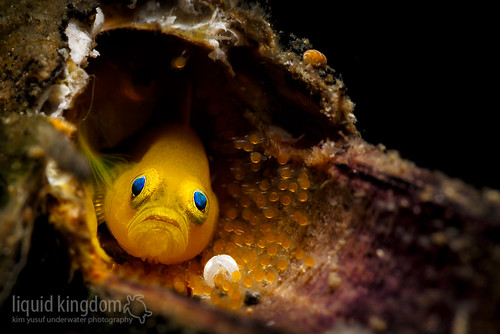
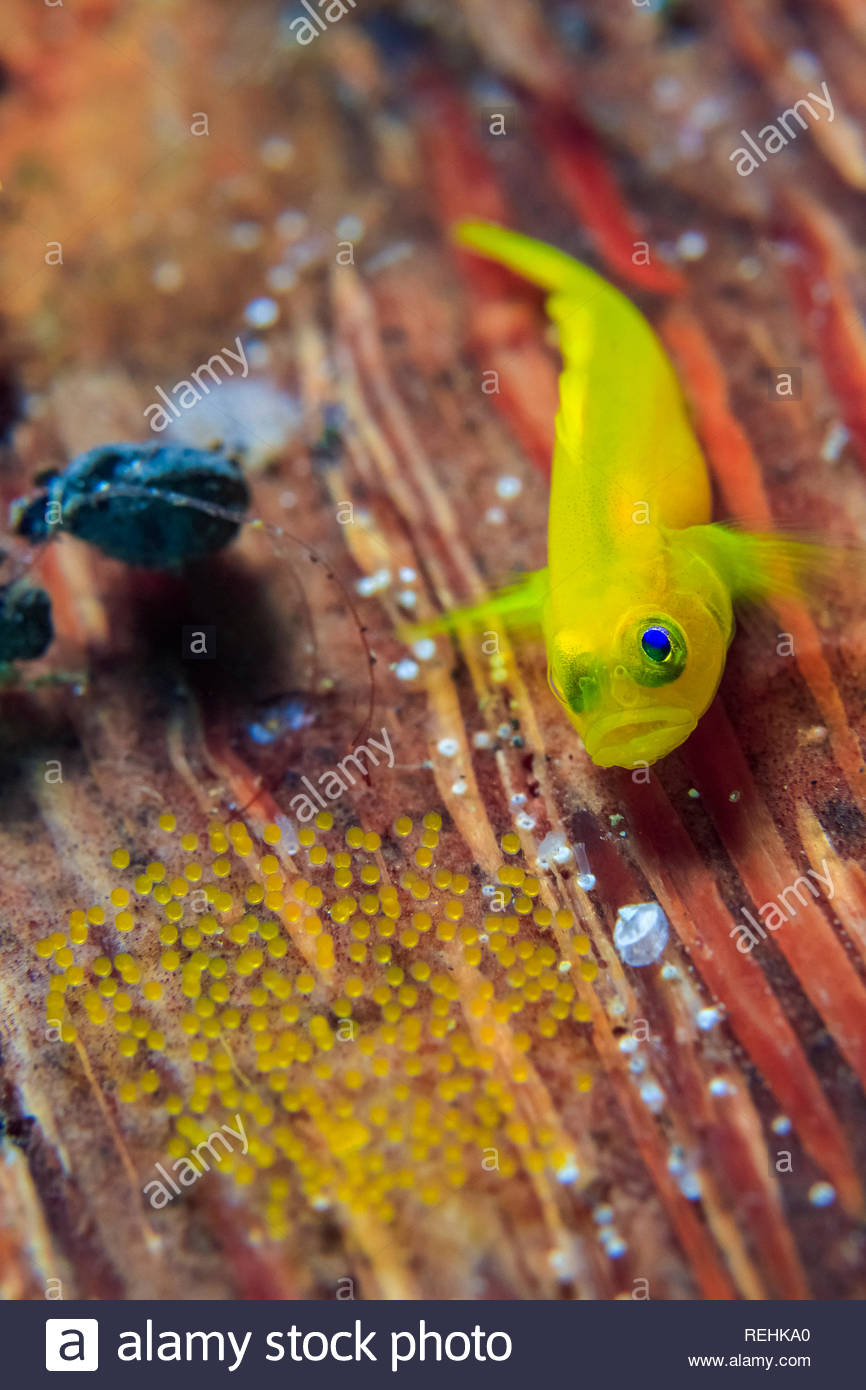
I added 3 Yellow Clown Goby`s to my 16 Biocube a few days ago . I found a egg cluster on the glass near the top of the tank YAYYYY :) .
I need advise on getting these eggs to hatch . Should I isolate the cluster to another tank ? No
Is there any vertebrates that i need to worry about eating the eggs ? Usually not
I read that they hatch in approx 5 days -correct, but can hatch early or late depending on temperature
and feed them brine shrimp or copepods etc.
Any advice would be great Thanks
Yes the adults will eat the larvae, so will other fish, coral, Inverts, etc.Hey Eagle Steve , thank you very much for the informative information . And thank you everyone with your replies to my post . I really love these uniquely bold and intelligent creatures and I feel fortunate that these goby s have felt secure in laying this cluster of eggs. I once long ago bred several tropical frog species most of which were dendrobates and enjoyed witnessing the morphing from egg to tadpole to frog . So I am very excited to watch the rearing of these goby s . I am curious if the adults will eat the larvae upon hatching ?
Thank you for the assistance. Can zooplankton and or phytoplankton also be use to feed if nauplii is hard to find. ?Yes the eggs can be carefully scraped off (the 5 night) and put in a dark place to hatch, they usually hatch within 1/2 hour.
You will need lots of parvocalanus nauplii to feed them for the first 14-21 days then rotifers.
Should start settling around day 40 (others have reported settling from day 33 to 60).
You can (and probably should) mix phytoplankton with the nauplii and then eventually rotifers, but phytoplankton by itself likely won't be enough. As @Surfzone suggested, you can get several Reef Nutrition fry foods as well as their rotifer culturing system (if you plan to be serious about raising fry). A few of other suggestions - (1) if the gobies are well cared for and well feed they should continue to breed so treat the first couple of batches as a learning experience and don't stress out about success rates, (2) place a half of a terra cotta pot in the tank and cross your fingers that they will start laying their eggs inside the roof of the pots so you can move the eggs before hatching in the future, and (3) buy the book "The Complete Illustrated Breeder's Guide to Marine Aquarium Fishes (Wittenrich, 2007) which does have a section on gobies. Good luck!Thank you for the assistance. Can zooplankton and or phytoplankton also be use to feed if nauplii is hard to find. ?
Phytoplankton probably not, zooplankton yes you definitely have a great chance for success. The big aquaculture institutions are isolating individual types of copepods out of the zooplankton that the larvae are consuming. Hobbyists are following what they are reporting having success with. Big thanks to Reef Nutrition for making a couple of them readily available to hobbyists.Thank you for the assistance. Can zooplankton and or phytoplankton also be use to feed if nauplii is hard to find. ?