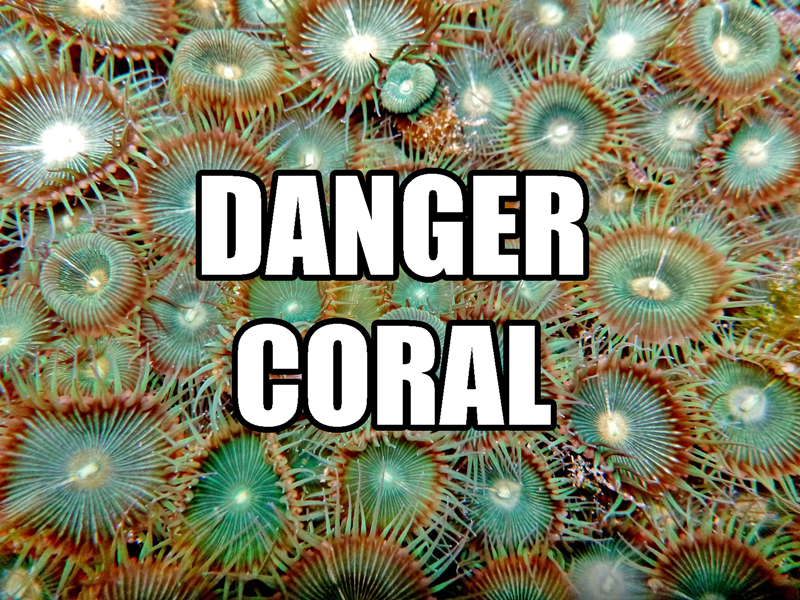
Are Zoanthids true corals??

Steph1

Active Member
View Badges
Joined
Jul 25, 2020
Messages
449
Reaction score
569
Location
Australia
Rating - 0%
0   0   0
Hi Guys, I have heard that Zoanthids are not true corals but are most closly related to jelly fish and Anenome. Are there aby experts here that can put some light on this for me?

 

John08007

Well-Known Member
View Badges
Joined
Apr 4, 2019
Messages
948
Reaction score
635
Rating - 0%
0   0   0
Not an expert but they seem close to a green star polyp to me.
 

Lybia

New Member
View Badges
Joined
Sep 11, 2020
Messages
11
Reaction score
32
Location
USA
Rating - 0%
0   0   0
All corals are Cnidaria, meaning that all corals are quite related to jellyfish and anemones. Hard or stony corals are Hexacorallia, which also includes anemones and zoas. Whereas what most of us consider soft corals are Octocorallia, but some corals we consider softies are actually Hexacorallia (our hobby terms are based on physical appearance and care, not actual genetic relations. The term coral is actually a bit up in the air because.... well there isn't a single taxonomic classification that includes ONLY and ALL of what we consider corals. You see... all corals are Cnidaria, but this includes anemones and jellyfish too. Anthozoa is a more specific classification under Cnidaria that contains both Hexacorallia and Octocorallia, which is essentially contains almost all of the corals in our hobby, but sea anemones are also both Anthozoans and within Hexacorallia. There is also another Class under the phyumn Cnidaria which contains some "corals", this is Hydrozoa, and contains Milleporina (most don't consider these true corals but still they have the name fire coral.... if you want to say those under the Class Hydrozoa are not corals, then it makes it simpler... we could say all true corals are under the Class Anthozoa... but we may or may not consider everything in Anthozoa a coral. I don't think most people really call Zoanthids corals within the scientific community, however it is misleading to say that Zoanthids are more related to jellyfish than corals, in fact they are more related to corals than to jellyfish... in fact they are essentially about as related to jellyfish as corals are to jellyfish as well.
Also, Zoanthids also happen to be more related to hard corals than soft corals are to hard corals. In fact, anemones are more related to hard corals than soft corals are to hard corals. Its not JUST the genetic or taxonomic relation that determines what is a coral and isn't a coral. I know that must make it even more confusing.
 

Fezbearer

Active Member
View Badges
Joined
Mar 3, 2020
Messages
465
Reaction score
1,323
Location
Silicon Valley
Rating - 0%
0   0   0
giphy.gif
 

Coralsdaily

Well-Known Member
View Badges
Joined
Dec 28, 2014
Messages
896
Reaction score
986
Location
Madison WI
Rating - 0%
0   0   0
They are more anemone than they are corals. If you magnify a zoanthid they'd look almost exactly like an anemone with tentacles and a mouth in the middle.
 

PicassoClown04

5000 Club Member
View Badges
Joined
Apr 4, 2020
Messages
6,580
Reaction score
9,696
Location
Houston
Rating - 0%
0   0   0
Hi! Yes, related to anemones but not aggressive. Can peacefully touch other corals but may outcompete them which would lead to the death of the other coral. As long as you keep your zoas trimmed they don’t cause any harm to anything in your tank :)
 

Algaewarrior

Active Member
View Badges
Joined
May 18, 2018
Messages
423
Reaction score
377
Rating - 0%
0   0   0
All corals are Cnidaria, meaning that all corals are quite related to jellyfish and anemones. Hard or stony corals are Hexacorallia, which also includes anemones and zoas. Whereas what most of us consider soft corals are Octocorallia, but some corals we consider softies are actually Hexacorallia (our hobby terms are based on physical appearance and care, not actual genetic relations. The term coral is actually a bit up in the air because.... well there isn't a single taxonomic classification that includes ONLY and ALL of what we consider corals. You see... all corals are Cnidaria, but this includes anemones and jellyfish too. Anthozoa is a more specific classification under Cnidaria that contains both Hexacorallia and Octocorallia, which is essentially contains almost all of the corals in our hobby, but sea anemones are also both Anthozoans and within Hexacorallia. There is also another Class under the phyumn Cnidaria which contains some "corals", this is Hydrozoa, and contains Milleporina (most don't consider these true corals but still they have the name fire coral.... if you want to say those under the Class Hydrozoa are not corals, then it makes it simpler... we could say all true corals are under the Class Anthozoa... but we may or may not consider everything in Anthozoa a coral. I don't think most people really call Zoanthids corals within the scientific community, however it is misleading to say that Zoanthids are more related to jellyfish than corals, in fact they are more related to corals than to jellyfish... in fact they are essentially about as related to jellyfish as corals are to jellyfish as well.
Also, Zoanthids also happen to be more related to hard corals than soft corals are to hard corals. In fact, anemones are more related to hard corals than soft corals are to hard corals. Its not JUST the genetic or taxonomic relation that determines what is a coral and isn't a coral. I know that must make it even more confusing.
giphy.gif
 

Coralsdaily

Well-Known Member
View Badges
Joined
Dec 28, 2014
Messages
896
Reaction score
986
Location
Madison WI
Rating - 0%
0   0   0
Hi! Yes, related to anemones but not aggressive. Can peacefully touch other corals but may outcompete them which would lead to the death of the other coral. As long as you keep your zoas trimmed they don’t cause any harm to anything in your tank :)
They are't aggressive, but I will warn they are extremely toxic to human. I once got really sick from just grazing my hand over some when doing tank chores and I was immobiized for the whole weekend. If you start taste metal in your mouth you are exposed to the toxin.
See this article:
 

scabbedwings616

Well-Known Member
View Badges
Joined
Oct 9, 2014
Messages
802
Reaction score
580
Location
Winthrop
Rating - 0%
0   0   0
They are't aggressive, but I will warn they are extremely toxic to human. I once got really sick from just grazing my hand over some when doing tank chores and I was immobiized for the whole weekend. If you start taste metal in your mouth you are exposed to the toxin.
See this article:
Some are more dangerous than others. I once had my gf and I scrub a rock outside, with glasses on for safety, nd we both got a fever and were sick for 24 hours. to Say they don’t harm other corals is also misleading as they will sting acros at the base and kill them quickly. I’ve lost a few corals due to this hence the scrubbing. Some sps corals will be fine but others may not be ok. Do a little research to what sps can tolerate the zoa.
 
OP
OP
S

Steph1

Active Member
View Badges
Joined
Jul 25, 2020
Messages
449
Reaction score
569
Location
Australia
Rating - 0%
0   0   0
OMG..........I just asked a simple question!

No, was only joking, Lybia, thanks for the great detailed response. Seemed many got a lot out of it including myself:)
 

Coralsdaily

Well-Known Member
View Badges
Joined
Dec 28, 2014
Messages
896
Reaction score
986
Location
Madison WI
Rating - 0%
0   0   0
Some are more dangerous than others. I once had my gf and I scrub a rock outside, with glasses on for safety, nd we both got a fever and were sick for 24 hours. to Say they don’t harm other corals is also misleading as they will sting acros at the base and kill them quickly. I’ve lost a few corals due to this hence the scrubbing. Some sps corals will be fine but others may not be ok. Do a little research to what sps can tolerate the zoa.
That's exactly my experience, I thought I had the flu turned out to be the palytoxin. And I once rubbed my eye after touching them my eyes were swollen for a full day! so many hidden dangers in this hobby.
 

TOP 10 Trending Threads

HOW DO YOU ADJUST YOUR CUC AS ALGAE DISAPPEARS?

  • Capture and re-home CUC

    Votes: 8 7.2%
  • Increase white light/hours in tank to spur algae growth to feed CUC

    Votes: 7 6.3%
  • Feed nori to support CUC

    Votes: 39 35.1%
  • Feed herbivore pellets to support CUC

    Votes: 39 35.1%
  • Allow attrition to balance CUC and algae

    Votes: 47 42.3%
  • Provide macro algae to feed CUC

    Votes: 8 7.2%
  • Introduce CUC predators

    Votes: 1 0.9%
  • Other (please explain)

    Votes: 11 9.9%
Back
Top