Frozen vs. Pellet Foods

I'm no fish disease expert, but I've "heard" that ich can lie dormant for long periods of time and resurface years later. I dunno. I tagged Jay lets see if he can find the time to give us his thoughts on ich dormancy.

I don't think any of us are debating the benefits of good nutrition, however some of the claims made are unsubstantiated. As I said this is a hobbyist discussion, our comments are based on acecdotal evidence, but that has to have some merit right?

The study case was from I think a German science paper/study with ich. My conclusion from it was that the temp being way lower that 77* that they used was the thing that kept ich alive for 70+ days. But I’m referring to a year let’s say of not a single ich stop, is it then in the tank? Temps above 76-77* give ich a need to pop out and look for victims in a tank.

My tanks at times before the fans were installed got up to 81*….. this alone will make ich wake up.

Jay has posted about this some time ago to from what I recall reading. And this study /research is also what started the 76 days fallow haha. I keep telling people 60 days will do. Q

Now uronema is a different story all together. Stuff will love from many things. Bacteria, detritus, uneaten food, poop.
 
To Paul's point, numerous studies demonstrate how sick our populations have become eating highly processed foods. We live long lives but as we age Dr. visits and medication regimens grow to handfuls of pills.
Then there are those healthy 100 year old still walking, active in community and happy. Many eat a Mediterranean style unprocessed diet. The similarities to sick vs healthy fish is 'food' for thought, no?
 
I've got no beef with you Paul, I respect your decades of wisdom on the subject.

It's these statements that you make with such authority that some of us have a problem with. We're not even saying its a bunch of bull, your methods probably have some merit, it's the delivery that's flawed.

You said "I have and can put any fish in my tank with any disease, and the other fish will be fine." is a bold statement to make. Marine Velvet would likely kill all of your fish in 7 days. According to the "experts" there's no immunity to that, QT to remove the pathogen from the fish is the only prevention. I find it obvious to me why fish in the ocean don't die from velvet, and I don't see it as being from their "immunity" to it.

I made a statement in a previous post that my fish never have ich spots on them, I made no other claim as to why other than a good healthy environment. My fish would not survive a velvet outbreak and I'm not going to pretend they would. My fish may or may not survive a heavy outbreak of ich, I don't know I've never had one occur, I've contributed that to my husbandry practices, but perhaps there is not ich present in my tank?
This is very well said, and I echo it completely. There are certain statements that none of us can reliably make, regardless of depth personal experience.
 
I also want to point out that none of us here are Ichthyologists or could even be considered "experts" in the field of fish nutrition, we are experienced hobbyists at best, some more than others. As far as I know, Jay Hemdal could be considered an "expert" and an "authority" on the subject but he has not participated in this thread yet.

#jayhemdal
I can never remember if an @ or a # will send a member an alert. Let’s try the @ this time.

@JayHemdal

Doesn’t look like that worked so 🤔
 
I can never remember if an @ or a # will send a member an alert. Let’s try the @ this time.

@JayHemdal

Doesn’t look like that worked so 🤔


@Jay Hemdal this should work.

Jay some would like some input, no pressure haha. But have a feeling it will turn into the same ol we’ve had here many times. 😁
 
Here on R2R I've yet to see really anyone with a tank that has some truly old fish, something verifiable, something with photo documentation and progression photos, and I'm not talking a 5 year old fish
Almost all of my fish are older than 5. I have a pair of 35 year old Fireclowns that I have been posting pictures of before there were computers or cell phone cameras, in paper magazines.

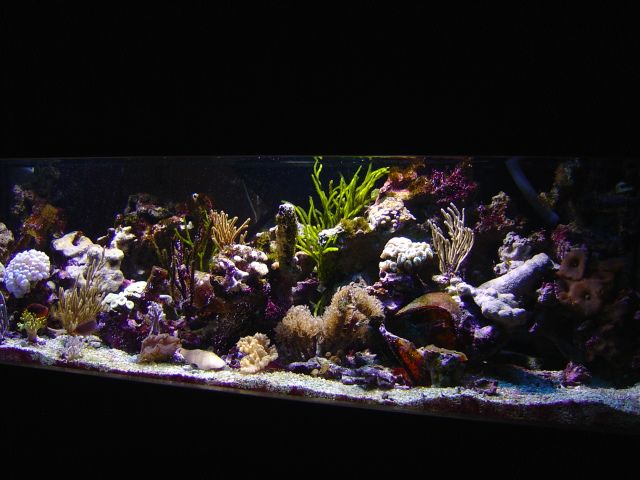
You can see him in this old film picture. He is under the bubble coral all the way to the left.


And today. His mate looks the same.


When this hobby started many of us went for the big, aggressive fish like lionfish, moray eels, clown triggers etc. I am past that. Then many of us went for the pretty tangs, angels and butterflies. I am also past that and now only want small, interesting and if I can find them, rare fish.


Those smaller fish only live about 6 or 7 years and if we get them as adults, you are not going to get too many years out of them but I keep most of them for their presumed lifespan then they die of old age.


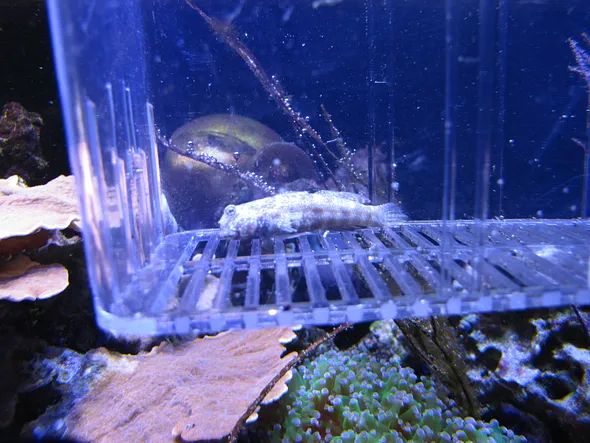
This little gobi is dying of old age after a long life. This is what a fish looks like when it is too old to live as his immune system stopped functioning. This is the best outcome we can have with fish.
Sick Gobi.jpg


This Watchman Goby is also dying of old age after about 10 years.

Her and her mate hatched out many eggs which I have posted many times.


I have posted pictures of that Watchman from when he was a baby through adolescents, mating, spawning and with her eggs.

You don't have to be sick to die. My own Mother lived to 99 years old and never took a pill in her life. We owned a seafood market and thats what we ate. A Mediterranean diet. Almost no processed foods as most Americans eat.
Or….

Show that if you did your entire method and used qt fish, the results would be worse.

Show that if you did your entire method and used dry fish food, the results would be worse.
OK, so my tank is now 50 years old and you want me to start another tank, feed only dry foods and quarantine and keep it running for 50+ years? Is that what you want me to do?

You do realize that I am 77 years old so that may not happen, but even if I was in my 20s, why would I want to run a system that everything in my bones tells me is the worst way to run a tank. The only proven "home" system that is running for that length of time, as far as I know, is mine.

Many people on here, probably the majority of people quarantine and feed dry foods. Are there any old tanks like that that have never had a disease?
Sure, you have nothing to prove to anyone, but also have not proven that each aspect is needed or even useful.
No I haven't, neither have you proved otherwise and you can't show any old, quarantined tanks fed only dry foods that are healthy.
(I think I heard of one somewhere)

You seem to have this thing about proving things. To me, this is not a contest and I have never asked anyone to prove anything because I don't care and I have already proved everything I need to, to anyone who wants to listen.
You said "I have and can put any fish in my tank with any disease, and the other fish will be fine." is a bold statement to make. Marine Velvet would likely kill all of your fish in 7 days. According to the "experts" there's no immunity to that,
So you feel that in 50 years, buying from LFSs all over New York and collecting fish, water, mud and seaweed for all of those years, I have never added velvet? Thats luck. 😊

Who said there is no immunity to that? Probably someone who lost a tank to velvet because he didn't keep it correctly.

If he is an "Expert", what is he an expert in? Is there a doctorate for ornamental fish keeping? I don't think so and if there is, does he have an old healthy tank or did he spend 4 or 5 years in a classroom so he could get a certificate that says he is an expert?

I am an expert electrician, I can say that because I went to about 10 years of school, then 7 years of apprenticeship, then worked in the field for almost 50 years. I am certified for high voltage, subways, manholes and everything else. Most electricians you will find are only certified to work in houses.

By the way, I feel almost all the electrical schooling I had to take was a waste of time as it was all about theory. Nothing beats practical experience. To wire a sewage treatment plant I don't have to know what the electrons are doing while they are traversing back and forth in the wire 120 times a second. I just have to know how to bend those large conduits and pull in the heavy conductors so I can connect them according to the prints and make it so the place doesn't blow up when I throw on the switch. 😵‍💫💥

The experience makes me an expert, not the time I spent in a classroom.
Many eat a Mediterranean style unprocessed diet. The similarities to sick vs healthy fish is 'food' for thought, no?
Thats what I eat and I am 77. So far, no heart disease, kidneys, cancer, Parkinson's or velvet. I know one or all of those things are coming but I am pretty sure it is asbestos or Agent Orange that will get me.

I used to install asbestos and remove it, and I was doused with Agent Orange many times in VietNam.

In the last 5 years I have lost 5 close friends because we are all near the end of our lifespans, all I can do is what I am doing. Walking up and down 17 flights of stairs every morning before the sun comes up in any kind of weather.
Even on this day.


Eat very little processed foods and stick to fresh. No produce from Mexico or any other "unsuitable" place, no deep fried foods and almost no white flour grown in America. (people should research that, it is really killing a lot of people)

I feed my fish the way I feed my family, naturally.

I just looked at my threads that I started on this forum. I have 18 pages of new threads from 2010 that I had no idea I had. They kind of build up. Not all of them are about fish, many are about nonsense. 😁
 
Last edited:
I have a pair of 35 year old Fireclowns that I have been posting pictures of before there were computers or cell phone cameras, in paper magazines.
I don't agree with some of the things you believe or stand for in this thread, but it doesn't reduce my respect for your experience overall and I just wanted to say I think it's inspiring that you can be in a position to say the above quote at all.
 
It's interesting that a thread on pellets vs frozen has turned into an ich discussion. It seems the general consensus is that we all feed a combination of both. I also want to point out that none of us here are Ichthyologists or could even be considered "experts" in the field of fish nutrition, we are experienced hobbyists at best, some more than others. As far as I know, Jay Hemdal could be considered an "expert" and an "authority" on the subject but he has not participated in this thread yet. Here on R2R I've yet to see really anyone with a tank that has some truly old fish, something verifiable, something with photo documentation and progression photos, and I'm not talking a 5 year old fish I'm talking someone who's maintained their imperator angel or sohal tang for a decade or more, with casual chit chat about what they eat. It's easy to hypothesize that frozen foods are better for the fish than pellets as it does make sense, however with a lack of long term success documentation it comes down to personal preference. As far as disease goes, I think we can all agree that a healthy well fed fish is better suited to deal with disease than one that has been neglected and not well cared for. Was it a fishes gut biome that allowed it to stay parasite free well into it's adult years or did it's keeper's husbandry contribute more to that? Or a little of both? I don't think making one or the other the "rule" or offering it as "fact" is the right thing to do, some of the casual readers here are easily influenced one way or the other (yes really).

With that said, does anyone have a copy of Noga's book? If you know, you know. I don't currently have a copy but it's on my want list, it's pretty spendy.

Fwiw, this has been a great discussion.

#jayhemdal

I have a copy of Noga's second edition. These are running about $100. To be honest, I use it mostly for the formulary (so I don't have to memorize too many dosages).

Dietary needs of fishes is really too complicated to cover in a thread like this. Proper diets run the gamut from fish that only eat living foods (some pipefish) to those raised purely on formulated diets (fisheries animals). Most people settle for the "shotgun" approach - feed a wide variety of foods and then hope that the fish's nutritional needs are covered.

For mixed-species tanks, I generally use a modified shotgun approach - where there are some foods that I avoid in the mix; frozen brine shrimp, cheap flake foods and roasted nori (air dried is better).

I do have an experiment running in my office tank - a black percula clown that has been feed ONLY pellets (a premium brand) for going on 5 years now. It really looks and acts pristine.....


clownfish (2).jpg
 
roasted nori (air dried is better
I do wish there was better cheap access to non roasted Nori. At least here in Australia. The supermarket sushi Nori is what I currently use which is dried. There is Nori at LFS that I assume aren't roasted but they're like 5x the price minimum. I'm pretty sure it's the most expensive food item by weight!
 
I have a copy of Noga's second edition. These are running about $100. To be honest, I use it mostly for the formulary (so I don't have to memorize too many dosages).

Dietary needs of fishes is really too complicated to cover in a thread like this. Proper diets run the gamut from fish that only eat living foods (some pipefish) to those raised purely on formulated diets (fisheries animals). Most people settle for the "shotgun" approach - feed a wide variety of foods and then hope that the fish's nutritional needs are covered.

For mixed-species tanks, I generally use a modified shotgun approach - where there are some foods that I avoid in the mix; frozen brine shrimp, cheap flake foods and roasted nori (air dried is better).

I do have an experiment running in my office tank - a black percula clown that has been feed ONLY pellets (a premium brand) for going on 5 years now. It really looks and acts pristine.....


clownfish (2).jpg
Absolutely gorgeous picture 😍. I worked at a land based dulse and sea lettuce farm in a town called Pubnico for a season and I was constantly wondering what North Atlantic seaweeds would be best to use for reef aquaria. Do you think dulse or other North Atlantic seaweed could work in place of Nori? Dulse stuff sold for human consumption is just air dried or tumble dried with no additives. I know some people on here feed dulse but from a digestibility perspective and bioavailability perspective I am curious if it's on par with nori.
 
Absolutely gorgeous picture 😍. I worked at a land based dulse and sea lettuce farm in a town called Pubnico for a season and I was constantly wondering what North Atlantic seaweeds would be best to use for reef aquaria. Do you think dulse or other North Atlantic seaweed could work in place of Nori? Dulse stuff sold for human consumption is just air dried or tumble dried with no additives. I know some people on here feed dulse but from a digestibility perspective and bioavailability perspective I am curious if it's on par with nori.

I’m not Jay, obviously, but I regularly feed food grade dulse to my herbivores. Much cheaper than hobby grades of the same seaweed, and the fish like it.
 
Absolutely gorgeous picture 😍. I worked at a land based dulse and sea lettuce farm in a town called Pubnico for a season and I was constantly wondering what North Atlantic seaweeds would be best to use for reef aquaria. Do you think dulse or other North Atlantic seaweed could work in place of Nori? Dulse stuff sold for human consumption is just air dried or tumble dried with no additives. I know some people on here feed dulse but from a digestibility perspective and bioavailability perspective I am curious if it's on par with nori.

Sorry, I haven’t fed that, so I don’t know much about it. I do recall it being a component of prepared foods though…..
 
This has made me look into Dulse, Kelp and Wakame. With the latter 2 bring brown seaweeds. My brief research suggests they all have a speciality worth integrating into the diet rotation.

Nori (Red Algae / Rhodophyta)
Protein: Highest (~35–40%)
Fiber & Texture: Very thin and soft; rehydrates quickly
Unique Advantage: Delivers fast daily calories and bulk protein for rapid mass growth
Best For: Daily baseline staple for all herbivorous and omnivorous grazers


Dulse (Red Algae / Rhodophyta)
Protein: Moderate (~15–20%)
Fiber & Texture: Leathery yet soft when rehydrated
Unique Advantage: High in astaxanthin (boosts red/orange pigments) and natural glutamates (appetite stimulant)
Best For: Popping red/orange coloration and enticing shy or newly introduced eaters


Wakame (Brown Algae / Phaeophyta)
Protein: Moderate (~15–20%)
Fiber & Texture: Medium thickness with a tender, satiny leaf structure
Unique Advantage: Rich in EPA Omega-3 fatty acids and the antioxidant pigment fucoxanthin
Best For: Mid-sized grazers, blennies, angelfish, and general species diversity


Kelp (Brown Algae / Phaeophyta)
Protein: Lower (~10–15%)
Fiber & Texture: Thick, tough, and leathery
Unique Advantage: High in fucoidan (natural immunostimulant), holds structural form for hours without shredding or clogging filter socks
Best For: Large tangs, foxfaces, and providing extended, natural grazing sessions
 
This has made me look into Dulse, Kelp and Wakame. With the latter 2 bring brown seaweeds. My brief research suggests they all have a speciality worth integrating into the diet rotation.

Nori (Red Algae / Rhodophyta)
Protein: Highest (~35–40%)
Fiber & Texture: Very thin and soft; rehydrates quickly
Unique Advantage: Delivers fast daily calories and bulk protein for rapid mass growth
Best For: Daily baseline staple for all herbivorous and omnivorous grazers


Dulse (Red Algae / Rhodophyta)
Protein: Moderate (~15–20%)
Fiber & Texture: Leathery yet soft when rehydrated
Unique Advantage: High in astaxanthin (boosts red/orange pigments) and natural glutamates (appetite stimulant)
Best For: Popping red/orange coloration and enticing shy or newly introduced eaters


Wakame (Brown Algae / Phaeophyta)
Protein: Moderate (~15–20%)
Fiber & Texture: Medium thickness with a tender, satiny leaf structure
Unique Advantage: Rich in EPA Omega-3 fatty acids and the antioxidant pigment fucoxanthin
Best For: Mid-sized grazers, blennies, angelfish, and general species diversity


Kelp (Brown Algae / Phaeophyta)
Protein: Lower (~10–15%)
Fiber & Texture: Thick, tough, and leathery
Unique Advantage: High in fucoidan (natural immunostimulant), holds structural form for hours without shredding or clogging filter socks
Best For: Large tangs, foxfaces, and providing extended, natural grazing sessions
Thats nuts I never would've expected nori to have higher protein and I didn't think kelp was worth harvesting. Thanks for sharing that!
 
I've been using inexpensive nori from Amazon, I'm guessing most reefers probably use the same thing or something similar because it is easy to get on your doorstep the next day. All of my fish will devour the stuff in just a few minutes lol. Perhaps air dried nori is something to look into. The nori marketed for the hobby is many times as expensive and when compared they look identical so I don't know if they are better or not.

Thanks for your input Jay.
 
If you feed all three daily how do you know the pellets fatten the fish faster?
I used to feed only frozen and seaweed and the fish looked less fat.
 
This has made me look into Dulse, Kelp and Wakame. With the latter 2 bring brown seaweeds. My brief research suggests they all have a speciality worth integrating into the diet rotation.

Nori (Red Algae / Rhodophyta)
Protein: Highest (~35–40%)
Fiber & Texture: Very thin and soft; rehydrates quickly
Unique Advantage: Delivers fast daily calories and bulk protein for rapid mass growth
Best For: Daily baseline staple for all herbivorous and omnivorous grazers


Dulse (Red Algae / Rhodophyta)
Protein: Moderate (~15–20%)
Fiber & Texture: Leathery yet soft when rehydrated
Unique Advantage: High in astaxanthin (boosts red/orange pigments) and natural glutamates (appetite stimulant)
Best For: Popping red/orange coloration and enticing shy or newly introduced eaters


Wakame (Brown Algae / Phaeophyta)
Protein: Moderate (~15–20%)
Fiber & Texture: Medium thickness with a tender, satiny leaf structure
Unique Advantage: Rich in EPA Omega-3 fatty acids and the antioxidant pigment fucoxanthin
Best For: Mid-sized grazers, blennies, angelfish, and general species diversity


Kelp (Brown Algae / Phaeophyta)
Protein: Lower (~10–15%)
Fiber & Texture: Thick, tough, and leathery
Unique Advantage: High in fucoidan (natural immunostimulant), holds structural form for hours without shredding or clogging filter socks
Best For: Large tangs, foxfaces, and providing extended, natural grazing sessions
Can you tell us which store you use for us aussies? I did a quick google search and found Pacific Harvest Seaweeds which seems pretty good.
 
Can you tell us which store you use for us aussies? I did a quick google search and found Pacific Harvest Seaweeds which seems pretty good.
Yeah I think there are a couple brands. I was looking this brand last night. But it ain't all that cheap. I was thinking about looking at an Asian grocery store to see if they stock something cheaper.
 

HOW MUCH DOES A FISH’S FEEDING REQUIREMENTS AFFECT YOUR STOCKING DECISIONS?

  • A lot! - I avoid fish that require frequent or specialized feeding

    Votes: 10 27.0%
  • Quite a bit, but an automatic feeder can change my answer

    Votes: 6 16.2%
  • It depends on whether my nutrient export can handle it

    Votes: 5 13.5%
  • It depends on how badly I want the fish

    Votes: 10 27.0%
  • Not much. I’m willing to adjust my routine

    Votes: 9 24.3%
  • Not at all. Feeding demands don’t limit my stocking choices

    Votes: 6 16.2%
  • I usually learn about the demanding feeding schedule after buying the fish!

    Votes: 2 5.4%
  • I haven’t really considered this before

    Votes: 3 8.1%
  • Something else (see my comments in the thread)

    Votes: 1 2.7%
Back
Top
Home
Post thread…
Market
What's new