



If you spend a lot of time browsing reef forums and looking at pictures of tanks, you can see the trend is toward a clean and natural look. You’d be hard pressed to find a recent TOTM with dirty back glass. Equipment is always well hidden and all four panes of glass are clean. If you keep your rock off the back wall, which in itself has several benefits, keeping all your glass clean is an easy task. It’s a simple step that makes a big difference.
We’re all familiar with the cleaning tools commercially available. The blades are not very sharp and many are made of coated metal that will corrode and cause the tool to eventually make a mess or break. Because the handles are always made of a stiff material, it’s not easy to maintain constant pressure and your arms fatigue very quickly when using them.
My solution: With a couple of simple and inexpensive items you can make a durable and non-corrosive scraper that can also double as an Apogee PAR meter sensor holder.
Tools:
Drill
8/32 drill bit
Rotary tool (Dremel)
1/16th wide cutoff wheel
Scissors
Materials:
Easy Blade algae scraper ($13)
Two small zip ties
Fiberglass driveway marker ($2)

First use the rotary tool to cut through the center of the driveway rod. Cut to the length of the skinny side of the Easy Blade. You don’t want to breathe fiberglass dust, so I’d advise wearing a dust mask and making this quick cut in the garage. You can cut it freehand, but a vise or cutting on a workbench top is even better. The Easy Blade will fit snugly in the newly created slot.

Hold the pieces in place nice and straight and drill two holes through the assembled scraper as shown. Fiberglass drills like butter, so it should be easy to center the holes on the rod.

Now run one zip tie through the holes in each direction as shown. Make sure the ties are tight and clip off excess.
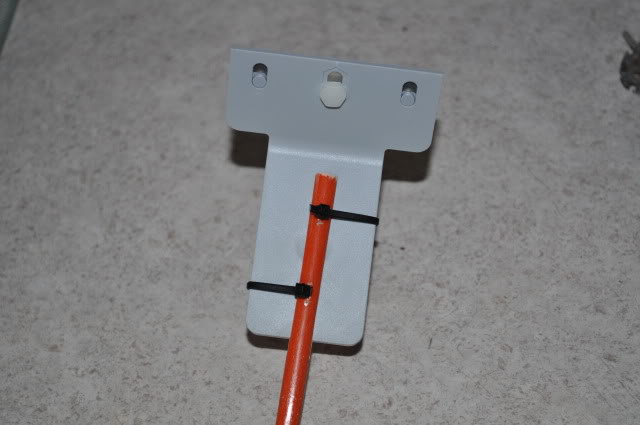

The blade that comes with the Easy Blade is extremely thin and sharp. It will take off common algae, including stubborn coralline, and diatoms with ease. I’d also highly recommend another Easy Blade for its intended purpose of being attached to a regular glass cleaning magnet for the front and sides of your tank.

This simple tool has no corrosive components and would be difficult to break. I’ve been using mine for almost two years now. Unlike most scrapers, the handle on this one will ‘give’ a little due to the flexibility of the fiberglass rod. This makes it easier to keep the needed pressure on the blade to scrape effectively. I can clean the back of the 400 in about ten minutes. In a well-maintained reef this only has to be done about once a month when the coralline spots become apparent again. There is no viewing comparison to a nice colony against a clear black or blue background.
A major bonus for those that own a PAR meter is how well this works for holding your sensor and taking accurate readings. If you’ve ever used one, you know how annoying it is to take a reading while holding the sensor. The reading doesn’t stabilize and you really have to get wet to do the bottom and corners. Holding the sensor upright while not blocking light is difficult.
To use your new scraper as a meter holder, simply disassemble blade.

You’ll see the bottom of the sensor has a mounting screw that is easily removed.


Place the sensor over the middle hole in the Easy Blade and hand-tighten screw through the bottom. Be sure to keep the wire facing the back to make the tool more easy to maneuver in the tank. If one was to only use this for a PAR meter, you could easily zip tie the cord to the rod handle to keep it in place.
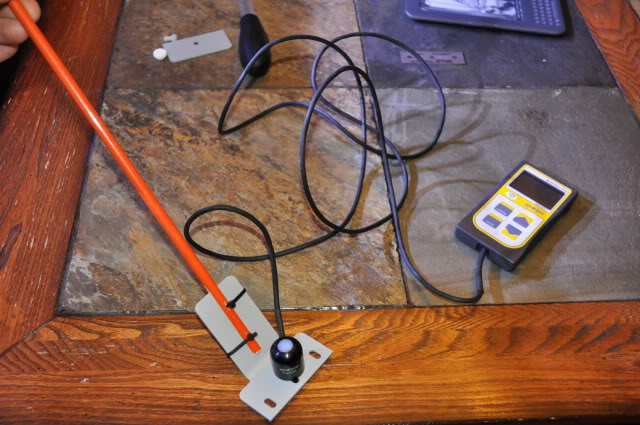
The rods are 48†long and are easy to cut to the desired length for the depth of your tank. I’ve found that around 30†is good for most of my tanks. The 45 degree angle does not interfere with the light and makes it a snap to get to the back and corners of your reef while maintaining an upright position.

We’re all familiar with the cleaning tools commercially available. The blades are not very sharp and many are made of coated metal that will corrode and cause the tool to eventually make a mess or break. Because the handles are always made of a stiff material, it’s not easy to maintain constant pressure and your arms fatigue very quickly when using them.
My solution: With a couple of simple and inexpensive items you can make a durable and non-corrosive scraper that can also double as an Apogee PAR meter sensor holder.
Tools:
Drill
8/32 drill bit
Rotary tool (Dremel)
1/16th wide cutoff wheel
Scissors
Materials:
Easy Blade algae scraper ($13)
Two small zip ties
Fiberglass driveway marker ($2)
First use the rotary tool to cut through the center of the driveway rod. Cut to the length of the skinny side of the Easy Blade. You don’t want to breathe fiberglass dust, so I’d advise wearing a dust mask and making this quick cut in the garage. You can cut it freehand, but a vise or cutting on a workbench top is even better. The Easy Blade will fit snugly in the newly created slot.
Hold the pieces in place nice and straight and drill two holes through the assembled scraper as shown. Fiberglass drills like butter, so it should be easy to center the holes on the rod.
Now run one zip tie through the holes in each direction as shown. Make sure the ties are tight and clip off excess.
The blade that comes with the Easy Blade is extremely thin and sharp. It will take off common algae, including stubborn coralline, and diatoms with ease. I’d also highly recommend another Easy Blade for its intended purpose of being attached to a regular glass cleaning magnet for the front and sides of your tank.
This simple tool has no corrosive components and would be difficult to break. I’ve been using mine for almost two years now. Unlike most scrapers, the handle on this one will ‘give’ a little due to the flexibility of the fiberglass rod. This makes it easier to keep the needed pressure on the blade to scrape effectively. I can clean the back of the 400 in about ten minutes. In a well-maintained reef this only has to be done about once a month when the coralline spots become apparent again. There is no viewing comparison to a nice colony against a clear black or blue background.
A major bonus for those that own a PAR meter is how well this works for holding your sensor and taking accurate readings. If you’ve ever used one, you know how annoying it is to take a reading while holding the sensor. The reading doesn’t stabilize and you really have to get wet to do the bottom and corners. Holding the sensor upright while not blocking light is difficult.
To use your new scraper as a meter holder, simply disassemble blade.
You’ll see the bottom of the sensor has a mounting screw that is easily removed.
Place the sensor over the middle hole in the Easy Blade and hand-tighten screw through the bottom. Be sure to keep the wire facing the back to make the tool more easy to maneuver in the tank. If one was to only use this for a PAR meter, you could easily zip tie the cord to the rod handle to keep it in place.
The rods are 48†long and are easy to cut to the desired length for the depth of your tank. I’ve found that around 30†is good for most of my tanks. The 45 degree angle does not interfere with the light and makes it a snap to get to the back and corners of your reef while maintaining an upright position.












