



Low PAR increase photosynthesis?

Broadfield

Red Sea Reefer Consultant... Non Affiliated
View Badges
Joined
Feb 8, 2014
Messages
2,553
Reaction score
4,406
Location
Normal, IL
Rating - 0%
0   0   0
That's awesome, have pics?

This is from 4 months ago... need to get a current one. I have had a ton of growth in the last 4 months though. That red planet top right there is 9" across now... it was only 7" in this picture.
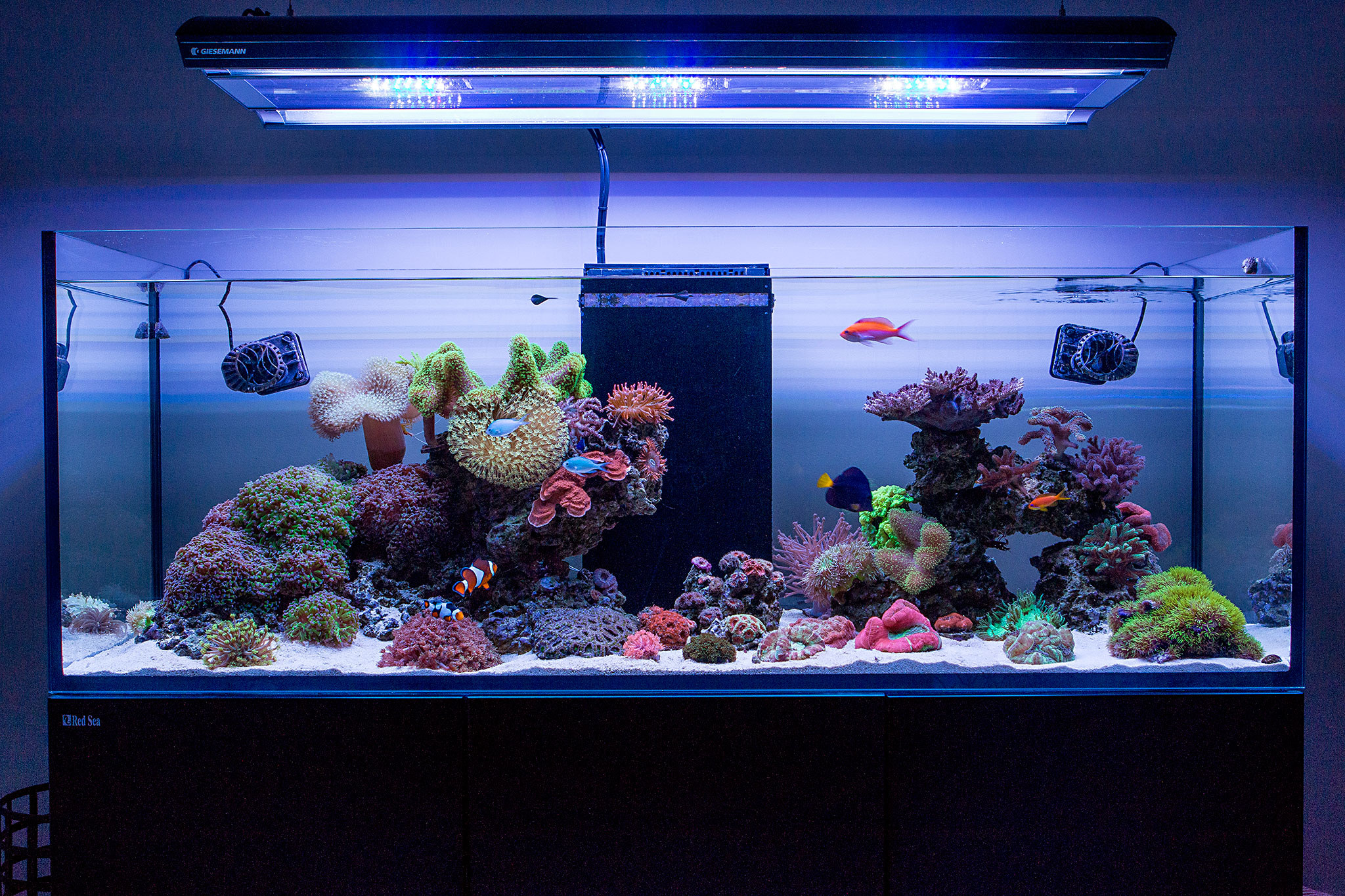
IMG_4278 by Toby Broadfield, on Flickr
 

Centerline

Valuable Member

View Badges
Joined
Sep 22, 2016
Messages
1,474
Reaction score
1,565
Location
St. Augustine, Florida
Rating - 0%
0   0   0
+1 to growing under low light! :)

But it's pretty hard draw comparisons I think.

This is why even spending $xxx on a meter, numbers are still just numbers.

For a fuller picture of the differences, instead of just comparing the readings of light coming from "up", we should probably take readings of the light from Up, Down, Toward the Front, Toward the Back (at least) from every location we sample. The corals do. :) But that's a level of complexity in measuring we're rarely if ever up to. It might even be hard to say if going there would be worth it, but it would enable better comparisons between your own systems at least.

Even though the Radiums and the Hydras may have shared a "downwelling irradiance" number from the lights directly, I bet the Radiums would have shown significantly higher readings from the walls of the tank.

Great point on the "downwelling irradiance"! MH bulbs with a good reflector put out so much intense light that it really does bounce all over the tank and of course the coral benefit greatly from that.
 

Centerline

Valuable Member
View Badges
Joined
Sep 22, 2016
Messages
1,474
Reaction score
1,565
Location
St. Augustine, Florida
Rating - 0%
0   0   0
I'm also a low PAR reefer. I have 13,000 Lux at the water and no more than 200 PAR anywhere in the tank. Honestly, if I turn it up much more than that, some of my corals get mad. I run a fairly low fish load and pretty low nutrients. I'm a firm believer of the correlation between the amount of nutrients available to the coral and the amount of light said corals can handle/need.
I absolutely have to agree with you here. I had a serious problem with undetectable P/N levels. I was dumping so much P/N into the tank to keep the corals alive it was scaring the crap out of me. On advice from someone at RedSea I cut the photo period down on my MHs from 8 hrs day to 4 and P/N started to rise again. Too much light = too much biological activity = eating the tank out of house and home. Weird and unique situation that probably doesn't apply to anyone else alive but lowering the photo period really did "appear" to be what made the difference.
 

saltyfilmfolks

Lights! Camera! Reef!
View Badges
Joined
Feb 25, 2014
Messages
28,739
Reaction score
40,625
Location
California
Rating - 0%
0   0   0
I absolutely have to agree with you here. I had a serious problem with undetectable P/N levels. I was dumping so much P/N into the tank to keep the corals alive it was scaring the crap out of me. On advice from someone at RedSea I cut the photo period down on my MHs from 8 hrs day to 4 and P/N started to rise again. Too much light = too much biological activity = eating the tank out of house and home. Weird and unique situation that probably doesn't apply to anyone else alive but lowering the photo period really did "appear" to be what made the difference.
No, Ive done the same. One reason i advocate light and measuring it even with lux, is exactly that. folks under powering the corals and having high nutrints. the kessil 160 on a 29 biocube is a preyy classic example. Most dont want to go over a % number, when in fact 100% is nothing comparatively. esp when the gee a "what % do you use" from another user with already low nutrints.
 

Marquiseo

Valuable Member
View Badges
Joined
May 27, 2013
Messages
2,003
Reaction score
733
Rating - 0%
0   0   0
For everyone that doesn't have time to watch the entire video:

Capture7.JPG

Capture2.JPG
Capture3.JPG
Capture4.JPG
Capture5.JPG
Capture6.JPG
 

BigJohnny

2500 Club Member
View Badges
Joined
Aug 27, 2015
Messages
3,707
Reaction score
2,372
Location
North Carolina
Rating - 0%
0   0   0
Depends on the coral, some grow faster with high some with low. Too much par can stunt growth and too little can slow it down, plus so many other factors in play as well. Really impossible to determine except for specific corals with ample sample size tested when all other variables are constant
 

saltyfilmfolks

Lights! Camera! Reef!
View Badges
Joined
Feb 25, 2014
Messages
28,739
Reaction score
40,625
Location
California
Rating - 0%
0   0   0
The last slide is important in regards to light.
I still have them on my phone, I was sitting stage left. Its all about balance. I will say I still find it interesting you don't see this video in the questions about flow threads.
 

mcarroll

10K Club member
View Badges
Joined
Jan 8, 2012
Messages
15,213
Reaction score
8,968
Location
Virginia
Rating - 0%
0   0   0
I absolutely have to agree with you here. I had a serious problem with undetectable P/N levels. I was dumping so much P/N into the tank to keep the corals alive it was scaring the crap out of me. On advice from someone at RedSea I cut the photo period down on my MHs from 8 hrs day to 4 and P/N started to rise again. Too much light = too much biological activity = eating the tank out of house and home. Weird and unique situation that probably doesn't apply to anyone else alive but lowering the photo period really did "appear" to be what made the difference.

The Light section and Nutrients section on my blog has several interesting links on the topic:
For example these two:
Ok, I can't limit to just two....there are a bunch of good ones. ;)

Even if those links don't sound all that related, they are in one way or another.....I usually make plenty of reefy observations on the article and make it easy to link to the original document.
 

mcarroll

10K Club member
View Badges
Joined
Jan 8, 2012
Messages
15,213
Reaction score
8,968
Location
Virginia
Rating - 0%
0   0   0
I also think the leader on this thread got it wrong.....the idea is not to increase photosynthesis at all. If anything you can see that corals have no trouble getting enough light to photosynthesize, and that's where the danger is. Photosynthesis is destructive. So they make a point of protecting themselves in lots of ways. If we go around hacking the system to boost photosynthesis, they are going to be under more stress and suffer additional damage compared to what is normal.

Look at the "Fast Growth..." article I linked above....it's clear they become consumed with maintenance of photosynthesis to the point they can't even properly heal an injury.
 

TOP 10 Trending Threads

WHAT AMOUNT OF LIVE ROCK AND SAND SHOULD BE PRIORITIZED FOR OPTIMAL BIODIVERSITY/FILTRATION?

  • 100% live rock + bagged sand

    Votes: 37 27.4%
  • 100% dry rock + 100% live sand

    Votes: 46 34.1%
  • 50/50 live/dry rock, 50/50 live/bagged sand

    Votes: 30 22.2%
  • 75% live rock, 25% live sand

    Votes: 12 8.9%
  • 25% live rock, 75% live sand

    Votes: 10 7.4%
Back
Top










