

Simplicity ATO Reservoir Leaking

Arkayology

Well-Known Member
View Badges
Joined
Aug 20, 2012
Messages
796
Reaction score
843
Location
Penna
Rating - 100%
1   0   0
I generally don't come out and bash companies for their products, but I am frustrated with my 10g Simplicity ATO reservoir. I bought my first one new in 2024 and it worked fine for a few months, but eventually the top began to separate from the rest of the reservoir. This was not due to me putting any kind of strain on the seams or improper use/handling. I contacted Simplicity and they said that it was weird, but they sent a new unit to me no problem. This new 10g reservoir was working much better until tonight. I was filling up the reservoir like I normally do using RO/DI tubing. I had my timer going and was sitting enjoying some bourbon. That is until I get an alarm notification from my Hydros leak sensor. I walk over to the tank and there is a pool of water growing from the side with the ATO. I thought maybe the RO/DI tubing had fallen out or something else, but no! I move the reservoir and I notice that a seam has busted and there is a nice stream of water gushing out from the side.

I am not bashing the company, but I have been burned twice. Buyer beware with their ATO reservoirs. I will be buying a new reservoir from a different company.
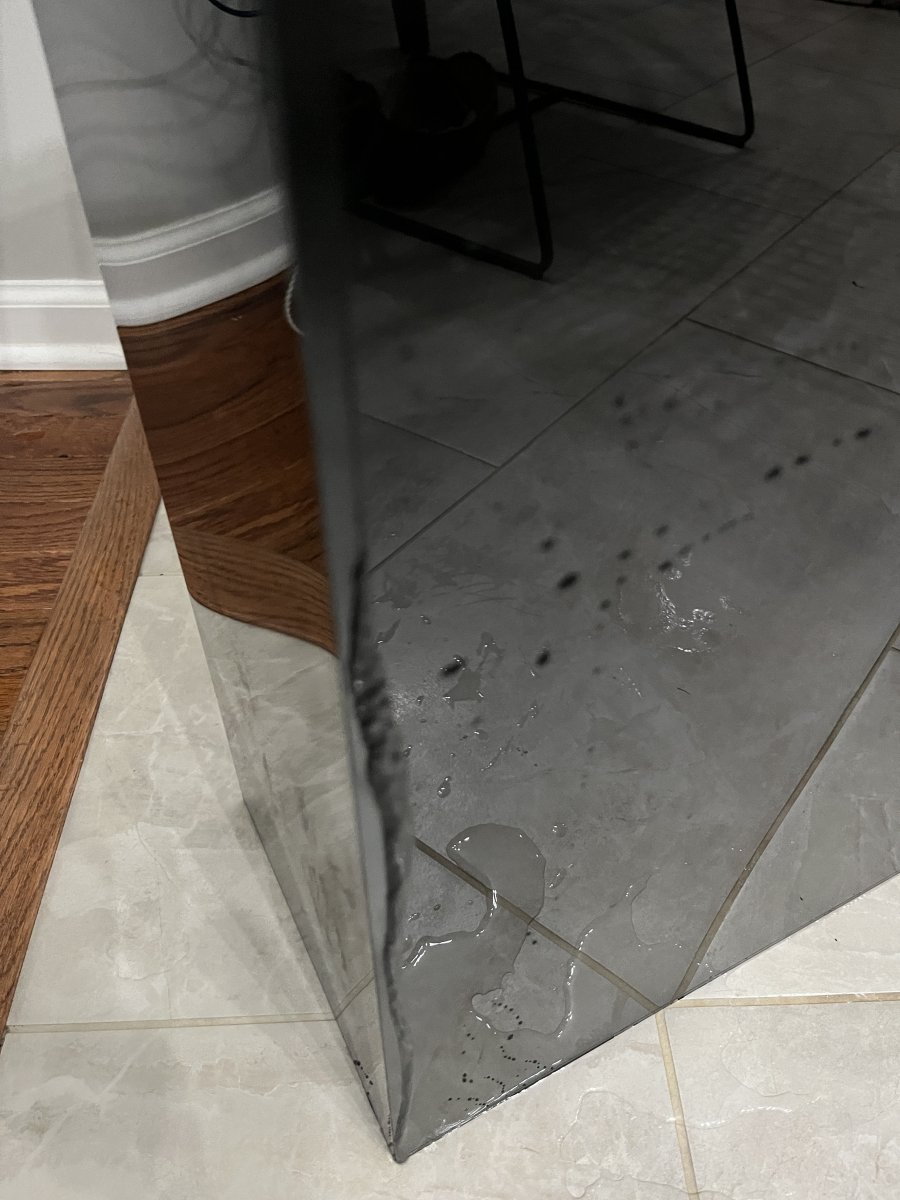
IMG_2104.JPG
 
That’s a bit shocking! I’m sorry to hear you’ve had to deal with this mess…

It’s interesting that the first ATO reservoir failed in a different way than the second one, too…

— In the case of this failure; these ATO reservoirs are all solvent welded acrylic construction for the water holding vessel… So, it splitting a seam (especially so high up the container wall) points towards an acrylic welding defect…

Unfortunate… I had been considering getting one of these, myself! — Thanks for sharing the real world usage experience!
 
I have had a thin walled tank acrylic tank for 30 years that was sitting outside in the weather for the last 5 and I went to move it and it also seperated at a welded seam, in a few places. I don't know how that is possible, but I think I have decided to avoid thin walled acrylic based upon these recent observations. 0.02$ 👨‍🌾
 
I don't know how that is possible
In this case, thermal expansion and contraction, every day, for years on end!

The welded areas are most susceptible to this phenomenon, though it isn’t often seen in the hobby because tanks are usually full of water at one consistent temperature!
 
In this case, thermal expansion and contraction, every day, for years on end!

The welded areas are most susceptible to this phenomenon, though it isn’t often seen in the hobby because tanks are usually full of water at one consistent temperature!
Makes sense. The back of the AIO tank was black acrylic and the front and sides were one bent u shaped clear sheet. The break / separation looked like it had popped the weld clean. The thermal expansion difference between the clear and black sheets eventually caused the uncoupling at there intersections.
 
Makes sense. The back of the AIO tank was black acrylic and the front and sides were one bent u shaped clear sheet. The break / separation looked like it had popped the weld clean. The thermal expansion difference between the clear and black sheets eventually caused the uncoupling at there intersections.
Agreed. It's not surprising that seam broke on that.
 
might want to get some weld on to make sure it is bonded correctly. looks like the outside has a small channel where the two pieces were bonded so you could just use weld on 4.
 
might want to get some weld on to make sure it is bonded correctly. looks like the outside has a small channel where the two pieces were bonded so you could just use weld on 4.
I was thinking about trying to repair the old one by running some weld-on on all of the seams just to shore it up. Maybe the problem was that the Chinese manufacturer used a sub-par solvent to bond the acrylic. You recommend weld-on 4 for a small separation like this?
 
I was thinking about trying to repair the old one by running some weld-on on all of the seams just to shore it up. Maybe the problem was that the Chinese manufacturer used a sub-par solvent to bond the acrylic. You recommend weld-on 4 for a small separation like this?

WeldOn #3, and #4 are extremely thin and watery, #4 cures a bit slower (thus is less likely to overheat the acrylic and cause crazing/etc)

The area may need to be clamped together after solvent is applied to get it to actually compress together and weld… — a more reliable/robust option might be to weld a square or right triangular acrylic rod into each of the four inside corners!
 
WeldOn #3, and #4 are extremely thin and watery, #4 cures a bit slower (thus is less likely to overheat the acrylic and cause crazing/etc)

The area may need to be clamped together after solvent is applied to get it to actually compress together and weld… — a more reliable/robust option might be to weld a square or right triangular acrylic rod into each of the four inside corners!
That's a great idea. If I get the black square rods do you recommend that I go with 3 or 4? I know that 16 is a bit thicker - would that be OK to use?
 
That's a great idea. If I get the black square rods do you recommend that I go with 3 or 4? I know that 16 is a bit thicker - would that be OK to use?
With my limited experience, I’ve had better luck with #4! #3 dries even faster (an exothermic reaction), and I’ve had it cause the weld to go cloudy from effectively overheating the surrounding acrylic! (This was on a hot day, with freshly cleaned then sun-dried acrylic parts, mind you! [preheated acrylic])

Weldon 16 would probably do the job too for this application, though you may be more liable to get voids/bubbles in the welded seams!

@Troylee , would you be willing to offer your expert opinion here?
 
With my limited experience, I’ve had better luck with #4! #3 dries even faster (an exothermic reaction), and I’ve had it cause the weld to go cloudy from effectively overheating the surrounding acrylic! (This was on a hot day, with freshly cleaned then sun-dried acrylic parts, mind you! [preheated acrylic])

Weldon 16 would probably do the job too for this application, though you may be more liable to get voids/bubbles in the welded seams!

@Troylee , would you be willing to offer your expert opinion here?
I don’t know when this was made but Weldon has been reconfigured without methalyne chloride… “spelling” I’m sure we’re gonna see a lot more of this in the near future and I’ve stopped making anything that holds water for this reason.. it’s been outlawed basically and the new stuff sucks lol.. for a repair I would use Weldon 40 or 42 and that’s about it.. time will tell how this works out for lots of manufactures.
 
I don’t know when this was made but Weldon has been reconfigured without methalyne chloride… “spelling” I’m sure we’re gonna see a lot more of this in the near future and I’ve stopped making anything that holds water for this reason.. it’s been outlawed basically and the new stuff sucks lol.. for a repair I would use Weldon 40 or 42 and that’s about it.. time will tell how this works out for lots of manufactures.
It looks like methylene chloride was fully phased out on April 11th, 2025…

I had to dig up the can of Weldon 4 I used to weld the center overflow into my hexagon tank back in May of last year; it looks like I lucked out and it was produced in January 2025!

— does this stuff ever actually expire? (Short of evaporating off if not sealed completely)
 
It looks like methylene chloride was fully phased out on April 11th, 2025…

I had to dig up the can of Weldon 4 I used to weld the center overflow into my hexagon tank back in May of last year; it looks like I lucked out and it was produced in January 2025!

— does this stuff ever actually expire? (Short of evaporating off if not sealed completely)
If it’s sealed air tight it should be okay.. the Mc is the first thing to go.
 
Back
Top
Home
Post thread…
Market
What's new









