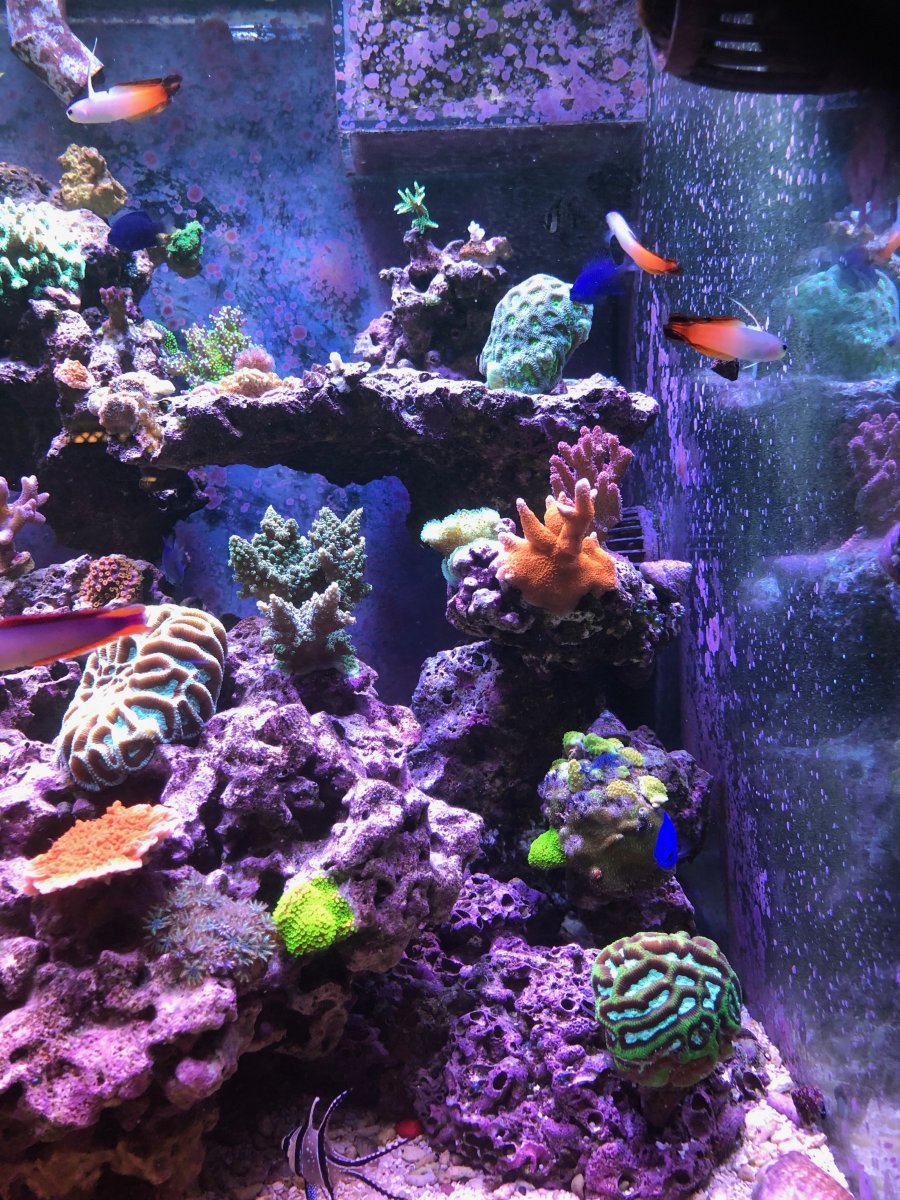
Soft corals are easy to keep, here is a link to corals for beginners; https://www.liveaquaria.com/category/2856/corals-for-beginners?c=597+2856&r=

Follow along with the video below to see how to install our site as a web app on your home screen.
Note: This feature may not be available in some browsers.




Let me start off by saying your tank is beautiful. I was wondering what your thoughts on running gfo? I've been in the hobby a few years and am about to take the plunge into sps. I run gfo through a reactor. I have gotten it dialed in pretty good. I only use 4 tbs using brs calculator which calls for 17 tbs in my reefer 350. It took me about a year to get it dialed in where my phosphates are stable at around .03. But, they are pretty stable and have been for around a year now. I do use the Hanna checker to test them. I was using the low range but have resently switched to the ULR.I did this writeup on our local board. A little copy and paste from there:
A quick writeup with my experience of SPS corals over the last three and a half years:
SPS are finicky - at least for me they are.
"Nothing good happens fast in a reef tank" - this saying pretty much sums up my philosophy.
SPS= Stability Promotes Success - the other part of my philosophy.
Swinging parameters, high nutrients, poor lighting, lack of flow: All of these factor into the success of a tank that is trying to grow SPS. They can stunt growth, cause STN/RTN (slow tissue necrosis/rapid tissue necrosis), brown polyps, or just flat out kill them.
Parameter checks:
Salinity - I check my salinity monthly with a refractometer. If you don't own a refractometer, do yourself a service and get one. $40 in this hobby is cheap, and salinity is critical to the success of any reef aquarium. Don't rely on the swing arms - they simply have too many variables and are typically pretty inaccurate.
pH - I run a calcium reactor, and probably have low pH. However, I don't measure it in my actual tank, just my reactor. This is my preference. If anything starts going wrong, and I've exhausted all other possibilities, then I may look into pH.
Calcium - 420 all day long. You can run it higher, but from what I've read, it doesn't do that much more for calcification of hard corals. Any lower than 380, and I've seen the negative effects start to occur - lack of growth namely.
Alkalinity - I run m Alk around 9.0-9.5 dKh. This is one parameter that has quite a bit of play in it. I've seen people running 15 dKh, and people that run ULNS (ultra low nutrient systems), like Neo, typically run their Alk closer to natural seawater, or around 7 dKh. Any lower than 7, and I've experienced zero growth and STN. I have also raised my Alk too high, too fast. I did this about 15 months ago in my 75. I nearly crashed the tank, cemented the sand bed, and caused STN in my SPS for several months. I lost quite a few really nice pieces, but overall, I managed to pull out of it with pretty good luck. I have a few coral that are still recovering from the Alk spike. I test Alk weekly, or daily if/when I make adjustments to my reactor
Magnesium - I run my Mg right around 1300. I test Mg bi-monthly, as I run NeoMag in my calcium reactor.
Nitrates - I prefer under 10ppm for nitrates. Any time I go over that number, I seem to experience browning out of coral and slowed growth. I maintain nitrates with water changes, feeding only pellet, nori (for tangs and foxface), occasionally mysis, and an oversized protein skimmer.
Phosphates - I don't have a good test for phosphates (not a fan of test kits for phosphates, they just don't do a good enough job). Under .03 is great for SPS. I have the Hanna handheld meter, and feel like it does a good "ballpark" job of measuring. I mostly go by the amount of algae and overall color of coral to "feel out my phosphates".
Trace elements - I don't dose anything - unless I get some phyto donated :) Other than the calcium reactor, I don't manually add any chemicals to my tank. I've tried them, and haven't had great success with them, so I've reverted back to skimmer and water changes only.
Other factors
Lighting - Another factor that has a lot of variance in it. I've ran MH almost my entire SW experience, from 175s to 150s to 250s, to T5, and eventually I'll be LED. All have their drawbacks, and all have their advantages. 175s probably have the lower advantage, IMO, as they are single end only. When I was running them 7 years ago, all they really had were spider reflectors. They've since came out with some really great SE reflectors, some that rival the best double end reflectors. 150s are great for shallower tanks, and have a great advantage of lower heat. 250s are great for faster growth, but the tradeoff is more heat output into the tank. I've experienced about a 4 degree increase in temperature since I've upgraded tanks. T5s work equally as well as 250s in my experience. The growth is the same, but the colors are much better! I'm building out my LED light in the next few weeks, so I'll be able to see how that goes as well. Lighting wasn't the only factor, but it does play a big part.
Flow - This topic has many variables as well. Throughout this hobby, there are several things that people do differently. You just need to find what works best for you, and you are comfortable with. For flow, I run a closed loop (3600gph), two powerheads (2100gph & 800gph), as well as my return of about 900gph, along with an MP40 Total that up for about 10000gph through my 120. I've been contemplating adding another vortech or two, but the cost on those seems to be my limiting factor. Other than the price, I don't see a downside to the vortechs.
Skimmer - Get the biggest skimmer you can afford! This is an integral piece of equipment to success for SPS. A skimmer that is too small for an SPS system will cause nitrates and phosphates to spike. This can cause SPS to recede tissue or RTN/STN. They can also brown out or just completely die. Skimmers are very important. Don't skimp!
Bioload - I prefer to run a very light bioload for SPS tanks. This helps reduce the amount of nutrients going into my system, which means I don't have to pull as many nutrients out. I keep two clowns, a yellow and blue tang, a foxface, and a wrasse. I'd probably be okay adding a couple more fish, but they would be small and add very little to the bioload. I will eventually trade the blue tang in for another once he outgrows the tank.
Quarantine - I am living with AEFW, so I can't say enough about this. You MUST QT every coral. I plan to run numerous frags through my QT once it is set up and then into the frag tank they will go. Once I have backups of everything, I'll dose the main tank with Levamisole. Not QTing is playing russian roulette. I dipped everything before it went into my tank, and that clearly didn't work. So set up a QT and learn to use it!
Overall, I'm very pleased with my transition to a nearly all SPS tank. There have been several struggles, but they have been great building blocks over the last couple years. I look forward to the future advancement of technology and equipment to help make SPS tanks more "user friendly".
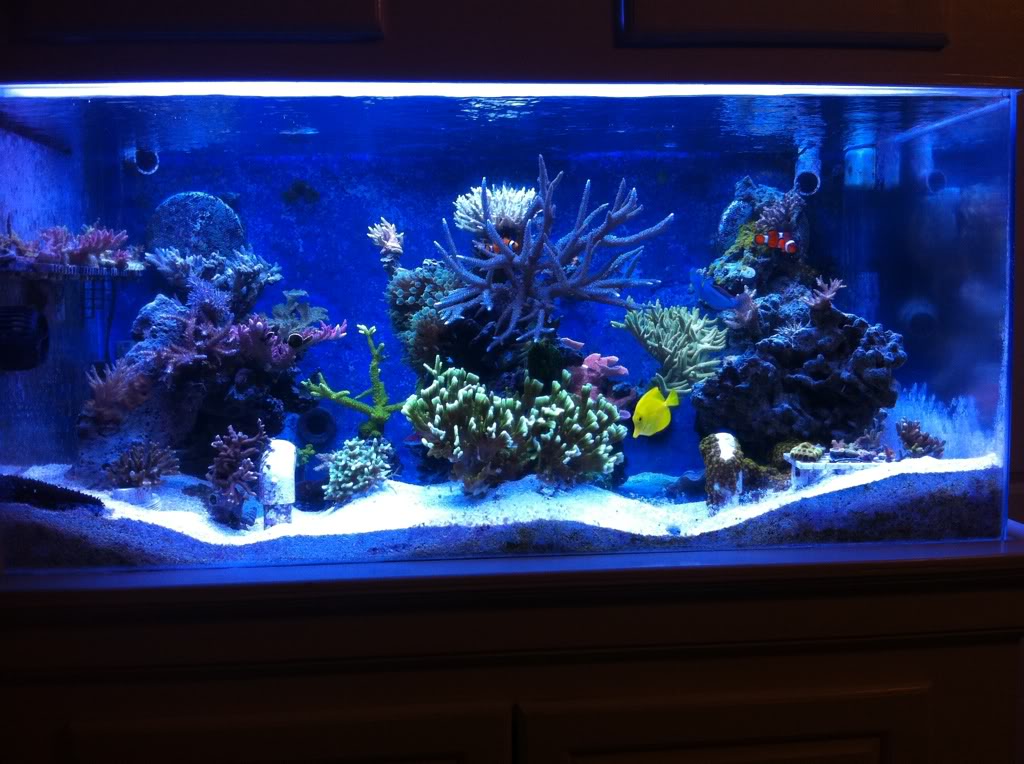


LolTell ya one SURE FIRE way to successfully keep them ... keep them away from ME.
Yikes .. I'm having a bad month over here ...lol




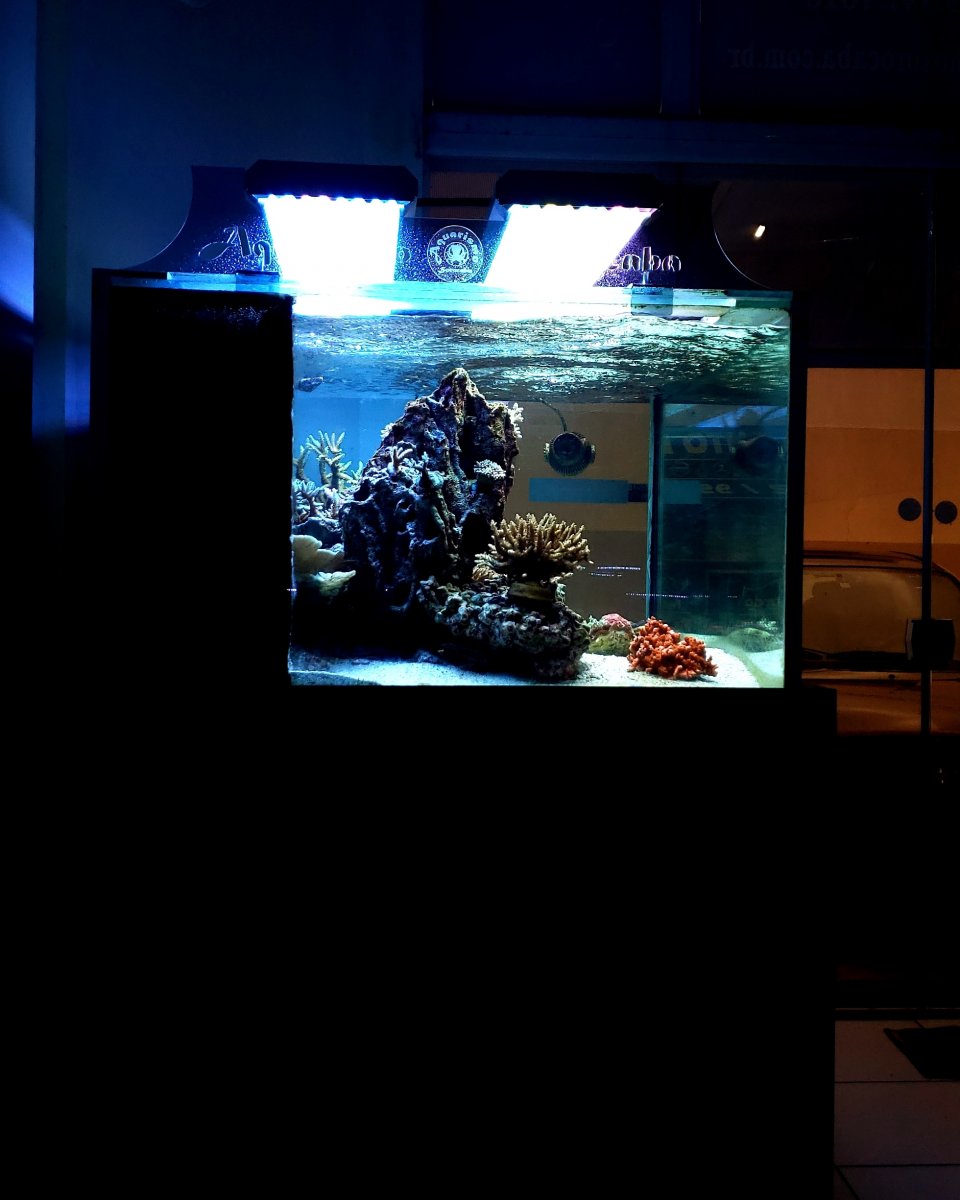
Aquário 1000 litros total
Iluminação ATI 2 calhas 4x80w
Skimmer nyos 220
Bubble mahus
Reator de cálcio Bubble magus cr180
Dosadora Bubble magus bm01
Ozônio cubos 2000
Co
Fotoperiodo 10 horas full
Dosagem
Tempo de montagem 5 meses
Colônia maiores com mais de 1 ano no aquário antigo
From online translation:
Aquarium 1000 liters total
ATI Lighting 2 gutters 4x80w
Skimmer nyos 220
Bubble mahus
Calcium Reactor Bubble magus cr180
Meter Bubble magus bm01
Ozone cubes 2000
Co
Photoperiod 10 hours full
Dosage
Assembly time 5 months
Greater colony with more than 1 year in the ancient aquarium
View attachment 20181026_191406.jpg
View attachment 20181026_191406.jpg


Th3 only sps i havent been able to keep is a yellow porites.... i have spent 60$ on a big frag like 3 inchs long and 2 inches wide.. snd it slowrly browned out thrn got covered in algae.
I got a new peice the other day so im hoping itll do better.. i have it in the highest point in my tank like 3 inchs from the top.. and in really high flow.. since i read yellow porites need really high lighting and get crashed with waves in the wild..
So well see


Just remember not to overdo it with the flow. Also too much light is worse than too little





Hey all,
I generally have "OK" success with SPS. My walt disneys, montis, and other green sps are doing well, have great polyp extension, and slowly growing. However, i noticed that any of my red or pink sps seem to fade out to tan/brown and don't grow at all in my tank. Their polyp extension is never great either.
Can anyone guess why these colors don't do well? I do weekly 10% water changes, so I don't think it's an micro nutrient issue.
params are normal, but I don't test for iron, potassium, etc.
Did you have any success looking into this? I have the exact same issue and haven’t discovered any solution as of yet.


Probably because you left your system alone. You didn't put your hands in again. :)Hey Travis,
must been a busy few weeks, and I’ve been neglecting my tank. Funny enough, my cherry bomb, pink and red Millis, and red tables are all looking great and more colorful. Just tested my nutrients:
Phosphates 0.08
Nitrates 15
Alk 7.5
who knows why they’re looking better tho!

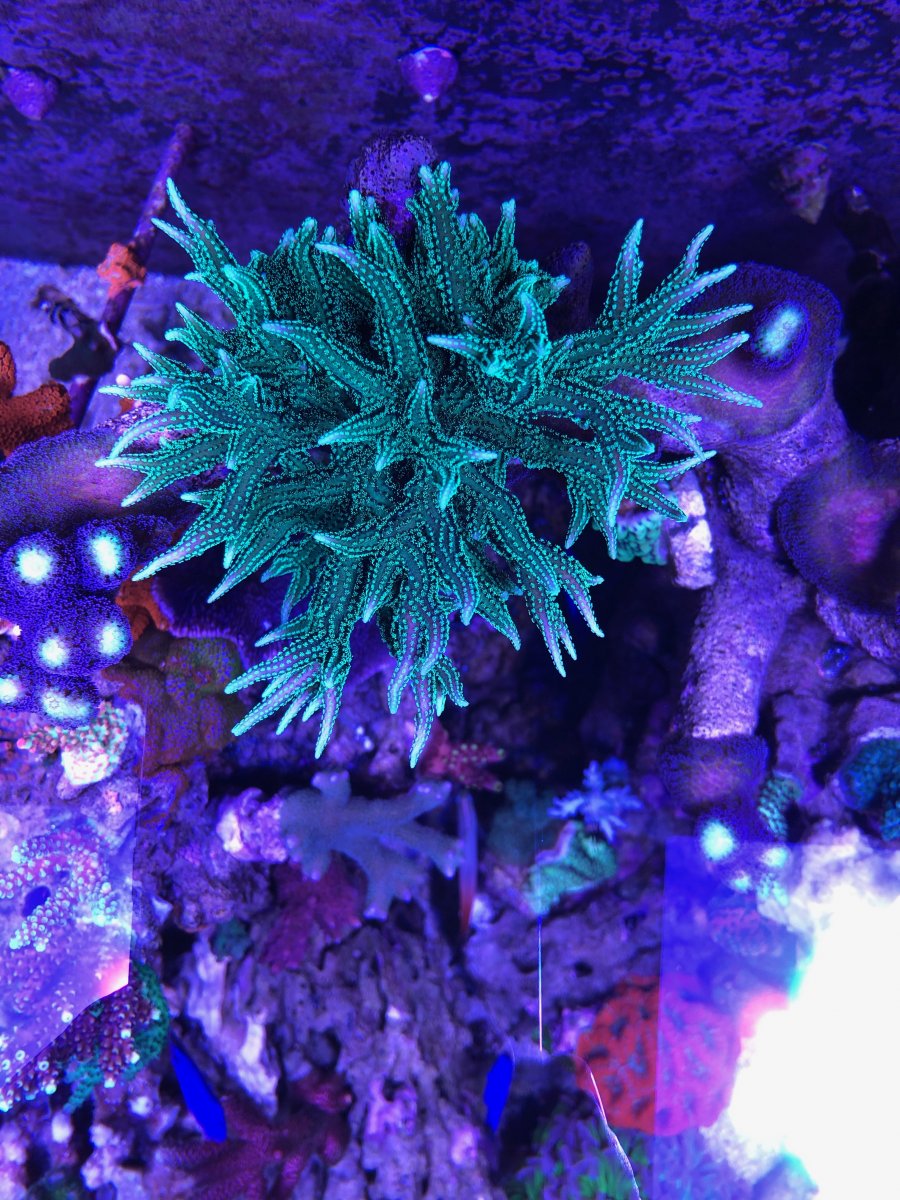
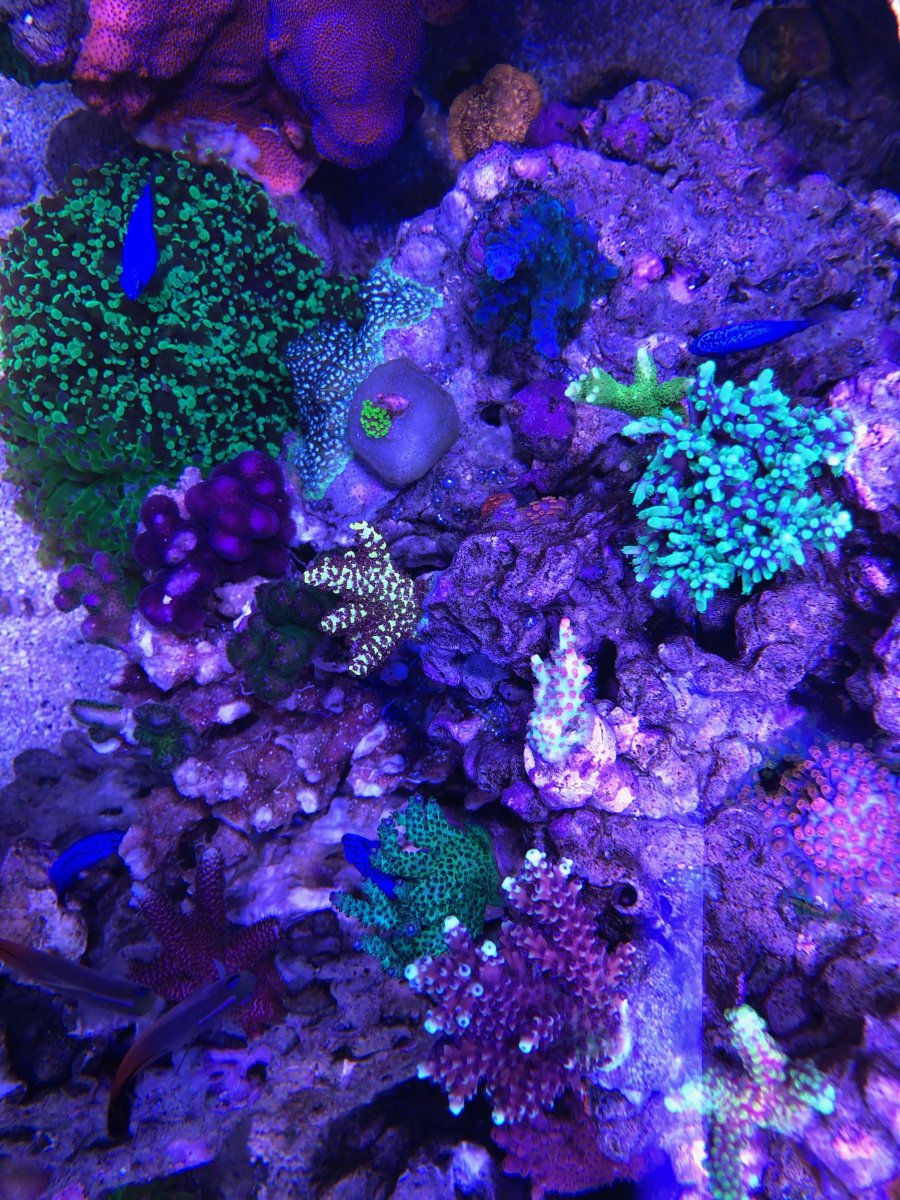
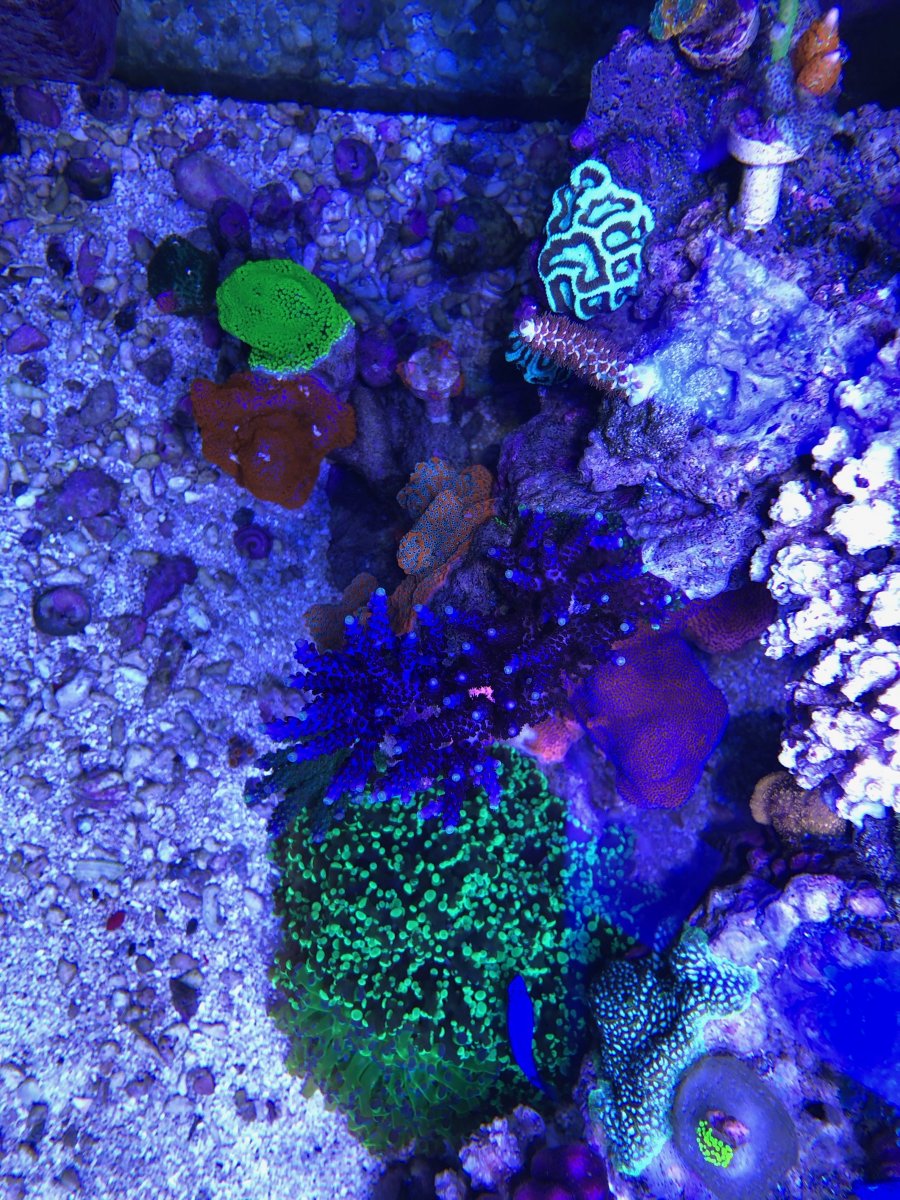
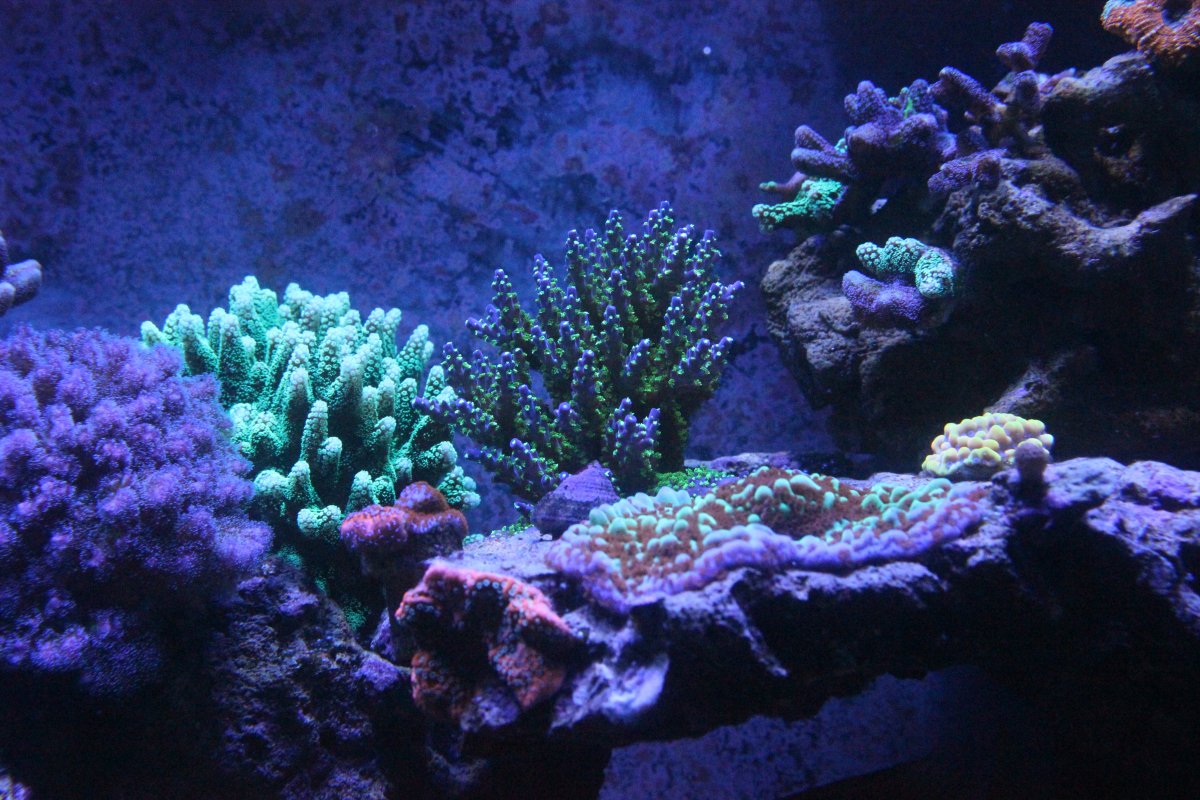
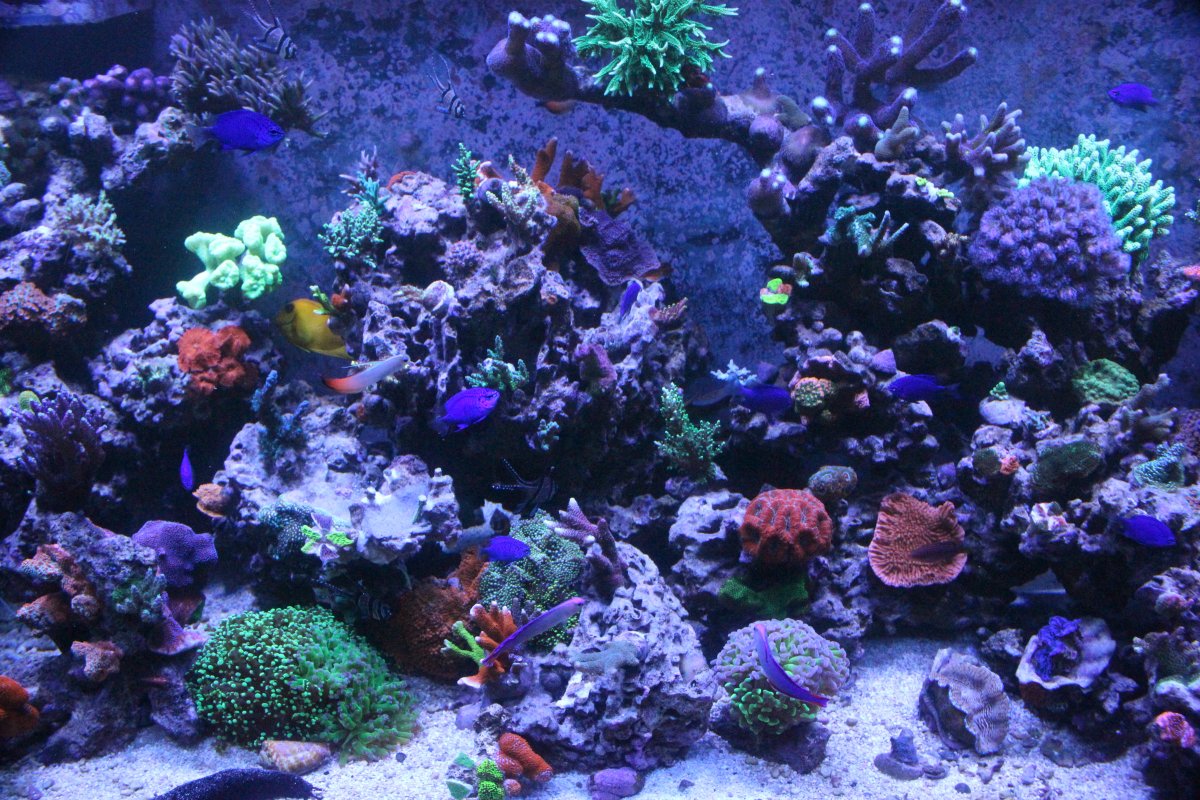
This tank has been up and runnings since February 2017. The rock had been established in other tanks. Some of it was a years old and others were months. There were a couple rocks straight from the ocean. The sand bed was out of a high phosphate crashed tank. I rinsed it out before I put it in. It is about 2 or 3 inches deep. There was mud and some weeds in the back corner from the Mission Bay. (Pacific) 10 gallons of the water was out of the ocean and it was 60% filled with ocean water from the local aquarium that pumps it through some kind of a filter before it gets to a tap for public use. From Feb till about September it was home to a pet octopus harvested in northern San Diego. We kept old reef lights on it during this time and the pod population grew.
The octopus lived with us for a little over a year, not really sure, at least two seasons with a chiller before we sent him to a better place.
Phosphates were pretty high and there was Cyano on the back wall. There were Malaysian clams living in the sand that were left over octopus food. I dumped some non scientific amount of swimming pool quality Lanthanum Chloride in the tank and the levels went to undetectable on my Salifert test kit.
The skimmer was an old euroreef with 2 cobalt needed wheel pumps on it. Not really any to quantify the flow, but it seemed to skim well. (Switched it yesterday for a reef octopus 150 with a controllable dc pump.)
The tank was fallow for about 6 weeks? During that time I manually dosed calcium, magnesium and sodium carbonate to get my parameters where I wanted them and make sure they stayed. We added a Caribbean blue tang and a Scrawled Cowfish to test the water. Then we started adding frags from our starter tank that was now around 16 months old. (Dates are very approximated.)
The tank is 120g with a 30ish gallon sump.
I generally shoot for:
ALK; 9.5 - 12 DKH
Cal; 450
Mag; 1400
Nitrate; close to 0 (on salifert)
Phosphate; close to 0 (on salifert)
1.025 salinity
76 degrees F
12x water volume turn over through the sump per hour.
I landed on my numbers pretty arbitrarily. The back of a business card I got at MACNA in San Diego, the label off of my salt mix and the ambient temperature of my house. Well, that combined with what I could remember from keeping a reef in the 90's.
My reef in the 90's used Kalkwasser and the high pH/DKH seemed to pay off. I use a calcium reactor now and I prefer the high DKH for help keep my pH up. I have had the least problems with my tank when I am over 9.5 DKH. Unfortunately the business card I found recommended phosphate levels >.2 ppm, and that is high enough to scare me a little. Phosphate gets blamed for too many tank crashes. I am just more comfortable keeping it low until I get some peer reviewed research on it.
For this reason I had to resort to the PO4 recommendation chart on my salt mix bucket. When I do change water, I use the Red Sea salt mix. The bucket says less than .03 PO4, and that is what I want to hear. I they have made great products like skimmers and tanks since clear back to the 80's. I went with the black bucket line because of the graphics. (It is the same way I choose my wine.) I think that their aquarium building skill in no way reflects their ability to mix salt. Instant ocean was more affordable and I used it for a long time but I have a degree in art and I feel like the graphics on their bucket are borderline offensive. If Tunze made a salt mix with better graphics than Red Sea, I might use that since I like their pumps and skimmers.
Some times I just throw caution to the wind and use ocean water since I live 5 miles away from it. There just isn't any compelling data that I could call Proof that one is going to be better for my coral or my system than another. Some are closer to where I want my levels to be than others and it makes life easier. With my once every two or three years water change schedule I am not sure that it would matter how good or bad the salt is.
Circulation is 2x mp-40 blowing across the tank in anti sync from each other on upper front of the side walls. 2x mp-10 mounted on the back edge of the right side wall. They are always on at 90%.
Light is Radion. G4pro. Two 30's and two 15's. I did some research before buying them and felt like they were the best for me at the time. I have not considered non LED options. I have used the others in the past but I think I just love the tech. The light is on about 10 hours a day. There have times when it was on for 12. I normally have a ramp up time of primarily blue light for two hours and ramp down for two hours. I use a corral lab preset in mid day and just blue, purple, white and 1/2 red on the ramp portions. I am currently running the lights at 70% on these settings and the highest par value is 550. Lowest is 110. I have run them brighter and better color seemed to coincide but there are always other variables so I cant point directly at PAR.
I really cant remember which coral got there first. You cant guess based on size. They all came in as frags the size of my the end of my little finger. About three of them were the size of a car key. I have some that are still the same size a year later and others that earn me a few hundred a month in frag sales and trade. The tank kills clams as a general rule. I am sure that there are still one or two Malaysian clams in there. There is a Derasa clam that has beaten the odds. Maximas will look good for a while, inevitably they fall off the shelves and are dead within a day of hitting the sand. We are pretty sure there is a predator in the sand bed.
Fish, 20 springeri damsel, 1 dragon face pipe, Scopas, Mimic yellow, Lavender tangs. Couple pair of goby, 2 barnacle blend, 4 red firefish, 4 purple firefish, yellow spotted wrasse, Pair of green mandarine goby, 2 breeding pair cardinals, Green wrasse, sixtine wrasse, copper band butterfly, and some others that I cant think of. The barnacle blennys are the only fish that are male and felmale that do not breed on a regular basis.
More than 30 various sized hermit crabs, more than 20 emerald crabs, two fire red shrimp, one cleaner shrimp, 8 Acropora crabs, bunch of Trochus,and nerites (they breed a lot), 10 turbo snails, 10 ? astria snails, 20+ random snails.
The tank is on an auto feeder that dumps much more food than the fish can eat in 10 minutes twice a day. I have not really focused on one specific kind of food other than usually more pellet than flake.
I make an effort to not impact my plankton population. No filter socks, or traps. I use propeller pumps, Main drive pump has a design that seems to do less damage than the pumps of the 90's. I believe that the microfauna population is one of the keystones of my system. At any given time I can pull half cup of water out of it and see things moving around with a magnifying glass. In the night it is even more dramatic. My cardinals spend the nights constantly feeding on whatever comes out at night.
The sump grows Chaetomorpha. (At my house we pronounced it Keeto because we pronounce algae as al-gee. Strange scientific latin derivatives.) We modeled the system based on the "Dynamic Aquaria" book from the 90's that is basically all about algae turf scrubbers. It is our main source of nutrient export. I believe it works as a giant buffer for fluctuations in my system. I have a 150 watt purple "grow light" from amazon on it. The more I feed, the faster it grows. There seems to always be some level of PO4 and often no Nitrate. I have tried supplementing nitrate, but I would prefer to just feed more often. It is not a perfect science. The tank is over crowded with fish and I see some stress from it.
I use GFO. I use little and run a 1/4 cup charge for about a year. I have turned off the skimmer and pulled the GFO on my other small reef, but it has only been 6 or 8 months and I am still waiting to see if I am ok with it.
I have tried to work out some kind of scheduled maintenance on the system but things just kind of work on their own. I am sure that I clean the skimmer at least once every 9 days, but I dont clean it unless it has got liquid in it and normally the neck is coated with 1/8 inch of sludge.
I harvest Chaeto when there is no room for it in the grow area. It is lit reverse daylight from my tank and runs 16 hours. It does make a dent in the pH drop at night, but not a big dent.
I generally hate testing my water. Normally it is about 3 days after I have decided that I need to test before I actually do it. If I find a problem, I normally correct it pretty quickly. (2 or 3 days) During any correction I test a least daily but normally am and pm. I recently got an apex, but before that I used a Seneye. It would text me when temp or pH was off. I think it is important to have some kind of live monitor on those 2 things.
I run a calcium reactor. I like the idea of it. It puts minerals and organics back into the water in the proportions that they came out. I run magnesium at a 1:10 ratio with crushed coral from 2 fishes. Research says all suppliers are different. Since that one worked for me I will just use it as long as it is available.
I check my ALK 2x a day when I have made an adjustment to the reactor or drip rate. When things stabilize, 2 days later I cut the test frequency in half each time I see the same level with 2 consecutive tests.
The system never had an intentional water change until this week after a one month period of troubleshooting tissue loss on random corals. I gave up and just started diluting the problem until I could get more information. I use ICP testing as a snap shot of what is going on when the tank looks good and bad. I try to have one test per quarter with some notes and photos. I have some corals that are always the same colors but I do get dramatic shifts in some when I change lighting, food, or GFO.
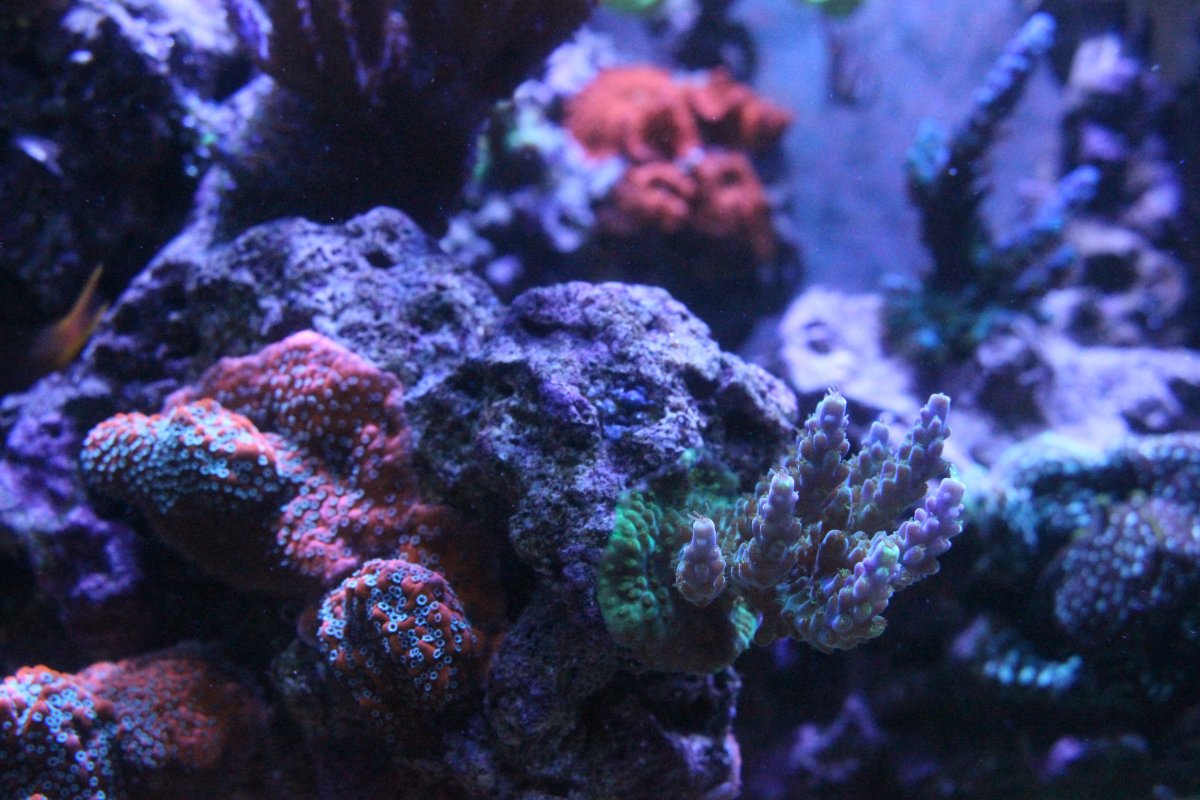
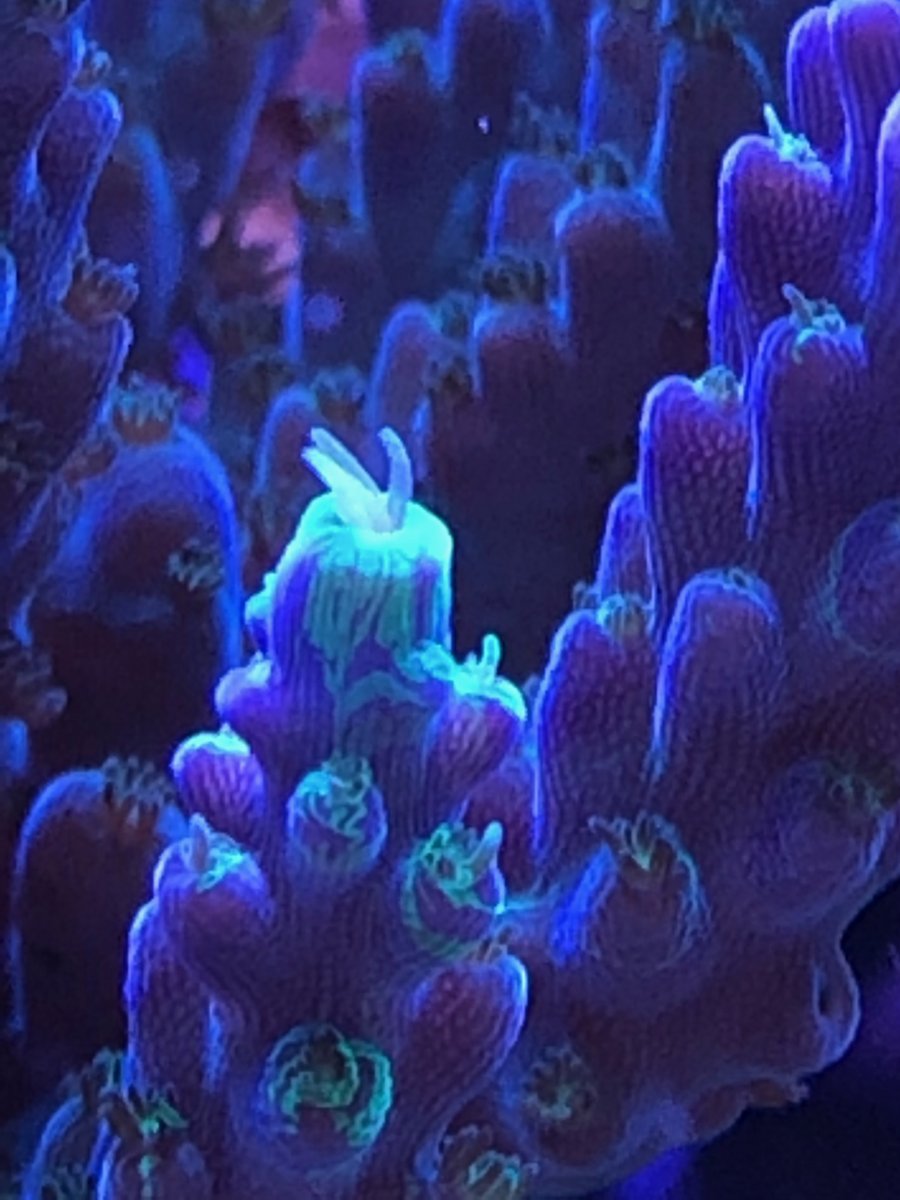
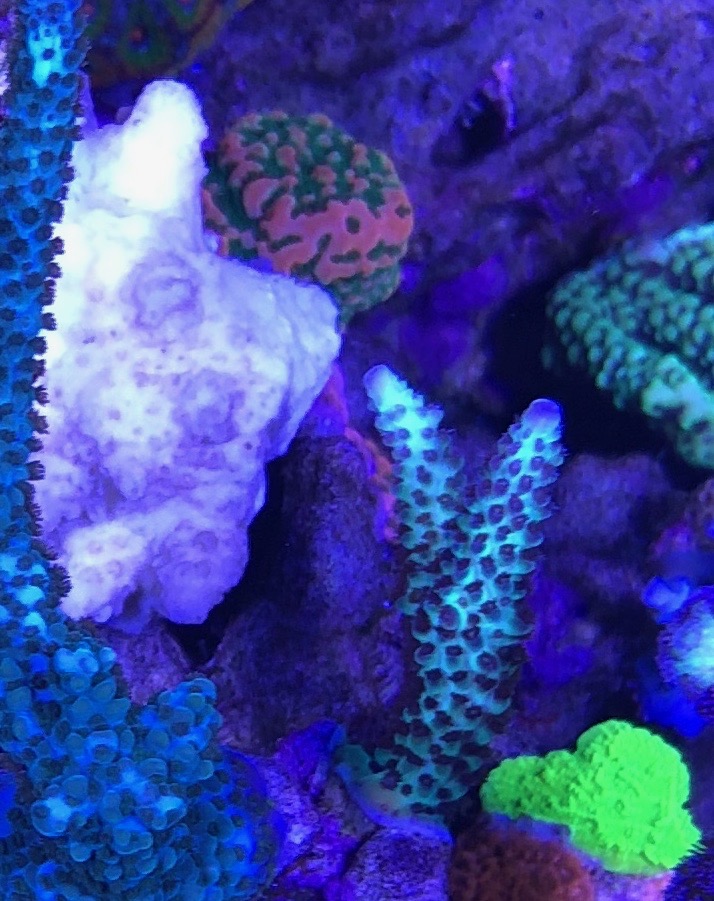
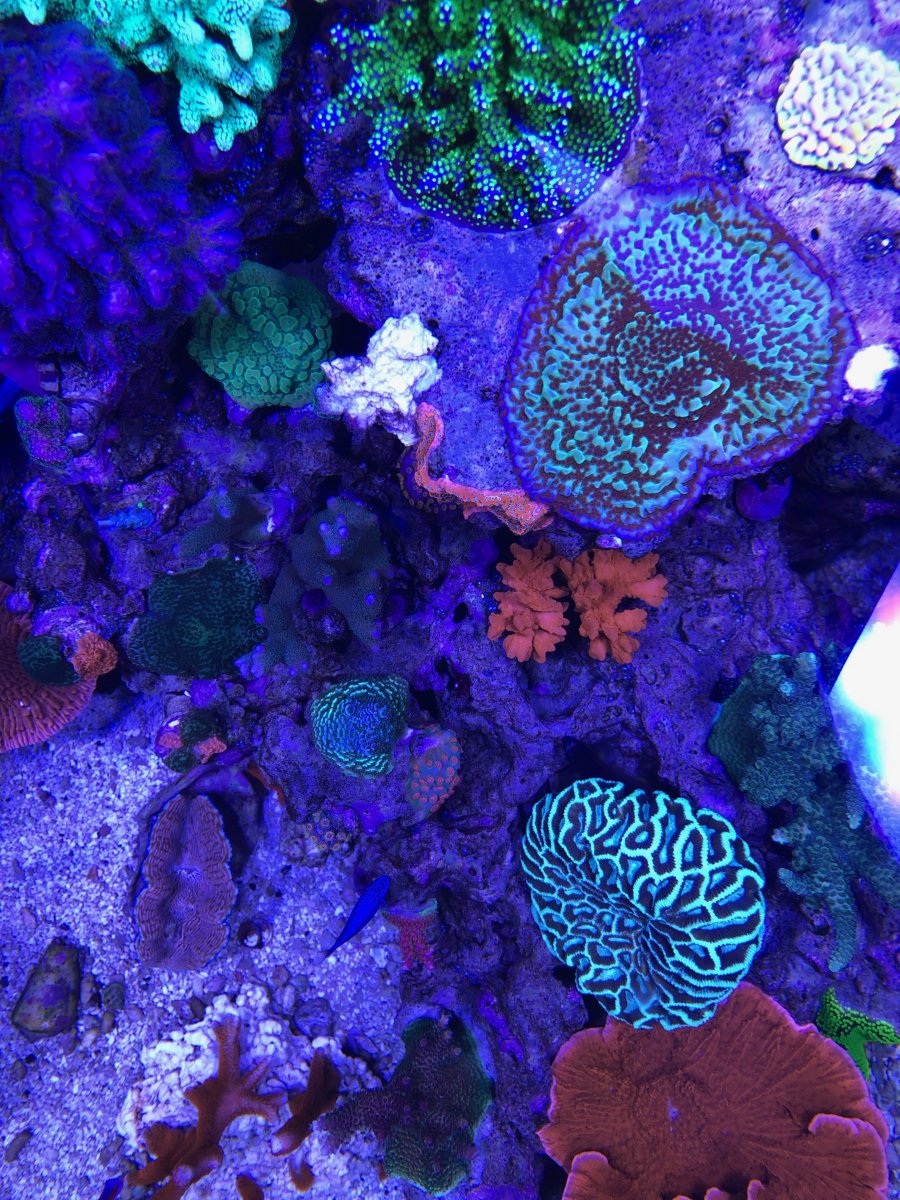
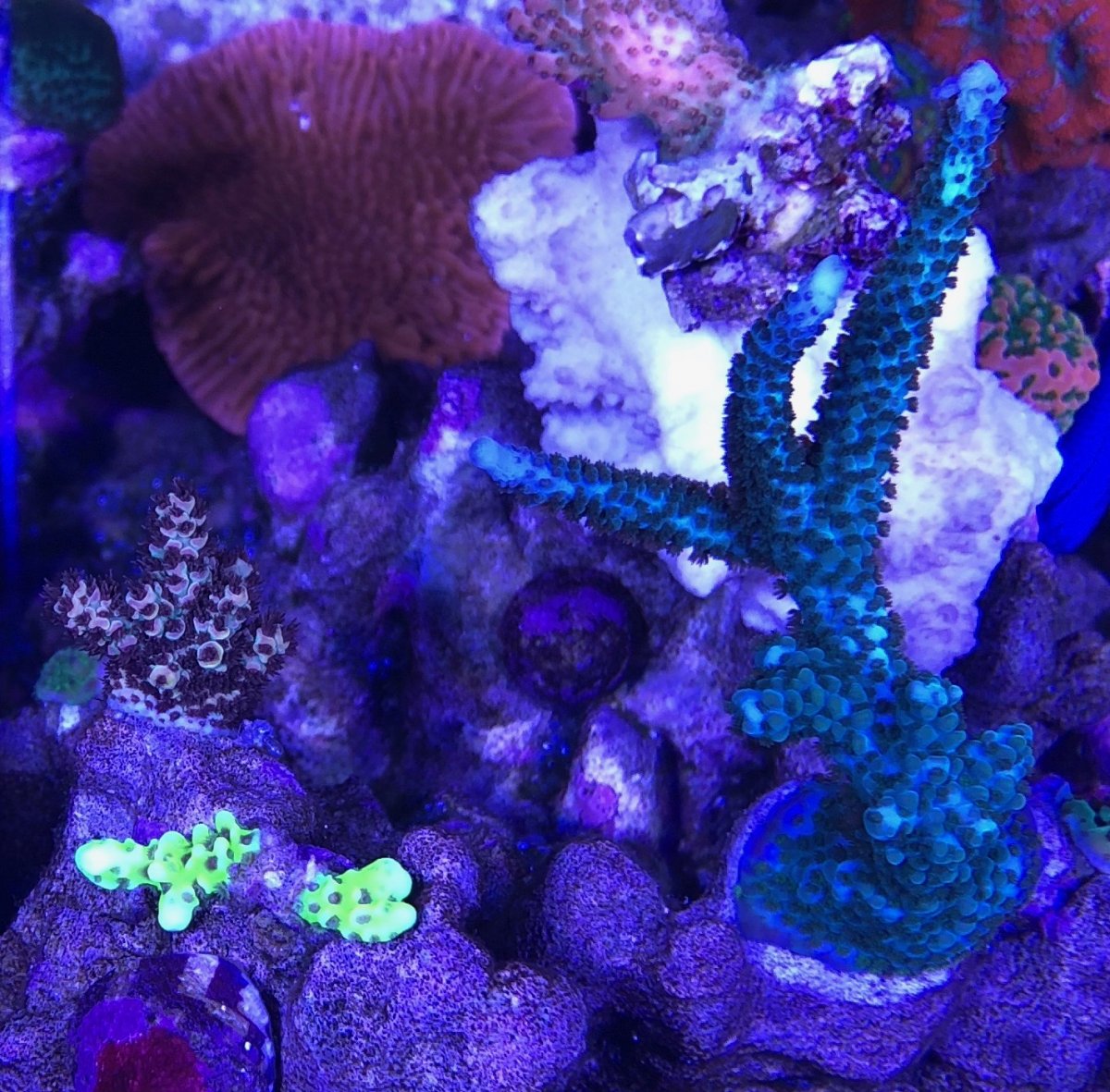
My tank looked best here (if it looks like a frag, I probably got it as a stick.)
//lab.atiaquaristik.com/share/7d9605e7a3bda51bceb4
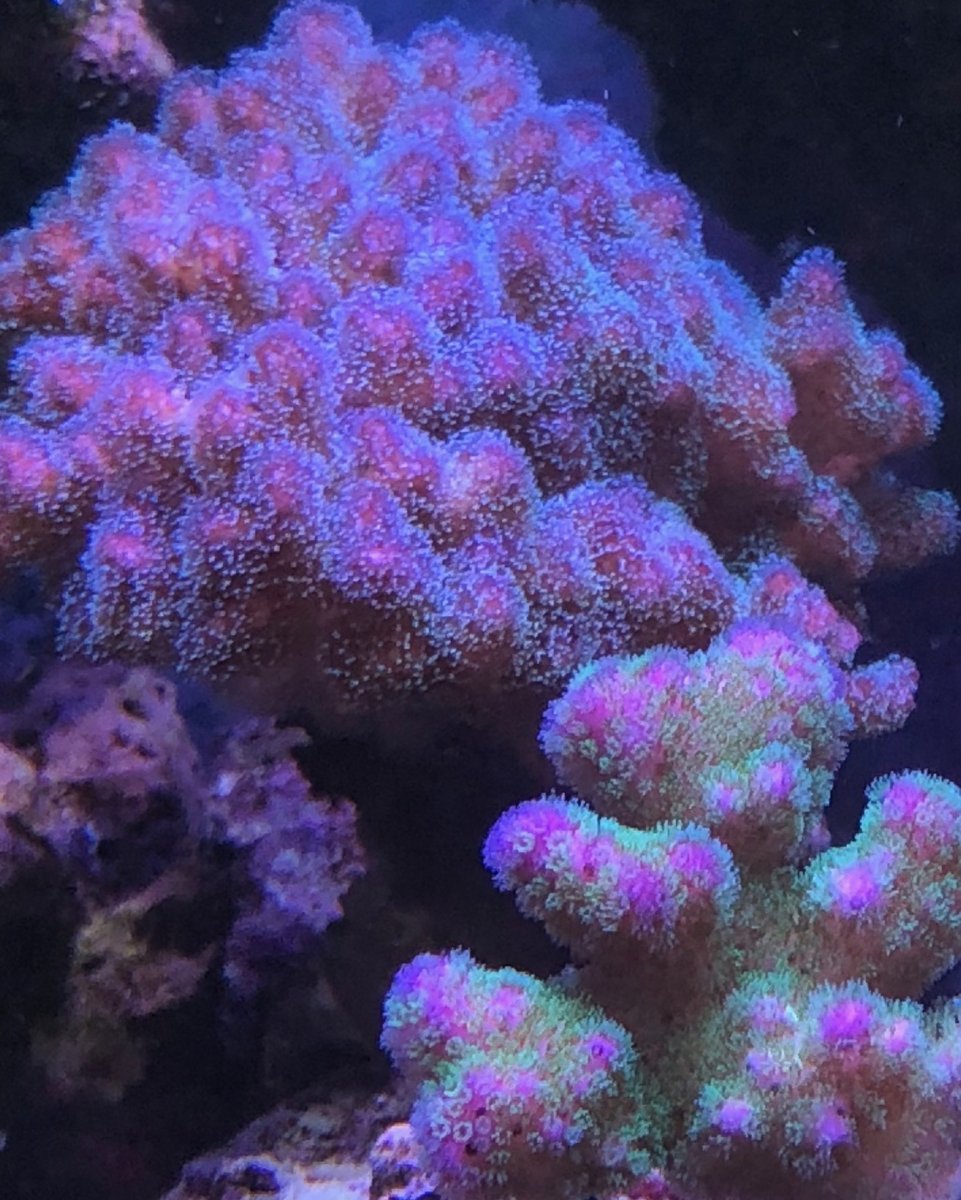
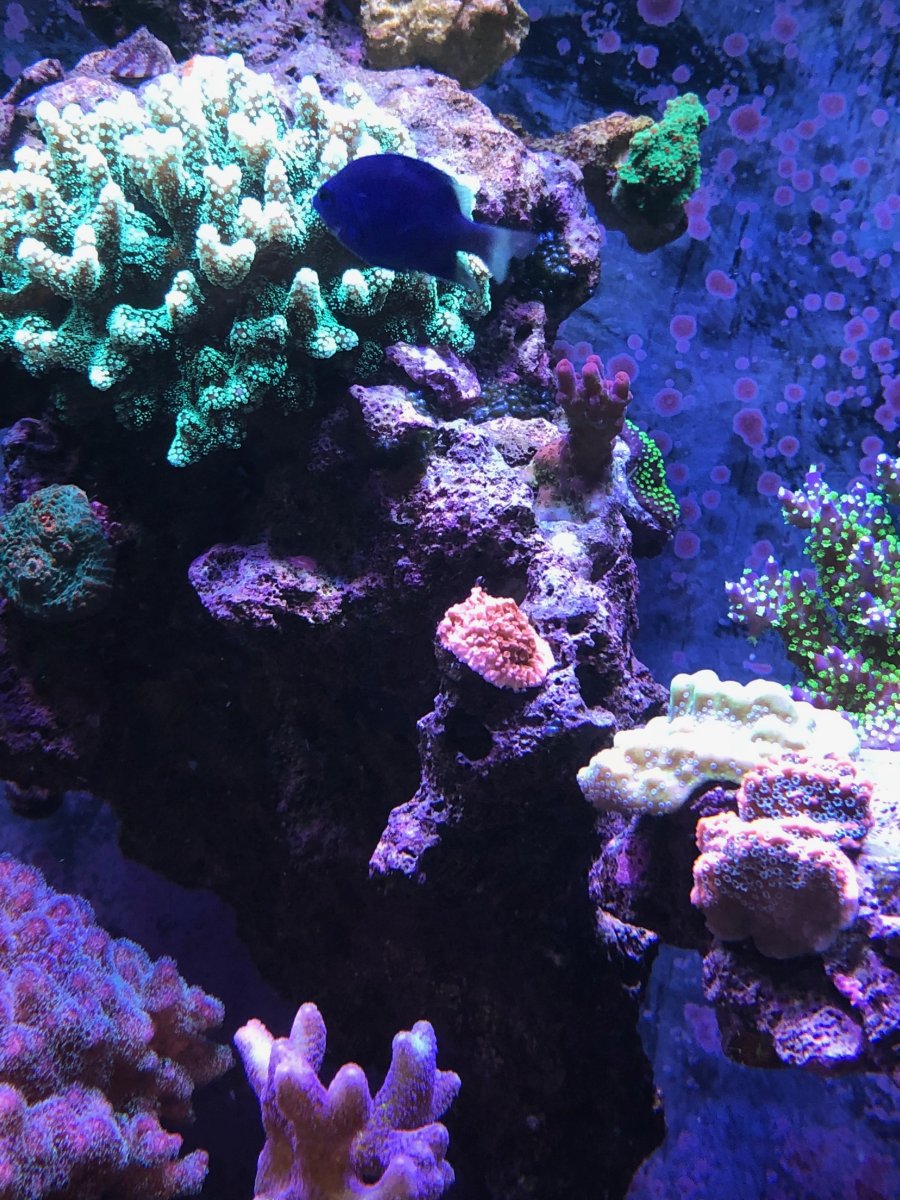
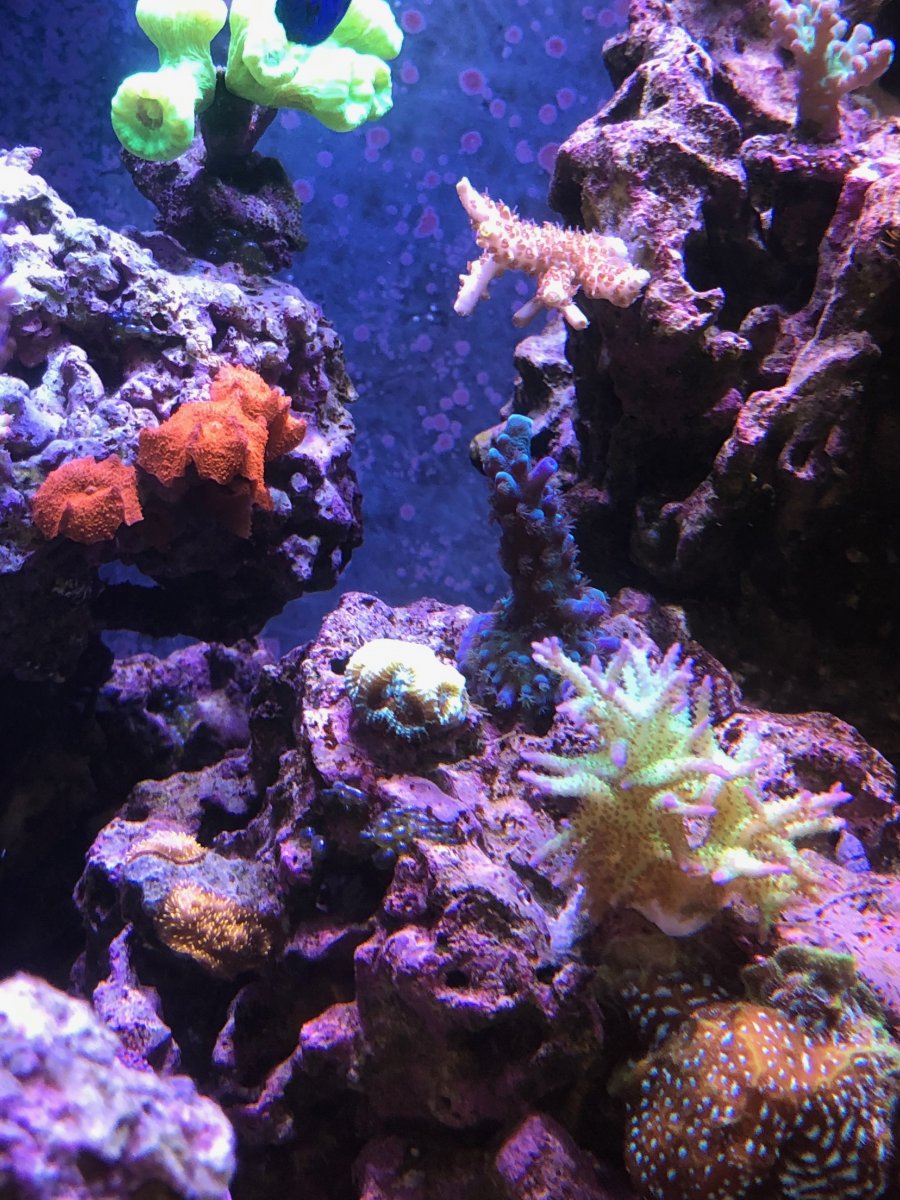
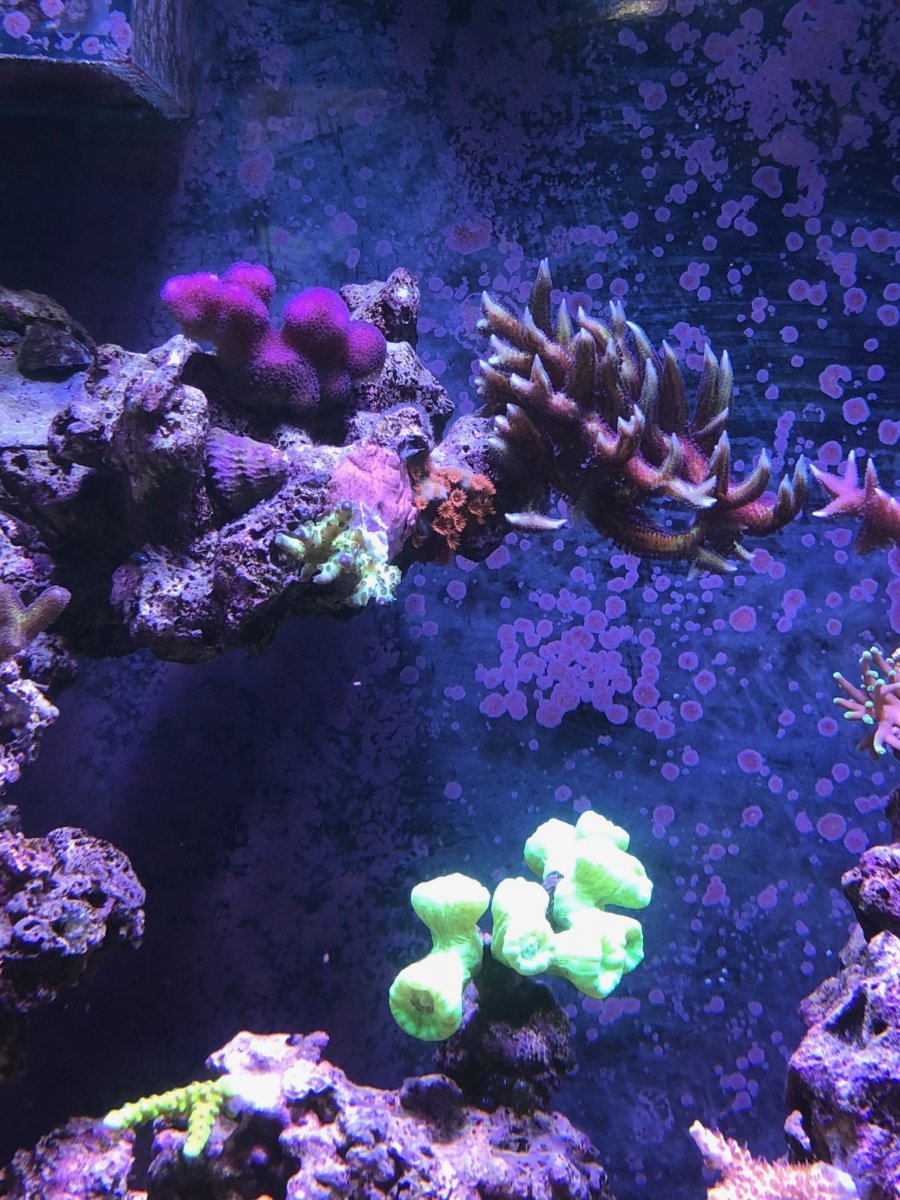
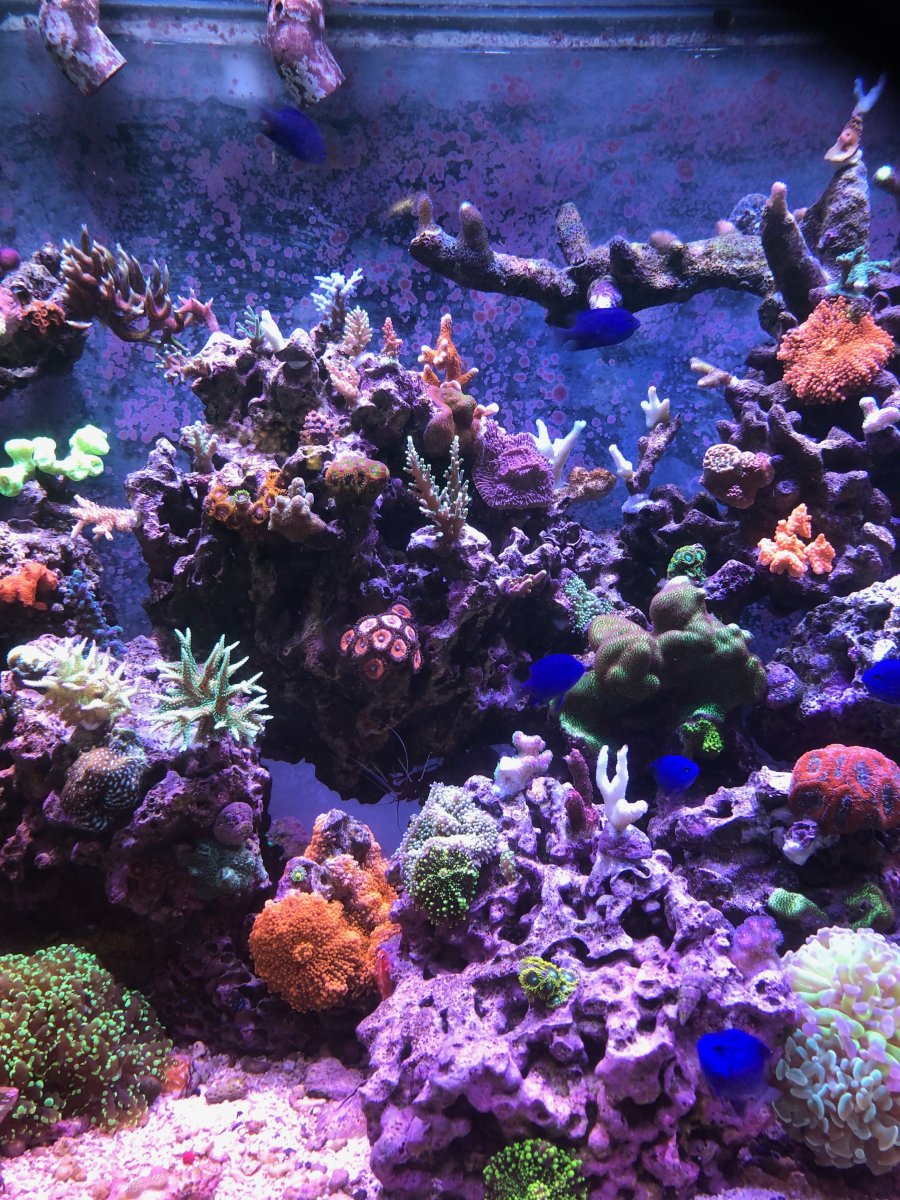
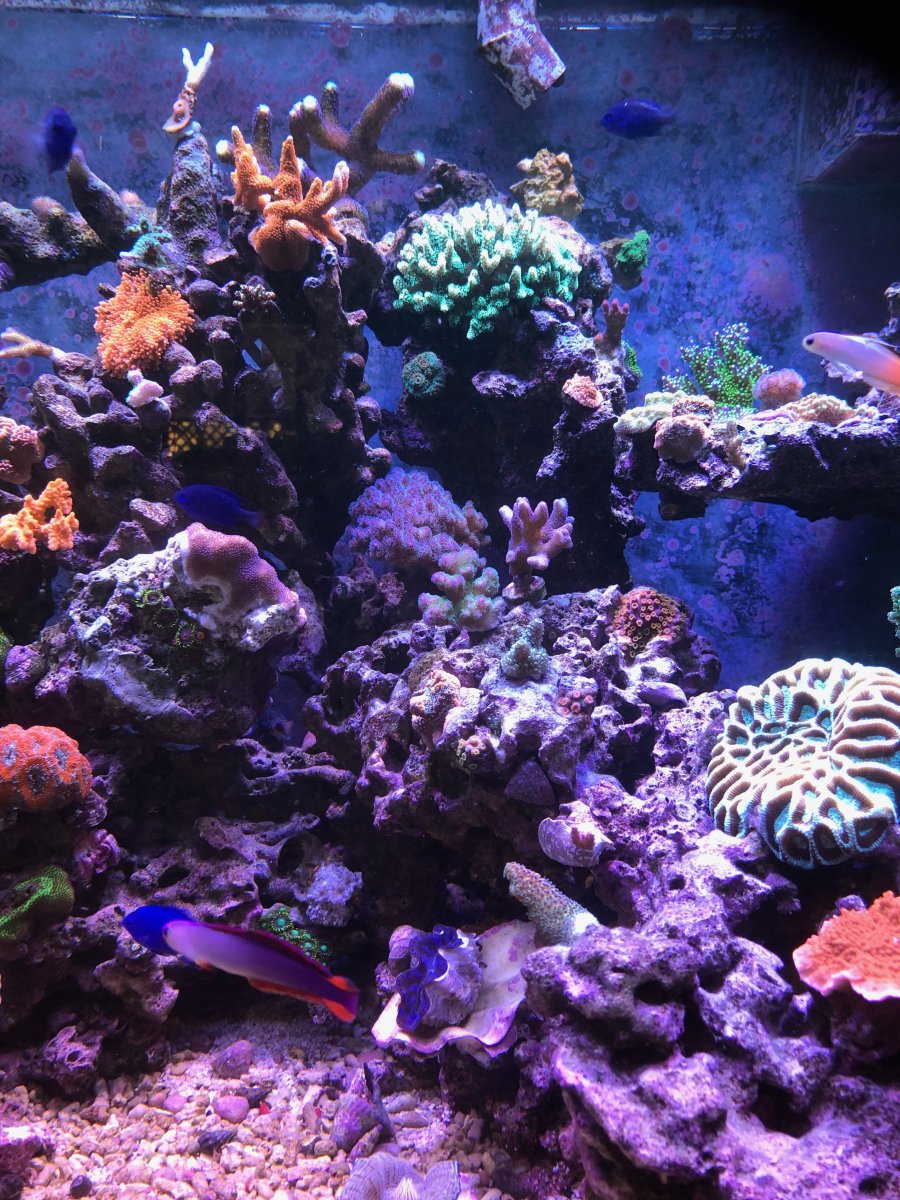
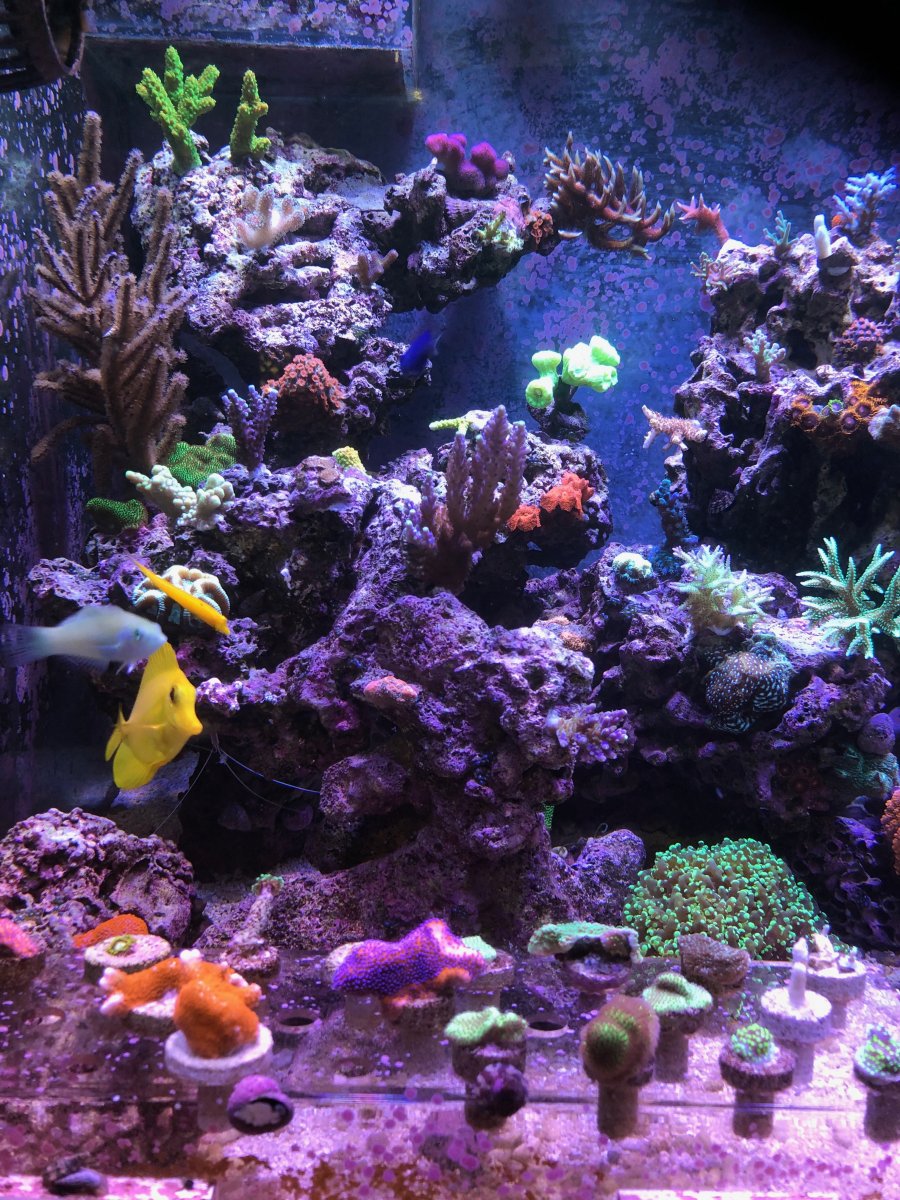
And here
//lab.atiaquaristik.com/share/6119d18b9a1c9cd255be
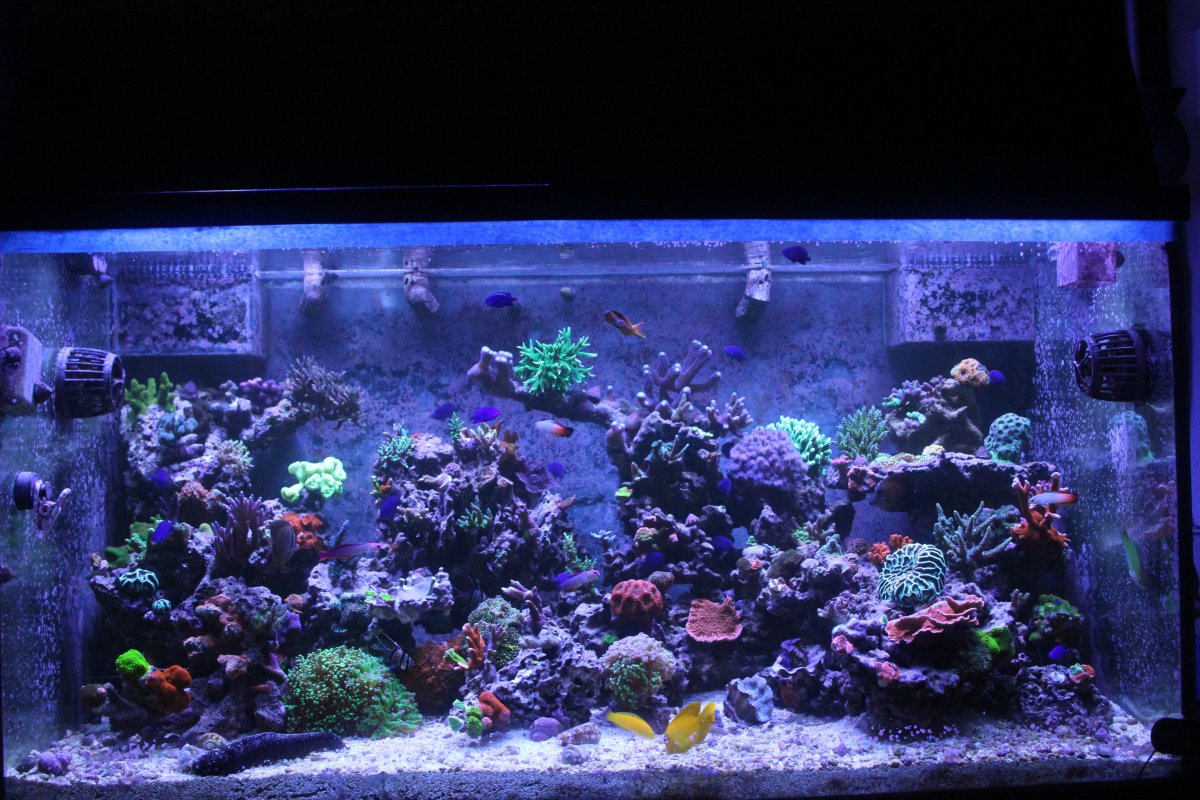
Nice aquarium.