



tbrown
Cronies #3?? Heathens' Coffee Snob???
View Badges
Ultimate Member
Reef Squad
Reef Squad Leader
Excellence Award
Reef Tank 365
R2R App User
Article Contributor
Hospitality Award
Rock Pool Reef Keepers
My Tank Thread
My Aquarium Showcase
Not positive but the second picture sure looks like an aiptasia to me.I did another 40 gallon water change today. Things are looking great!
I’ve noticed some interesting changes since adding a little more PAR vis a vis the height adjustable lighting and third halide. First is the sudden proliferation of purple coralline along with the hot pink. Both are growing quickly. Second is the aiptasia….
That’s not an aiptasia! It seems I have 4 curlicue anemones instead. Two of them are growing like weeds. The other two have moved somewhere I can’t find them yet.
Here’s what the larger one looks like currently.
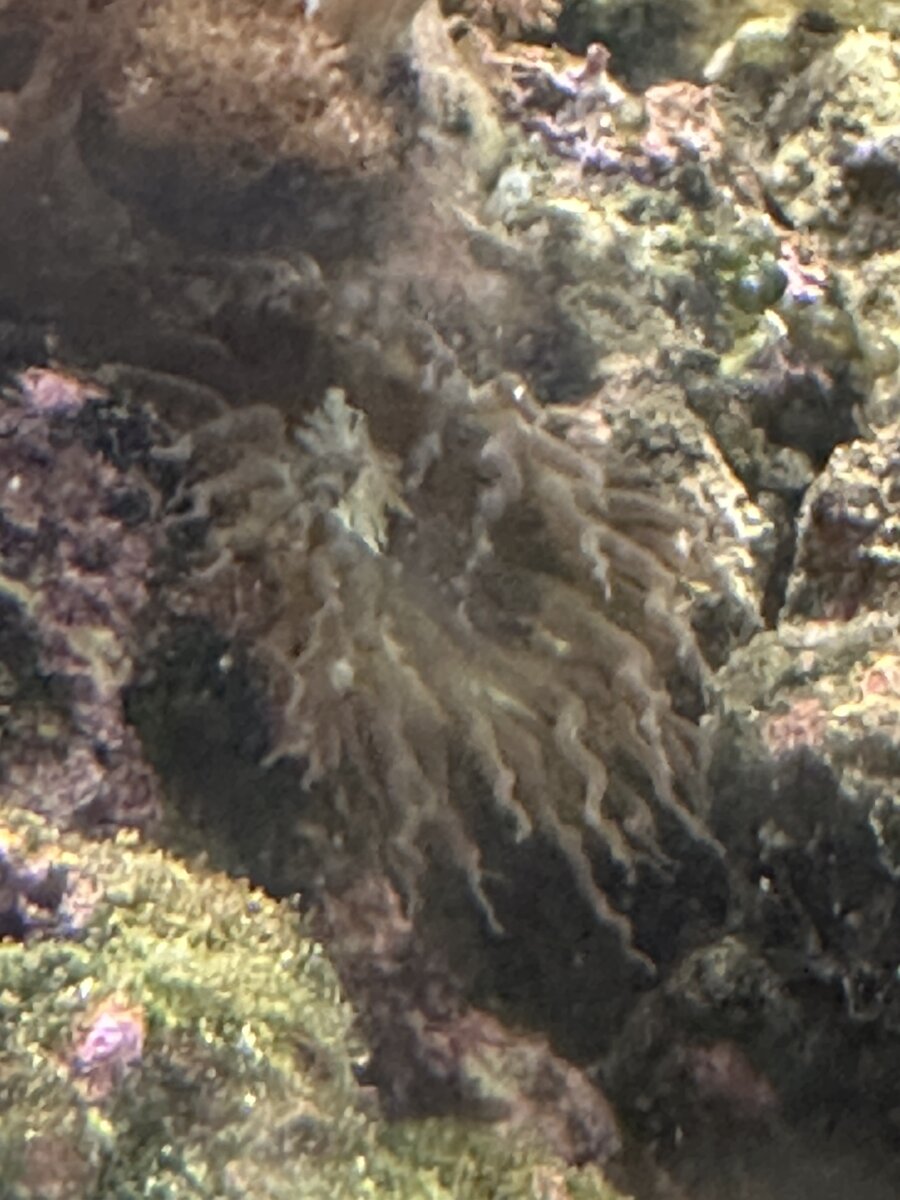
This is the smaller one.
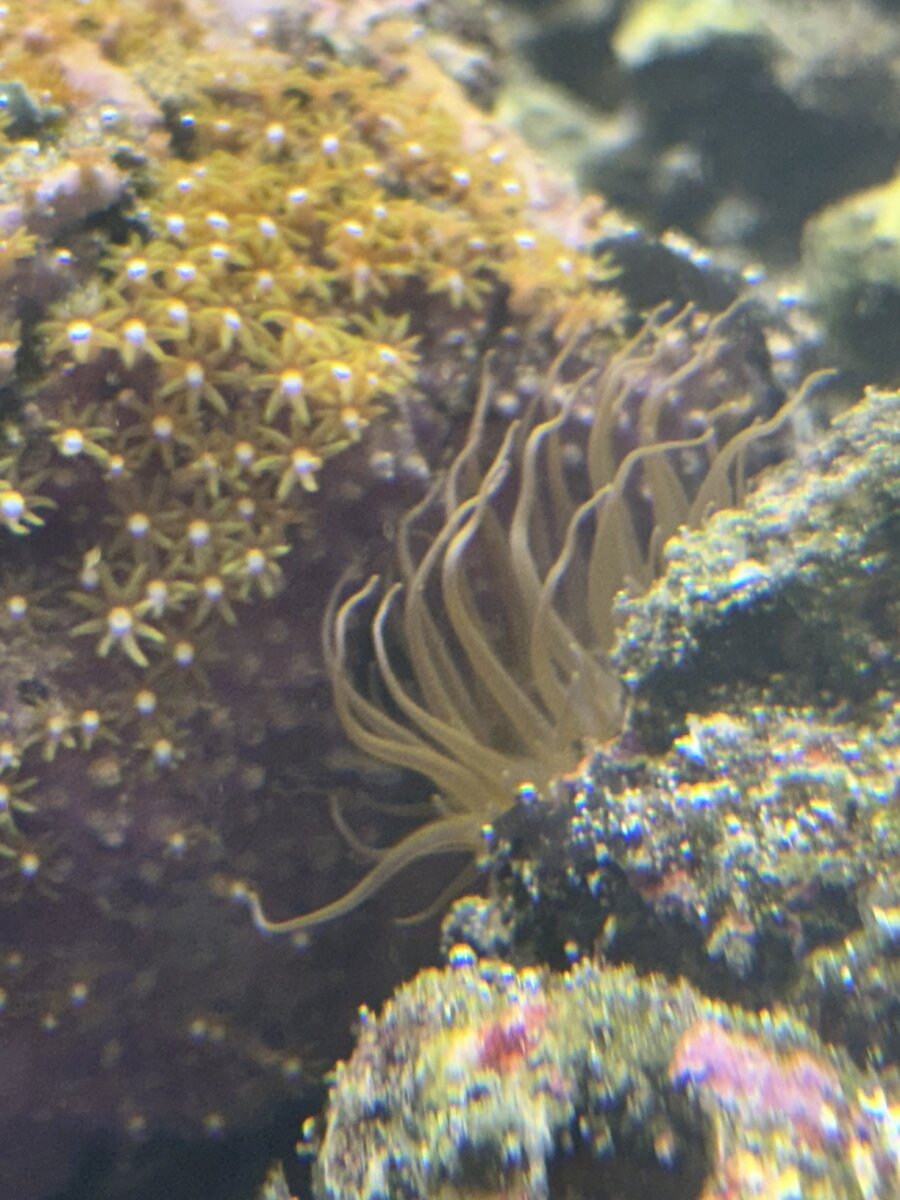
The smaller one’s even started getting the curlicue look!
I suspected that they might be curlicues because their proportions didn’t match that of typical aiptasia anemones I’ve encountered in my reefing career. The size ratio of the oral disk to tentacle length favors the oral disk. The oral disk is much larger than in an aiptasia of the same size. The oral disk is held close to the rock while aiptasias don’t. Lastly, and perhaps most importantly, there have only been a couple of splits. Aiptasia would have found its way into places you wouldn’t believe. I don’t doubt they’d find their way into our beds at night…. Ok maybe not. Still, I’d have a crazy amount of aiptasia by now if they were the most common types of aiptasia found in our systems.
I suspected they were possibly a slower growing aiptasia species but even the slowest growing aips would have split more than these guys have. Seeing what I was seeing I researched aiptasia like anemones. Curlicue anemones were one of the first hits on my Google search. The problem was that I didn’t see the curls or the banding at the time. As a result I just figured I had some uncommon aiptasia species.
I started suspecting I might have had curlicue anemones a couple of months later when the oral disk grew to about 3 inches in diameter but the tentacles weren’t lengthening as fast. Also, I didn’t remember the coloring around the oral disk being present in the common aiptasia species.
Fast forward to the change in light. At first, I started noticing a bit of a green tinge to the off white coloring surrounding the mouth. Definitely not a characteristic of any aiptasia I’ve heard of. A couple of days ago (about 4 days after the lighting change) I noticed the curling starting in the larger nem’s tentacles. 2 days ago the curling became quite pronounced. I don’t see the bands on the tentacles yet but these nems can grow to a foot in diameter! Both of these guys have a lot of maturing to do yet!
I haven’t fed the curlicues directly like I do with the BTAs but now that I know what they are I’m going to try feeding them tonight directly. I’ll let you all know how it goes!
It turns out that there are two types of shrimp that are hosted by these anemones. Pederson shrimp and Spotted shrimp are the two in question. I’m going to see if I can get some.
Oh and the largest nem has been touching a Kenya tree yet it hasn’t caused it any harm. It turns out that while they aggressively sting, their venom isn’t potent at all. This system is definitely anemone heavy!
I know I wrote a book but it’s a pretty awesome discovery, at least to me. I’m glad I didn’t try to kill them. If you ever have an “aiptasia” that doesn’t spread, you just might have a curlicue anemone!
















