@DBUK thank you for letting us all be part of this journey, it’s never good knowing a fellow hobbyist has no answers to their woes!!! After seeing various responses to your questions on our local forum UR here in uk it was the usual run of the mill answers which prompted me to offer my help. From my brief encounter with setting up my nano tank I suggested taking similar action.
@brandon429 take the credit as the countless times you helped me find courage to carry on and gain control of the tank has paid off here.
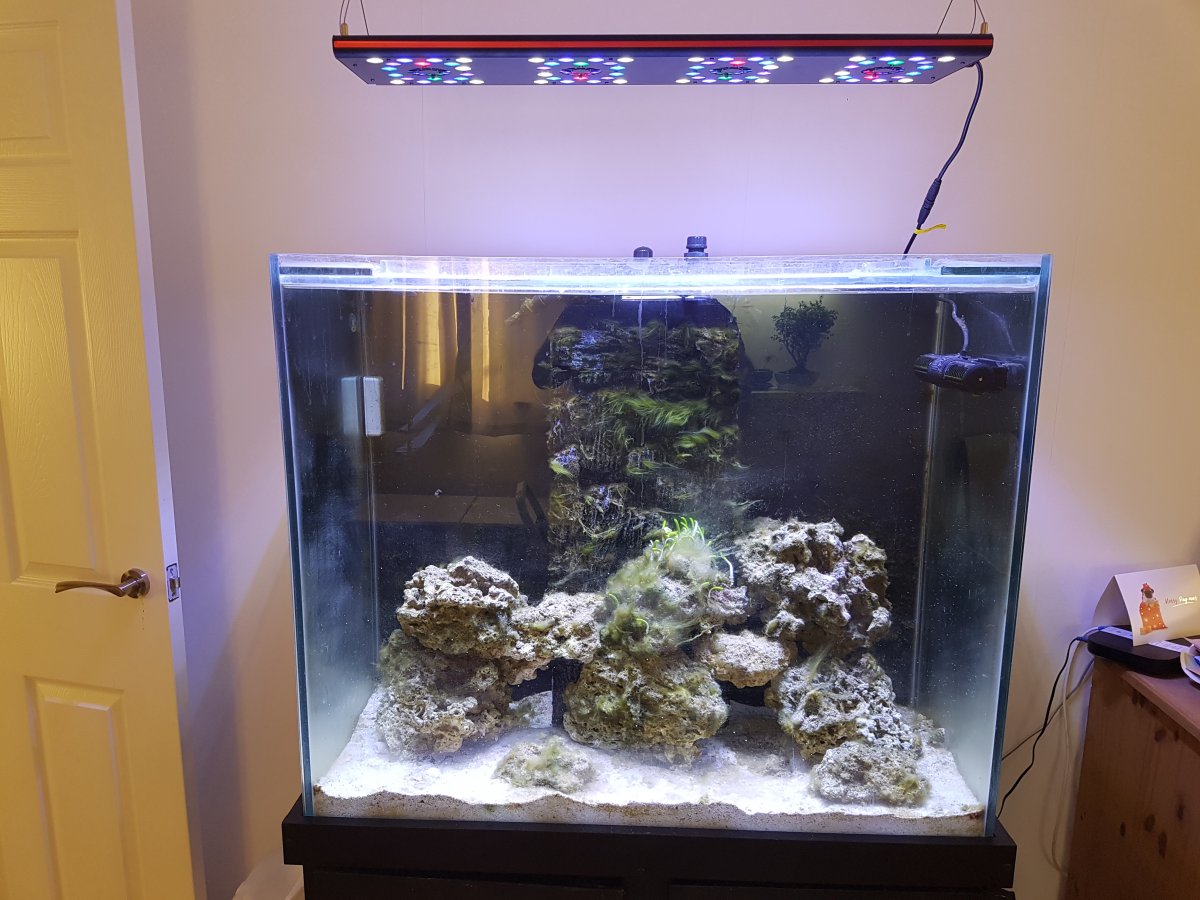
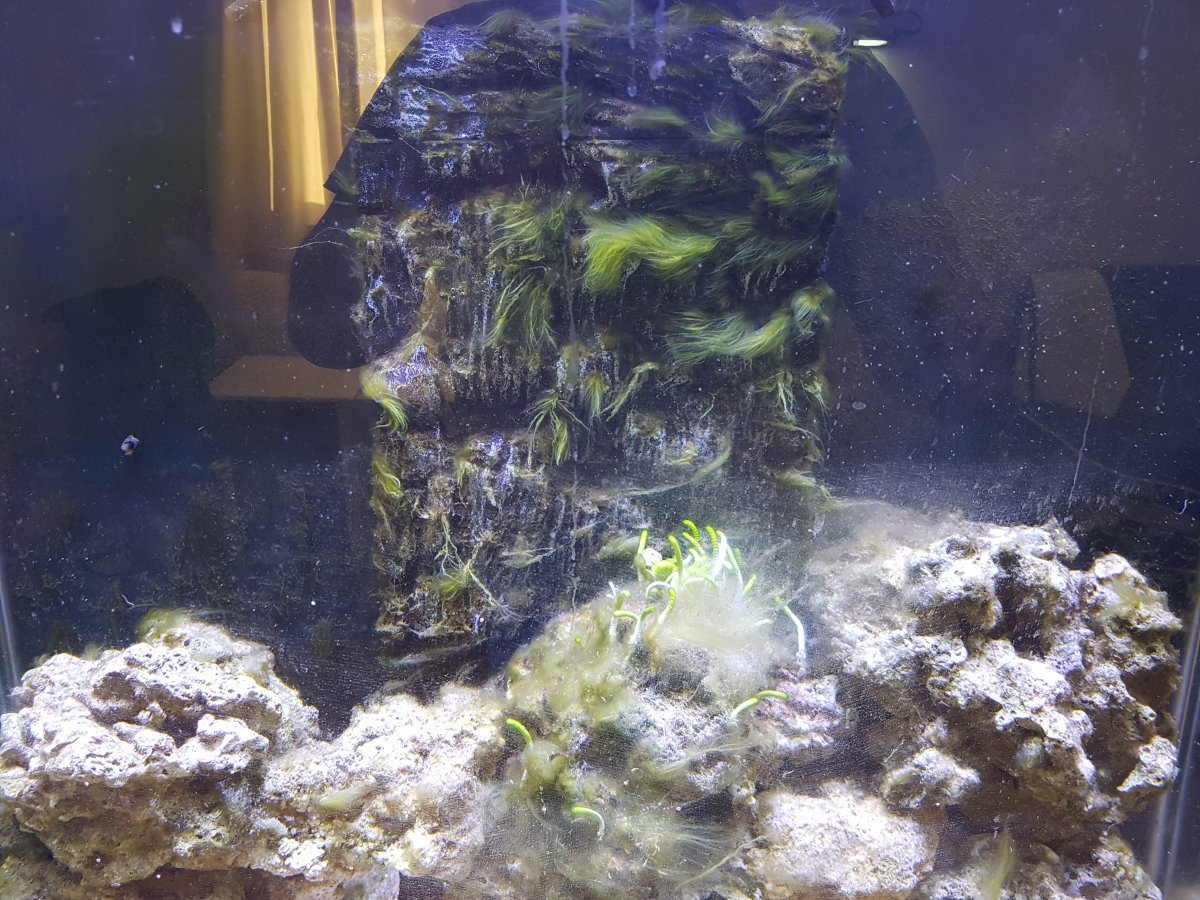
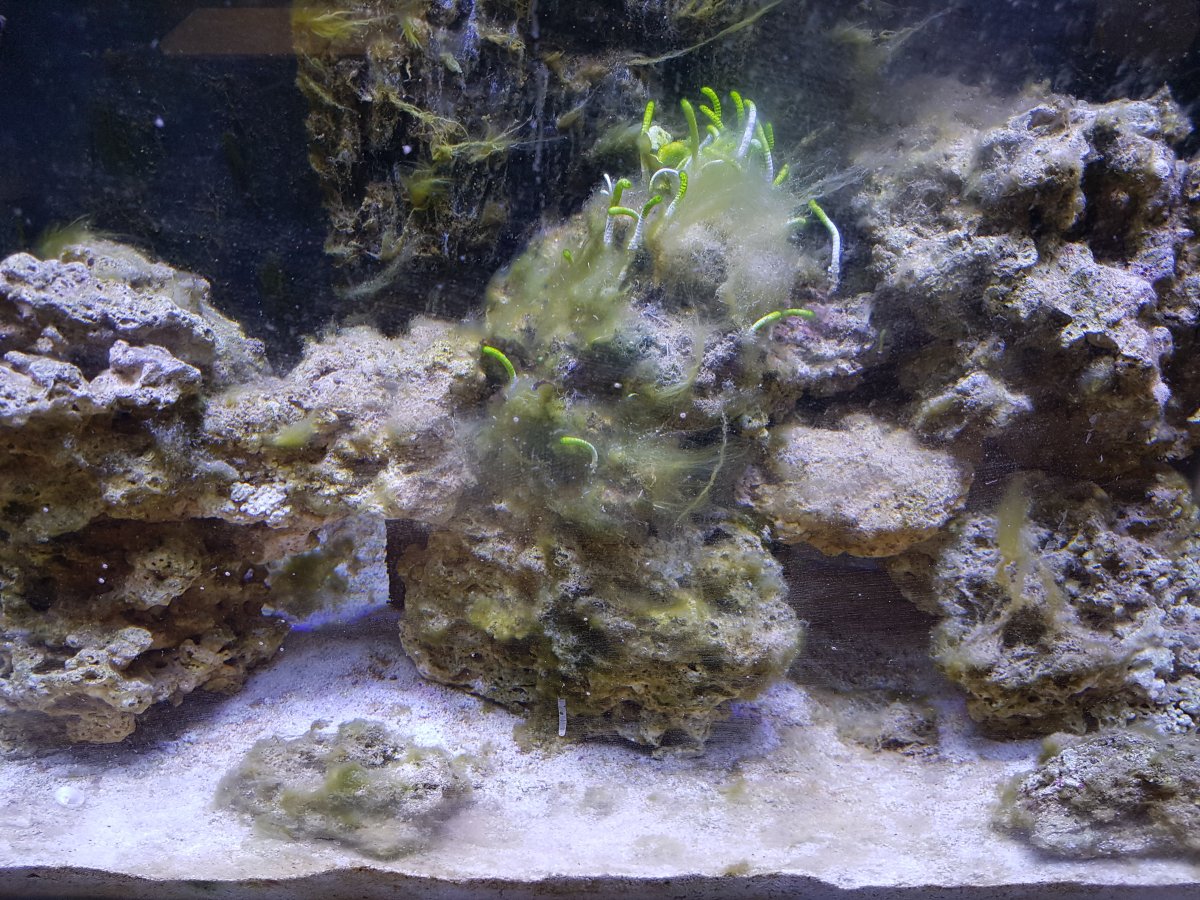
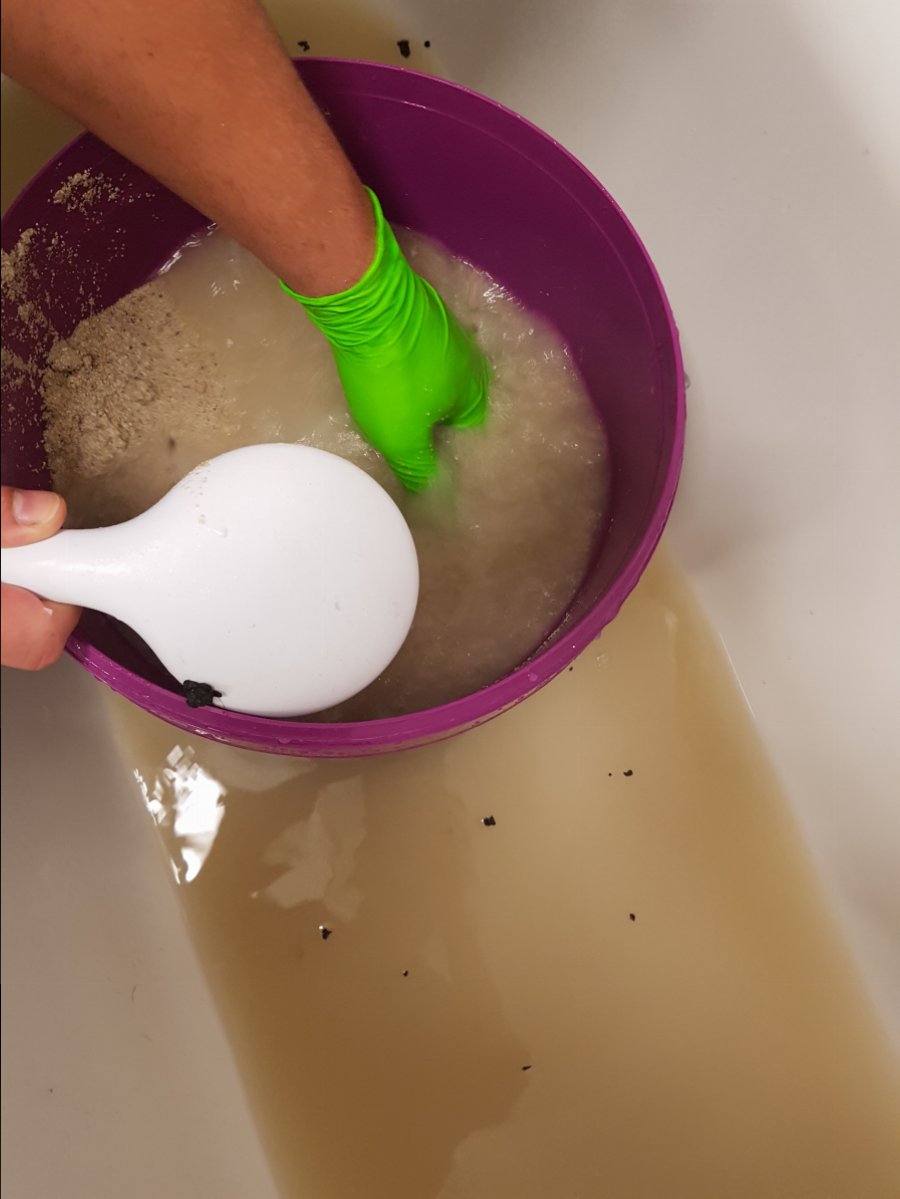
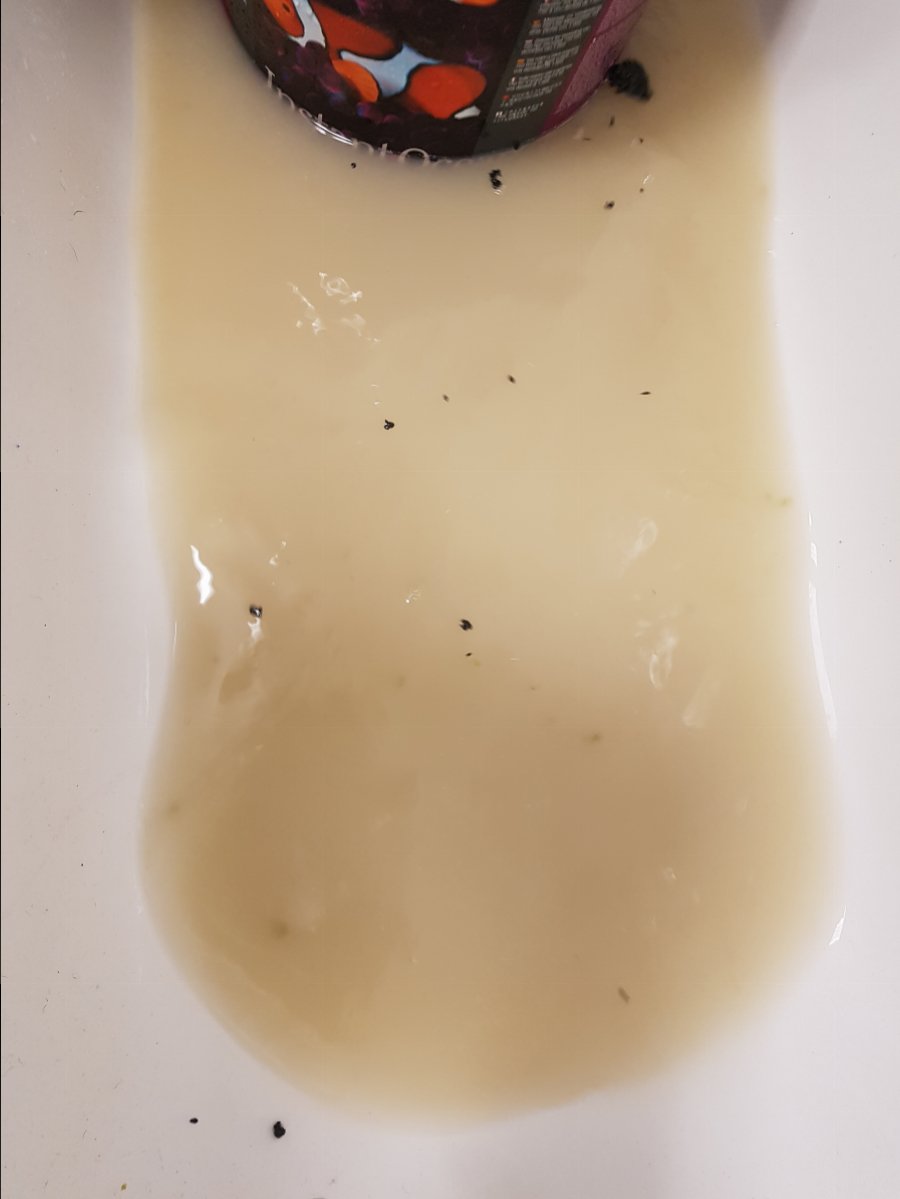
As pictures from above show, the tank was in need of some husbandry. Firstly having been set up using live sand (without rinsing) it was common that
@DBUK was led to believe he was on the right path. Not only did we have a task on our hands it was hard earned cash being wasted. Also having been told he also used live rock too I started to come to conclusion £££ was being poured down the drain, literally. Dan was doing weekly/bi weekly waterchanges since set up hoping it would get rid of the algae issue, now we realise he potentially wasted good water as the issue was not water but in the sand. I believe the tank had been running 5 months without no fish or Coral being added since set up, and for any hobbyist that’s not easy. By then algae had got a foot hold, Dan had been patient up till now and still couldn’t seem to get the answer he was looking for. Although he listened to others advice and hoped the algae would die off it never did.... So I advised this could be turned around in a single day, regain control of his tank and know what a rip clean can bring.
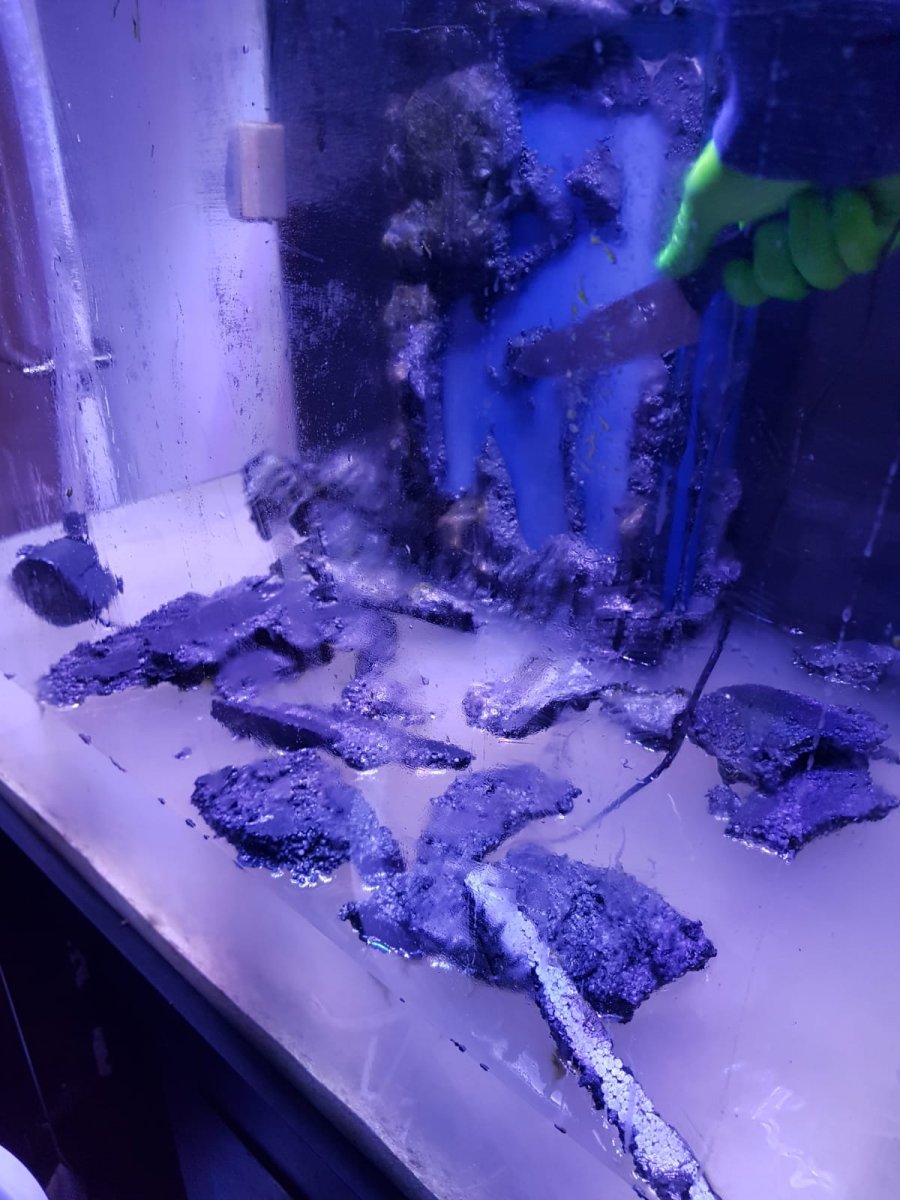
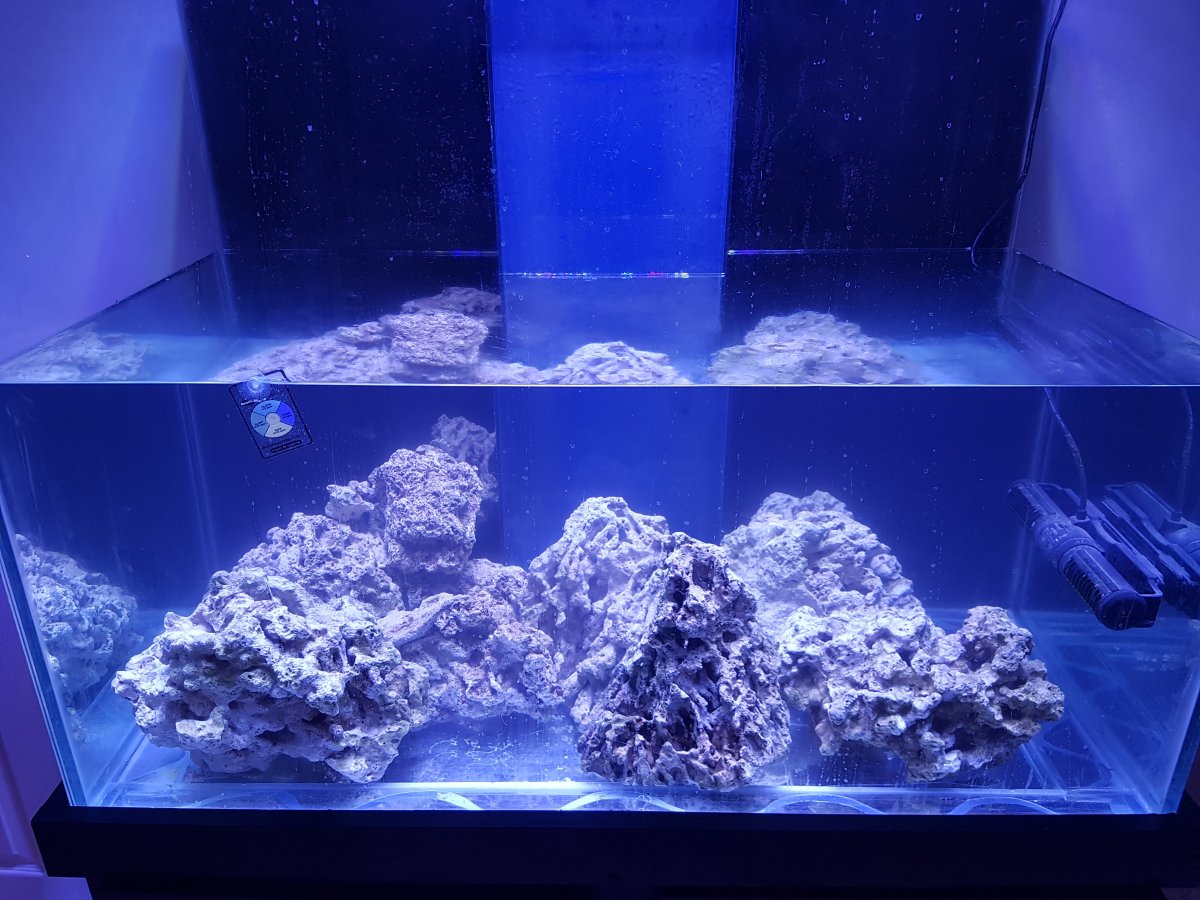
Dan ordered some h2o2, costing a under £10 for a Litre. Now that’s nothing in comparison to how much he had spent just buying live sand, then live rock. I briefly explained the process to Dan, firstly do a drop test and see how cloudy his sand is. Well let the pictures explain above, out came the sand, rinsed in tap water and then soaked in RODI for 2 days whilst changing RO daily. Then pull the rocks, whilst soaking in a bucket with tank water we manually done some dentistry work by scraping the rocks like a dentist would with plaque on teeth. Steak knives are best at extracting the algae by removing its foothold at the base from the rocks and not waiting for the CUC (snail/fish/urchin) to decide if it will do the job. Nothing will do the job as efficient as we did, manually. We used the 3% h2o2 to spray areas of algae still present on the rocks and places we couldn’t access and let it burn for 5 minutes before rinsing in old tank water whilst forcefully submerging the rocks to push the detritus out and enabling it to be more efficient/porous.... After a full tank drain we reused half the volume of the old tank water to fill up the tank and the rest with new salt water, and replaced the rocks.
Now
@DBUK who has had livestock in observation tank for 5 weeks wanting to put them into the main display can consider adding them to the display. Considering the few snails that had been through the rip clean process have survived since re setting up it’s clear the tank is ready for its first fish. (We did the smell test, yes it smelt like seaside). Don’t forget Dan, use just a single chromis fish as a tester fish before slowly adding the others to make sure the tank is ready. We need to make sure no more money is wasted.
Below is a brief list of what Dan can take with him and offer to others as a learning curve.
Live sand - time has moved on and live rock/bottled bacteria is preferred.
Live rock mixed with dead rock - only one piece of live rock would have seeded the rest of the rocks and saved some money from buying lots of live rock.
No need to own every test possible and waste money when you know what to look for and how to implement a solution.
When calibrating salinity instruments never use tools that have been mixed in saltwater prior as it will leave residue and not calibrate. Always rinse thoroughly in RO or use a separate tool for salt and ro to transfer the water onto the instrument.
No need to add snake oil/chemicals to the main tank and wait it out to get rid of algae once it’s smothered the rocks, always best if possible to remove the rock and rid of it out of tank. EXPORT waste NOT harbour in tank.
I look forward to seeing this tank grow now and becoming the reef Dan wants it to be. After all this is 390 Litre/103 US Gallons of water in this glass box..
A.