




- Joined
- Apr 6, 2024
- Messages
- 127
- Reaction score
- 145
- Location
- East Coast
- What state or country do you live in
- Massachusetts
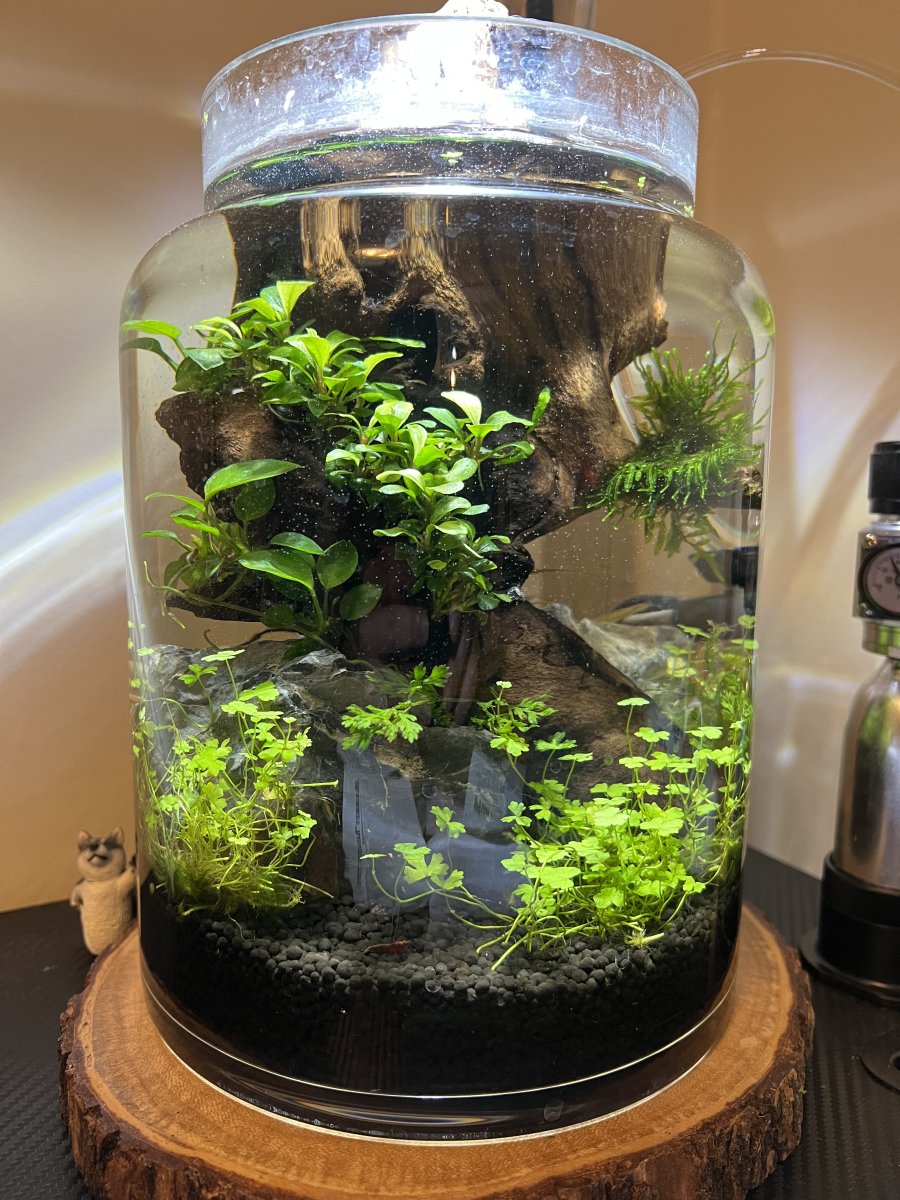
I've had this tank in my mind for a long time now...I've always been drawn to weird cylindrical or spherical containers for housing aquatic life. Here is a planted tank I made with a custom made canister filter.
Since Halloween, I've been wanting to do something of a specialized tank for meat corals and donut corals and trachys...something like a spherical glass holding a colorful brain....it would look pretty dank. Imagine a brain in a glass jar sort of vibe, except instead of gray matter, we have brain corals.
I decided to do a spherical bowl aquarium, but I wanted a sump. As I was researching solutions, I found out about the mame/viv glass overflows...I had my starting point.
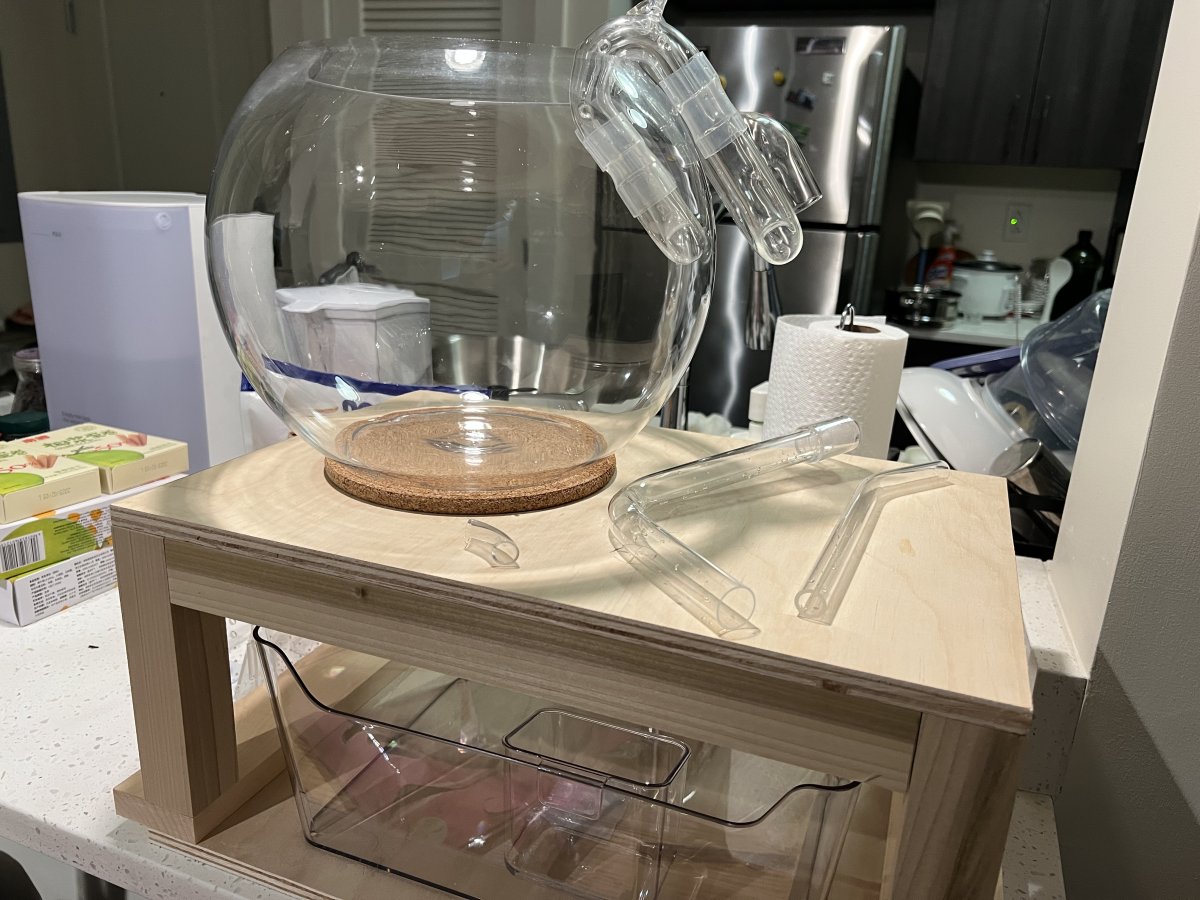
I grabbed a glass bowl from Michaels which is about 3 gallons in total water volume. For the sump I am using a clear acrylic bin with a hang on organizer to create a sort of primary sump overflow for oxygen exchange. The stand was made from plywood and pine. The above was a test fit. You can see the viv glass overflow.
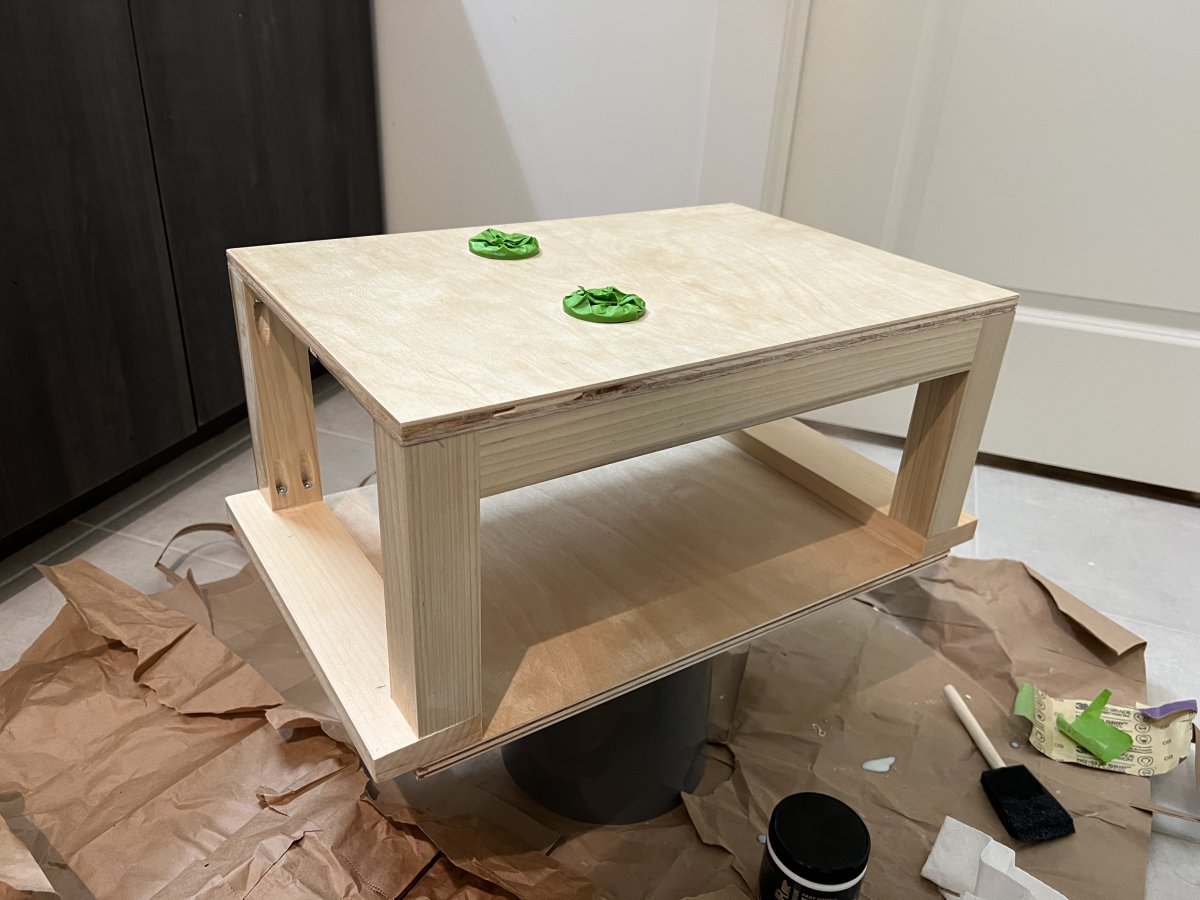
I wanted everything as clean as possible, so I opted for hard plumbing using acrylic tubing, which I bent...but this would have to later be modified. Here is the stand with holes drilled for the overflow, being painted with polyurethane for moisture protection. It has 6 coats...
Here is the test fit and first wet testing:

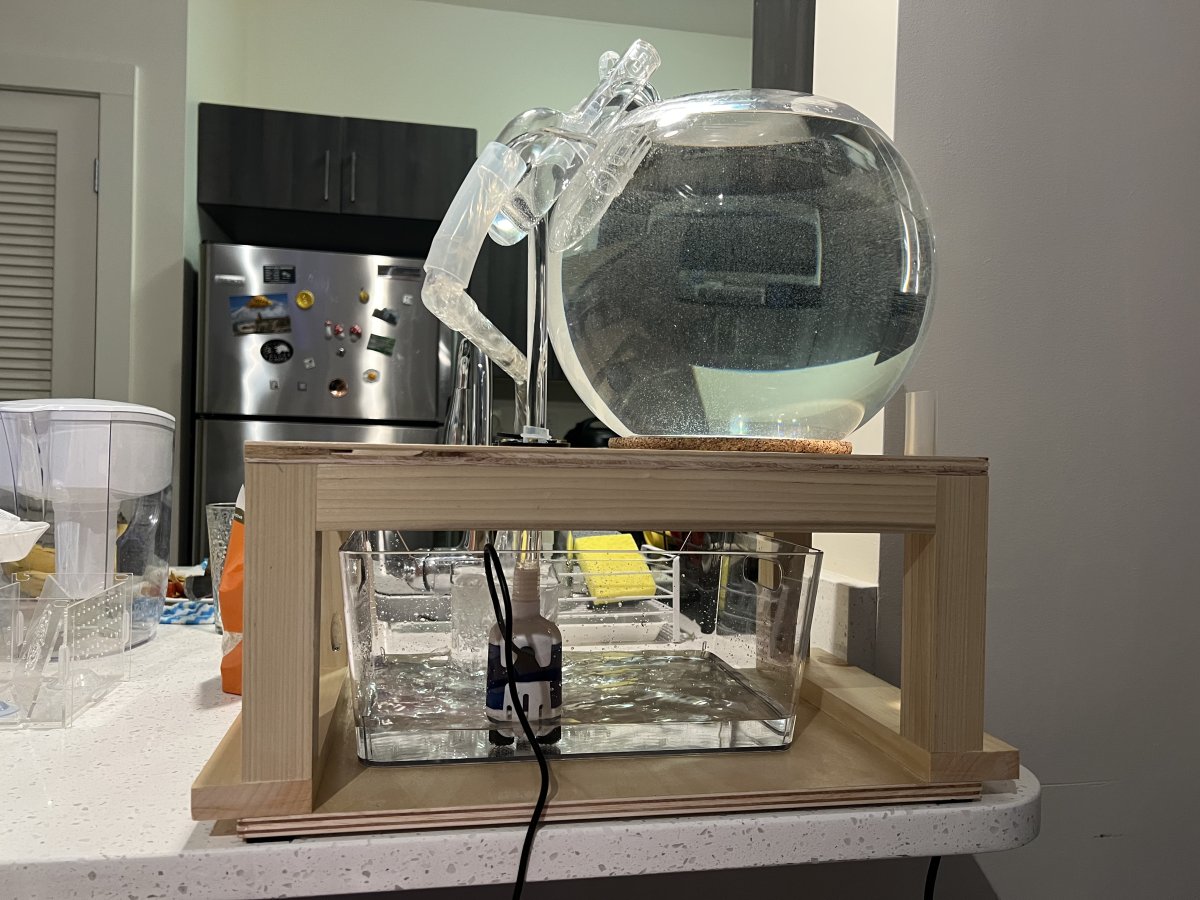
The wet test was successful in as far as two things:
1. The flow rate of my plumbing was adequate to handle my pump.
2. I was able to prove out an important feature - autorestart of the siphon after a power off event. This is a feature of the glass overflow, however, my current implementation of the glass overflow is way outside the recommended operational bounds.
However, there was a huge issue - the noise ---gurgling and splashing, absolutely unacceptable.....which meant I had to think about this a bit more.
As I contemplated siphons and water pressure...I realized that due to the way I had routed my pipe bends, and coupled with a lack of flow regulation on the overflow pipe, I had created a sort of hydrodynamic oscillator. The water would build up in the standpipe of the overflow until sufficient pressure formed to collapse trapped air in the overflow pipe, which would lead to a gush of water and bubbles causing a loud periodic gurgling. I had to attach a ball valve.
Here is the solution:
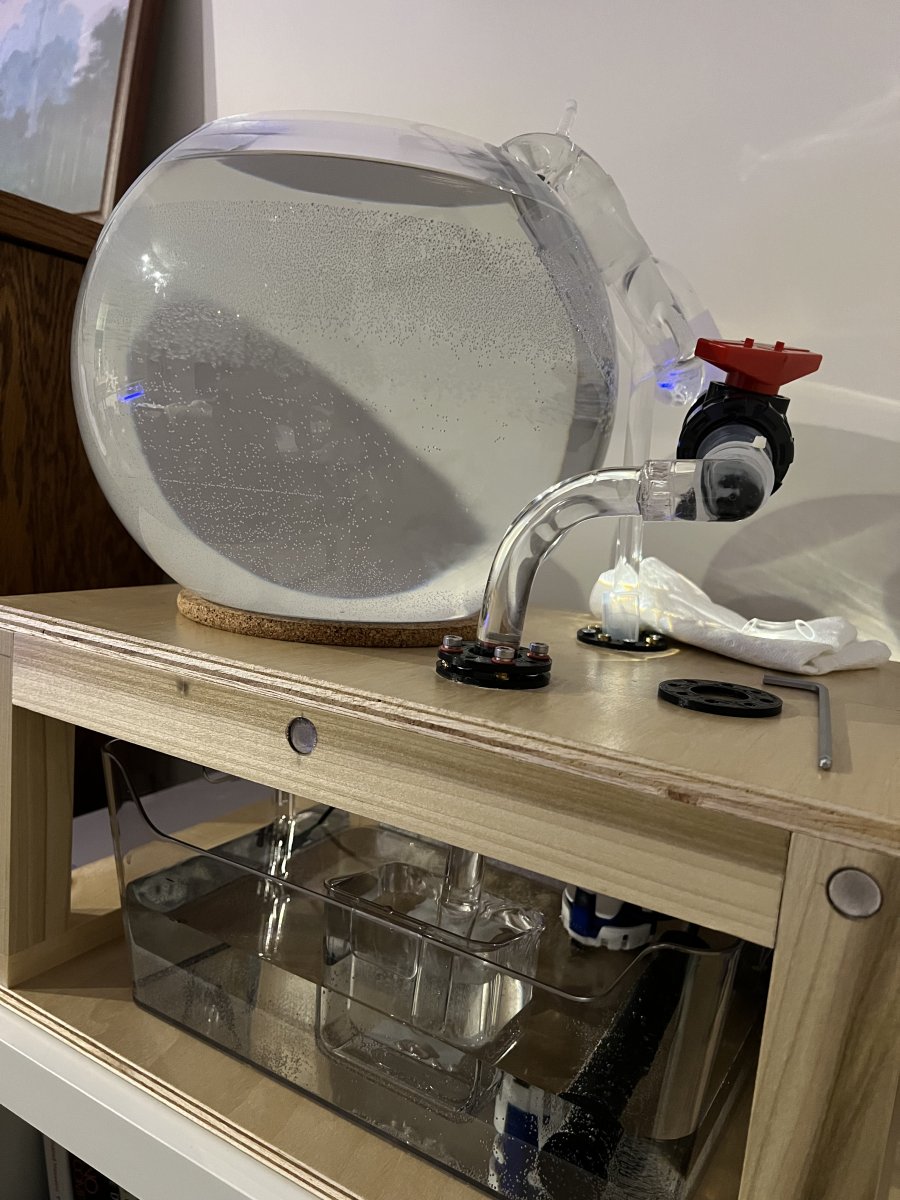
It sort of mars the clean ascetic I was originally gunning for, but what it allows me to do is regulate the water height on the overflow standpipe such that I get consistent head pressure. This immediately solved the noise issue. Also note my custom printed pass through tube clamps. They allow for a sort of orbital motion of the tube, which corrects for misalignment, and takes the stress out of my tubing, whilst preventing them from moving too much.
Here is the system now, undergoing overnight testing to ensure reliability:
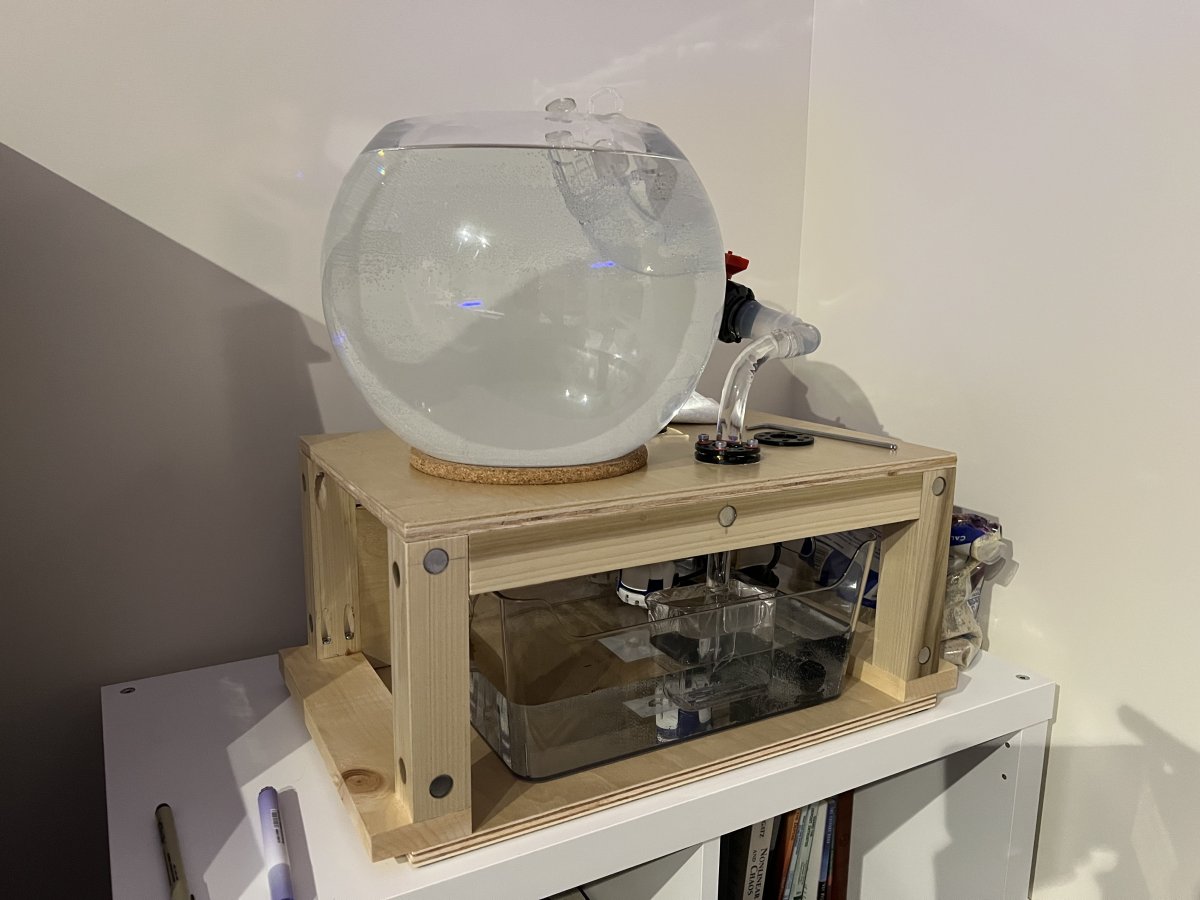
I am also testing a hygger 50 watt titanium heater. Also notice the magnets I glued in with epoxy, these will allow for magnetic side panels that I will attach later, once I strike up the time to work on them. Not seen is a control panel that I attached at the back of the frame which allows the entire unit to run off of one cord.
Until the next update....
Since Halloween, I've been wanting to do something of a specialized tank for meat corals and donut corals and trachys...something like a spherical glass holding a colorful brain....it would look pretty dank. Imagine a brain in a glass jar sort of vibe, except instead of gray matter, we have brain corals.
I decided to do a spherical bowl aquarium, but I wanted a sump. As I was researching solutions, I found out about the mame/viv glass overflows...I had my starting point.
I grabbed a glass bowl from Michaels which is about 3 gallons in total water volume. For the sump I am using a clear acrylic bin with a hang on organizer to create a sort of primary sump overflow for oxygen exchange. The stand was made from plywood and pine. The above was a test fit. You can see the viv glass overflow.
I wanted everything as clean as possible, so I opted for hard plumbing using acrylic tubing, which I bent...but this would have to later be modified. Here is the stand with holes drilled for the overflow, being painted with polyurethane for moisture protection. It has 6 coats...
Here is the test fit and first wet testing:
The wet test was successful in as far as two things:
1. The flow rate of my plumbing was adequate to handle my pump.
2. I was able to prove out an important feature - autorestart of the siphon after a power off event. This is a feature of the glass overflow, however, my current implementation of the glass overflow is way outside the recommended operational bounds.
However, there was a huge issue - the noise ---gurgling and splashing, absolutely unacceptable.....which meant I had to think about this a bit more.
As I contemplated siphons and water pressure...I realized that due to the way I had routed my pipe bends, and coupled with a lack of flow regulation on the overflow pipe, I had created a sort of hydrodynamic oscillator. The water would build up in the standpipe of the overflow until sufficient pressure formed to collapse trapped air in the overflow pipe, which would lead to a gush of water and bubbles causing a loud periodic gurgling. I had to attach a ball valve.
Here is the solution:
It sort of mars the clean ascetic I was originally gunning for, but what it allows me to do is regulate the water height on the overflow standpipe such that I get consistent head pressure. This immediately solved the noise issue. Also note my custom printed pass through tube clamps. They allow for a sort of orbital motion of the tube, which corrects for misalignment, and takes the stress out of my tubing, whilst preventing them from moving too much.
Here is the system now, undergoing overnight testing to ensure reliability:
I am also testing a hygger 50 watt titanium heater. Also notice the magnets I glued in with epoxy, these will allow for magnetic side panels that I will attach later, once I strike up the time to work on them. Not seen is a control panel that I attached at the back of the frame which allows the entire unit to run off of one cord.
Until the next update....














