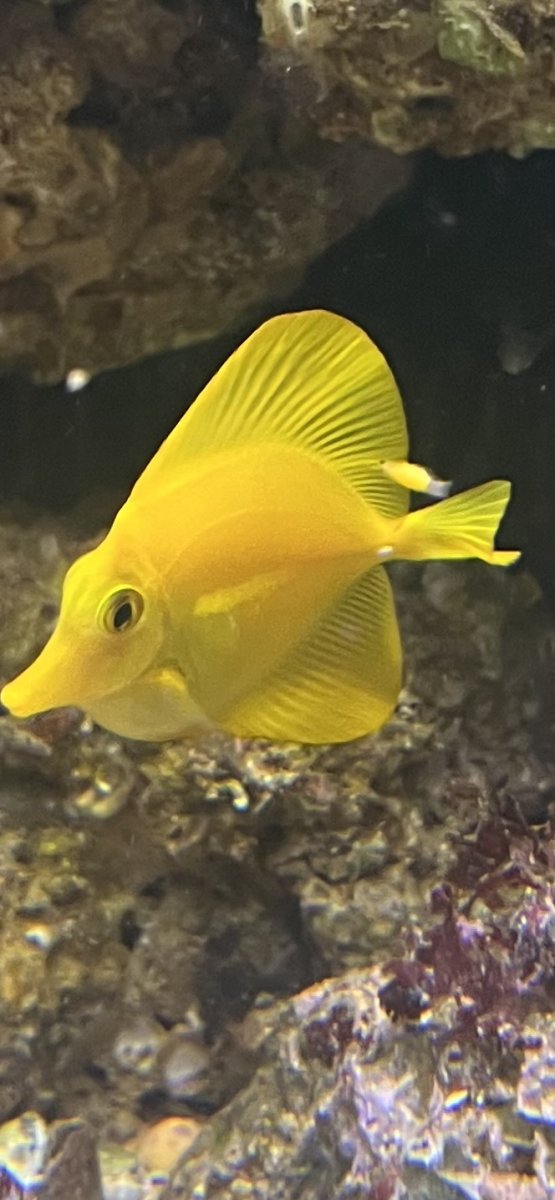
Yellow tang issue

Randy Holmes-Farley

Reef Chemist
View Badges

Joined
Sep 5, 2014
Messages
89,263
Reaction score
92,319
Location
Massachusetts, United States
Rating - 0%
0   0   0
What the heck is this on my yellow tang?

Some sort of parasite?
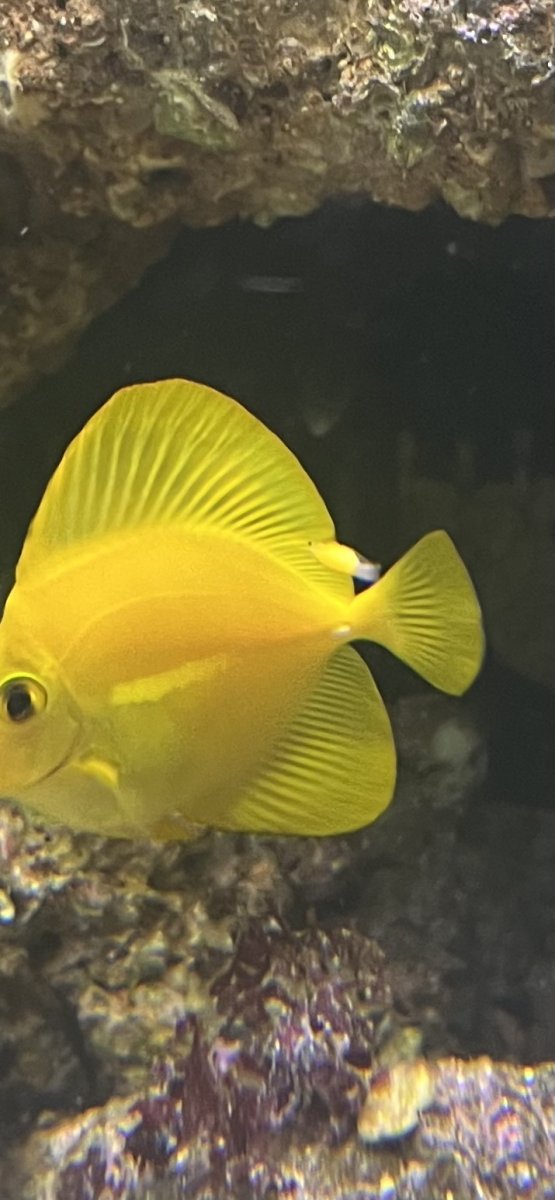
IMG_3504.jpeg
IMG_3499.jpeg
 

bluemon

Lazy DIY Reefer
View Badges
Joined
Jun 20, 2017
Messages
2,620
Reaction score
2,507
Location
California
Rating - 0%
0   0   0
Oh man, kinda looks like a cirolanid isopod parasite hitching a ride?

Haven’t seen one so yellow. Maybe because it’s been munching on a yellow tang?

I’m sure the #fishmedic team will know better
 
OP
OP
Randy Holmes-Farley

Randy Holmes-Farley

Reef Chemist
View Badges
Joined
Sep 5, 2014
Messages
89,263
Reaction score
92,319
Location
Massachusetts, United States
Rating - 0%
0   0   0
Looks like this one.


@Jay Hemdal
 

Miami Reef

Reef Chem Enthusiast
View Badges
Joined
Sep 8, 2017
Messages
17,255
Reaction score
29,618
Location
Miami
Rating - 0%
0   0   0
All your fish were either pre quarantined from Dr. Reef or purchased captive bred from Biota, right?
 
OP
OP
Randy Holmes-Farley

Randy Holmes-Farley

Reef Chemist
View Badges
Joined
Sep 5, 2014
Messages
89,263
Reaction score
92,319
Location
Massachusetts, United States
Rating - 0%
0   0   0
All your fish were either pre quarantined from Dr. Reef or purchased captive bred from Biota, right?

Yes, but the thread above suggests ocean rock can bring them.
 

Jay Hemdal

10K Club member
View Badges
Joined
Jul 31, 2020
Messages
37,586
Reaction score
37,385
Location
Dundee, MI
Rating - 0%
0   0   0
Yes, but the thread above suggests ocean rock can bring them.

I've never seen a bright yellow one before! Yes, they hitchhike in on live rock direct from the ocean, with uncured Gulf of Mexico rock being the most common source. These tend to die out over time. If they even reproduce in aquariums, there seems to be something that harvests them faster than they can reproduce. There are ways to trap them though.
 
OP
OP
Randy Holmes-Farley

Randy Holmes-Farley

Reef Chemist
View Badges
Joined
Sep 5, 2014
Messages
89,263
Reaction score
92,319
Location
Massachusetts, United States
Rating - 0%
0   0   0
I've never seen a bright yellow one before! Yes, they hitchhike in on live rock direct from the ocean, with uncured Gulf of Mexico rock being the most common source. These tend to die out over time. If they even reproduce in aquariums, there seems to be something that harvests them faster than they can reproduce. There are ways to trap them though.

I’m all for predators eating them. Maybe the mantis will get them. lol

Any links to trap ideas?
 

Jay Hemdal

10K Club member
View Badges
Joined
Jul 31, 2020
Messages
37,586
Reaction score
37,385
Location
Dundee, MI
Rating - 0%
0   0   0
I’m all for predators eating them. Maybe the mantis will get them. lol

Any links to trap ideas?

The ones I've seen are simple - like a 16 oz soda bottle, with the neck cut off and turned around and glued into the base to make a funnel trap. These need to be weighted down. Bait them and deploy at night and retrieve them in the morning before lights on. Amazon has a weird little device - try searching on: "MiOYOOW Aquarium Planaria Catcher" I wonder if that would work?
 

Miami Reef

Reef Chem Enthusiast
View Badges
Joined
Sep 8, 2017
Messages
17,255
Reaction score
29,618
Location
Miami
Rating - 0%
0   0   0
Yes, but the thread above suggests ocean rock can bring them.
Right.

What I’m going at is that these guys aren’t obligate fish parasites, which IMO means they normally don’t cause issues — they prefer other food sources, just like bristleworms, for example.

Personally, I think this is incredibly rare and might honestly just be a freak accident. I’d be surprised if it happened again.

Wrasses, especially sixlines, and going to be incredible hunters, but they are aggressive and can outcompete mandarins; I’d hold off on them for now.

Good luck. This is just my opinion and educated guess.
 
OP
OP
Randy Holmes-Farley

Randy Holmes-Farley

Reef Chemist
View Badges
Joined
Sep 5, 2014
Messages
89,263
Reaction score
92,319
Location
Massachusetts, United States
Rating - 0%
0   0   0
Well, they have presumably both been in the tank for a few weeks, and this is the first sight of it, so maybe it won’t happen again.
 

OrionN

Anemones
View Badges
Joined
Jul 28, 2013
Messages
11,302
Reaction score
22,512
Location
Corpus Christi, TX
Rating - 0%
0   0   0
Randy
That is rough. Hopefully you just have one and it will not be able to reproduce in your tank.
Does not seem to cause any problem but I would imagine I don’t want a chihuahua hanging on my back sucking blood out of me, even if he let go after a week.
 

LiquidSpace

Well-Known Member
View Badges
Joined
Jan 2, 2022
Messages
596
Reaction score
583
Location
Tennessee
Rating - 0%
0   0   0
I got one of these from TBS and was somehow about to catch the tiny Harptail Blenny it was on and remove it. Per TBS, they do not reproduce in our aquariums. This is likely a one off.


TOP 10 Trending Threads

WHAT AMOUNT OF LIVE ROCK AND SAND SHOULD BE PRIORITIZED FOR OPTIMAL BIODIVERSITY/FILTRATION?

  • 100% live rock + bagged sand

    Votes: 38 27.1%
  • 100% dry rock + 100% live sand

    Votes: 47 33.6%
  • 50/50 live/dry rock, 50/50 live/bagged sand

    Votes: 31 22.1%
  • 75% live rock, 25% live sand

    Votes: 14 10.0%
  • 25% live rock, 75% live sand

    Votes: 10 7.1%
Back
Top