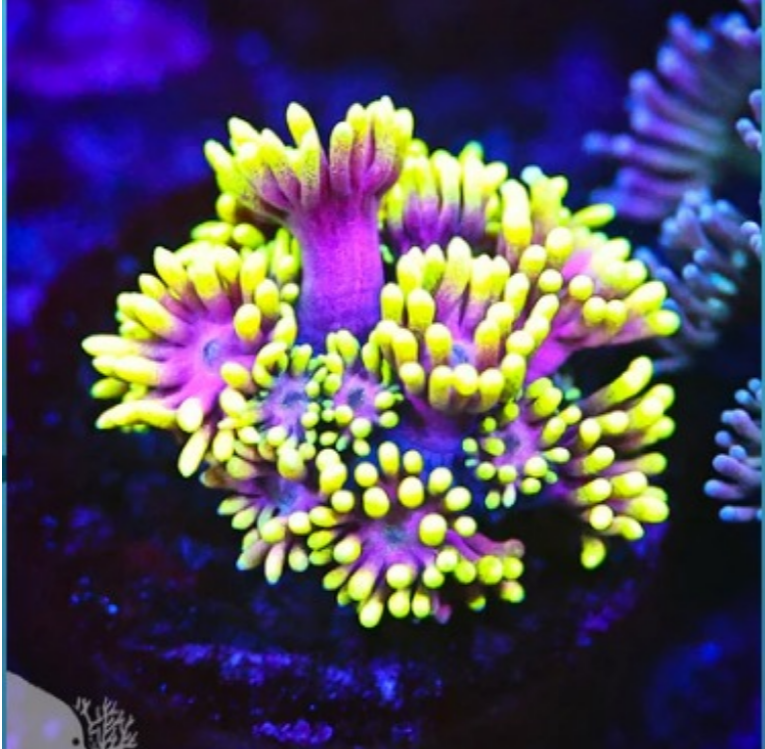
my 4 torches are doing good so decided to try a goni any tips for keeping them? cost a pretty penny so wanna do it right
Follow along with the video below to see how to install our site as a web app on your home screen.
Note: This feature may not be available in some browsers.
my 4 torches are doing good so decided to try a goni any tips for keeping them? cost a pretty penny so wanna do it right
![]()
This coral is use to captivity so hopefully it should do well stating by what you are sayingSomeone here with more experience I am sure will chime in, but in mine about the only thing you can do to screw it up yourself is too much flow.
Otherwise gonies are wierd in my experience. Ive had some take off and seemed impossible to kill. Others never really thrive then die over a period of months no matter what I did. Same tank. There is probably a really explanation involving fine details of chemistry, origin, handling, etc...but to an untrained eye it feels random.

This coral is use to captivity so hopefully it should do well stating by what you are saying![]()
Glitter and Amazeballs . I love em but so hard to keep.Trace elements play a huge role in Goni health. Stable nitrate and phosphate as well. Besides that in my opinion there’s not much to them fairly easy coral to grow, besides some species of Australian glitter Goni those are the only ones I’ve struggled with.
Amazeballs does very well for me somehow survived a terrible bryopsis problem. Some glitters do well for me but some do not seems like the indo glitters are much more forgiving than the aussiesGlitter and Amazeballs . I love em but so hard to keep.
I’m going to try stay cost conscious this go around . It seems the ones that did the best were among the least expensive in any case. The big red one in the video cost me a total of 38 bucks as 2 frags and the big green/yellowish one above was 25 in total for 2 frags at Farmer Frag Market.Amazeballs does very well for me somehow survived a terrible bryopsis problem. Some glitters do well for me but some do not seems like the indo glitters are much more forgiving than the aussies
Nice colour on this Goni. This is my opinion from having 8 Goni in my tank.my 4 torches are doing good so decided to try a goni any tips for keeping them? cost a pretty penny so wanna do it right
![]()
how will i know how much manganese to dose from 1 icp? is there any test kit for it? whats the recommended number for it?Nice colour on this Goni. This is my opinion from having 8 Goni in my tank.
First get an ICP test to see what your trace elements levels are. Since gonis are harder to keep than other corals, having close to ideal water parameters is more important for gonis. They generally tend to prefer lower par though some types can handle higher par. Keep flow random instead of one direction. Feed them reef roids once in a while. And the important one that alot of people miss, dose manganese. The ICP test will confirm your manganese level but I'll bet it's lower than desired because manganese depletes really fast in our tank environment.
Yes I know some people can have one or 2 Goni thrive in their tank without dosing manganese but everyone I've read about with lots of gonis thriving in their tank has been dosing manganese. Water changes or dosing AFR won't keep up with the demand for manganese for Gonis.
Manganese is one of those elements with quite a low concentration in natural seawater. We are talking less than a μg/L. ATI recommends around 1μg/L probably because it ensures availability for longer and it's not causing trouble in those concentrations. I'm sure you can go higher, but I can't tell you a limit.how will i know how much manganese to dose from 1 icp? is there any test kit for it? whats the recommended number for it?Nice colour on this Goni. This is my opinion from having 8 Goni in my tank.
First get an ICP test to see what your trace elements levels are. Since gonis are harder to keep than other corals, having close to ideal water parameters is more important for gonis. They generally tend to prefer lower par though some types can handle higher par. Keep flow random instead of one direction. Feed them reef roids once in a while. And the important one that alot of people miss, dose manganese. The ICP test will confirm your manganese level but I'll bet it's lower than desired because manganese depletes really fast in our tank environment.
Yes I know some people can have one or 2 Goni thrive in their tank without dosing manganese but everyone I've read about with lots of gonis thriving in their tank has been dosing manganese. Water changes or dosing AFR won't keep up with the demand for manganese for Gonis.
so how much do know how much to dose per dayManganese is one of those elements with quite a low concentration in natural seawater. We are talking less than a μg/L. ATI recommends around 1μg/L probably because it ensures availability for longer and it's not causing trouble in those concentrations. I'm sure you can go higher, but I can't tell you a limit.
It's one of those elements (like iron) that are depleted really fast and requires very frequent dosing due to a high consumption rate relative to its availability.
Unfortunately there is no test kit for it. You even require the more expensive ICP method (namely ICP-MS instead of ICP-OES) to detect it properly.
do i just dose something like 0.1ml 5x a day or something?so i got this from google sound about right?Manganese is one of those elements with quite a low concentration in natural seawater. We are talking less than a μg/L. ATI recommends around 1μg/L probably because it ensures availability for longer and it's not causing trouble in those concentrations. I'm sure you can go higher, but I can't tell you a limit.
It's one of those elements (like iron) that are depleted really fast and requires very frequent dosing due to a high consumption rate relative to its availability.
Unfortunately there is no test kit for it. You even require the more expensive ICP method (namely ICP-MS instead of ICP-OES) to detect it properly.
How much you can dose of a supplement depends on the strength of said supplement.so i got this from google sound about right?Manganese is one of those elements with quite a low concentration in natural seawater. We are talking less than a μg/L. ATI recommends around 1μg/L probably because it ensures availability for longer and it's not causing trouble in those concentrations. I'm sure you can go higher, but I can't tell you a limit.
It's one of those elements (like iron) that are depleted really fast and requires very frequent dosing due to a high consumption rate relative to its availability.
Unfortunately there is no test kit for it. You even require the more expensive ICP method (namely ICP-MS instead of ICP-OES) to detect it properly.
General Dosing Guidelines
Without specific test results, it is difficult to give an exact daily dose. However, general product guidelines suggest dosing a small amount very frequently.
- Maximum Safe Daily Dose: The maximum recommended safe daily dose is generally 0.5 ml of supplement per 100 liters of water (approximately 0.5 ml per 26 US gallons).
- For a 90-gallon tank: A 90-gallon (approx. 340 liter) tank's maximum safe daily dose would be around 1.7 ml per day (0.5 ml per 100L * 3.4 units of 100L).
- Split the dose: It is advised to split the total daily dose into smaller, more frequent portions throughout the day to protect marine animals from stress and prevent the manganese from precipitating out of the water instantly.

With respect, I just don’t think this is the case. I dose both AFR and TM K+ daily and it is still hit or miss. I have 2 that love life and 1 that does not. 1 I’ve had for 2 years and 2 newer additions.Nice colour on this Goni. This is my opinion from having 8 Goni in my tank.
First get an ICP test to see what your trace elements levels are. Since gonis are harder to keep than other corals, having close to ideal water parameters is more important for gonis. They generally tend to prefer lower par though some types can handle higher par. Keep flow random instead of one direction. Feed them reef roids once in a while. And the important one that alot of people miss, dose manganese. The ICP test will confirm your manganese level but I'll bet it's lower than desired because manganese depletes really fast in our tank environment.
Yes I know some people can have one or 2 Goni thrive in their tank without dosing manganese but everyone I've read about with lots of gonis thriving in their tank has been dosing manganese. Water changes or dosing AFR won't keep up with the demand for manganese for Gonis.
Nice looking goni. I have 5, the red ora is bulletproof. We dose manganese 2x. Per week. They can close up for weeks at a time, then come back as before.my 4 torches are doing good so decided to try a goni any tips for keeping them? cost a pretty penny so wanna do it right
![]()
Yes, even if you dose manganese and make everything else as perfect as you can, you can still have some Goni that will not do good in your tank. However I think dosing manganese gives your Goni the best chance at survival in your tank.With respect, I just don’t think this is the case. I dose both AFR and TM K+ daily and it is still hit or miss. I have 2 that love life and 1 that does not. 1 I’ve had for 2 years and 2 newer additions.
Yes, you can start dosing per these instructions... though ideally you should get ICP test.so i got this from google sound about right?
General Dosing Guidelines
Without specific test results, it is difficult to give an exact daily dose. However, general product guidelines suggest dosing a small amount very frequently.
- Maximum Safe Daily Dose: The maximum recommended safe daily dose is generally 0.5 ml of supplement per 100 liters of water (approximately 0.5 ml per 26 US gallons).
- For a 90-gallon tank: A 90-gallon (approx. 340 liter) tank's maximum safe daily dose would be around 1.7 ml per day (0.5 ml per 100L * 3.4 units of 100L).
- Split the dose: It is advised to split the total daily dose into smaller, more frequent portions throughout the day to protect marine animals from stress and prevent the manganese from precipitating out of the water instantly.