Help with clownfish disease ID

tylerjohnsoncc

Community Member
View Badges
Joined
Nov 11, 2024
Messages
40
Reaction score
15
Location
Texas
Rating - 0%
0   0   0
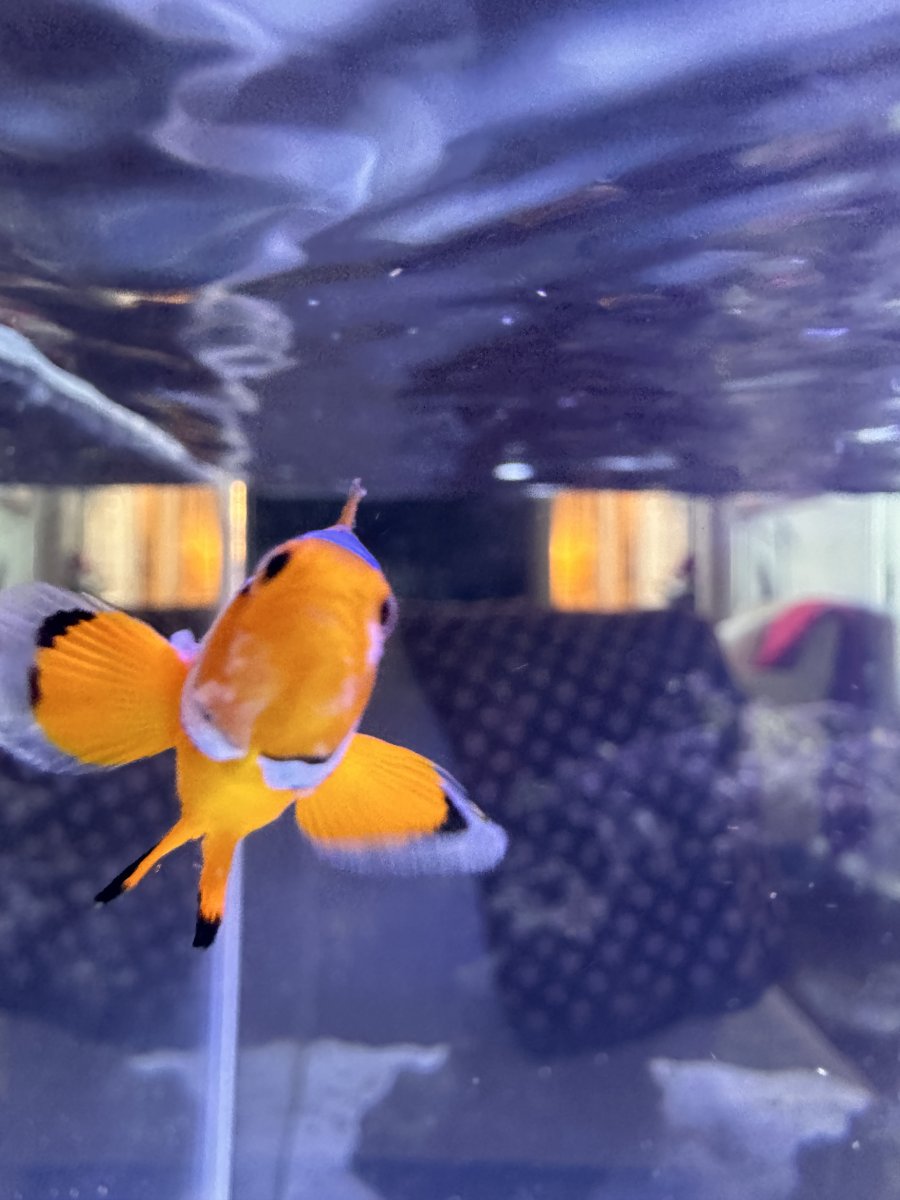
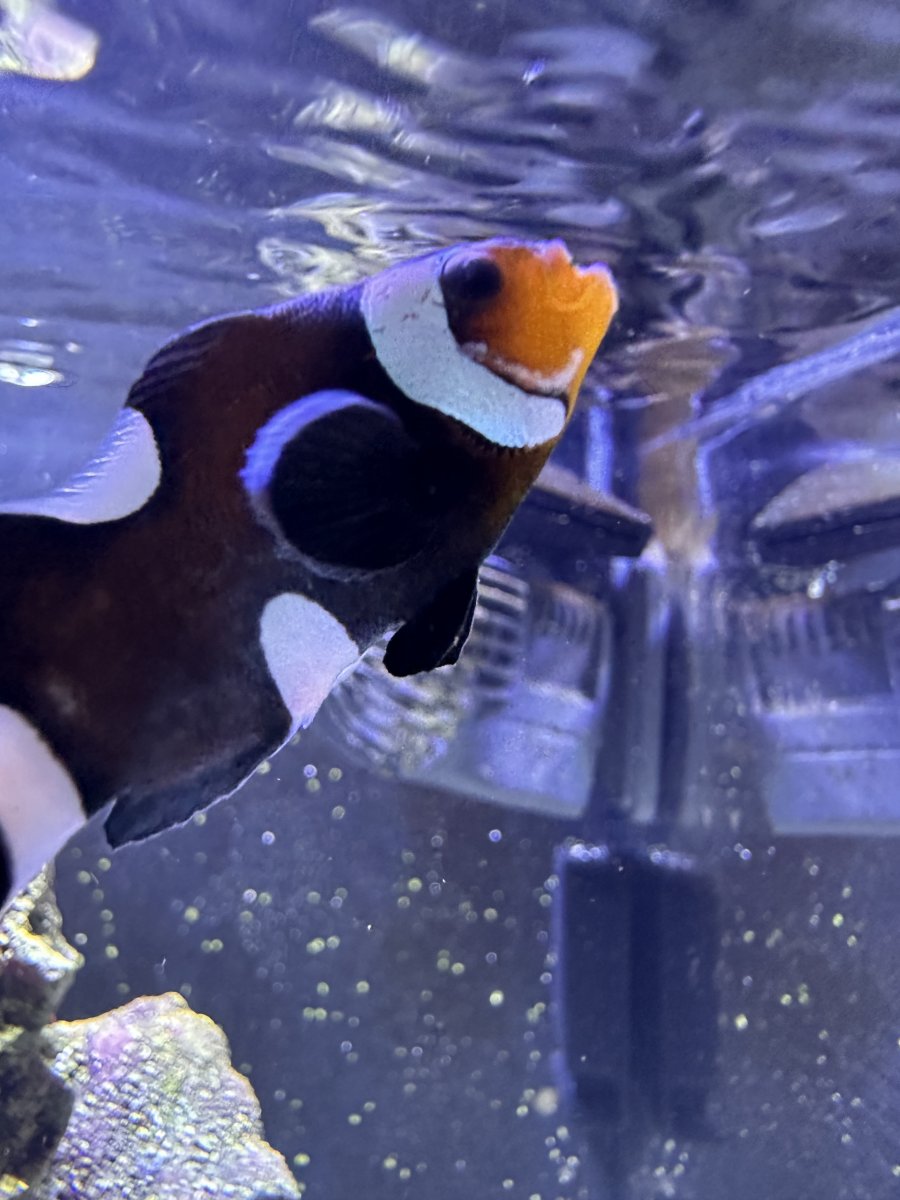
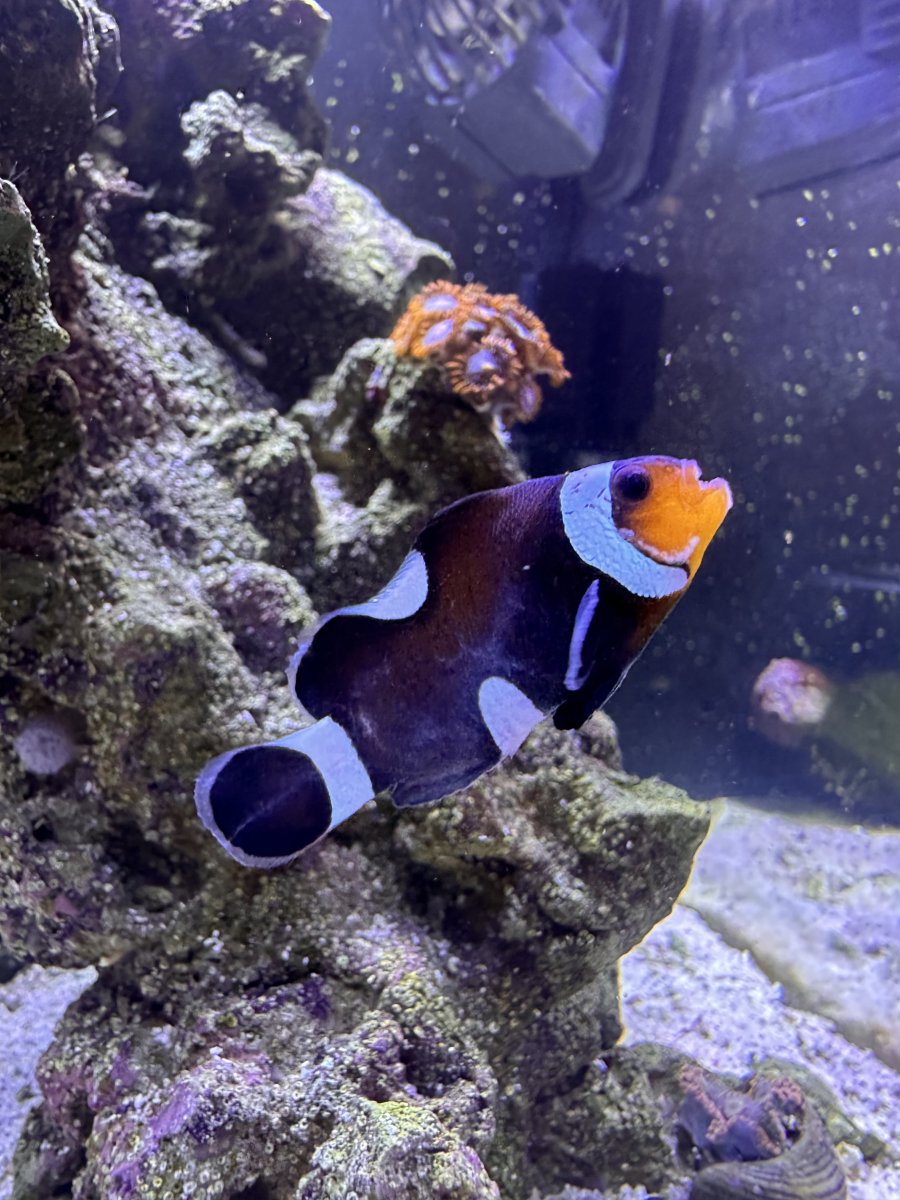
Hi all, hoping you can help me with my two clownfish. I got them about 6 weeks ago as the first two fish in my tank. I got the tank from someone who had the tank up and running for years. About 3 weeks ago, the darker clown started showing signs of white stuff on his lips. I thought it was from him biting something or bonding with the other clown, but it seems that is not the case as the white has gotten worse and is now on the lower end of his gill plate. It also seems to have spread to the orange clown as well, showing up slightly on his gill plate. Both fish have been eating (very!) well, fed a mix of various frozen food(marine cuisine variety pack) and PE pellets. I have no stinging corals in the tank. Some of my hermits have been dying, but i think that’s due to a predatory nassarius(or maybe not nassarius?!?) snail so that’s a different story.

Parameters are good and steady with 0/0/0 ammonia/nitrite/nitrate, 8.2 Ph and 1.025 salinity. Tank at 75/76°

What do you think they have? I’m not incredibly concerned as they have been eating well, but it’s clear that they have something as it’s grown and spread to the other clown. I’m worried that the growth on her(?) lip may prevent her from eating eventually. Thanks in advance for the help! I’d appreciate any treatment advice you have as well.
IMG_7813.jpeg

IMG_7798.jpeg
IMG_7800.jpeg
IMG_7807.jpeg

IMG_7791.jpeg IMG_7807.jpeg IMG_7806.jpeg IMG_7800.jpeg IMG_7798.jpeg
 

Attachments

  • IMG_7792.mov
    74.6 MB
  • IMG_7808.mov
    40.4 MB

vetteguy53081

Well known Member and monster tank lover
View Badges
Joined
Aug 11, 2013
Messages
108,096
Reaction score
242,657
Location
Wisconsin -
Rating - 100%
17   0   0
This is classic brookly
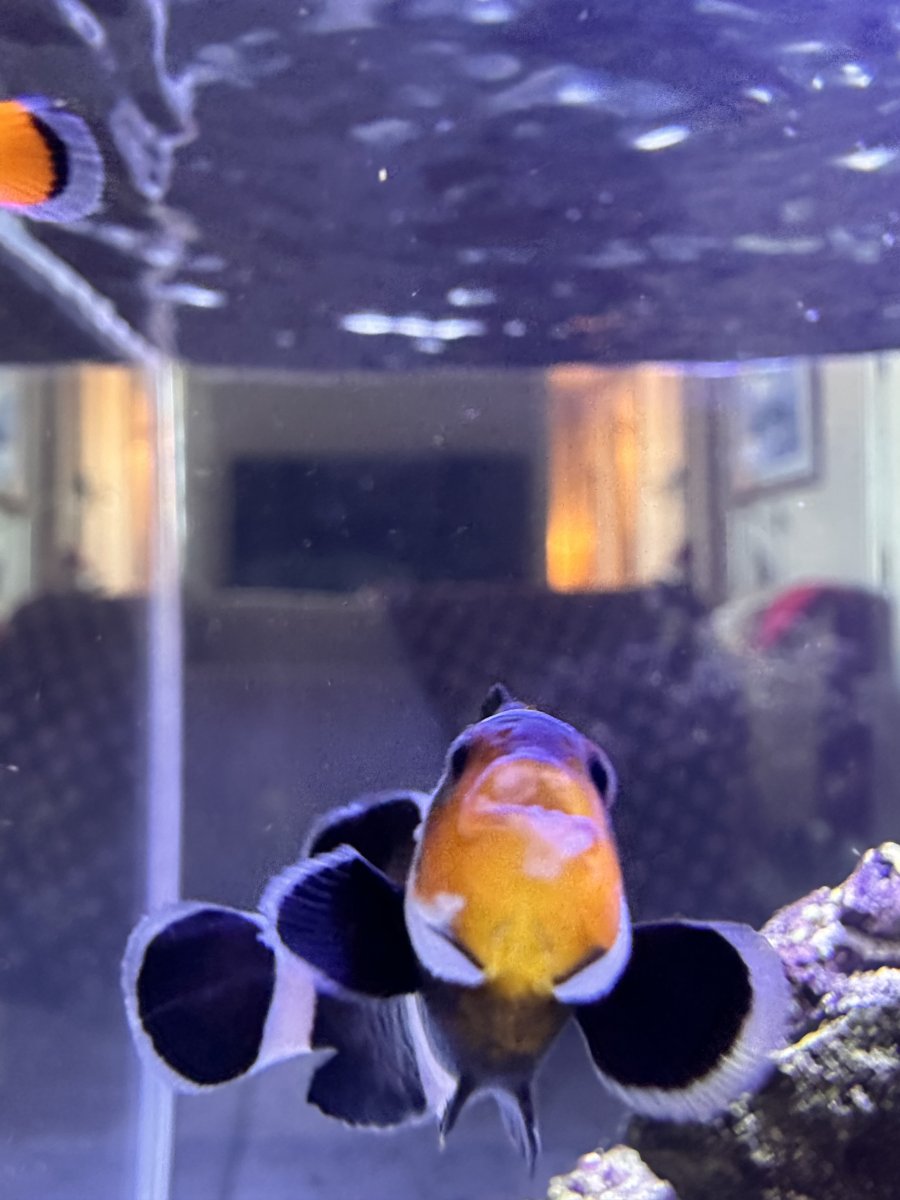
Hi all, hoping you can help me with my two clownfish. I got them about 6 weeks ago as the first two fish in my tank. I got the tank from someone who had the tank up and running for years. About 3 weeks ago, the darker clown started showing signs of white stuff on his lips. I thought it was from him biting something or bonding with the other clown, but it seems that is not the case as the white has gotten worse and is now on the lower end of his gill plate. It also seems to have spread to the orange clown as well, showing up slightly on his gill plate. Both fish have been eating (very!) well, fed a mix of various frozen food(marine cuisine variety pack) and PE pellets. I have no stinging corals in the tank. Some of my hermits have been dying, but i think that’s due to a predatory nassarius(or maybe not nassarius?!?) snail so that’s a different story.

Parameters are good and steady with 0/0/0 ammonia/nitrite/nitrate, 8.2 Ph and 1.025 salinity. Tank at 75/76°

What do you think they have? I’m not incredibly concerned as they have been eating well, but it’s clear that they have something as it’s grown and spread to the other clown. I’m worried that the growth on her(?) lip may prevent her from eating eventually. Thanks in advance for the help! I’d appreciate any treatment advice you have as well.
IMG_7813.jpeg

IMG_7798.jpeg
IMG_7800.jpeg
IMG_7807.jpeg

IMG_7791.jpeg IMG_7807.jpeg IMG_7806.jpeg IMG_7800.jpeg IMG_7798.jpeg
This is classic brooklynella. With brooklynella, the most significant sign is the amount of slime on its body which is noticeable on the fish. This mucus generally starts at the facial area as well as gills and spreads across the body producing lesions as it progresses often confused with ich and can turn into secondary bacteria. Other symptoms will be lethargic behavior, refusing to eat and heavy breathing from the mucus.
Start with a prolonged 60 minute bath of ruby rally pro then at a lower concentration in a quarantine tank. The longer the fish are exposed to the treatment, the more effective it will be at eliminating this issue.
Since a formalin solution is often not available for use, temporary relief can be achieved by giving the fish a FW bath or dip in water same temperature as display tank. Even though this treatment will not cure the disease, it can help to remove some of the parasites, as well as reduce the amount of mucus in the gills to assist with respiration problems.
Treatment is best done in a QT tank using either quick cure (more effective but now harder to find) or Ruby Rally Pro. Ruby takes a little longer and initial treatment generally takes 2-3 days to really start going to work.
 
OP
OP
tylerjohnsoncc

tylerjohnsoncc

Community Member
View Badges
Joined
Nov 11, 2024
Messages
40
Reaction score
15
Location
Texas
Rating - 0%
0   0   0
This is classic brookly

This is classic brooklynella. With brooklynella, the most significant sign is the amount of slime on its body which is noticeable on the fish. This mucus generally starts at the facial area as well as gills and spreads across the body producing lesions as it progresses often confused with ich and can turn into secondary bacteria. Other symptoms will be lethargic behavior, refusing to eat and heavy breathing from the mucus.
Start with a prolonged 60 minute bath of ruby rally pro then at a lower concentration in a quarantine tank. The longer the fish are exposed to the treatment, the more effective it will be at eliminating this issue.
Since a formalin solution is often not available for use, temporary relief can be achieved by giving the fish a FW bath or dip in water same temperature as display tank. Even though this treatment will not cure the disease, it can help to remove some of the parasites, as well as reduce the amount of mucus in the gills to assist with respiration problems.
Treatment is best done in a QT tank using either quick cure (more effective but now harder to find) or Ruby Rally Pro. Ruby takes a little longer and initial treatment generally takes 2-3 days to really start going to work.
Thank you very much! I had assumed it wasn’t brooklynella since they are eating fine, not exhibiting weird behavior, and have had it for over 3-4 weeks and seem to be fine. Wouldn’t they be dead by now if it was brooklynella??
 

Duane family

Active Member
View Badges
Joined
Aug 20, 2024
Messages
231
Reaction score
191
Location
Abu Dhabi
Rating - 0%
0   0   0
Yip you have clownfish disease or Brook.
In addition to the advice above:
Your best short treatment is formalin dip.
If cannot get formalin then you can also use a Ruby Reef Pro as a dip at double strength which will be 0.8ml per liter or 3ml per gallon.

You need to act quickly this parasite kills fast.
 
OP
OP
tylerjohnsoncc

tylerjohnsoncc

Community Member
View Badges
Joined
Nov 11, 2024
Messages
40
Reaction score
15
Location
Texas
Rating - 0%
0   0   0
Thank you. I really appreciate the help! I had been putting it off since the clownfish's lip has looked like this since I got him roughly 4 weeks ago. i'll get on treatment ASAP. QT is likely not an option unfortunately. Can I just do the dip, then put them back in the DT and treat with Ruby Reef Rally?
 

vetteguy53081

Well known Member and monster tank lover
View Badges
Joined
Aug 11, 2013
Messages
108,096
Reaction score
242,657
Location
Wisconsin -
Rating - 100%
17   0   0
Formalin
Yip you have clownfish disease or Brook.
In addition to the advice above:
Your best short treatment is formalin dip.
If cannot get formalin then you can also use a Ruby Reef Pro as a dip at double strength which will be 0.8ml per liter or 3ml per gallon.

You need to act quickly this parasite kills fast.
Formalin is near impossible to acquire now here and is deemed very unhealthy especially for those who do not know how to handle/use it. Ruby is our go to
 
OP
OP
tylerjohnsoncc

tylerjohnsoncc

Community Member
View Badges
Joined
Nov 11, 2024
Messages
40
Reaction score
15
Location
Texas
Rating - 0%
0   0   0
This is classic brookly

This is classic brooklynella. With brooklynella, the most significant sign is the amount of slime on its body which is noticeable on the fish. This mucus generally starts at the facial area as well as gills and spreads across the body producing lesions as it progresses often confused with ich and can turn into secondary bacteria. Other symptoms will be lethargic behavior, refusing to eat and heavy breathing from the mucus.
Start with a prolonged 60 minute bath of ruby rally pro then at a lower concentration in a quarantine tank. The longer the fish are exposed to the treatment, the more effective it will be at eliminating this issue.
Since a formalin solution is often not available for use, temporary relief can be achieved by giving the fish a FW bath or dip in water same temperature as display tank. Even though this treatment will not cure the disease, it can help to remove some of the parasites, as well as reduce the amount of mucus in the gills to assist with respiration problems.
Treatment is best done in a QT tank using either quick cure (more effective but now harder to find) or Ruby Rally Pro. Ruby takes a little longer and initial treatment generally takes 2-3 days to really start going to work.
Thank you! Do you recommend the Freshwater dip or 60 minute Ruby Rally Pro bath first?
 
OP
OP
tylerjohnsoncc

tylerjohnsoncc

Community Member
View Badges
Joined
Nov 11, 2024
Messages
40
Reaction score
15
Location
Texas
Rating - 0%
0   0   0
Thank you. I really appreciate the help! I had been putting it off since the clownfish's lip has looked like this since I got him roughly 4 weeks ago. i'll get on treatment ASAP. QT is likely not an option unfortunately. Can I just do the dip, then put them back in the DT and treat with Ruby Reef Rally?
@vetteguy53081 im on day 2.5 of treating the DT with ruby reef rally. The fish look like they are getting worse but not dead yet. Shouldn’t the brook have killed them by now? Unfortunately the black ocellaris stopped eating today. The infection is very bad in and around his mouth.
 

vetteguy53081

Well known Member and monster tank lover
View Badges
Joined
Aug 11, 2013
Messages
108,096
Reaction score
242,657
Location
Wisconsin -
Rating - 100%
17   0   0
@vetteguy53081 im on day 2.5 of treating the DT with ruby reef rally. The fish look like they are getting worse but not dead yet. Shouldn’t the brook have killed them by now? Unfortunately the black ocellaris stopped eating today. The infection is very bad in and around his mouth.
Brrok does not take down a fish as many say but Moreso, its likely stabilized as Ruby Rally pro takes at least 2 days to start taking effect
 
OP
OP
tylerjohnsoncc

tylerjohnsoncc

Community Member
View Badges
Joined
Nov 11, 2024
Messages
40
Reaction score
15
Location
Texas
Rating - 0%
0   0   0
Thank you. I’m getting concerned as she’s finally stopped eating, and has started acting sick now vs. just showing symptoms. I’ll keep my fingers crossed, i guess there’s not much else i can do. Really appreciate the help
Brrok does not take down a fish as many say but Moreso, its likely stabilized as Ruby Rally pro takes at least 2 days to start taking effect
 
OP
OP
tylerjohnsoncc

tylerjohnsoncc

Community Member
View Badges
Joined
Nov 11, 2024
Messages
40
Reaction score
15
Location
Texas
Rating - 0%
0   0   0
Update here! The black ocellaris is still not eating. The growth on his gills seems to be growing but also potentially falling off? He shows interest in food but won’t actually eat, likely because the growth on his mouth is so bad. Day 4 of treating with ruby rally pro with no noticeable affects.
 
OP
OP
tylerjohnsoncc

tylerjohnsoncc

Community Member
View Badges
Joined
Nov 11, 2024
Messages
40
Reaction score
15
Location
Texas
Rating - 0%
0   0   0
@Jay Hemdal if you have any additional thoughts, it would be much appreciated. Shouldn’t brook have killed these fish by now? Aside from ruby reef rally, any treatment recommendations?
 

Jay Hemdal

10K Club member
View Badges
Joined
Jul 31, 2020
Messages
37,577
Reaction score
37,377
Location
Dundee, MI
Rating - 0%
0   0   0
@Jay Hemdal if you have any additional thoughts, it would be much appreciated. Shouldn’t brook have killed these fish by now? Aside from ruby reef rally, any treatment recommendations?

I looked back over your posts, I still think this is Brooklynella, and sorry - no, I don't have any other suggestions.

I'm not a fan of Ruby Reef, I don't feel that it is effective enough to control Brooklynella in all instances. Formalin is much better, but it is so difficult to acquire and dose, and then, it really should not be used inside homes. Did the high dose Ruby Reef dips help at all?

For what it's worth, here is some text I wrote about Brook:

Brooklynellosis

Cause
Brooklynellosis is caused by a ciliated protozoan, Brooklynella hostilis. It commonly affects newly acquired wild-caught clownfish, thus its common name “clownfish disease.” Entire shipments of wild-caught clownfish have been lost to this infection. It is also commonly seen in marine angelfish and Anthias and sometimes in butterflyfish and tangs. The life cycle is direct, there is no resting stage.

Symptoms
Aquarists often miss the early symptoms of this malady in their fish, so by the time it’s identified, it’s often too late to easily save the specimen. The first signs of this disease may be limited to slightly folded fins combined with lethargy. Soon, skin mucus production increases, as does the fish’s breathing rate. The fish will then lose color, stop feeding, and hang in one location, with death following in a matter of hours to days.

Uronema often has similar symptoms, but a reddish underlying lesion is usually associated with that disease. Bacterial infections can produce similarly cloudy skin, but they typically do not result in rapid breathing. End-stage Cryptocaryon can sometimes be mistaken for Brooklynellosis, as well. Positive identification requires microscopic examination of a skin scraping. Look for medium-sized, barely motile protozoans that are ventrally flattened with a slightly domed dorsal side and have cilia mostly at one end.

Treatment
Few treatments are effective against Brooklynellosis, although two options include a 14-day chloroquine treatment at 15 mg/l or daily formalin dips at 150-167 ppm for 45 minutes with good aeration. The effectiveness of dips is vastly improved if the fish is then moved to a non-infected aquarium. Reducing the specific gravity of the treatment tank may assist the fish in balancing the electrolytes lost due to skin and gill damage. A target specific gravity of 1.018 should be maintained during treatment. Some aquarists have reported success using a proprietary product that contains a low dose of formalin along with acriflavine. Normal level copper treatments do not work for this disease.

Prevention
Acquiring captive-raised clownfish as opposed to wild-caught ones is a good way to help prevent outbreaks of this disease. However, tank raised clownfish that have been mixed with infected wild caught clownfish through the supply chain are equally at risk. Brooklynellosis is much easier to manage in a quarantine aquarium than in a main display tank.
 
OP
OP
tylerjohnsoncc

tylerjohnsoncc

Community Member
View Badges
Joined
Nov 11, 2024
Messages
40
Reaction score
15
Location
Texas
Rating - 0%
0   0   0
I looked back over your posts, I still think this is Brooklynella, and sorry - no, I don't have any other suggestions.

I'm not a fan of Ruby Reef, I don't feel that it is effective enough to control Brooklynella in all instances. Formalin is much better, but it is so difficult to acquire and dose, and then, it really should not be used inside homes. Did the high dose Ruby Reef dips help at all?

For what it's worth, here is some text I wrote about Brook:

Brooklynellosis

Cause
Brooklynellosis is caused by a ciliated protozoan, Brooklynella hostilis. It commonly affects newly acquired wild-caught clownfish, thus its common name “clownfish disease.” Entire shipments of wild-caught clownfish have been lost to this infection. It is also commonly seen in marine angelfish and Anthias and sometimes in butterflyfish and tangs. The life cycle is direct, there is no resting stage.

Symptoms
Aquarists often miss the early symptoms of this malady in their fish, so by the time it’s identified, it’s often too late to easily save the specimen. The first signs of this disease may be limited to slightly folded fins combined with lethargy. Soon, skin mucus production increases, as does the fish’s breathing rate. The fish will then lose color, stop feeding, and hang in one location, with death following in a matter of hours to days.

Uronema often has similar symptoms, but a reddish underlying lesion is usually associated with that disease. Bacterial infections can produce similarly cloudy skin, but they typically do not result in rapid breathing. End-stage Cryptocaryon can sometimes be mistaken for Brooklynellosis, as well. Positive identification requires microscopic examination of a skin scraping. Look for medium-sized, barely motile protozoans that are ventrally flattened with a slightly domed dorsal side and have cilia mostly at one end.

Treatment
Few treatments are effective against Brooklynellosis, although two options include a 14-day chloroquine treatment at 15 mg/l or daily formalin dips at 150-167 ppm for 45 minutes with good aeration. The effectiveness of dips is vastly improved if the fish is then moved to a non-infected aquarium. Reducing the specific gravity of the treatment tank may assist the fish in balancing the electrolytes lost due to skin and gill damage. A target specific gravity of 1.018 should be maintained during treatment. Some aquarists have reported success using a proprietary product that contains a low dose of formalin along with acriflavine. Normal level copper treatments do not work for this disease.

Prevention
Acquiring captive-raised clownfish as opposed to wild-caught ones is a good way to help prevent outbreaks of this disease. However, tank raised clownfish that have been mixed with infected wild caught clownfish through the supply chain are equally at risk. Brooklynellosis is much easier to manage in a quarantine aquarium than in a main display tank.
Thanks for taking a look, i appreciate it! They’ve definitely had it for over 2 weeks now so im puzzled how they’re still around. It’s day 4.5 of treatment with RRR pro and they aren’t really showing any noticeable signs of improvement. The stuff on her gill plate looks bigger but it also looks like it may be falling off in one place? The little guys infection is getting worse but he’s still eating very well.

The high dose ruby reef dip didn’t seem to help.

Thanks again! Hopefully they can tough it out and in the meantime I’ll keep treating the DT with RRR. Seems like no effects at all to my corals and inverts.
 

Jay Hemdal

10K Club member
View Badges
Joined
Jul 31, 2020
Messages
37,577
Reaction score
37,377
Location
Dundee, MI
Rating - 0%
0   0   0
Thanks for taking a look, i appreciate it! They’ve definitely had it for over 2 weeks now so im puzzled how they’re still around. It’s day 4.5 of treatment with RRR pro and they aren’t really showing any noticeable signs of improvement. The stuff on her gill plate looks bigger but it also looks like it may be falling off in one place? The little guys infection is getting worse but he’s still eating very well.

The high dose ruby reef dip didn’t seem to help.

Thanks again! Hopefully they can tough it out and in the meantime I’ll keep treating the DT with RRR. Seems like no effects at all to my corals and inverts.

Your last videos were from 6 days ago. If you post fresh ones, perhaps I'll see something different?
 
OP
OP
tylerjohnsoncc

tylerjohnsoncc

Community Member
View Badges
Joined
Nov 11, 2024
Messages
40
Reaction score
15
Location
Texas
Rating - 0%
0   0   0
Your last videos were from 6 days ago. If you post fresh ones, perhaps I'll see something different?
Here you go! Thanks for taking a look. Water is a little off-colored due to the ruby reef rally. As mentioned, the little guy is still eating and the bigger one has stopped eating for the last 3 days but was eating great before that so still not too sunken in. The white line on her cheek seems to have improved at the bottom part and the top is a little “fluffier”
 

Jay Hemdal

10K Club member
View Badges
Joined
Jul 31, 2020
Messages
37,577
Reaction score
37,377
Location
Dundee, MI
Rating - 0%
0   0   0
Here you go! Thanks for taking a look. Water is a little off-colored due to the ruby reef rally. As mentioned, the little guy is still eating and the bigger one has stopped eating for the last 3 days but was eating great before that so still not too sunken in. The white line on her cheek seems to have improved at the bottom part and the top is a little “fluffier”


Sorry - it still looks like Brook to me. The only thing that is atypical is the concentration of mucus around the mouths. That is usually from fighting...but no ripped fins to go with it.

Perhaps the Rally Pro is holding it at bay, just not curing it? The acriflavine in the Rally Pro could be helping if this turns out not to be Brook, and is instead, some odd bacterial infection.
 
OP
OP
tylerjohnsoncc

tylerjohnsoncc

Community Member
View Badges
Joined
Nov 11, 2024
Messages
40
Reaction score
15
Location
Texas
Rating - 0%
0   0   0
Sorry - it still looks like Brook to me. The only thing that is atypical is the concentration of mucus around the mouths. That is usually from fighting...but no ripped fins to go with it.

Perhaps the Rally Pro is holding it at bay, just not curing it? The acriflavine in the Rally Pro could be helping if this turns out not to be Brook, and is instead, some odd bacterial infection.
Appreciate it! I haven’t seen them fighting at all, and no stinging corals to irritate their mouths. It is odd that it’s so concentrated around their mouths. I think that’s what’s preventing her from eating. I may try a freshwater dip if they start looking a little worse. As is, they still have enough energy to run away from me pretty well without catching them and i dont want to stress them out more than they already are. I turned the power head off so flow is a little lower and they aren’t getting blasted.
 

Jay Hemdal

10K Club member
View Badges
Joined
Jul 31, 2020
Messages
37,577
Reaction score
37,377
Location
Dundee, MI
Rating - 0%
0   0   0
Appreciate it! I haven’t seen them fighting at all, and no stinging corals to irritate their mouths. It is odd that it’s so concentrated around their mouths. I think that’s what’s preventing her from eating. I may try a freshwater dip if they start looking a little worse. As is, they still have enough energy to run away from me pretty well without catching them and i dont want to stress them out more than they already are. I turned the power head off so flow is a little lower and they aren’t getting blasted.
Just be sure that with the powerhead off, that there is still sufficient aeration - like from an air stone.
 

TOP 10 Trending Threads

WHAT AMOUNT OF LIVE ROCK AND SAND SHOULD BE PRIORITIZED FOR OPTIMAL BIODIVERSITY/FILTRATION?

  • 100% live rock + bagged sand

    Votes: 37 27.4%
  • 100% dry rock + 100% live sand

    Votes: 46 34.1%
  • 50/50 live/dry rock, 50/50 live/bagged sand

    Votes: 30 22.2%
  • 75% live rock, 25% live sand

    Votes: 12 8.9%
  • 25% live rock, 75% live sand

    Votes: 10 7.4%
Back
Top