reef-pi :: An opensource reef tank controller based on Raspberry Pi.

Des Westcott

Well-Known Member
View Badges
Joined
May 29, 2018
Messages
646
Reaction score
1,025
Location
Durban - South Africa
Rating - 0%
0   0   0
Yes.. I too do not like HAT as a general-purpose solution. Its not impossible to really make an all-inclusive design, but I think its pretty hard, the form factor itself imposes a challenge.
First of all, lets call out a key thing, an official Pi HAT is a very specific thing, it has to conform to certain guidelines, including a specific EEPROM spec for auto-detection. Only then it can be called as HAT. Otherwise, we should just call it Addon board, with HAT's form factor (i.e. it sits on top).

The problem I see with stacking HATs are
1) The form factor becomes weird. You get a brick-shaped thing where pi connectors (HDMI, sd card slot etc ) are in one place.. now for exposing all PWM, outlet, inlet, ph probe you'll need connectors in another place. So if you conceptualize the end product, you have a brick-like thing with connectors popping up from multiple directions:-/ . I dont like that. I prefer the traditional rectangular shape with connectors spanning in one side only, this eases mounting and we know how to do brackets etc.. Its not impossible to get other designs, but they required significant design thinking/work.
2) The power delivery can get complicated, this typical perf board or pcb boards are less than 3A rated. The power requirements are kinda blocker for arbitrary stacking.

OK. Maybe I've been too free with using the term "HAT". I probably mean "Add-on Board"

I'm actually thinking that with a bit of planning, this "unified approach" could actually work out better with regard to form factor. Imagine having an enclosure ready-made for the Add-on Boards (or design available as printable on Thingiverse) . Each board already has the mini stereo / DB9 / XLR receptacles attached and mounted to a panel that slots into the case. So just by adding one board to a pi in the correct case, you need no wires between components and all your sockets are right there on the outside of the case. You just plug the sensors / powerstrips / whatever straight in.

I don't know. I'm just throwing ideas out here without a proper insight into what's required to accomplish what I'm talking about / imagining. Adding a laymans perspective to try avoid the challenges around wiring, soldering and case design / building that may be a barrier to more people getting into Reef-Pi.

I show mates pictures of my Reef-Pi setup and most of them just say "no f*&%$#g way" can they even imagine what's going on there. :D
 
OP
OP
Ranjib

Ranjib

7500 Club Member
View Badges
Joined
Apr 16, 2016
Messages
9,876
Reaction score
16,680
Location
Pleasant Hill, Concord
Rating - 0%
0   0   0
OK. Maybe I've been too free with using the term "HAT". I probably mean "Add-on Board"

I'm actually thinking that with a bit of planning, this "unified approach" could actually work out better with regard to form factor. Imagine having an enclosure ready-made for the Add-on Boards (or design available as printable on Thingiverse) . Each board already has the mini stereo / DB9 / XLR receptacles attached and mounted to a panel that slots into the case. So just by adding one board to a pi in the correct case, you need no wires between components and all your sockets are right there on the outside of the case. You just plug the sensors / powerstrips / whatever straight in.

I don't know. I'm just throwing ideas out here without a proper insight into what's required to accomplish what I'm talking about / imagining. Adding a laymans perspective to try avoid the challenges around wiring, soldering and case design / building that may be a barrier to more people getting into Reef-Pi.

I show mates pictures of my Reef-Pi setup and most of them just say "no f*&%$#g way" can they even imagine what's going on there. :D
Yes, I also think this will be awesome. To have streamlined build process where connectors are pre-soldered along with all electronics/circuit. Pico boatd exactly attempted at that. @Roberto_b was also planning to work on something along the same line. Its just the Pi HAT/Addon board form factor that I think makes the connector bits awkard at the end. Pico board's form factor i like much better, we get to line up all the connectors in one broad side. It will be really nice if the Pi ports (hdmi, audio, sd card, micro usb etc) are accessible as well. I try to do the with all the 3d printed enclosures. Because I use the perma proto board, i was able to experiment with the HAT style form factor, but all the endproduct was more like cube or brick. I prefer the jewelery box style (set top box, pre-amp enclosures, pretty much most common consumer grade, industrial electronics enclosures) form factor. Primary due to all connectors lining up in one side (sensors, power, pwm outputs etc).

I am not saying its not possible :-) . I was not able to come up with something like that, and I have not seen that problem being addressed yet. I would prefer not to have things attached multiple side of the boards. In some of my builds I have them one above another on the same face, but it think even that is little weird. Though its common in many AV equipment.

Keep your thoughts coming, this is a very interesting topic it helps us to evolve and address feedbacks from enclosure design.
I always think of Apple and dyson devices when comes to topics like this, how they are very different. Both of them build form factors that are exactly opposite to whatever I have mentioned above. Contrary to popular best practices in terms of design & UX. Very inspirational companies. Mac Pro had a very unconventional design. I dont know if anyone have seen one of the SGI O2, desktop computing system. Their CPU unit design was straight from outer space, alient tech :)
 

hhaase

Active Member
View Badges
Joined
Nov 11, 2019
Messages
418
Reaction score
344
Rating - 0%
0   0   0
I'm not against a modular approach at all, in fact if it's done right it could work out great for guys like me trying to make PCB's available. It worked wonders for the 3D printer market, where essentially all the 3D printers at the hobby/home level are based around a couple basic standards of board layouts, physical layouts, and software sets.

Generally form follows function. A great starting point would be to define which features would go on which module, and once that's defined we should standardize connector and signal types between the modules. This way we're not all re-inventing the connectivity standards from iteration to iteration, and modules from different sources would be easily interchangeable. I'd put a high preference for connectors that have waterproof styles available, with non-corroding housings.

But the first thing I think we should agree on is which side of the Pi board the header should go ;)
 

Zippyfear

Community Member
View Badges
Joined
Apr 30, 2019
Messages
86
Reaction score
150
Rating - 0%
0   0   0
The difficulty with stacking hats is ensuring gpio compatibility between the modules. It either requires standards, or a disciplined design and everything from a single designer/vendor.
It's an interesting idea though. I've considered making a pi tower based on that concept.

Shout out to Michael Lane, the rebuild with the HAT (or add-on) as it may be called - going great! Equipment control and temp probes are functional, Next up - ATO and PH probe.. Eventually lighting control.. one step at a time!

IMG_20191211_134145.jpg IMG_20191211_134156.jpg
 
OP
OP
Ranjib

Ranjib

7500 Club Member
View Badges
Joined
Apr 16, 2016
Messages
9,876
Reaction score
16,680
Location
Pleasant Hill, Concord
Rating - 0%
0   0   0
Shout out to Michael Lane, the rebuild with the HAT (or add-on) as it may be called - going great! Equipment control and temp probes are functional, Next up - ATO and PH probe.. Eventually lighting control.. one step at a time!

IMG_20191211_134145.jpg IMG_20191211_134156.jpg
Looking good :-) . Curious why some connectors are mounted on the backpanel ?
 
OP
OP
Ranjib

Ranjib

7500 Club Member
View Badges
Joined
Apr 16, 2016
Messages
9,876
Reaction score
16,680
Location
Pleasant Hill, Concord
Rating - 0%
0   0   0
Just share my build...

Original pcb before cut
IMG_20191212_080904.jpg


After cut
With 2 pcb.
IMG20191212075432.jpg

IMG20191212075701.jpg

IMG20191212075727.jpg

IMG20191206104823.jpg

IMG20191212080116.jpg

IMG20191212080816.jpg


Next..Add fan on top raspberry
stick to the clear acrylic, I hope this week can be finished all.

Thanks
This looks super duper cool. How can I get one of these ?
 

Des Westcott

Well-Known Member
View Badges
Joined
May 29, 2018
Messages
646
Reaction score
1,025
Location
Durban - South Africa
Rating - 0%
0   0   0
I'm not against a modular approach at all, in fact if it's done right it could work out great for guys like me trying to make PCB's available. It worked wonders for the 3D printer market, where essentially all the 3D printers at the hobby/home level are based around a couple basic standards of board layouts, physical layouts, and software sets.

Generally form follows function. A great starting point would be to define which features would go on which module, and once that's defined we should standardize connector and signal types between the modules. This way we're not all re-inventing the connectivity standards from iteration to iteration, and modules from different sources would be easily interchangeable. I'd put a high preference for connectors that have waterproof styles available, with non-corroding housings.

But the first thing I think we should agree on is which side of the Pi board the header should go ;)

"MAYBE" @Michael Lane actually has the right idea. Put them all on top on a single board. Then you could have a series of pigtails to whatever type of connector arrangement you could want. Possibilities for connector positions are endless then.
 

Soulreefer

Community Member
View Badges
Joined
Aug 16, 2018
Messages
44
Reaction score
67
Location
Jakarta, Indonesia
Rating - 0%
0   0   0
This looks super duper cool. How can I get one of these ?

thanks @Ranjib .. The build hasn't finished yet, there is a dosing pump box that I haven't uploaded yet.

actually I can give you free, because I have some boards that haven't been used yet, only the possibility of shipping to your place in America, from Indonesia will be very expensive, maybe it could be $60-$100 with economic shipping:rolleyes:. the shipping cost is quite expensive for a board for only $13 and an acrylic box around $15.
 

Zippyfear

Community Member
View Badges
Joined
Apr 30, 2019
Messages
86
Reaction score
150
Rating - 0%
0   0   0
Looking good :) . Curious why some connectors are mounted on the backpanel ?

Good question.. my last build I had them attached to the top, but it became messy every time I needed to open it to work on it, so I put them on the bottom with the intent that once the top is in place, I turn it upside down, and the bottom becomes the top! :) genius.. I know..
 

alphacustomization

New Member
View Badges
Joined
Feb 16, 2019
Messages
11
Reaction score
13
Rating - 0%
0   0   0
Quick question that's probably been answered before, I'm using Michael Lane's PH board I can see it at address 45 when i do i2c detect but when i try to make a driver in reef-pi it gives me the error code

{"error":"Failed to create. Error: write /dev/i2c-1: remote I/O error"} | HTTP 500

Any advice or input would be greatly appreciated
 

Soulreefer

Community Member
View Badges
Joined
Aug 16, 2018
Messages
44
Reaction score
67
Location
Jakarta, Indonesia
Rating - 0%
0   0   0
Quick question that's probably been answered before, I'm using Michael Lane's PH board I can see it at address 45 when i do i2c detect but when i try to make a driver in reef-pi it gives me the error code

{"error":"Failed to create. Error: write /dev/i2c-1: remote I/O error"} | HTTP 500
Any advice or input would be greatly appreciated
try change address in reef pi to 69
 
OP
OP
Ranjib

Ranjib

7500 Club Member
View Badges
Joined
Apr 16, 2016
Messages
9,876
Reaction score
16,680
Location
Pleasant Hill, Concord
Rating - 0%
0   0   0
thanks @Ranjib .. The build hasn't finished yet, there is a dosing pump box that I haven't uploaded yet.

actually I can give you free, because I have some boards that haven't been used yet, only the possibility of shipping to your place in America, from Indonesia will be very expensive, maybe it could be $60-$100 with economic shipping:rolleyes:. the shipping cost is quite expensive for a board for only $13 and an acrylic box around $15.
No worries. I'll be visiting jakarta sometime in future. Its been long time wish to travel there, try some local food. I'll pick up the PCB then, just save one for me :-)
 

Soulreefer

Community Member
View Badges
Joined
Aug 16, 2018
Messages
44
Reaction score
67
Location
Jakarta, Indonesia
Rating - 0%
0   0   0
No worries. I'll be visiting jakarta sometime in future. Its been long time wish to travel there, try some local food. I'll pick up the PCB then, just save one for me :)

with my pleasure, I will save one for you, anytime you come to Indonesia remind me, hope you can come here soon. :cool:
 

Michael Lane

Well-Known Member
View Badges
Joined
Aug 11, 2018
Messages
677
Reaction score
1,121
Rating - 0%
0   0   0
I took some notes on setting up a pH board today, so I'll share them here too.

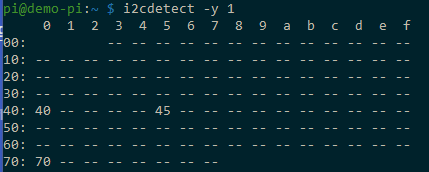
Verify the i2c address by running i2cdetect

image


0x40 and 0x70 are the PCA9685 PWM chip. 0x45 is the pH board.

In reef-pi, make sure pH is enabled in the Configuration | Settings tab.

image


Then, on the Configuration | Drivers tab, add a driver entry for the ph-board. The default address should be incorrect since it is already assigned to the pca9685, with both jumpers it should be 69 (0x45). reef-pi expects a decimal value instead of the hex value.

HexDecimal
0x4064
0x4165
0x4468
0x4569
image

With correct address...

image


After that, you should be able to create an Analog Input on Configuration | Connectors.

image


Finally, you can add a pH.

image
 

TOP 10 Trending Threads

WHAT AMOUNT OF LIVE ROCK AND SAND SHOULD BE PRIORITIZED FOR OPTIMAL BIODIVERSITY/FILTRATION?

  • 100% live rock + bagged sand

    Votes: 38 27.1%
  • 100% dry rock + 100% live sand

    Votes: 47 33.6%
  • 50/50 live/dry rock, 50/50 live/bagged sand

    Votes: 31 22.1%
  • 75% live rock, 25% live sand

    Votes: 14 10.0%
  • 25% live rock, 75% live sand

    Votes: 10 7.1%
Back
Top