"Anemones list and Information"

  • Thread starter Thread starter clowns101
  • Start date Start date
  • Tagged users Tagged users None
I've got a 13.5g Fluval EVO. I was thinking about getting a nem for my clown. Tank is 6 months old and stable. Any suggestions on what to get, or is my tank to small or too young for a nem? Thanks.
 
Hello,
I am posting this thread to help other become aware of the different species of anemones and care for anemone species.

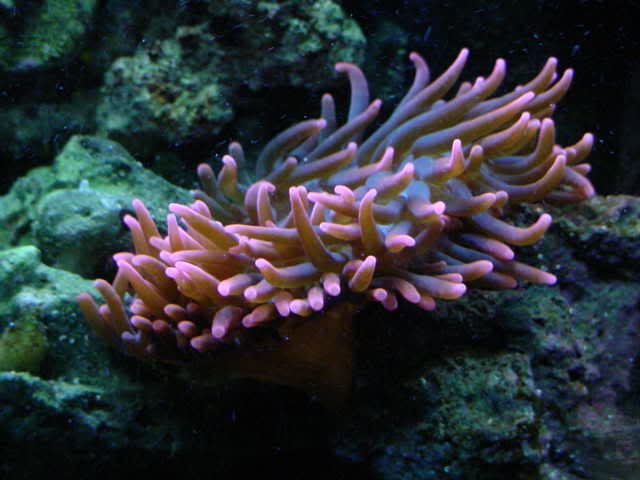
Entacmaea quadricolor:
Common names:
1)Rose Bubble Tip:RBTA's
2)Bulb Anemones
3)Maroon Anemones
4)4 Color Anemone

Tentecals will sometimes inflate at tip with white stripes around the mouth is commonly seen in this species.Ataches to hard surface with a current gently blowing over the Oral Disk.

Natural Host:
Symbiosis with this anemones has occured with all species that we know of and seen with some damsels.

Avability:10/10
Light demands:Moderate to high
Flow:Moderate
Photo:
MVC-006S.jpg


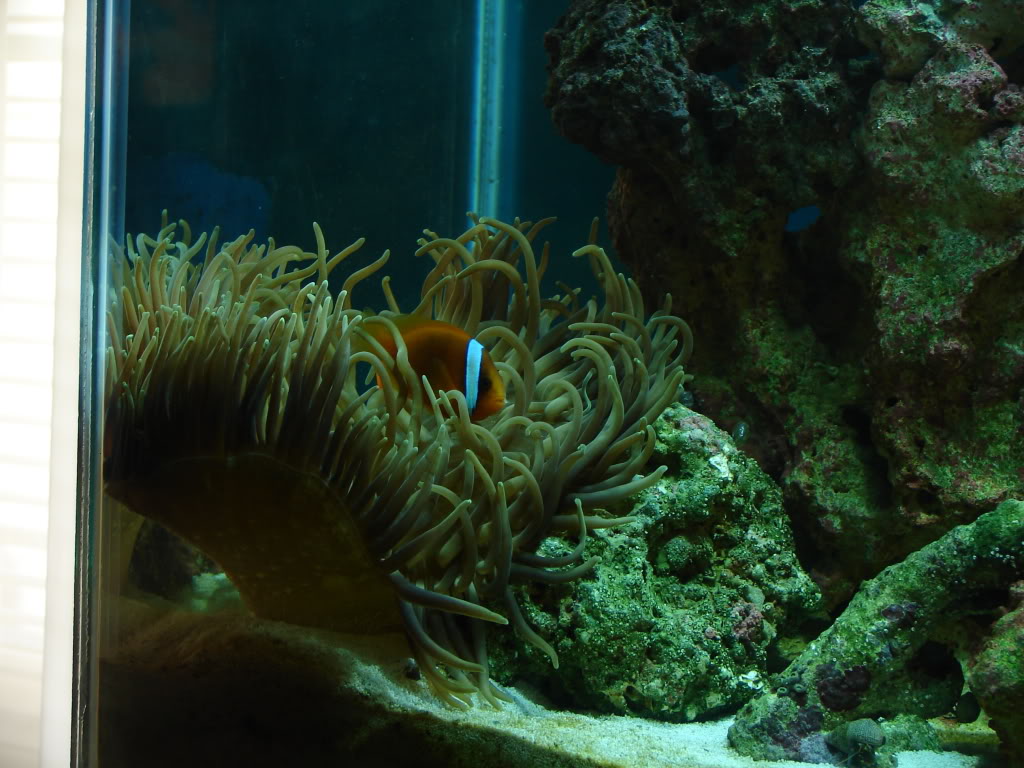
Macrodactlya doreensis:
Common names:
1)Long Tentecal Anemone
2)Red Based Anemone
3)Corkscrew Anemone
4)Sand Anemone

Attaches at Rock/Sand interface with a Moderate flow passing through the tenteclas.

Avability:9/10
Lighting:Moderate to high
Flow:Moderate

Natural Host:
Know to host many clownfish and has been seen hosting some damsels.
Photo:
DSC00904.jpg


Heteractis cripsa:
Common Names:
1)Leathery Anemone
2)Buttom Anemone
3)Sand Based Anemone
4)Sebae Anemone

Attaches to Rock/Sand interface,has been seen on rocks.

Avability:9/10
Lighting:High
Flow:Moderate to high

Natural Host:
Clarkii,Blue Stripe,True Percula,Pink Skunk,Saddle Back.Known to host other as well,as been seen with some damsels.

Heteractis aroura:
Common Names:
1)Beaded Anemone
2)Aroura Anemone

Buries foot down in sand bed,with tenteclas raised.Large beady like tentecals.

Avability:3/10
Lighting:Moderate to high
Flow:Moderate

Natural host know:
Clarkii


Hateractis malu:
Common names:
1)Singapore Anemone
2)Malu Anemone


Buries foot in sand also seen at Rock/Sand interface.Commonly has purple tips.

Avability:5/10
Lighting:Moderate to high
Flow:Moderate

Natural Host:
Clarkii
Has been known to has many more clownfish.


Heteractis magnifica:
Common Names:
1)Magnificent Anemone
2)Ritteri Anemone
3)Red Radianthus Anemone

Generally attaches to hard surface with foot completly exposed.Very bright colors and generally bigger.

Avability:7/10
Lighting:Very High
Flow:Very high and alternating

Natural host:
Ocellaris
Percula
Skunk
Has been seen hosting others as well.


Stichodactlya haddoni:
Common Names:
1)Carpet Anemone
2)Short tentecal Anemone

Attaches at Rock/Sand interface,very sticky and comes in MANY colors.

Avability:8/10
Lighting:High
Flow:Moderate

Natural host:
Clarkii
SaddleBack
Has been known to host many more clownfish.


Stichidactly gigantea:
Common names:
1)Giant Carpet Anemone

Commonly seen in the rocks but also close to the Rock/Sand Interface.

Avability:6/10
Lighting:Very high
Flow:Very high and alternating

Natural host:
Clarkii
Percula
Ocellaris
Has been know to host many other species as well.


Cerianthus sp.
Common name:
1)Tube Anemone
2)Worm Anemone

Buries foot in sand has long tenteclas that can vary in color!

Avability:8/10
Lighting:Low/Non phyto
Flow:Low Moderate

Natural host:
Dosent host any clownfish


Epicystis crucifer:
Common Names:
1)Rock Flower Anemone
2)Flower Anemone

Many live on shaded vertical rock walls.Oral disk lacks tentecals and the anemone may have beaded tentecals.

Avability:7/10
Lighting:Low
Flow:Low

Natural host:
No natural host.Has been seen hosting Tomato Clowns in the aquarium.
Let me know if you would like to have more species done.This is just your basic host selection.


Also if you have any pictures of the aneones posted please pass them along for me to post here!

Tanks!

Hi... could you help me identify this extra terrestrial looking creature
377C1790-EC47-4930-814E-303C7F73C049.jpeg
 
Hi there and greetings from Bulgaria!
Two weeks ago I got as a gift from a friend's crashed tank -this dying anemone. I wasn't so sure about the health of the nem, but so far so good. I think it will handle it. I'm fledgling with these anemonie things but I'm eager to know all about them. From what I read this is a carpet anemone but I'm not so sure about the genus. Can you help me? Maybe it is Haddoni or what?


unnamed.jpg
 
Natural hosts for A. ocellaris are H. magnifica,(Mag, Magnificent anemone), S. gigantea (Gig, True Carpet, Gigantea) and S. mertensii (mertensii carpet) None of these anemomes are suitable for anyone other than fairly advance reefers who know how to take care of them. If you have to ask which anemone for an Ocellaris, you likely not have enough experience in keeping anemones. I may be wrong.
Easier Anemones that can host Ocellaris are H. malu (Malu), and E.quadricolor (BTA). There is no guarantee that they will go into these anemones. They don't need host anemone in aquarium anyway.
 
I've been looking into a bunch tbh, I saw magnifica but then ran into another site than mentioned sebae. My main concern is finding one that is not prone to roaming the tank. I've kept them in the past but I will be upfront, I have been out of the hobby almost 10 years and alot has changed so I figured id ask. When I got out of the hobby LEDs were 10k a piece with Solaria being the only manufacturer lol, thought possibly our knowledge of anemone keeping may of changed as well. :)

Edit: And yes, I am aware they are fine without one, but that's not what I am looking to do in this display. :)
 
How big is your tank, and will it have a sand bed in it?

My approach to keeping anemone is set up a tank for the anemone, then pick a pair of clowns that are the naturally pair with it. The main focus is the anemone, which is what it should be since it is way harder to keep an anemone happy than the fish.
 
How big is your tank, and will it have a sand bed in it?

My approach to keeping anemone is set up a tank for the anemone, then pick a pair of clowns that are the naturally pair with it. The main focus is the anemone, which is what it should be since it is way harder to keep an anemone happy than the fish.

125 Gallon SPS Dominant, no coral currently given it is cycling still so I am planning. Run off 3 Red Sea RL90s, possibly adding 2 more since I recently discovered they may only be fit for LPS/Softie due to PAR values. I had planned on 2 pairs with each having an anemone on either side of the tank, dependent of course of where the anem would settle so it may just be one if they are close. Unfortunately I am stuck with Ocellaris for one pair but was thinking skunk for the other given our LFS has a pair already hosted for sale in a bubble tip. Due to a 5 year old nemo fan in the house I am stuck with at least one of the pairs being ocellaris lol (And yes, hes into it enough to tell a percula from ocellaris x.x). Anemone would be at the black line I marked:

1587439004800.png

Setup with hopeful possible locations marked:
1587439220095.png
 
Anemone does not stay where they are put but where they want. I would doubt very much that your anemone will stay where you "marked". It is not possible to keep 4 pairs of clowns in your tank. The females just will not tolerate other female in sight. You can add 8 clowns in your tank but you will have 1 pair and a bunch of abused Juveniles.
Good luck
 
Here's my LT. Sorry for the bight reflection, that's the frt door about 30' away.
DSC_8043.JPG
LT Anemonie.jpg
Red Dot 2.jpg
A & his Red dot Clown (at least that's what LA called. About 15-18"
 
16E2A538-43B8-427B-BBCE-7D4FA890DB61.png
D540162B-519A-4D77-AE9B-DF5DC6032396.png


People told me this is Mini-Maxi, and I’m still not sure. I’m feeding this amigo with tiny shrimp flesh very often but it just won’t grow!! It loves to roam around and inflate/deflate based on it’s condition.
The size is about 1inch/2cm.
What is his real name and what can I do for him to grow and propagate?
(Retailer said sold this as mini-carpet nem.)
 
16E2A538-43B8-427B-BBCE-7D4FA890DB61.png
D540162B-519A-4D77-AE9B-DF5DC6032396.png


People told me this is Mini-Maxi, and I’m still not sure. I’m feeding this amigo with tiny shrimp flesh very often but it just won’t grow!! It loves to roam around and inflate/deflate based on it’s condition.
The size is about 1inch/2cm.
What is his real name and what can I do for him to grow and propagate?
(Retailer said sold this as mini-carpet nem.)
This looks like a mini-maxi, and you don't need to feed it anything :) I've had mine for a year and it has grown without being fed. I see it grab floating mysis from time to time.
 
I have a rose bubble anemone. Was thinking about adding a sherman nem to the tank. Are they okay together? I know they are both bubble tips but i was just wanting to make sure. Before i went along with the purchase.
 
Hi, all!
I just got my first nem last weekend; a rainbow BTA. I want to make sure he's happy, but I'm having a hard time finding info on proper parameters for BTAs. There is much debate on best lighting, phosphate levels, etc., so I'm just going to ask a few questions, based on my situation.

I have a pair of osc. clowns, a couple hermits, a couple snails, and a couple limpets in this 20g long tank with my new nem. I'm hoping the clowns will host with him, but time will tell. He's still new, so he hasn't had time to wander much and I know he'll go where he wants, so I'm not worried about that. I have a Fluval HOB multi level filtration filter and a small powerhead (covered with netting for his safety) at each end for water flow.

This was originally my frag tank, so I have an AI Prime 16 HD mounted about 15" above the water for a wide light spread. I'm wondering what the best light settings would be for the nem, i.e. ratios of UV, blues, whites, red, and green and at how much intensity, or does that even matter?

I know stability is the main ingredient, but are there recommended params, such as pH, alk, calcium, magnesium, etc. that I should try to stay within, and if so, what are they? As you can probably tell, I'm used to caring for fish and corals!

Any advice would be appreciated!

Thank you,
Amy
 
I don't measure my pH. BTA won't care about Ca, Alk, or magnesium as long as it is reasonable. BTA like mid to low level light, mid to lower range for LPS should do OK for BTA (IMO)
 
hi, anybody know why a carpet anemone would melt .
20200820_122850.jpg
20200820_122840.jpg

Or why this would seem too happen ..
 
Hello,
I am posting this thread to help other become aware of the different species of anemones and care for anemone species.

Entacmaea quadricolor:
Common names:
1)Rose Bubble Tip:RBTA's
2)Bulb Anemones
3)Maroon Anemones
4)4 Color Anemone

Tentecals will sometimes inflate at tip with white stripes around the mouth is commonly seen in this species.Ataches to hard surface with a current gently blowing over the Oral Disk.

Natural Host:
Symbiosis with this anemones has occured with all species that we know of and seen with some damsels.

Avability:10/10
Light demands:Moderate to high
Flow:Moderate
Photo:
MVC-006S.jpg


Macrodactlya doreensis:
Common names:
1)Long Tentecal Anemone
2)Red Based Anemone
3)Corkscrew Anemone
4)Sand Anemone

Attaches at Rock/Sand interface with a Moderate flow passing through the tenteclas.

Avability:9/10
Lighting:Moderate to high
Flow:Moderate

Natural Host:
Know to host many clownfish and has been seen hosting some damsels.
Photo:
DSC00904.jpg


Heteractis cripsa:
Common Names:
1)Leathery Anemone
2)Buttom Anemone
3)Sand Based Anemone
4)Sebae Anemone

Attaches to Rock/Sand interface,has been seen on rocks.

Avability:9/10
Lighting:High
Flow:Moderate to high

Natural Host:
Clarkii,Blue Stripe,True Percula,Pink Skunk,Saddle Back.Known to host other as well,as been seen with some damsels.

Heteractis aroura:
Common Names:
1)Beaded Anemone
2)Aroura Anemone

Buries foot down in sand bed,with tenteclas raised.Large beady like tentecals.

Avability:3/10
Lighting:Moderate to high
Flow:Moderate

Natural host know:
Clarkii


Hateractis malu:
Common names:
1)Singapore Anemone
2)Malu Anemone


Buries foot in sand also seen at Rock/Sand interface.Commonly has purple tips.

Avability:5/10
Lighting:Moderate to high
Flow:Moderate

Natural Host:
Clarkii
Has been known to has many more clownfish.


Heteractis magnifica:
Common Names:
1)Magnificent Anemone
2)Ritteri Anemone
3)Red Radianthus Anemone

Generally attaches to hard surface with foot completly exposed.Very bright colors and generally bigger.

Avability:7/10
Lighting:Very High
Flow:Very high and alternating

Natural host:
Ocellaris
Percula
Skunk
Has been seen hosting others as well.


Stichodactlya haddoni:
Common Names:
1)Carpet Anemone
2)Short tentecal Anemone

Attaches at Rock/Sand interface,very sticky and comes in MANY colors.

Avability:8/10
Lighting:High
Flow:Moderate

Natural host:
Clarkii
SaddleBack
Has been known to host many more clownfish.


Stichidactly gigantea:
Common names:
1)Giant Carpet Anemone

Commonly seen in the rocks but also close to the Rock/Sand Interface.

Avability:6/10
Lighting:Very high
Flow:Very high and alternating

Natural host:
Clarkii
Percula
Ocellaris
Has been know to host many other species as well.


Cerianthus sp.
Common name:
1)Tube Anemone
2)Worm Anemone

Buries foot in sand has long tenteclas that can vary in color!

Avability:8/10
Lighting:Low/Non phyto
Flow:Low Moderate

Natural host:
Dosent host any clownfish


Epicystis crucifer:
Common Names:
1)Rock Flower Anemone
2)Flower Anemone

Many live on shaded vertical rock walls.Oral disk lacks tentecals and the anemone may have beaded tentecals.

Avability:7/10
Lighting:Low
Flow:Low

Natural host:
No natural host.Has been seen hosting Tomato Clowns in the aquarium.
Let me know if you would like to have more species done.This is just your basic host selection.


Also if you have any pictures of the aneones posted please pass them along for me to post here!

Tanks!
Great info!
 

TOP 10 Trending Threads

Back
Top
Home
Post thread…
Market
What's new