Criticisms please- the more constructive the better

drainbamage

Extreme Whippersnapper
View Badges
Joined
Apr 30, 2010
Messages
2,379
Reaction score
55
Location
San Diego, California
Rating - 0%
0   0   0
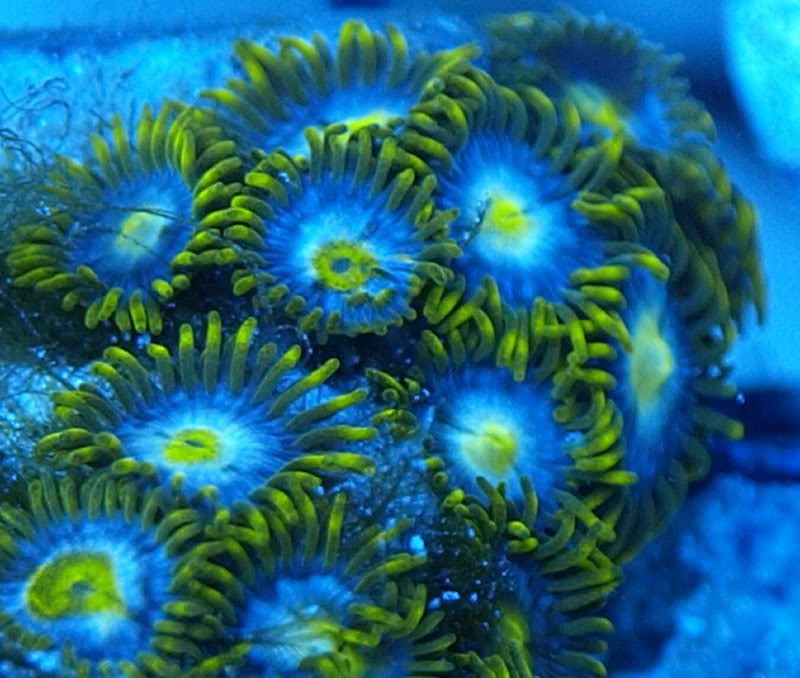
I was pretty pleased with the way these turned out just raw from the camera, did a little post-processing (upped noise filter, touched up white balance just a tad, exposure balanced, cropped, developed from RAW, all using Olympus Master 2,) as I'm still learning the camera so it's easier to do on the comp than the camera still, though I'm getting much better at tweaking on the camera.
All shots were under VHO T5's, camera's an Olympus E510, using a 14-42mm lense, was holding camera and shooting in micro with ISO set at 100, not sure the metering setting (either the small circle or the tiny circle) and no flash.

Just looking for any thoughts on what I should continue working on exactly to keep improving, any flaws you find in the pictures that show of sloppiness or things like that. Can't really afford to upgrade the equipment I'm working with, so those suggestions are still welcome, but won't be as helpful in the near future.

Much appreciated folks!

0802282011.jpg


_1251059.jpg


0302282011.jpg


1002282011.jpg


1202282011.jpg
 
Not bad. I see you are taking these pics - hand held with a macro lens.....there are few people that can hand hold a tight macro shot and have it not turn out blurry. The chalice in the 2nd pic (JF Crazy Fox Rainbow it looks like) is nice and clear. The others would definitely benefit from a tripod and a remote shutter as they are just a bit blurry. Nice corals though. I typically take 200 pics to get 10 good ones so keep shooting and post what you get. Would love to see some of your other pics. Reef photography can be quite addicting as well!
 
Pics look great! A slower aperture setting, (higher Fstop number) will give you a wider field of focus, bringing more of the first photo into focus. However, this will also result in a lower light photo. To gain more light, without limiting the field of focus, you can use a higher ISO and/or a longer shutter speed. At 100 ISO, you can afford to up your ISO some, without having a negative impact on the photo.
 
Not bad. I see you are taking these pics - hand held with a macro lens.....there are few people that can hand hold a tight macro shot and have it not turn out blurry. The chalice in the 2nd pic (JF Crazy Fox Rainbow it looks like) is nice and clear. The others would definitely benefit from a tripod and a remote shutter as they are just a bit blurry. Nice corals though. I typically take 200 pics to get 10 good ones so keep shooting and post what you get. Would love to see some of your other pics. Reef photography can be quite addicting as well!

Hand held but not a macro lense, just a 14-42mm olympus brand lense of some sort and yea, trying to hold and keep it steady is tough, the tripod is tricky to use with the combo of the tank, the tripod, and the chair I have to put the tripod on-then I somehow have to get on the chair too and not bump everything around too much while trying to zoom and focus. I'm assuming it's the lense that's not helping, but I do have trouble finding the sweet spot of getting a close shot of the corals without getting the blur issue. Oh, the 2nd pic is a My Miami from WWC (though I agree they look really similar to crazy fox's).
I'll get some pics posted up of my chalice collection that I took using aperture mode with a delayed timer, those ones have a lot more crispness going on, but I gave up real fast trying to use any sort of aperture mode without a tripod, so the top-downs aren't happening until I rig up a boom stand of some sort for the camera to hang from. Maybe I can steal one of my brothers extra cymbol stands and make that work out somehow...

Pics look great! A slower aperture setting, (higher Fstop number) will give you a wider field of focus, bringing more of the first photo into focus. However, this will also result in a lower light photo. To gain more light, without limiting the field of focus, you can use a higher ISO and/or a longer shutter speed. At 100 ISO, you can afford to up your ISO some, without having a negative impact on the photo.

Thanks Sid! If I bump up the ISO to 200 (camera can do 100, 200, 400, 800) will that cause increased blurriness when shooting without a tripod? And I always get this mixed up-is the higher fstop (e.g. F22) a wider area of focus than a smaller Fstop (e.g. 5.4) or is it the other way around? When pulling close up shots on a non-macro lense, any recommended numbers to start with? I usually shoot with the tip of lense within about 4-5" of the coral, if not a little closer. Only way I can play with both Fstop and Shutter Speed is in pure manual mode-any recommendation of Fstops and shutter speeds to start trying out with?

pics look good to me........... first one looks a little blurry.........

Thanks! And yea, there's some slight blur in all of them, owing both to my shaking the camera a bit, as well as not focusing quite perfect. The on-camera display is pretty much no use in close up shots, and I can only get so good squinting into the viewfinder before my contacts start driving me nuts.

But again-thanks for all the advice, please keep them coming! (I've gone from being a guy who never touched a camera before to making sure the tank is clean just so I can take photo's now, and getting really pleased with the results-and this is pretty much all due to info I've found on here or bugged my gf to explain in really simple terms to me)

Eh, for the heck of it, here's a few pics using aperture and tripod (can't rememeber all the settings)


0402052011.jpg


0902052011.jpg


02051104.jpg
 
An ISO of 200 will not result in more blur. It will allow you to crank up your shutter speed and/or close your Aperture, in order to cut down on motion blur and/or have a wider field of focus.

Aperture (Fstop) This refers to how wide the lens opens, when you take the photo, which controls how much light enters the lens AND controls how much of the photo is in focus.
It's confusing. A lower Fstop number means the Aperture is wider (more open). A higher Fstop number means the Aperture is more shallow (more closed).

A wide aperture will allow in more light, but reduces the field of focus. A shallower aperture allows in less light, but widens the field of focus.

Shutter speed also controls light. A slower shutter speed will allow the light in, LONGER, resulting in more light hitting the sensor and a more lit photo. However, a slower shutter speed will also result in more motion blur, both from a moving photo object (fish) and from the motion of the photographer.

ISO, makes the sensor more sensitive to light. Higher ISOs will not result in any more blur, BUT if too high, can result in a "grainy" photograph, especially in the darker areas of the photo.
 
Your last set of photos are also great. You'll notice that the Echino photos, an area of the photo is in focus, while most of the area of the photo is out of focus. You used an aperture of 5.6, on both. In fact, here's the EXIF Data:


EXIF IFD0

* Camera Make = OLYMPUS IMAGING CORP.
* Camera Model = E-510
* Picture Orientation = normal (1)
* Last Modified Date/Time = 2011:02:25 20:18:52

EXIF Sub IFD

* Exposure Time (1 / Shutter Speed) = 1/80 second ===> 0.0125 second
* Lens F-Number / F-Stop = 28/5 ===> Æ’/5.6
* ISO Speed Ratings = 800
* Original Date/Time = 2011:02:05 02:23:06
* Flash = Flash did not fire, auto mode
* Focal Length = 42/1 mm ===> 42 mm
* Image Width = 800 pixels
* Image Height = 600 pixels

So, if you were to slow down your shutter slightly, and close your apeture slightly, more of the photo will be in focus. Slowing down the shutter speed, while tightening your aperture will result in about the same amount of light, since slowing the shutter allows more light, while tightening the apeture allows less light.

Your shooting at an ISO of 800, without any noticable grainy appearances.
 
Thanks Sid! going to have to fiddle around even more now...

And I'll confess, I actually do that partial out of focus on purpose sometimes (rarely, but in those enchino photo's it was actually something I liked about them) I've always sort of liked the 'out of focus at the front, focusing in themiddle, and getting out of focus again at the back' sort of photo's. But now I'm going to try and get some cleaner shots.
 
that last picture was awesome and the seacond picture was nice and clear as well. do you have a tripod?
 
that last picture was awesome and the seacond picture was nice and clear as well. do you have a tripod?

Yea, the second batch of pictures was where I had used a tripod, the first were just freehand. Trouble with the tripod is I have a lot of difficulty shooting top-downs with it, especially on the frag rack that's right against the glass. Going to try and experiment with a boom stand of some sort.
 
I like the second set of photos much more than the first. You have a lot of distracting space in the first set (frag tiles, algae, etc.) of photos, and most of it is pretty uniformly blue. It takes away from the overall contrast of the photo.

One way to fix this is to get in tight on the subject. I know it's hard to zoom in and focus on a tiny area. That's why a photographer has to work within the limitations of his/her equipment. Those are some great corals, but they don't necessarily make for a great photo if they're in barely 10% of your shot (i.e. the wm chalice shot). Cropping a high-res photo works to an extent, but don't overdo it either.
 
not bad not bad at all your a natural just keep clicking and you will be one of the best..don't get discouraged you can do it ..
 

TOP 10 Trending Threads

Back
Top
Home
Post thread…
Market
What's new