

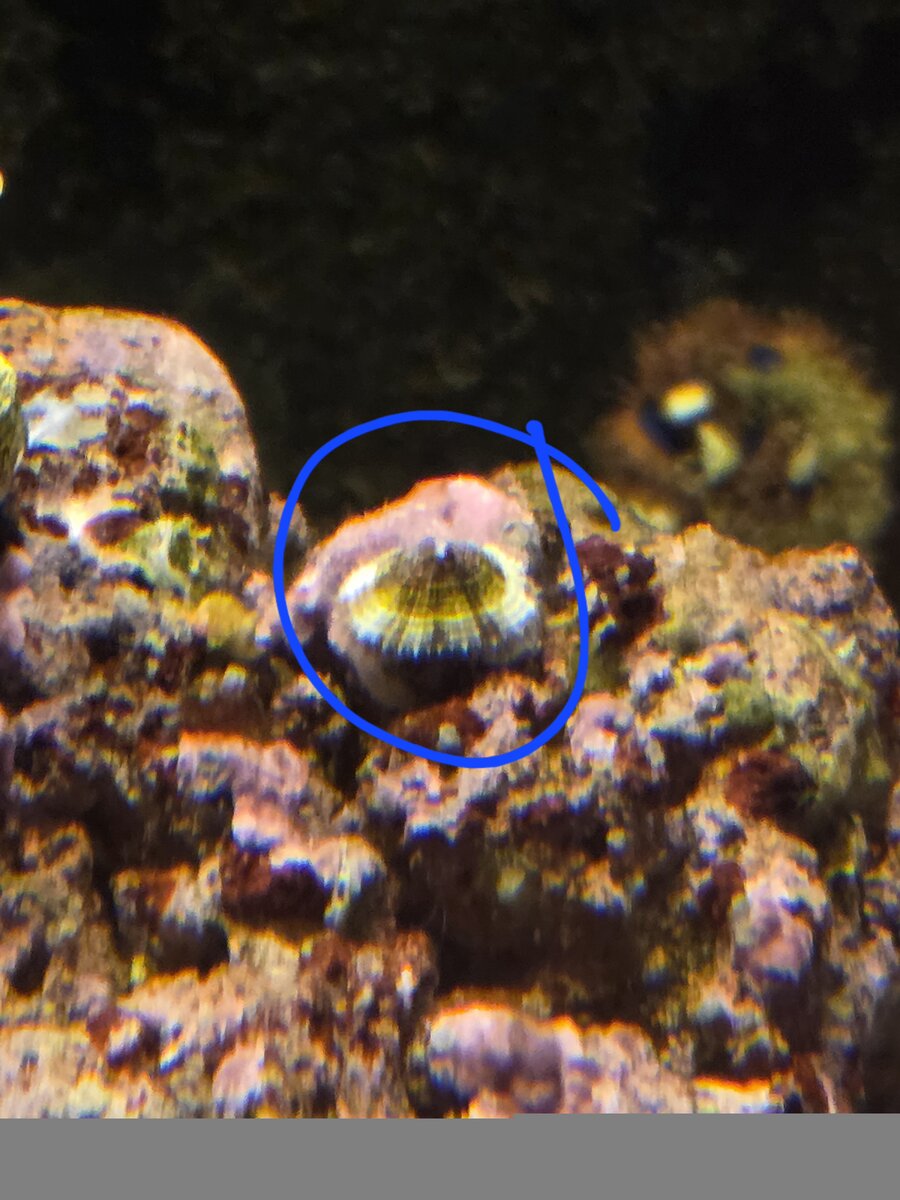
Hey all, found this on my acro plug the other day. Pried it off and put it on the sand and the next morning it was back climbing toward the acro. Enough evidence for me, unless any info on what it is and if it's reef safe? Kind of snail like.
Follow along with the video below to see how to install our site as a web app on your home screen.
Note: This feature may not be available in some browsers.
I'm late, but yeah either a limpet or a keyhole limpet (looks like it might be one of these, but I can't say for sure from the pic) - the vast majority of both are good CUC, but some keyhole limpets are known to go after corals; I'd say to keep an eye on it for suspicious behavior and remove it if necessary:Hey all, found this on my acro plug the other day. Pried it off and put it on the sand and the next morning it was back climbing toward the acro. Enough evidence for me, unless any info on what it is and if it's reef safe? Kind of snail like.![]()
Looks like a Keyhole Limpet, so possibly, but this would be the first I've seen one going for an Octocoral:
Just to clarify this - there are multiple kinds of snails referred to as limpets (with a hole in the top of the shell, these are Keyhole Limpets):
True limpets are from the taxonomic subclass Patellogastropoda, and they're harmless/beneficial herbivores.
Keyhole limpets are fissurellid snails from the subclass Vetigastropoda; a handful of these snails from the taxonomic subfamilies Diodorinae and Emarginulinae are known to eat SPS:
t’s rare, but there are two taxonomic subfamilies of keyhole limpets (Diodorinae and Emarginulinae) that I have found research on showing that they have a handful of species in them that are either known to or thought to occasionally eat corals (I’d need to go digging through the papers again, but, IIRC, they only ate SPS , and they had pretty specific tastes/preferences).
just to reinforce, regular limpets are fine, and most keyhole limpets (including most from the subfamilies listed above) are reef safe; to the best of current scientific knowledge, only a very small number of them are not.
The good news is that most keyhole limpets are also harmless/beneficial herbivores, and telling keyhole limpets apart from normal limpets is generally pretty easy:
If it has a little "keyhole" or bullet hole looking hole on the back of it's shell (where the shell comes to a point) then it's a keyhole limpet.
To my knowledge, true limpets (taxonomic subclass Patellogastropoda) don't have a hole on top of their shell at all, but keyhole limpets (taxonomic subclass Vetigastropoda, order Lepetellida, superfamily Fissurelloidea) all have one for respiration.
Some keyhole limpets to compare with the true limpets in the quote above:For some examples of true limpets:
![]()
Variegated Limpet
This is one of those spottings that made me smile, because this cluster of limpets looked like a town meeting, and it's something I'd never observed before. Cellana tramoserica, commonly known aswww.projectnoah.org
![]()
![]()
Patellogastropoda - Wikipedia
en.wikipedia.org




