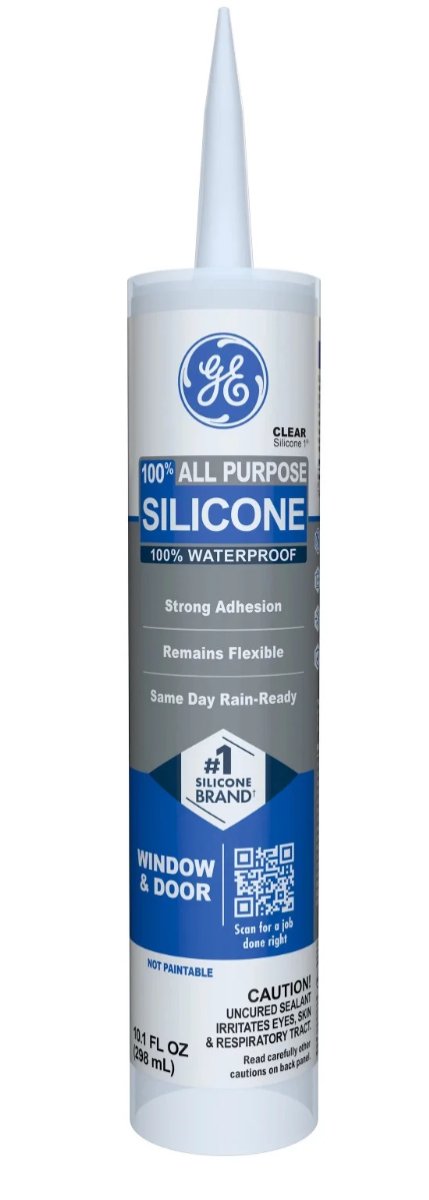
Silicone for aquarium

  • Thread starter Thread starter Ramon84
  • Start date Start date
  • Tagged users Tagged users None

Ramon84

CubanReefer
View Badges
Joined
Dec 11, 2024
Messages
576
Reaction score
270
Location
Florida
Rating - 0%
0   0   0
I was told I could use any 100% silicone for a fish tank could I use this wanted to make sure before purchasing
IMG_3557.jpeg
 
GE Silicon1 (not 2!) is perfectly aquarium, fish and reef safe, I have used that for years with no problems, even to reseal old tanks.

However, there are many members here on R2R will tell you to use something stronger if you're building a tank from scratch.

Good luck!
 
Upvote 0
GE Silicon1 (not 2!) is perfectly aquarium, fish and reef safe, I have used that for years with no problems, even to reseal old tanks.

However, there are many members here on R2R will tell you to use something stronger if you're building a tank from scratch.

Good luck!
Sorry you said 1 not 2 can you please explain
 
Upvote 0
Sorry you said 1 not 2 can you please explain
GE makes two versions of their clear silicon, GE Silicon 1 that you have pictured is reef safe and perfectly fine to adhere your baffles.

GE Silicon 2 has additional mold inhibitors, and is not aquarium safe.

So not this:
1747583637895.png
 
Upvote 0
Look in the top right of the tube, under where it says clear, it will say "silicon 1" or "silicon 2". Get Silicon 1, or purchase a stated aquarium safe brand if in doubt. You only save a few bucks going with the GE stuff, some pay extra for total peace of mind.
 
Upvote 0
It looks like they've changed the packaging, but it's been some time since I've used GE Silicone 1. As just stated GE Silicone 1 is acetic acid cured and is safe. The other silicone I use....now more than Silicone 1....is the one that adheres very well with glass to plastics or to plastics alone.
1747583489189.png


You're not going to find this silicone with the other caulks in the paint department of HD. You have to go back were they sell acrylic sheet goods and you'll find it there.
 
Upvote 0
Needed to use to add these for sump
IMG_3560.jpeg

If these parts are plastic and you're putting them in a glass tank, you want the red tube I posted above. And let it cure for as many days as you can....I'd suggest minimum of three days, but five is better.


Silicone 1 will eventually fail.....ask me how I know! GE 1 failed and the baffle shifted left.....yellow arrow.

1747584515688.png
 
Last edited:
Upvote 0
If these parts are plastic and you're putting them in a glass tank, you want the red tube I posted above. And let it cure for as many days as you can....I'd suggest minimum of three days, but five is better.


Silicone 1 will eventually fail.....ask me how I know!
This is why every single baffle I install in my glass sumps is a glass baffle!!

Edit: this particular sump is for a 180g freshwater DT; and is a heavily modified, very old 75G tank!
IMG_5734.jpeg
 
Last edited:
Upvote 0
This is what I use IMG_6673.png
THIS!
I use this and love this!... unless you made a mistake and siliconed your pre-drilled rear glass on backwards... Which is the reason I will not use anything else, because I was afraid I would break the glass the seal was so good.
Also, because you are using plex to glass, do a bead on each side. Think about the silicone creating a channel seal and clean your surfaces very well. Alcohol wipes are a good degreaser.
 
Upvote 0
THIS!
I use this and love this!... unless you made a mistake and siliconed your pre-drilled rear glass on backwards... Which is the reason I will not use anything else, because I was afraid I would break the glass the seal was so good.
Also, because you are using plex to glass, do a bead on each side. Think about the silicone creating a channel seal and clean your surfaces very well. Alcohol wipes are a good degreaser.
Haha oops!! I’ve totally never, ever done anything like that; just ask me!

yes, it’s some good stuff! Just have your alcohol soaked rag handy for the inevitable silicone encased fingertips!

BRS actually did a video long ago (some of you probably remember!) showing a sheet of glass laid out on a table; a piece of 1/4” acrylic, and 1/4” glass siliconed down perpendicular to the flat glass sheet…

the demonstrator peeled the acrylic free from the acrylic:glass silicone bond… he then tried peeling the glass piece free, and broke the glass itself in the glass:glass silicone bond!
 
Upvote 0
Not too long ago I read of an incident where acrylic baffles swelled and cracked a glass sump. It was here but I can find the post now.
Interesting! This is the first I’ve heard of that!!
 
Upvote 0
Interesting! This is the first I’ve heard of that!!
I had never heard of it either. I did find this. If its accurate I guess it can swell?
I would agree that it's not recommended for the reasons mentioned above. Nearly any glass shop will cut some glass for you and it shouldn't break the bank.

However, if you are going to try it, cut the acrylic baffles so you have a little room/gap between them and the glass sides. This will allow the expansion of the acrylic once it's saturated with water. Apply a bead of silicone along the lines of where the baffles where will be. Push the baffle in to the bead. Then apply additional silicone on the same side as you pushed the baffle in to re-fill the gap (for a lack of a better term). Smooth both sides as best you can. Just make sure to use plenty of silicone and let it dry for several days.

It may not look pretty and there is no guarantee it will hold, but I followed this procedure nearly three years ago and the baffles are still very secure. So it can work but in my opinion, and after saying all of this, I would still recommend getting glass cut and using it. It's what I did on the last sump I built.

 
Upvote 0
Haha oops!! I’ve totally never, ever done anything like that; just ask me!

yes, it’s some good stuff! Just have your alcohol soaked rag handy for the inevitable silicone encased fingertips!

BRS actually did a video long ago (some of you probably remember!) showing a sheet of glass laid out on a table; a piece of 1/4” acrylic, and 1/4” glass siliconed down perpendicular to the flat glass sheet…

the demonstrator peeled the acrylic free from the acrylic:glass silicone bond… he then tried peeling the glass piece free, and broke the glass itself in the glass:glass silicone bond!
I was looking for the video on YouTube could not find it tho
 
Upvote 0

TOP 10 Trending Threads

Back
Top
Home
Post thread…
Market
What's new