Lymphocystis

PopBot16

Active Member
View Badges
Joined
Aug 1, 2017
Messages
229
Reaction score
104
Location
West Coast USA
Rating - 0%
0   0   0
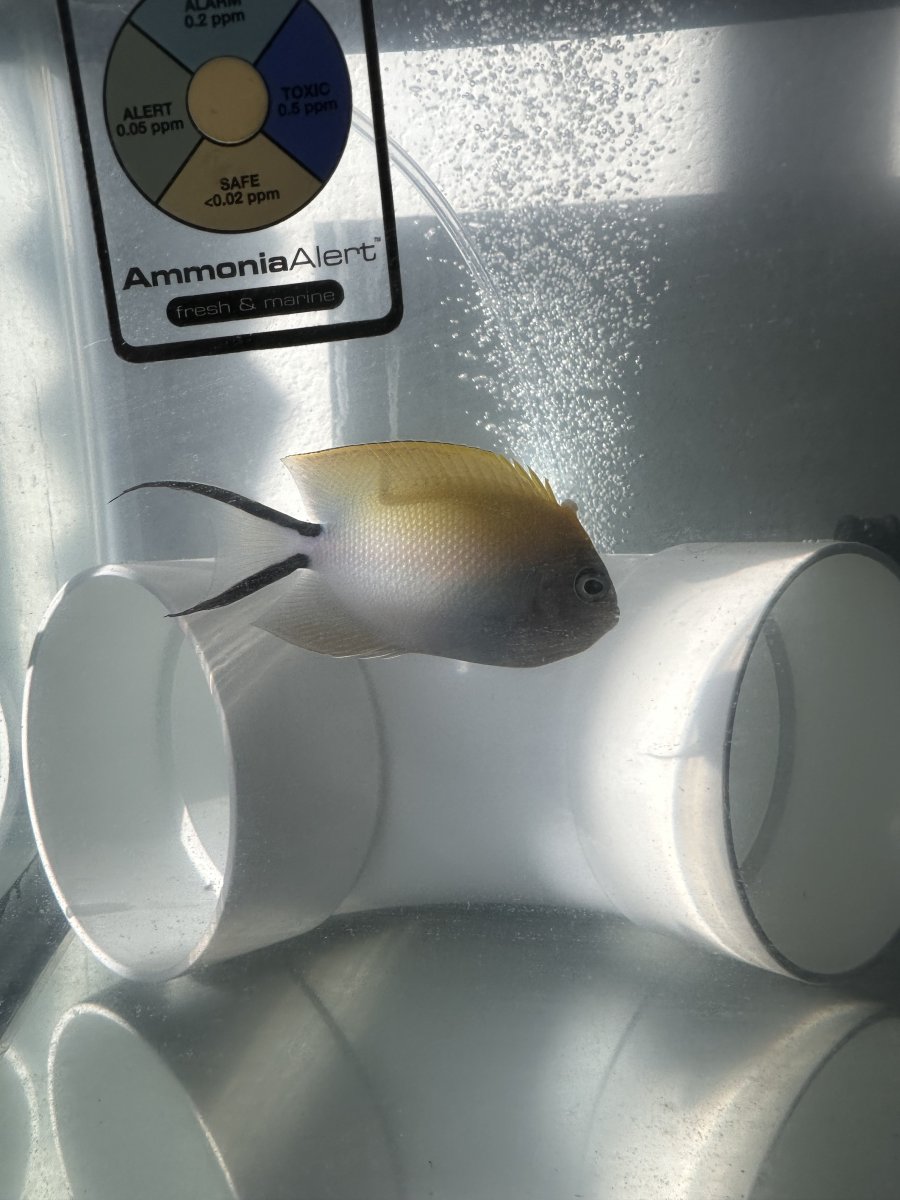
@Jay Hemdal I have been treating this guy with metro and kana for a week thinking it was bacterial, but I’m wondering if it could be lymphocitis? Any thoughts? Im on week 3 of QT.

IMG_3392.jpeg

IMG_3393.jpeg
IMG_3378.jpeg


That 100% looks like Lymph to me. Swallowtail Angels are very prone to it.
 

Jay Hemdal

10K Club member
View Badges
Joined
Jul 31, 2020
Messages
37,761
Reaction score
37,630
Location
Dundee, MI
Rating - 0%
0   0   0
@Jay Hemdal I have been treating this guy with metro and kana for a week thinking it was bacterial, but I’m wondering if it could be lymphocitis? Any thoughts? Im on week 3 of QT.

IMG_3392.jpeg

IMG_3393.jpeg
IMG_3378.jpeg


That looks like Lymphocystis to me. The other thing it *could* be is an infected, broken dorsal spine, but I do not think that this species has a dorsal spine in that location (too far forward).
 

LiquidSpace

Well-Known Member
View Badges
Joined
Jan 2, 2022
Messages
596
Reaction score
583
Location
Tennessee
Rating - 0%
0   0   0
That looks like Lymphocystis to me. The other thing it *could* be is an infected, broken dorsal spine, but I do not think that this species has a dorsal spine in that location (too far forward).

Cool, that’s what I was hoping to hear. It popped up a week ago. This is what it looked like.

IMG_3435.jpeg


Would you recommend discontinuing the antibiotics or should I finish the treatment since I have started?
 

Jay Hemdal

10K Club member
View Badges
Joined
Jul 31, 2020
Messages
37,761
Reaction score
37,630
Location
Dundee, MI
Rating - 0%
0   0   0
Cool, that’s what I was hoping to hear. It popped up a week ago. This is what it looked like.

IMG_3435.jpeg


Would you recommend discontinuing the antibiotics or should I finish the treatment since I have started?

That pic helps - that is too far forward to be a dorsal spine. I would finish the Kanamycin treatment, metro won't be of much use. Here is my text on Lymphocystis:

Lymphocystis (cauliflower disease)

This is a common viral disease of marine, brackish, and certain freshwater fishes (usually those with marine relatives: glassfish and rainbowfish). It is a chronic (long-lasting) but self-limiting (usually going away on its own) syndrome caused by an iridovirus. The virus causes hypertrophy (enlargement) of the epithelial cells of a fish’s skin and fins.

Initial symptoms consist of off-white to gray nodules on the fish that spread and grow larger over a timeframe of 10 to 90 days. Commonly, when a Lymphocystis nodule forms on a pectoral fin, a new nodule will soon begin to form on the part of the fish that is brushed by the fin, indicating that direct contact can be a mode of spreading the infection.

When Lymphocystis first starts, the small growths can be misdiagnosed as a protozoan infection, such as Cryptocaryon, or even a bacterial infection. The fact that the lesions are long-lasting and do not cause the fish to become acutely ill rules out these more virulent diseases.

Since Lymphocystis is most often seen in newly imported fishes, capture and transport stresses are often mentioned as the stressors that allow this disease to take hold. While this may be true, it may also be that the cause is actually exposure to other infected fish in the aquarium systems of the exporter, importer, or retail suppliers. In any event, it is extremely rare for a fish held in captivity for more than four to six months to suddenly develop this disease.

Treatment with copper sulfate has also been implicated in the development of Lymphocystis in marine fish. The connection is actually not very clear, in that copper sulfate is most often used on newly imported fishes, and those are the ones that develop the disease most often.

Lymphocystis infections can sometimes become more serious, covering large areas of a fish’s body and even interfering with proper feeding if the cell growth involves areas around the mouth. In rare instances, the virus can also cause enlargement of the cells of internal organs, especially in marine fishes (Wolf 1988). This has the potential of causing serious, yet difficult-to-identify diseases in marine fishes.

A variety of cures have been suggested for this disease over the years. Some public aquarists have reported that a reduction in the animal’s environmental stress level will help reduce the severity of an infection. Others have reported that treatment with a mixture of malachite green and formalin (Quick Cure, Formalite, etc.) helps limit the spread of the lesions. Since both of these compounds can damage an aquarium’s bio-filter, and since both are toxic to fish, care must be taken if this method is attempted. By far, the most commonly recommended treatment involves surgically removing the hypertrophied skin cells, followed with a topical antibiotic to hopefully prevent secondary bacterial infection.

The issue with all these suggested treatments is that because Lymphocystis is usually self-limiting, remission of the disease will almost always occur in spite of any treatment undertaken. Additionally, cutting the tissue to remove the lesions releases viral particles into the aquarium, potentially spreading the disease to other fish. Finally, any time a fish is handled, there is a risk to its health due to injury or infection.

The general advice is to never intercede with a Lymphocystis infection—just let it run its course. The only exception might be if the fish develops a severe form of the disease, and its mouth develops lesions that might inhibit it from feeding. Even in those extreme cases, surgery around the mouth will also cause the fish to stop feeding, so it may be better to just wait it out (Hemdal 2014).

Interestingly, aquarists do not seem to report Lymphocystis infections in their fish as often as they did in the 1970’s and 1980’s. Anecdotally, the disease does not seem as common in public aquariums overall as it used to be. The reason(s) for this change are unclear. It may be that more aquarists are familiar with the syndrome, know that it is usually self-limiting, and therefore do not report it. It may also be that marine fish traveling through the commercial supply chain are being handled better, with less stress, making the outbreaks less common.

Jay

 

LiquidSpace

Well-Known Member
View Badges
Joined
Jan 2, 2022
Messages
596
Reaction score
583
Location
Tennessee
Rating - 0%
0   0   0
That pic helps - that is too far forward to be a dorsal spine. I would finish the Kanamycin treatment, metro won't be of much use. Here is my text on Lymphocystis:

Lymphocystis (cauliflower disease)

This is a common viral disease of marine, brackish, and certain freshwater fishes (usually those with marine relatives: glassfish and rainbowfish). It is a chronic (long-lasting) but self-limiting (usually going away on its own) syndrome caused by an iridovirus. The virus causes hypertrophy (enlargement) of the epithelial cells of a fish’s skin and fins.

Initial symptoms consist of off-white to gray nodules on the fish that spread and grow larger over a timeframe of 10 to 90 days. Commonly, when a Lymphocystis nodule forms on a pectoral fin, a new nodule will soon begin to form on the part of the fish that is brushed by the fin, indicating that direct contact can be a mode of spreading the infection.

When Lymphocystis first starts, the small growths can be misdiagnosed as a protozoan infection, such as Cryptocaryon, or even a bacterial infection. The fact that the lesions are long-lasting and do not cause the fish to become acutely ill rules out these more virulent diseases.

Since Lymphocystis is most often seen in newly imported fishes, capture and transport stresses are often mentioned as the stressors that allow this disease to take hold. While this may be true, it may also be that the cause is actually exposure to other infected fish in the aquarium systems of the exporter, importer, or retail suppliers. In any event, it is extremely rare for a fish held in captivity for more than four to six months to suddenly develop this disease.

Treatment with copper sulfate has also been implicated in the development of Lymphocystis in marine fish. The connection is actually not very clear, in that copper sulfate is most often used on newly imported fishes, and those are the ones that develop the disease most often.

Lymphocystis infections can sometimes become more serious, covering large areas of a fish’s body and even interfering with proper feeding if the cell growth involves areas around the mouth. In rare instances, the virus can also cause enlargement of the cells of internal organs, especially in marine fishes (Wolf 1988). This has the potential of causing serious, yet difficult-to-identify diseases in marine fishes.

A variety of cures have been suggested for this disease over the years. Some public aquarists have reported that a reduction in the animal’s environmental stress level will help reduce the severity of an infection. Others have reported that treatment with a mixture of malachite green and formalin (Quick Cure, Formalite, etc.) helps limit the spread of the lesions. Since both of these compounds can damage an aquarium’s bio-filter, and since both are toxic to fish, care must be taken if this method is attempted. By far, the most commonly recommended treatment involves surgically removing the hypertrophied skin cells, followed with a topical antibiotic to hopefully prevent secondary bacterial infection.

The issue with all these suggested treatments is that because Lymphocystis is usually self-limiting, remission of the disease will almost always occur in spite of any treatment undertaken. Additionally, cutting the tissue to remove the lesions releases viral particles into the aquarium, potentially spreading the disease to other fish. Finally, any time a fish is handled, there is a risk to its health due to injury or infection.

The general advice is to never intercede with a Lymphocystis infection—just let it run its course. The only exception might be if the fish develops a severe form of the disease, and its mouth develops lesions that might inhibit it from feeding. Even in those extreme cases, surgery around the mouth will also cause the fish to stop feeding, so it may be better to just wait it out (Hemdal 2014).

Interestingly, aquarists do not seem to report Lymphocystis infections in their fish as often as they did in the 1970’s and 1980’s. Anecdotally, the disease does not seem as common in public aquariums overall as it used to be. The reason(s) for this change are unclear. It may be that more aquarists are familiar with the syndrome, know that it is usually self-limiting, and therefore do not report it. It may also be that marine fish traveling through the commercial supply chain are being handled better, with less stress, making the outbreaks less common.

Jay

Hey Jay,

I transitioned from copper to prazi today so I took the opportunity to get a better photo. The growth has gotten smaller but I’m noticing a red/brown spot under the growth. Is this anything I need to worry about?


IMG_3884.jpeg
 

Jay Hemdal

10K Club member
View Badges
Joined
Jul 31, 2020
Messages
37,761
Reaction score
37,630
Location
Dundee, MI
Rating - 0%
0   0   0
Hey Jay,

I transitioned from copper to prazi today so I took the opportunity to get a better photo. The growth has gotten smaller but I’m noticing a red/brown spot under the growth. Is this anything I need to worry about?


IMG_3884.jpeg

Tough to see in that photo, but it does seem smaller. That is a good sign. As for the darker coloration, that could be from tissues that are healing, but it could also be from bacterial infection.....

Can you get a picture of it in the tank?
 

LiquidSpace

Well-Known Member
View Badges
Joined
Jan 2, 2022
Messages
596
Reaction score
583
Location
Tennessee
Rating - 0%
0   0   0
Tough to see in that photo, but it does seem smaller. That is a good sign. As for the darker coloration, that could be from tissues that are healing, but it could also be from bacterial infection.....

Can you get a picture of it in the tank?

IMG_3901.jpeg
IMG_3904.jpeg


This one below was yesterday, it looks like a bit of the top was coming off.

IMG_3908.jpeg
 

Jay Hemdal

10K Club member
View Badges
Joined
Jul 31, 2020
Messages
37,761
Reaction score
37,630
Location
Dundee, MI
Rating - 0%
0   0   0
Hey Jay, would you recommend anything for the mark on its head? Or at this point are you just thinking this is normal healing?
IMG_4160.jpeg
Tough to say - this sort of thing can take time to heal (a month or more). As long as the lesion isn’t getting larger, I’d just watch it.
 

LiquidSpace

Well-Known Member
View Badges
Joined
Jan 2, 2022
Messages
596
Reaction score
583
Location
Tennessee
Rating - 0%
0   0   0
@Jay Hemdal , one last question for you, I think. So this is healing pretty well. Once prazi is complete should I keep it in QT or can I release it into my 200 gallon with much better water quality even if it’s still healing?

I’m not sure what is right. I assume I’d want to leave a fish with a healing wound in QT but at the same time I feel like it would heal faster in a larger aquarium with better water quality?
 

Jay Hemdal

10K Club member
View Badges
Joined
Jul 31, 2020
Messages
37,761
Reaction score
37,630
Location
Dundee, MI
Rating - 0%
0   0   0
@Jay Hemdal , one last question for you, I think. So this is healing pretty well. Once prazi is complete should I keep it in QT or can I release it into my 200 gallon with much better water quality even if it’s still healing?

I’m not sure what is right. I assume I’d want to leave a fish with a healing wound in QT but at the same time I feel like it would heal faster in a larger aquarium with better water quality?

If the QT was stable, I'd say leave it there, no rush getting it into the DT. Since you are not happy with how the QT is running, you may just need to make a risk analysis and move it.
 

clown2clown

New Member
View Badges
Joined
Jan 29, 2024
Messages
2
Reaction score
0
Location
turkey
Rating - 0%
0   0   0
Hi,

The new hippo I bought has been in the quarantine tank for 4–5 days. On the day I got it, I noticed the white spot in the photo on its left fin. I’m curious about your thoughts on whether it might be lympho.

WhatsApp Image 2025-11-26 at 10.54.59.jpeg WhatsApp Image 2025-11-26 at 10.55.20.jpeg
 

Jay Hemdal

10K Club member
View Badges
Joined
Jul 31, 2020
Messages
37,761
Reaction score
37,630
Location
Dundee, MI
Rating - 0%
0   0   0
Hi,

The new hippo I bought has been in the quarantine tank for 4–5 days. On the day I got it, I noticed the white spot in the photo on its left fin. I’m curious about your thoughts on whether it might be lympho.

WhatsApp Image 2025-11-26 at 10.54.59.jpeg WhatsApp Image 2025-11-26 at 10.55.20.jpeg

We really need a closer view to confirm, but the timing, location and color all point to it being lymphocystis. You won’t need to treat that, but the spots may spread a bit before it goes away in a month or so.
 

TOP 10 Trending Threads

HOW DO YOU ADJUST YOUR CUC AS ALGAE DISAPPEARS?

  • Capture and re-home CUC

    Votes: 6 6.7%
  • Increase white light/hours in tank to spur algae growth to feed CUC

    Votes: 6 6.7%
  • Feed nori to support CUC

    Votes: 31 34.8%
  • Feed herbivore pellets to support CUC

    Votes: 28 31.5%
  • Allow attrition to balance CUC and algae

    Votes: 40 44.9%
  • Provide macro algae to feed CUC

    Votes: 6 6.7%
  • Introduce CUC predators

    Votes: 1 1.1%
  • Other (please explain)

    Votes: 8 9.0%
Back
Top